


In 2025, marketers win attention by matching messages to real-world context. Using AI to personalize dynamic creative based on weather and location turns shifting conditions into timely, relevant ads that feel made for the moment. Done well, it lifts relevance without sacrificing brand control or privacy. This guide explains the strategy, data, workflows, and governance you need to make it work—starting now.
What “weather and location personalization” means for dynamic creative optimization
Dynamic creative optimization (DCO) assembles ad elements—copy, imagery, offers, and calls to action—in real time. When you add weather and location signals, you move from generic personalization to situational relevance: the right variant for a specific place and condition, delivered at the right time.
In practice, a single campaign might include dozens (or hundreds) of approved combinations such as:
- Weather state: rain, snow, heat, cold, high winds, humidity, UV index, air quality.
- Location context: city or DMA, postal code, store radius, regional language preferences, local inventory, local events.
- Time context: hour-of-day, day-of-week, commute hours, weekend vs. weekday.
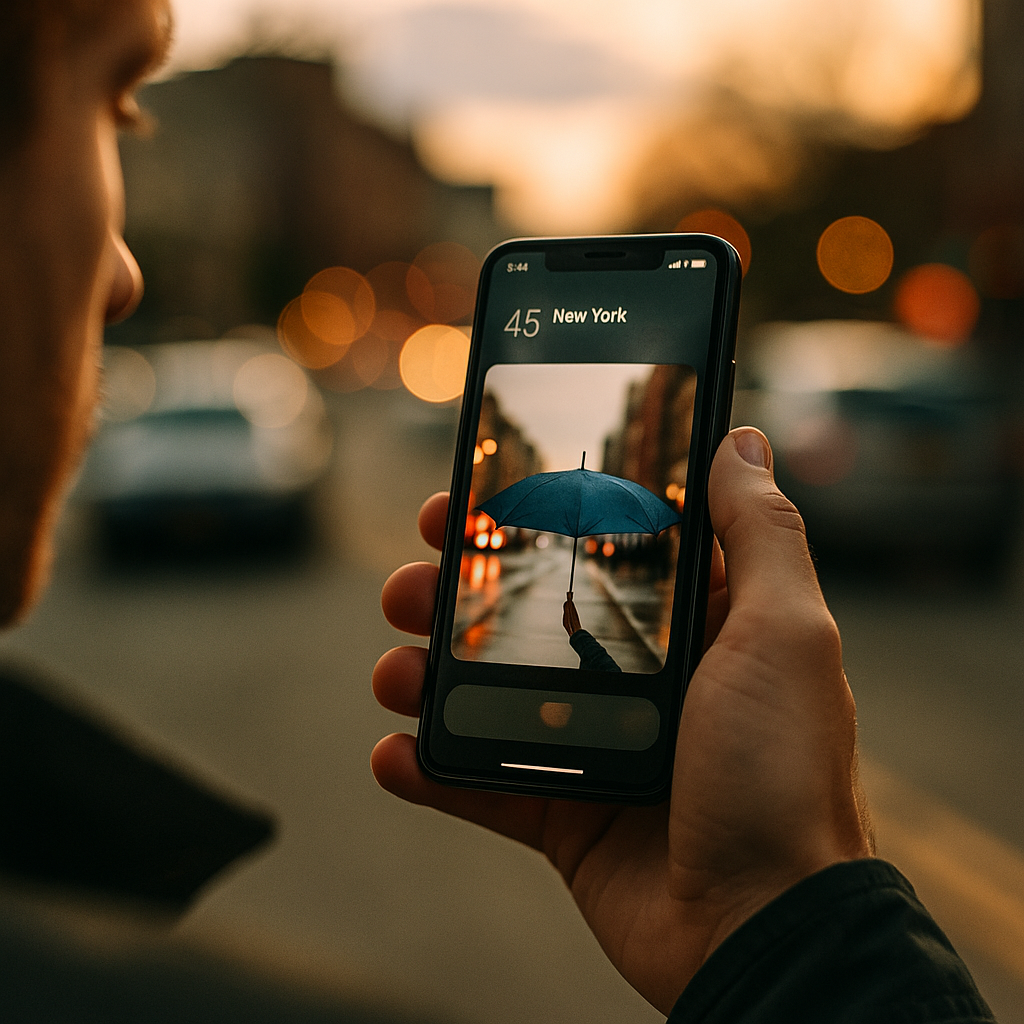
AI strengthens DCO by predicting which combination is most likely to drive an outcome (click, add-to-cart, store visit, subscription) for a given audience under current conditions. Instead of hardcoding “if rain then show umbrella ad,” you can let models learn nuanced interactions, such as which product category performs best in 55°F drizzle versus 40°F heavy rain, and which wording resonates in coastal versus inland markets.
Key point: You are not “personalizing to an individual’s weather.” You are personalizing creative to contextual signals available at impression time, often without needing personally identifiable information.
AI-driven creative personalization: the data signals you need and how to source them
Effective AI personalization relies on data you can trust. In 2025, the safest approach is to prioritize first-party and contextual data, and treat location with appropriate granularity and consent.
Core inputs for weather and location personalization typically include:
- Weather APIs: current conditions, hourly forecasts, precipitation probability, temperature ranges, severe weather alerts.
- Geo signals: coarse location (city/DMA), user-selected store, shipping destination, or consented GPS where applicable.
- Business data: product catalog, margins, inventory by location, delivery SLAs, store hours, promotions and price rules.
- Performance data: creative-level results by condition and region, conversion paths, incrementality tests where available.
Practical sourcing guidance:
- Use a reputable weather provider with documented uptime and clear licensing for ad use. Cache responses to prevent latency.
- Choose the right location precision: for most ads, city-level or store-radius is enough. Finer precision increases privacy risk and may not improve outcomes.
- Connect inventory and availability so AI never promotes items unavailable in that location. This is a major trust driver and reduces wasted spend.
Answering the follow-up question: “Do we need user-level data to do this?” Usually, no. Many strong implementations are contextual and aggregate: the creative adapts to the weather in the target area and the nearest store’s availability, not to an identified person.
Weather-based ad creative: use cases that improve relevance without feeling intrusive
Weather-triggered messaging works when it helps the customer decide, saves time, or reduces risk. It fails when it looks like surveillance or changes too aggressively, creating inconsistency.
High-performing use cases by industry:
- Retail and apparel: promote rainwear on wet days, breathable fabrics during heat spikes, layering essentials during cold fronts, and “ship to home” when storms disrupt travel.
- QSR and food delivery: shift toward delivery and comfort foods during rain or snow; highlight iced drinks during heat; adjust imagery to match local conditions.
- Travel and mobility: emphasize flexible booking during severe weather alerts; promote nearby getaways when local forecasts are favorable; adjust airport transfer messaging for heavy rain.
- CPG: align seasonal demand (allergy relief, hydration, sunscreen) with humidity/UV and local availability.
- Home services: push HVAC checks during heat waves, pipe protection during freezing alerts, and roof inspections after storms (with careful tone and no fearmongering).
Creative guidelines that preserve brand trust:
- Keep the weather reference subtle: “Ready for the rain?” often lands better than “We see it’s raining where you are.”
- Offer utility: local pickup availability, delivery windows, or a relevant bundle.
- Set guardrails for sensitive events: avoid opportunistic messaging during extreme weather emergencies; use PSA-style resources only if appropriate for your brand and approved legally.
What readers often ask next: “Will weather personalization fatigue users?” It can if you over-rotate. Use frequency caps and creative rotation, and limit weather-triggered variants to moments where it changes the value proposition.
Location-based marketing automation: building the workflow from feed to ad delivery
Scaling dynamic creative requires a workflow that separates brand-approved building blocks from AI decisioning. This keeps output consistent while still allowing local relevance.
A reliable end-to-end workflow:
- 1) Creative component library: approved headlines, descriptions, CTAs, product images, lifestyle images, legal lines, and localized disclaimers.
- 2) Product and store feeds: SKU attributes (category, weather fit, gender/size), pricing, promos, inventory by store, store hours, and fulfillment options.
- 3) Context engine: resolves location (city/store radius) and pulls weather conditions/forecast windows. Create normalized “weather states” (e.g., cold, mild, hot; dry vs. wet) for consistency.
- 4) Decisioning model: selects components based on predicted performance under current context, constrained by rules (brand safety, legal, margin, inventory, language).
- 5) Assembly and rendering: builds the final ad for each placement (social, display, video, DOOH, onsite). Validate aspect ratios and safe areas.
- 6) Measurement and feedback loop: logs which variant ran under which context, then retrains or reweights based on results.
Operational details that prevent common failures:
- Latency management: don’t call external APIs per impression without caching; use near-real-time updates (e.g., every 10–30 minutes) unless severe alerts require faster refresh.
- Fallback logic: if weather data fails, show a baseline evergreen creative. If inventory is low, switch to store pickup alternatives or another SKU set.
- Localization accuracy: use vetted translations and local compliance text; avoid auto-translation for regulated industries without review.
Answering the next question: “Do we need a custom platform?” Not always. Many teams start with existing DCO capabilities in their DSP or social platforms, then add a lightweight context layer and better feeds. Custom development becomes worthwhile when you need advanced constraints, cross-channel consistency, or specialized measurement.
Real-time creative optimization with machine learning: models, testing, and measurement
AI is only as valuable as the measurement strategy behind it. In 2025, privacy constraints and signal loss mean you must combine platform reporting with robust experimentation and clear business KPIs.
Where machine learning adds value:
- Variant selection: multi-armed bandits or uplift models choose creatives that perform best per weather/location cluster.
- Interaction learning: models detect that “cold + commuting hours + urban areas” drives different behavior than “cold + weekend + suburban.”
- Budget allocation: shift spend toward contexts where incremental lift is likely, rather than only where clicks are cheap.
Testing methods that answer “is this working?”:
- Geo-experiments: hold out matched regions where you run non-personalized creative, then compare outcomes against test regions with weather/location DCO.
- Incrementality tests: where platforms support them, measure lift in conversions or store visits rather than relying on last-click.
- Creative-level diagnostics: break down performance by weather state and region to verify the model’s logic and catch anomalies.
KPIs to track (choose based on your goal):
- Ecommerce: conversion rate, revenue per session, ROAS with incrementality checks, return rate by promoted weather category.
- Retail stores: store visits, local inventory turn, pickup conversions, call volume during severe conditions (if relevant and compliant).
- Brand: view-through reach and frequency, ad recall studies, brand lift by region and season.
Common measurement pitfall: confusing correlation with causation. Weather itself changes demand; your job is to prove that personalized creative improved results beyond what the weather would have produced anyway. Controlled holdouts and pre/post baselines by region help answer this.
Privacy, compliance, and EEAT: earning trust while scaling AI personalization
Personalization succeeds when customers feel respected and when stakeholders can explain the “why” behind decisions. EEAT (Experience, Expertise, Authoritativeness, Trustworthiness) in 2025 means you document your approach, limit sensitive data, and maintain rigorous review processes.
Practical trust and compliance checklist:
- Data minimization: use the least precise location needed to deliver value; prefer contextual weather and regional targeting over individual tracking.
- Consent and transparency: if you use precise location from an app, ensure explicit consent, clear disclosures, and easy opt-out. Align with your privacy policy and platform rules.
- Safety guardrails: block exploitative messaging during disasters; define “severe weather” rules and escalation paths for pausing campaigns.
- Human review: pre-approve component libraries, enforce brand voice, and implement QA for localization, pricing, and legal text.
- Auditability: log which inputs (weather state, region, inventory) drove creative selection so you can explain outcomes internally and respond to compliance requests.
How to demonstrate expertise internally:
- Maintain a decisioning playbook: definitions of weather states, eligible SKUs, prohibited claims, and fallback rules.
- Run regular “model sanity checks”: review top-performing variants by context to confirm they align with brand and customer expectations.
Answering the final follow-up: “Will this hurt our brand consistency?” Not if you constrain AI to approved modules and style rules. Consistency comes from your library and governance; relevance comes from your context and model.
FAQs
What is the primary benefit of using AI for weather and location-based creative?
AI helps you choose the best approved creative variation for each context at scale. It improves relevance by matching offers and messaging to local conditions, while learning which combinations drive incremental results across regions and weather states.
Do I need real-time weather data, or is forecast data enough?
Most campaigns perform well with near-real-time updates plus short-range forecasts. Forecast-based variants are especially useful for planning purchases (apparel, travel, grocery). Real-time data matters more for sudden shifts and severe alerts.
How granular should location targeting be?
Start with city, DMA, or store-radius targeting. Use more precision only if it materially improves customer value (for example, store inventory within a small radius) and you have appropriate consent and controls.
How many creative variants do we need to start?
You can start with a small matrix: 3–5 weather states multiplied by 5–10 key regions and a handful of offers. Focus on high-impact categories and expand after you prove lift and stabilize your workflow.
How do we prevent “wrong” ads, like promoting sandals during snow?
Use rule-based constraints on top of AI: weather eligibility rules, inventory checks, and brand safety filters. AI should select among allowed options, not invent options outside your approved boundaries.
Which channels work best for dynamic weather and location creative?
Paid social, programmatic display, online video, and onsite personalization are common starting points. DOOH can work well where local weather and foot traffic correlate. The best channel is the one where you can measure outcomes and control variant delivery reliably.
How long does it take to implement?
Many teams can pilot within 4–8 weeks if they already have a clean product feed and a DCO-capable platform. More advanced setups—inventory-by-store, multi-channel orchestration, or custom decisioning—take longer due to data engineering and governance.
AI-driven dynamic creative tied to weather and location works when it is useful, measurable, and governed. Build a trusted data layer, constrain AI to approved components, and test incrementality with geo holdouts or platform experiments. In 2025, the advantage comes from operational excellence: fast feeds, clear rules, and continuous learning. Make relevance a system, not a one-off campaign.