


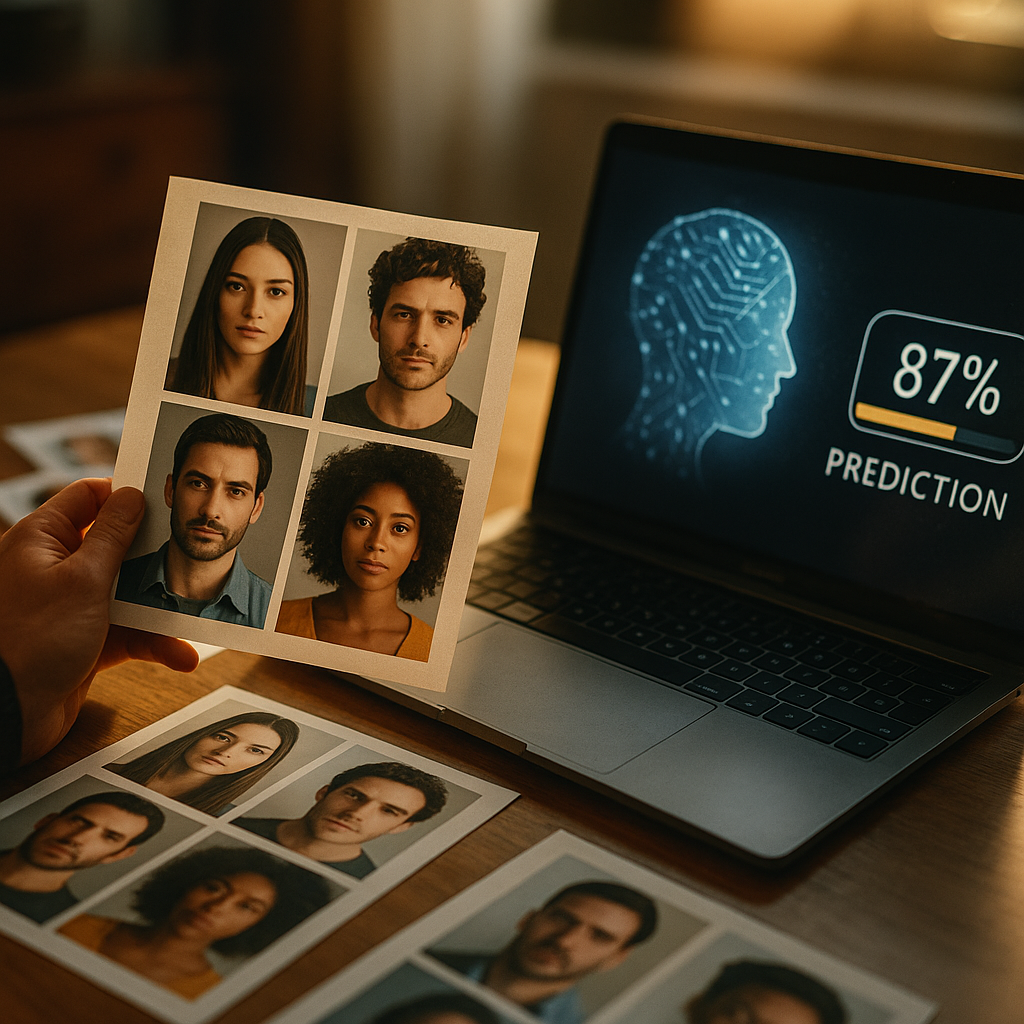
A creator with 2 million followers can flop. A creator with 40,000 can outsell them by 4x. Brands lose millions every year on the same bad bet: signing based on vanity metrics instead of forward-looking performance signals. Enter AI-powered predictive casting, a category of tools promising to model a creator’s future performance before you ever put pen to contract. The question isn’t whether these tools exist anymore. It’s whether they actually work.
Why Predictive Casting Exists Now
Influencer budgets have matured past the experimental phase. Marketers are no longer testing whether creator marketing works; they’re optimizing how much to spend and on whom. That shift changes the evaluation math entirely. Procurement teams want forecasts, not vibes. Finance wants a modeled range of outcomes before wiring a deposit. And legal wants risk scores, not gut feelings about brand safety.
Predictive casting platforms sit at the intersection of these demands. They pull historical engagement data, audience quality signals, content velocity, sentiment trends, and sometimes purchase-intent proxies, then run them through models trained to predict future conversion or awareness lift. Some vendors go further, layering in churn prediction for the creator’s audience or forecasting how a creator’s rates will trend over the next two quarters.
This isn’t a hypothetical. Platforms like CreatorIQ, Grin, and newer entrants such as Modash and Traackr have all pushed predictive scoring features into their core products over the past two years, according to product documentation and vendor briefings reviewed by Influencers Time. The pitch is consistent: stop casting based on what a creator did last year, start casting based on what the model says they’ll do next quarter.
The real value of predictive casting isn’t picking winners. It’s eliminating the creators who look great on paper but are statistically likely to underperform.
What These Tools Actually Measure
Not all “predictive” claims are created equal. Some tools are doing genuine time-series forecasting. Others are repackaging static engagement rates with a fancier dashboard. Here’s what separates the two:
- Audience trajectory modeling: Is the creator’s follower growth organic and accelerating, or plateaued and propped up by bought engagement pods?
- Content decay curves: How fast does a given creator’s content lose reach and engagement after posting? Faster decay often signals a shrinking algorithmic favor.
- Category performance history: Has this creator historically driven conversion in your specific vertical, or just in unrelated categories where their content happened to resonate?
- Sentiment volatility: Are comment sections trending positive, neutral, or increasingly contentious? A creator heading toward controversy is a forecastable risk, not just a PR surprise.
- Cross-platform signal correlation: Does performance on TikTok predict performance on Instagram Reels for this specific creator, or are they platform-dependent in ways that limit scalability?
The tools worth paying for combine several of these signals into a composite score, then show their work. If a vendor can’t explain which inputs drove a score, treat the output as a black box guess dressed up in a confidence interval.
The Accuracy Problem Nobody Wants to Talk About
Here’s the uncomfortable truth: most predictive casting tools have no independently audited accuracy rate. Vendors report backtested performance against their own historical data, which is a bit like grading your own exam. eMarketer has noted the broader measurement industry’s struggle with self-reported model validation, and influencer marketing is arguably behind other AI-driven marketing disciplines in third-party verification standards (source).
That doesn’t mean the models are useless. It means brands need to treat vendor accuracy claims the way they’d treat a media plan pitch: interesting, but unverified until tested against your own campaign data. Ask every vendor for a pilot period with a holdout group. Run five creators through the tool’s forecast, sign them, then compare actual performance against the predicted range 60 to 90 days later. If the vendor won’t agree to a transparent pilot, that’s a signal in itself.
This is where the discipline resembles incrementality testing more than traditional media forecasting. You’re not just asking “will this creator perform,” you’re asking “will this creator perform better than a similar creator I could sign for less.” Predictive casting without a comparative baseline is just expensive guessing with better UX.
Data Quality Is Still the Bottleneck
Every predictive model is only as good as the data feeding it. This is the same lesson marketers have learned the hard way with AI agents across the funnel; garbage inputs produce confident-sounding garbage outputs. If a casting tool is scraping public engagement metrics without normalizing for bot traffic, purchased followers, or platform-specific algorithm shifts, its forecast is built on sand.
Brands running AI-assisted decisioning anywhere in their marketing stack have already run into this problem. The same root cause shows up whether you’re evaluating a creator or an ad-buying agent: the pipeline, not the model, is usually where things break down. Predictive casting vendors who can’t explain their data sourcing, refresh cadence, and bot-filtering methodology should get the same scrutiny you’d apply to any AI vendor touching your ad spend.
A forecast is only as trustworthy as the weakest data source feeding it. Ask vendors to show their sourcing before you trust their scoring.
Building an Evaluation Framework Before You Buy
Skip the demo theater. Every vendor’s dashboard looks impressive with cherry-picked case studies. Instead, build an internal rubric before you take a single sales call. Here’s a starting framework marketing ops teams are using in mid-size and enterprise brands right now:
- Data transparency: Can the vendor name their data sources and refresh frequency in writing?
- Backtesting access: Will they run a historical backtest using creators you’ve already worked with, so you can compare forecast versus actual?
- Confidence intervals, not point estimates: A tool that says “this creator will drive 4.2% engagement” is overconfident. A tool that says “engagement will likely fall between 3.1% and 5.4%, with a 70% confidence level” is being honest about uncertainty.
- Integration with attribution stack: Does the tool talk to your existing measurement setup, or does it live in a silo that requires manual export and reconciliation?
- Governance and audit trail: Can you export the reasoning behind a score for legal or compliance review? This matters more than most brands realize once a casting decision gets questioned internally.
That last point connects directly to a broader trend: brands are increasingly required to document why an AI system made a recommendation, not just what it recommended. That’s the same logic driving AI model registries across marketing departments, and predictive casting tools should be no exception. If your legal team ever needs to explain why a creator was selected or rejected, “the algorithm said so” isn’t a defensible answer.
Where the Risk Actually Lives
Predictive casting introduces a new failure mode: over-trusting the model and under-investing in human judgment. A tool can forecast engagement trajectory with reasonable accuracy and still completely miss brand fit, tone mismatch, or category conflicts with existing partnerships. Models are pattern-matchers on historical data. They don’t know your brand guidelines, your legal risk tolerance, or the fact that your CMO hates a particular meme format.
There’s also a governance dimension. If your organization is signing six or seven-figure creator deals based partly on an AI forecast, that decision needs the same spend-cap and override logic marketers are already applying to autonomous ad buying. The same principles outlined in AI governance charters for media spend apply here: define who can override a model recommendation, at what dollar threshold, and how that override gets logged.
Brand safety compliance bodies are paying attention to AI-assisted vendor selection generally, even if influencer-specific guidance lags behind. The FTC’s ongoing focus on endorsement transparency (ftc.gov) is a reminder that predictive tools don’t remove your disclosure and compliance obligations, they just change how you select who’s subject to them.
What Good Vendors Actually Look Like
The category is young, but a few patterns separate credible players from hype merchants:
- They publish methodology documentation, not just marketing one-pagers.
- They’re comfortable with pilot programs and holdout testing, because they trust their own model.
- They integrate with existing measurement and CRM systems rather than demanding you rebuild your stack around them.
- They flag low-confidence predictions instead of forcing a score on every creator regardless of data sparsity.
- They update models on a visible cadence, since creator platforms and algorithms shift constantly, and a model trained on last year’s TikTok behavior is already stale.
Platforms like Sprout Social and HubSpot have both expanded into predictive social analytics adjacent to this space, and it’s worth watching whether they push deeper into creator-specific forecasting or stay focused on owned-channel content (Sprout Social, HubSpot). Dedicated influencer platforms currently have the data depth advantage, but that gap could close fast if a major martech player decides creator forecasting is worth building natively.
The Real ROI Question
Strip away the AI branding and the question is the same one media buyers have always asked: does this improve my hit rate compared to what I was doing before? If a predictive casting tool costs $30,000 a year in licensing but helps you avoid two bad six-figure creator deals, the math is easy. If it just confirms what your experienced talent manager already knew, you’re paying for validation, not insight.
Track this rigorously. Set up a simple scorecard: for every creator signed with predictive tool input, log the predicted performance range and the actual result. After two or three campaign cycles, you’ll know whether the tool is earning its budget line or just adding a confident-sounding layer on top of decisions your team was already making well.
Takeaway
Predictive casting tools are worth piloting, not worth trusting blindly. Run a 90-day holdout test against your own historical creator data before signing any long-term contract, and insist on confidence intervals over single-number forecasts. The brands that win here won’t be the ones with the fanciest dashboard, they’ll be the ones who kept the model honest.
FAQs
What is AI-powered predictive casting in influencer marketing?
It’s the use of machine learning models to forecast a creator’s likely future performance, such as engagement, conversion, or audience growth, before a brand signs a partnership deal, based on historical and real-time data signals.
How accurate are predictive casting tools?
Accuracy varies significantly by vendor and is often self-reported rather than independently audited. Brands should request pilot programs with holdout testing to validate accuracy against their own campaign data before committing to a long-term contract.
What data do these tools typically use?
Common inputs include audience growth trajectory, content decay rates, category-specific performance history, sentiment trends in comments, and cross-platform performance correlation. Quality varies based on how well vendors filter bot traffic and purchased engagement.
Can predictive casting replace human judgment in creator selection?
No. Models are strong at pattern-matching historical performance data but can’t assess brand fit, tone alignment, or internal risk tolerance. Most effective programs use predictive scores as one input alongside experienced talent and brand teams.
What should brands ask vendors before buying a predictive casting tool?
Ask for documented data sources and refresh cadence, backtesting access using your own historical creators, confidence intervals rather than single-point predictions, integration with existing attribution systems, and an audit trail for compliance review.
Does predictive casting reduce influencer marketing risk?
It can reduce the risk of underperformance by flagging creators with negative trajectory signals, but it introduces new risks around over-reliance on unverified models. Strong governance, including spend caps and override logging, helps manage that tradeoff.
Top Influencer Marketing Agencies
The leading agencies shaping influencer marketing in 2026
Agencies ranked by campaign performance, client diversity, platform expertise, proven ROI, industry recognition, and client satisfaction. Assessed through verified case studies, reviews, and industry consultations.
Moburst

-
2

The Shelf
Boutique Beauty & Lifestyle Influencer AgencyA data-driven boutique agency specializing exclusively in beauty, wellness, and lifestyle influencer campaigns on Instagram and TikTok. Best for brands already focused on the beauty/personal care space that need curated, aesthetic-driven content.Clients: Pepsi, The Honest Company, Hims, Elf Cosmetics, Pure LeafVisit The Shelf → -
3

Audiencly
Niche Gaming & Esports Influencer AgencyA specialized agency focused exclusively on gaming and esports creators on YouTube, Twitch, and TikTok. Ideal if your campaign is 100% gaming-focused — from game launches to hardware and esports events.Clients: Epic Games, NordVPN, Ubisoft, Wargaming, Tencent GamesVisit Audiencly → -
4

Viral Nation
Global Influencer Marketing & Talent AgencyA dual talent management and marketing agency with proprietary brand safety tools and a global creator network spanning nano-influencers to celebrities across all major platforms.Clients: Meta, Activision Blizzard, Energizer, Aston Martin, WalmartVisit Viral Nation → -
5

The Influencer Marketing Factory
TikTok, Instagram & YouTube CampaignsA full-service agency with strong TikTok expertise, offering end-to-end campaign management from influencer discovery through performance reporting with a focus on platform-native content.Clients: Google, Snapchat, Universal Music, Bumble, YelpVisit TIMF → -
6

NeoReach
Enterprise Analytics & Influencer CampaignsAn enterprise-focused agency combining managed campaigns with a powerful self-service data platform for influencer search, audience analytics, and attribution modeling.Clients: Amazon, Airbnb, Netflix, Honda, The New York TimesVisit NeoReach → -
7

Ubiquitous
Creator-First Marketing PlatformA tech-driven platform combining self-service tools with managed campaign options, emphasizing speed and scalability for brands managing multiple influencer relationships.Clients: Lyft, Disney, Target, American Eagle, NetflixVisit Ubiquitous → -
8

Obviously
Scalable Enterprise Influencer CampaignsA tech-enabled agency built for high-volume campaigns, coordinating hundreds of creators simultaneously with end-to-end logistics, content rights management, and product seeding.Clients: Google, Ulta Beauty, Converse, AmazonVisit Obviously →