


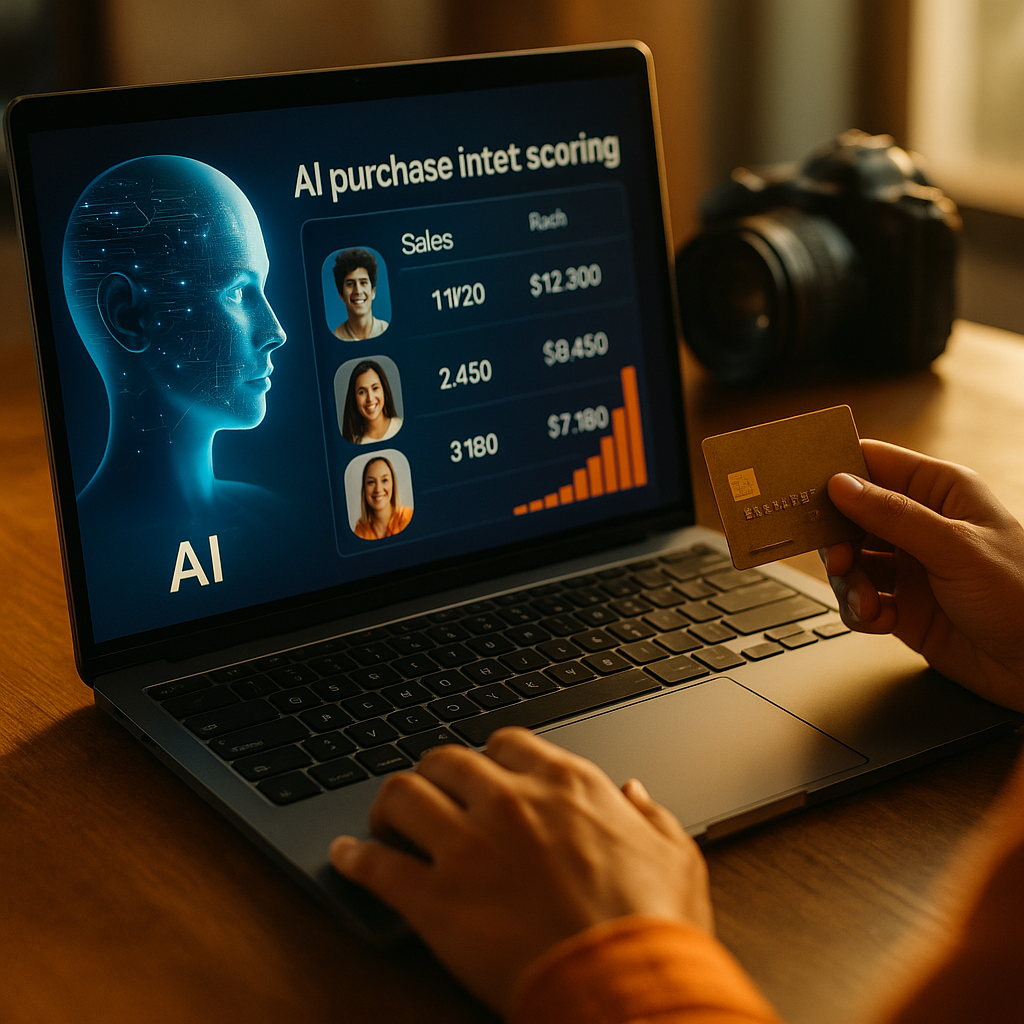
A creator with 40,000 followers just outsold one with 2 million. That is not a fluke anymore. It is the entire premise behind AI purchase-intent scoring, a modeling approach that ranks creators by their likelihood to drive a sale rather than the size of their audience. Reach used to be the currency of influencer marketing. Conversion is becoming the new one.
Reach Was Always a Proxy, Not a Result
For a decade, brands paid for reach because reach was the only thing they could measure at scale. Follower counts, impressions, view counts: all easy to pull from a dashboard, all weakly correlated with actual purchase behavior. Marketers knew this. They just didn’t have a better option.
That’s changed. Machine learning models now ingest engagement patterns, comment sentiment, click-through behavior, past campaign conversion data, audience overlap with buyer personas, and even the semantic content of a creator’s captions to predict how likely a given creator’s audience is to actually buy something. The output isn’t a follower count. It’s a conversion probability score.
A mid-tier creator with a 4% engagement rate and a history of driving affiliate link clicks can outrank a celebrity influencer with 50 times the audience, because the model weighs intent signals, not vanity metrics.
This isn’t theoretical. Platforms building agentic vetting tools have already shown that automated scoring changes shortlist composition dramatically. Our earlier coverage of agentic AI creator vetting found that automated systems routinely surface creators human buyers would have skipped based on follower count alone.
How the Models Actually Score Conversion Potential
Purchase-intent scoring models typically pull from four data layers. None of them is “how many followers does this person have.”
- Behavioral signals: click-through rates on past sponsored links, dwell time on product tags, saves and shares relative to likes (a much stronger buying signal than likes alone).
- Audience quality data: overlap between a creator’s followers and a brand’s existing customer base, often pulled from lookalike modeling similar to what Meta’s ad platform uses for audience targeting.
- Content semantics: natural language processing that scores how a creator talks about products, distinguishing genuine product enthusiasm from generic sponsored-post language that audiences have learned to tune out.
- Historical conversion lift: actual attributed sales or sign-ups from prior brand partnerships, when that data exists and can be matched.
Vendors weight these differently. Some lean hard on affiliate and promo-code data because it’s the cleanest conversion signal available. Others build hybrid models that blend engagement quality scores with lookalike audience matching. The common thread: reach is either a minor input or excluded from the model entirely once a creator clears a minimum audience threshold.
Live commerce has become a proving ground for this kind of scoring. Chat transcripts during livestream shopping events generate enormous volumes of intent language (“does this come in blue,” “link please,” “how long does shipping take”) that models can parse in real time. We covered how this works in detail in live shopping intent scoring, and the same logic underpins broader creator ranking systems: the words people use signal what they’re about to do.
Why Brands Are Rebuilding Vetting Around Conversion, Not Vanity
The math is blunt. According to eMarketer, influencer marketing spend in the US has climbed past $9 billion annually, and brands are under growing pressure to justify that line item with attributable revenue, not impressions. A CMO defending budget in a board meeting cannot say “we reached 12 million people.” They need to say “we generated $400,000 in tracked sales at a 6x return.”
Purchase-intent scoring gives procurement and brand teams a defensible, quantifiable basis for creator selection. That matters for three operational reasons.
- Budget efficiency. Spending against a conversion score instead of a rate card tied to follower count tends to lower cost-per-acquisition, because brands stop overpaying for audience size that never converts.
- Faster negotiation. When a score justifies the fee, procurement teams move faster. This pairs naturally with automated contracting tools like those covered in AI contract redlining, where deal cycles that used to take weeks now close in days.
- Audit trails for finance. A documented scoring methodology gives finance and legal teams something to point to when a campaign underperforms, rather than a vague “the creator seemed like a good fit” explanation.
None of this means reach becomes irrelevant. A creator with genuine scale and strong intent scores is still the best of both worlds. The shift is that reach alone no longer earns a spot on the shortlist.
Where the Data Actually Comes From
Skeptical readers should ask: how does a third-party model know a creator’s audience actually converted? Good question, and the honest answer is that data quality varies wildly by vendor.
The most reliable purchase-intent models rely on first-party conversion data brands feed back into the system, closing the loop between a campaign and actual pipeline. Demandbase’s approach to linking creator content to closed revenue is one example of this feedback loop in B2B contexts, where sales cycles are longer and attribution is harder to fake. Weaker models rely on public engagement metrics as a proxy for intent, which is better than reach alone but still one step removed from an actual sale.
If a vendor can’t tell you what data trained the conversion model, treat the score as a hypothesis, not a fact.
Brands running high-stakes campaigns should ask vendors directly: is this model trained on your platform’s own conversion data, third-party affiliate data, or engagement metrics dressed up as intent signals? The answer changes how much weight the score deserves in a final decision.
The Risk Nobody’s Pricing In Yet
Purchase-intent models are only as good as the data feeding them, and that data has known blind spots. Bot activity and engagement farming can distort intent signals just as easily as they inflate follower counts. Anthropic’s research into AI-driven fraud farms found that automated engagement networks are sophisticated enough to mimic genuine purchase-intent language in comments, which means a naive scoring model could actually reward fraud if it isn’t paired with fraud detection.
There’s also a compliance dimension brands can’t ignore. If a scoring model uses demographic or behavioral proxies that correlate with protected characteristics, even unintentionally, brands could face scrutiny under advertising fairness guidelines. The Federal Trade Commission has been increasingly vocal about algorithmic transparency in marketing decisions, and creator scoring isn’t exempt just because it happens behind the scenes at a vendor. Brands should ask for documentation on what inputs a model uses and whether it’s been audited for bias, the same way they’d vet any vendor handling consumer data under UK data protection guidance or comparable US frameworks.
Governance gaps compound the risk. Teams adopting AI scoring fast, without corresponding audit trails, are repeating a pattern we’ve seen across the AI marketing stack. The lesson from end-to-end creator AI platforms applies directly here: automation without governance creates operational speed and legal exposure in equal measure.
Building an Operational Workflow Around Scores
Adopting purchase-intent scoring isn’t a plug-and-play swap. It requires a workflow redesign. Here’s what a defensible process tends to look like in practice.
- Set a minimum reach floor first, then let the intent score rank within that pool. This avoids surfacing micro-creators with strong scores but genuinely negligible audience size.
- Cross-reference scores against fraud detection tools before finalizing a shortlist, not after signing contracts.
- Keep a human checkpoint for final approval. Scoring narrows the field; it shouldn’t make the final call unsupervised, a principle echoed across agentic vetting workflows.
- Document the scoring rationale for every creator selected, so finance and legal have a paper trail if a campaign is questioned later.
- Revisit model weightings quarterly. Conversion behavior shifts by platform and season, and a model tuned on last year’s TikTok data may misjudge this year’s audience.
Marketing operations teams already managing AI-assisted briefs and approvals, similar to the workflows discussed in AI creative brief tools, will recognize the pattern: speed gains are real, but strategist oversight is what keeps the output usable.
FAQs
Frequently Asked Questions
What is AI purchase-intent scoring in influencer marketing?
It’s a machine learning method that ranks creators by their predicted likelihood of driving a sale or conversion, using signals like engagement quality, audience overlap, content semantics, and past conversion history, rather than relying primarily on follower count or reach.
How is purchase-intent scoring different from engagement rate?
Engagement rate measures likes, comments, and shares relative to audience size. Purchase-intent scoring goes further, weighing the type of engagement (saves, click-throughs, comment sentiment) and blending it with audience-to-buyer overlap data to predict actual conversion likelihood, not just interaction volume.
Can purchase-intent models be manipulated or gamed?
Yes. Bot networks and engagement farms can mimic intent signals just as they’ve historically inflated follower counts and engagement rates, which is why fraud detection needs to run alongside any scoring system rather than after the fact.
Do brands still need to consider reach at all?
Reach still matters as a baseline filter to ensure a campaign can hit awareness targets, but it should function as a floor, not the ranking criterion. Intent scores determine who rises to the top once that floor is met.
What data should brands ask vendors for before trusting a score?
Ask whether the model is trained on first-party conversion data, third-party affiliate data, or public engagement metrics alone, and whether it has been audited for bias or fraud vulnerability. Vendors who can’t answer clearly should be treated cautiously.
The brands winning with creator programs right now aren’t chasing the biggest names. They’re building scoring pipelines that treat conversion data as a first-class input and reach as a secondary filter. Start by auditing whether your current vetting process can even answer the question “why this creator, over that one,” with a number instead of a guess.
Top Influencer Marketing Agencies
The leading agencies shaping influencer marketing in 2026
Agencies ranked by campaign performance, client diversity, platform expertise, proven ROI, industry recognition, and client satisfaction. Assessed through verified case studies, reviews, and industry consultations.
Moburst

-
2

The Shelf
Boutique Beauty & Lifestyle Influencer AgencyA data-driven boutique agency specializing exclusively in beauty, wellness, and lifestyle influencer campaigns on Instagram and TikTok. Best for brands already focused on the beauty/personal care space that need curated, aesthetic-driven content.Clients: Pepsi, The Honest Company, Hims, Elf Cosmetics, Pure LeafVisit The Shelf → -
3

Audiencly
Niche Gaming & Esports Influencer AgencyA specialized agency focused exclusively on gaming and esports creators on YouTube, Twitch, and TikTok. Ideal if your campaign is 100% gaming-focused — from game launches to hardware and esports events.Clients: Epic Games, NordVPN, Ubisoft, Wargaming, Tencent GamesVisit Audiencly → -
4

Viral Nation
Global Influencer Marketing & Talent AgencyA dual talent management and marketing agency with proprietary brand safety tools and a global creator network spanning nano-influencers to celebrities across all major platforms.Clients: Meta, Activision Blizzard, Energizer, Aston Martin, WalmartVisit Viral Nation → -
5

The Influencer Marketing Factory
TikTok, Instagram & YouTube CampaignsA full-service agency with strong TikTok expertise, offering end-to-end campaign management from influencer discovery through performance reporting with a focus on platform-native content.Clients: Google, Snapchat, Universal Music, Bumble, YelpVisit TIMF → -
6

NeoReach
Enterprise Analytics & Influencer CampaignsAn enterprise-focused agency combining managed campaigns with a powerful self-service data platform for influencer search, audience analytics, and attribution modeling.Clients: Amazon, Airbnb, Netflix, Honda, The New York TimesVisit NeoReach → -
7

Ubiquitous
Creator-First Marketing PlatformA tech-driven platform combining self-service tools with managed campaign options, emphasizing speed and scalability for brands managing multiple influencer relationships.Clients: Lyft, Disney, Target, American Eagle, NetflixVisit Ubiquitous → -
8

Obviously
Scalable Enterprise Influencer CampaignsA tech-enabled agency built for high-volume campaigns, coordinating hundreds of creators simultaneously with end-to-end logistics, content rights management, and product seeding.Clients: Google, Ulta Beauty, Converse, AmazonVisit Obviously →