


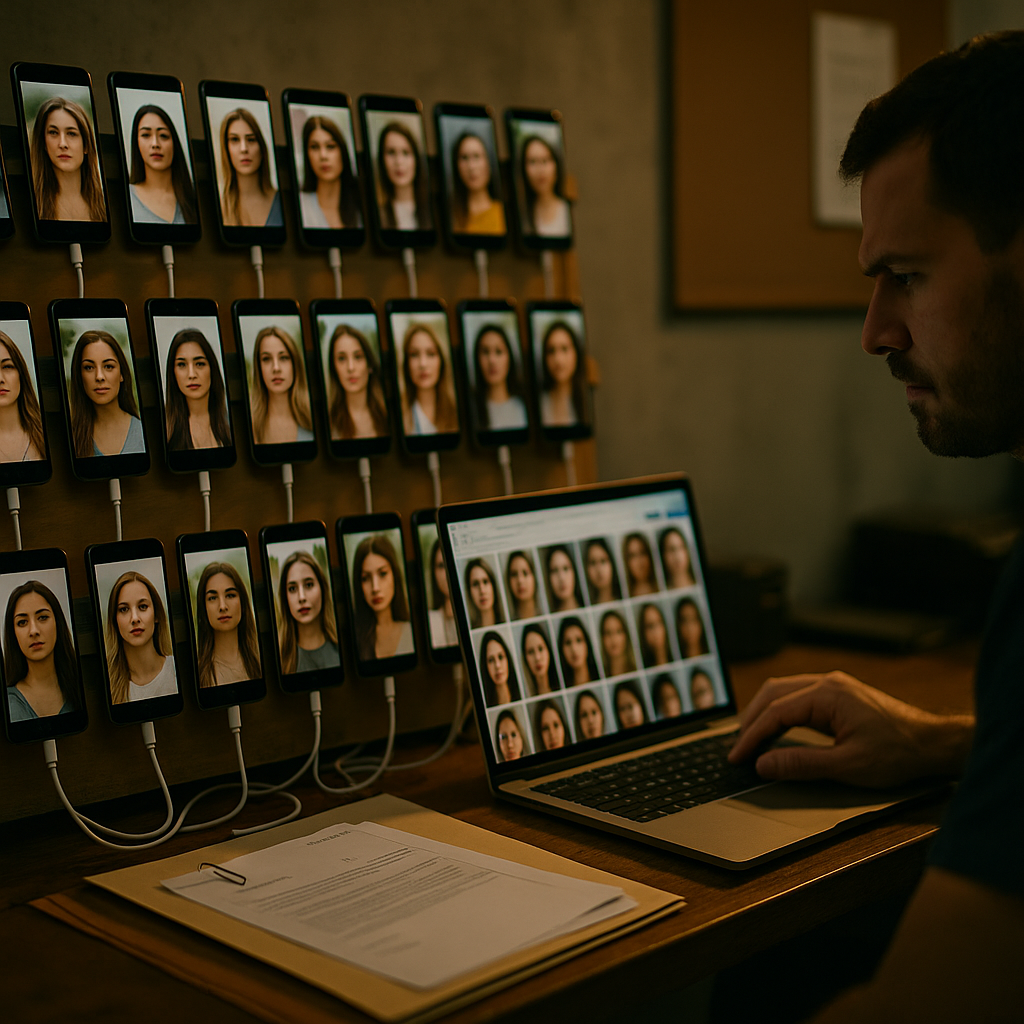
One threat actor, a handful of prompts, thousands of fake personas. That’s the math behind the fraud farms Anthropic detailed in its latest threat intelligence report, and it should terrify anyone signing off on influencer payouts. The report documents how criminal operators used AI models to generate synthetic identities, complete with backstories, posting histories, and engagement patterns convincing enough to pass casual review. For brands running creator programs at scale, this isn’t a security footnote. It’s a direct threat to budget integrity.
What Anthropic Actually Found
Anthropic’s threat intelligence team tracks misuse of its Claude models across categories like influence operations, cyberattacks, and fraud. In its most recent disclosure, the company detailed a case where a single operator used AI assistance to run a large-scale scheme involving fabricated online personas, complete with generated profile content and coordinated posting behavior designed to mimic organic creator activity. The operation wasn’t selling followers in bulk the way old-school bot farms did. It was building believable, individualized identities that could pass for real micro-influencers.
That distinction matters. Legacy fraud detection tools were built to catch obvious tells: identical bios, sequential account creation dates, engagement spikes with no corresponding content quality. AI-assisted fraud farms don’t leave those fingerprints. Each account gets its own voice, its own posting cadence, its own plausible niche. Multiply that by the scale AI enables, and you get a fraud problem that looks nothing like the one your vetting process was designed to catch.
The uncomfortable takeaway from Anthropic’s findings: the same generative tools your creators use to write captions faster are being weaponized to manufacture entire fake creator identities at scale.
Why Creator Vetting Was Already Fragile
Let’s be honest about where most influencer programs stood before this report. Vetting typically meant checking follower counts, glancing at engagement rate, maybe running a basic audit tool to flag purchased followers. That process was already struggling against sophisticated bot networks. Now layer in AI-generated content, synthetic profile photos, and personas trained to sound like real micro-creators in a specific niche, and you have a vetting gap wide enough to drive a campaign budget through.
Marketing teams that scaled creator programs fast, particularly in the nano and micro tiers where volume matters more than individual scrutiny, are the most exposed. When you’re managing 200 creator relationships instead of 20, manual review doesn’t scale. That’s exactly the gap AI-generated fraud is built to exploit.
It’s not just a brand safety issue either. Fake creator accounts distort attribution data, inflate perceived reach, and can quietly siphon payment budgets toward personas that never deliver real audience engagement. If your finance team is asking why influencer ROI numbers look softer than campaign reports suggest, this is one place to look. Related coverage on automated creator payouts shows how quickly AI-driven payment systems can move money before human review ever catches a problem.
The New Vetting Stack Brands Need
So what does credible account vetting look like when the fraud itself is AI-generated? A few practices are emerging among more sophisticated brand teams and agencies.
- Cross-platform identity verification. Confirm a creator’s presence spans multiple platforms with consistent history, not just a single account created recently with a suspiciously polished aesthetic.
- Content provenance checks. Reverse image search profile photos and sample content. AI-generated faces and stock-adjacent visuals are catchable, but only if someone actually looks.
- Behavioral pattern analysis over time. Real creators have inconsistent posting rhythms, off-topic tangents, and audience interactions that feel human. Synthetic accounts tend to be too consistent.
- Payment and tax documentation friction. Requiring real banking details, tax forms, and identity verification before onboarding filters out a large share of fraud farm activity, since most synthetic operations avoid anything that creates a legal paper trail.
- Third-party audit tools with AI detection built in. Legacy influencer fraud detection vendors are racing to add synthetic content detection. Ask vendors directly what their AI-generated persona detection rate looks like, not just their bot-follower detection stats.
None of these steps are individually new. What’s new is treating them as mandatory rather than optional, especially for programs running below the enterprise-influencer tier where scrutiny used to be lighter.
Platform Response Has Been Uneven
Meta, TikTok, and YouTube have all published policies around synthetic and AI-generated content, but enforcement lags policy. Meta’s transparency reporting acknowledges coordinated inauthentic behavior as an ongoing challenge, and platform trust and safety teams are candidly outmatched by the pace of generative AI misuse. That leaves brands and agencies carrying more of the vetting burden than platform terms of service would suggest they should.
This is consistent with a broader pattern covered elsewhere on this site: AI adoption inside marketing organizations is outpacing governance. Research on marketer AI adoption rates found that the overwhelming majority of teams have integrated AI tools into daily workflows, yet formal risk review processes remain the exception rather than the rule. Fraud farms are simply the adversarial mirror of that same dynamic. If your team is using AI to move faster, assume bad actors are using it to move faster too.
Where Compliance Teams Should Start
Legal and compliance functions are typically the last to hear about creator vetting problems, usually after a campaign has already run. That needs to flip. Given regulatory attention on disclosure and endorsement rules, a fake creator account isn’t just a fraud risk, it’s a compliance exposure if that account’s content and disclosures can’t be traced to a verifiable individual.
Practical steps compliance and marketing ops teams can implement immediately:
- Update creator onboarding contracts to require identity verification and warrant that the account is human-operated and not a synthetic persona.
- Build a documented audit trail for every creator vetting decision, so if a fraud farm account slips through, there’s a record of what checks were performed.
- Set a review cadence for AI detection vendors, since detection methods that work today may be obsolete within a couple of quarters as generative models improve.
- Coordinate with the agencies and platforms running your influencer marketplace to confirm what verification they’re already doing, so you’re not paying twice for the same check or assuming coverage that doesn’t exist.
Governance gaps like this rarely stay isolated to one function. Similar patterns have shown up in broader creator AI tooling, where automation speed has consistently outpaced platform governance controls, and where audit trail requirements have become a selling point rather than an afterthought for compliance-focused tooling vendors.
If your creator vetting process hasn’t changed in the last year, assume it’s already outdated. Fraud farms built on generative AI evolve faster than annual policy reviews can keep up with.
What This Means for Budget Allocation
There’s a temptation to treat fraud vetting as a pure cost center, another line item competing with campaign spend. That framing misses the actual ROI math. Every dollar paid to a synthetic account is a dollar with zero conversion potential and full reputational downside if discovered. Industry estimates on influencer fraud, tracked by firms like Statista, have long put fake engagement losses in the billions annually, and that was before generative AI made fraud production cheaper and more convincing.
Brands that build vetting costs into program budgets from the start, rather than treating detection as an emergency response after a campaign underperforms, consistently report cleaner attribution data and fewer disputes with finance over influencer marketing spend. Social platforms themselves, including guidance published by Sprout Social, increasingly recommend building fraud detection into vendor selection criteria rather than bolting it on afterward.
It’s also worth watching how creator content itself gets screened before it ever reaches a feed. Tools built for pre-publish content screening are starting to add identity and authenticity signals alongside brand safety checks, which suggests the market is already responding to exactly the problem Anthropic’s report surfaced.
The Bottom Line for Marketing Leaders
Anthropic’s threat intelligence report isn’t a security team problem to file away. It’s a direct signal to marketing leadership that the assumptions underlying creator vetting need an update. AI didn’t just make content creation faster, it made fraud production faster too, and the two trends are colliding in exactly the accounts brands are paying to reach audiences through.
Frequently Asked Questions
What did Anthropic’s threat intelligence report actually reveal about fraud farms?
The report documented cases where threat actors used AI models to generate large numbers of convincing synthetic personas, complete with fabricated content and posting histories, designed to mimic authentic creator or user activity for fraudulent purposes.
How is AI-generated creator fraud different from traditional bot networks?
Traditional bot farms often show obvious patterns like identical bios or synchronized activity. AI-generated fraud farms produce individualized personas with distinct voices and posting habits, making them much harder to detect with older audit tools built for pattern matching.
What should brands require during creator onboarding to reduce fraud risk?
Identity verification, tax and payment documentation, cross-platform history checks, and contractual warranties that the account is human-operated are becoming standard requirements among more cautious marketing teams.
Are influencer platforms responsible for catching synthetic creator accounts?
Platforms publish policies against inauthentic and synthetic behavior, but enforcement lags the pace of generative AI misuse, leaving brands and agencies to carry a larger share of the vetting responsibility than platform terms alone would suggest.
Does this affect small and mid-size creator programs or only enterprise brands?
It affects both, but mid-tier and micro-influencer programs are often more exposed since they run higher creator volumes with less individualized manual review, exactly the conditions synthetic fraud is designed to exploit.
Next step: Audit your current creator vetting checklist against the identity, content, and payment verification steps outlined above, and flag any gaps to your compliance team before your next campaign cycle, not after a fraud farm shows up in your payout report.
Frequently Asked Questions
What did Anthropic’s threat intelligence report actually reveal about fraud farms?
The report documented cases where threat actors used AI models to generate large numbers of convincing synthetic personas, complete with fabricated content and posting histories, designed to mimic authentic creator or user activity for fraudulent purposes.
How is AI-generated creator fraud different from traditional bot networks?
Traditional bot farms often show obvious patterns like identical bios or synchronized activity. AI-generated fraud farms produce individualized personas with distinct voices and posting habits, making them much harder to detect with older audit tools built for pattern matching.
What should brands require during creator onboarding to reduce fraud risk?
Identity verification, tax and payment documentation, cross-platform history checks, and contractual warranties that the account is human-operated are becoming standard requirements among more cautious marketing teams.
Are influencer platforms responsible for catching synthetic creator accounts?
Platforms publish policies against inauthentic and synthetic behavior, but enforcement lags the pace of generative AI misuse, leaving brands and agencies to carry a larger share of the vetting responsibility than platform terms alone would suggest.
Does this affect small and mid-size creator programs or only enterprise brands?
It affects both, but mid-tier and micro-influencer programs are often more exposed since they run higher creator volumes with less individualized manual review, exactly the conditions synthetic fraud is designed to exploit.
Top Influencer Marketing Agencies
The leading agencies shaping influencer marketing in 2026
Agencies ranked by campaign performance, client diversity, platform expertise, proven ROI, industry recognition, and client satisfaction. Assessed through verified case studies, reviews, and industry consultations.
Moburst

-
2

The Shelf
Boutique Beauty & Lifestyle Influencer AgencyA data-driven boutique agency specializing exclusively in beauty, wellness, and lifestyle influencer campaigns on Instagram and TikTok. Best for brands already focused on the beauty/personal care space that need curated, aesthetic-driven content.Clients: Pepsi, The Honest Company, Hims, Elf Cosmetics, Pure LeafVisit The Shelf → -
3

Audiencly
Niche Gaming & Esports Influencer AgencyA specialized agency focused exclusively on gaming and esports creators on YouTube, Twitch, and TikTok. Ideal if your campaign is 100% gaming-focused — from game launches to hardware and esports events.Clients: Epic Games, NordVPN, Ubisoft, Wargaming, Tencent GamesVisit Audiencly → -
4

Viral Nation
Global Influencer Marketing & Talent AgencyA dual talent management and marketing agency with proprietary brand safety tools and a global creator network spanning nano-influencers to celebrities across all major platforms.Clients: Meta, Activision Blizzard, Energizer, Aston Martin, WalmartVisit Viral Nation → -
5

The Influencer Marketing Factory
TikTok, Instagram & YouTube CampaignsA full-service agency with strong TikTok expertise, offering end-to-end campaign management from influencer discovery through performance reporting with a focus on platform-native content.Clients: Google, Snapchat, Universal Music, Bumble, YelpVisit TIMF → -
6

NeoReach
Enterprise Analytics & Influencer CampaignsAn enterprise-focused agency combining managed campaigns with a powerful self-service data platform for influencer search, audience analytics, and attribution modeling.Clients: Amazon, Airbnb, Netflix, Honda, The New York TimesVisit NeoReach → -
7

Ubiquitous
Creator-First Marketing PlatformA tech-driven platform combining self-service tools with managed campaign options, emphasizing speed and scalability for brands managing multiple influencer relationships.Clients: Lyft, Disney, Target, American Eagle, NetflixVisit Ubiquitous → -
8

Obviously
Scalable Enterprise Influencer CampaignsA tech-enabled agency built for high-volume campaigns, coordinating hundreds of creators simultaneously with end-to-end logistics, content rights management, and product seeding.Clients: Google, Ulta Beauty, Converse, AmazonVisit Obviously →