


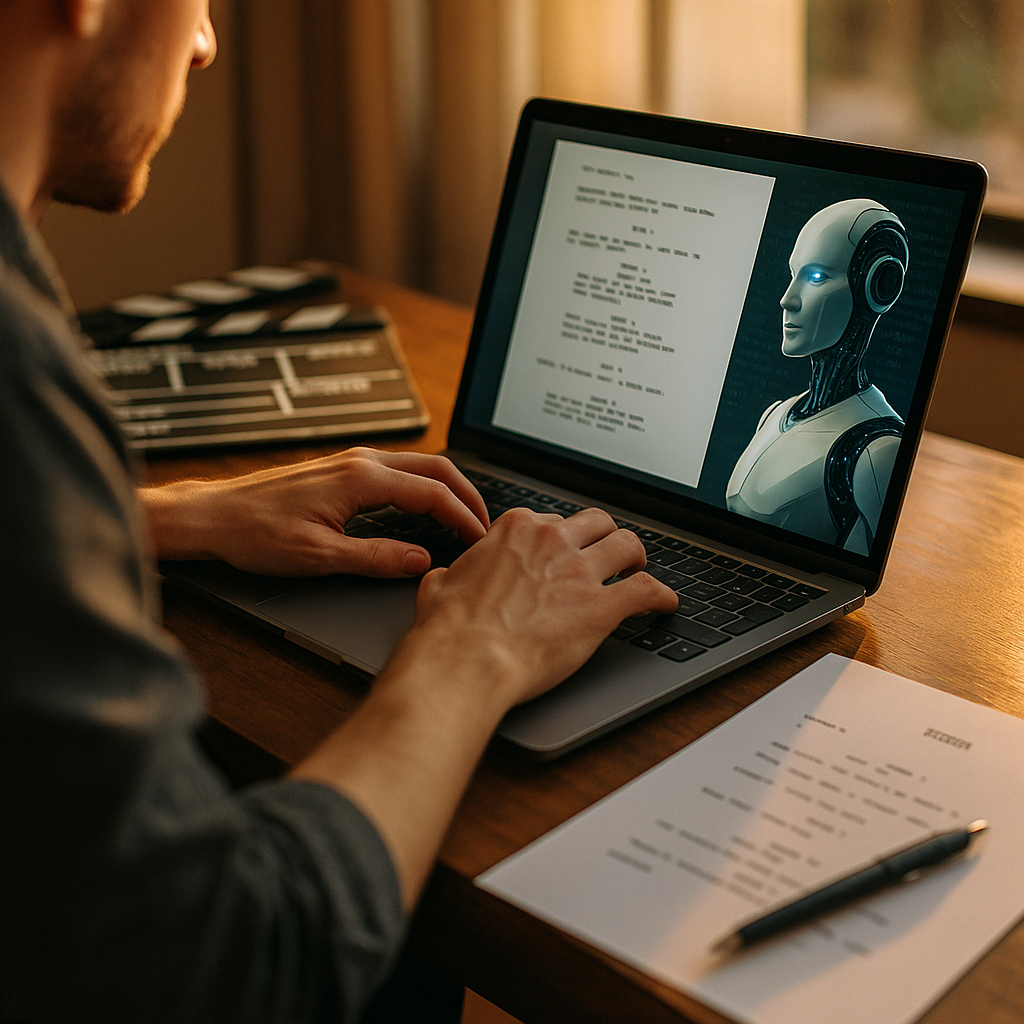
AI for automated scriptwriting based on top-performing viral hooks is changing how creators, brands, and agencies produce short-form videos, ads, and podcasts in 2025. Instead of guessing what will grab attention, teams can learn from proven intros, structure scripts faster, and test variations at scale. Used responsibly, it boosts creativity rather than replacing it. So how do you turn viral patterns into repeatable results?
Viral hooks analysis: what makes openings perform
“Hook” usually means the first 1–3 seconds for short-form video (or the first 1–2 sentences for text/audio). Top-performing hooks create an immediate reason to keep watching. When you analyze a library of winning openings across your niche, a few measurable elements show up repeatedly:
- Clarity + specificity: A clear promise (“Here’s the exact template…”) outperforms vague hype.
- Fast context: Viewers understand what’s happening without needing backstory.
- Curiosity gap with boundaries: The audience senses a missing piece, but not confusion (“Most people do X—here’s why it fails”).
- Immediate value: A tip, a “do this, not that,” or a quick win in the first beat.
- Credible tension: A surprising claim paired with a reason to believe (“I tested 12 options…”).
Automated scriptwriting works best when it starts from real performance signals. That means capturing examples of hooks that already perform in your channel category, then breaking them into reusable patterns: claim style, pacing, point of view, length, and payoff type. The goal is not to clone; it’s to encode what your audience consistently responds to.
Practical step: Build a “hook bank” of 50–200 openings from top posts in your niche, label each by pattern (problem/solution, contrarian, proof-first, challenge, story-start, before/after), and track which patterns correlate with retention and completion in your own analytics.
Automated scriptwriting workflow: from idea to publish-ready drafts
A strong AI workflow turns raw ideas into structured scripts with minimal friction. The best setups look less like “press a button, get a script” and more like a repeatable pipeline with human checkpoints. In 2025, a practical workflow typically includes:
- Input brief: Topic, audience stage, goal (views, leads, sales), and format (15s reel, 60s explainer, 30s ad, 5-min YouTube).
- Hook selection: Pick 2–5 hook patterns from your hook bank that match the topic and intent.
- Outline generation: Beat-by-beat structure (hook → promise → proof → steps → CTA), tuned to platform pacing.
- Draft scripting: Voice, length, scene direction, b-roll notes, on-screen text, and CTA variants.
- Compliance and brand check: Claims, disclaimers, prohibited wording, and tone alignment.
- Export and testing: Multiple hook variants, caption versions, and thumbnails (if relevant) for A/B tests.
To avoid generic output, your brief must carry constraints. AI performs best when you specify what to exclude (no exaggeration, no jargon, no “game-changer”), and when you add proof assets (product specs, results, testimonials you are allowed to use, study links, or internal data).
Common follow-up question: “How many variations should I generate?” For short-form, create 5–10 hook variants per topic, then 2–3 full scripts from the best hooks. That keeps creative options high without burying your team in review work.
Hook templates for short-form video: patterns AI can remix safely
AI can generate hooks quickly, but you need guardrails so the output stays accurate, ethical, and on-brand. Start with proven patterns, then let the model produce variations. Here are hook templates that work well across niches and are easy to validate:
- “Do this, not that”: “Stop doing X when you want Y—do this instead.”
- Proof-first: “I got [result] in [time]. Here’s what actually mattered.”
- Contrarian with reason: “The ‘best practice’ for X is hurting your Y—because…”
- Fast list promise: “Three mistakes that make X fail—and the fix for each.”
- Myth vs reality: “You don’t need X to get Y. You need Z.”
- Before/after: “Before: [pain]. After: [outcome]. Here’s the change.”
- Micro-story start: “I almost quit because of X. Then I tried this…”
Safe remixing rule: Keep the structure consistent and change the specifics (audience, situation, mechanism, and payoff). This avoids plagiarism while preserving performance characteristics.
Another follow-up question: “How do I stop AI from making exaggerated claims?” Add explicit constraints: “No guaranteed results. No medical/financial promises. Use ‘may’ and ‘often’ when evidence is limited. Cite the source in the script notes when you reference data.” Then require a human review before publishing.
AI prompt engineering for scripts: getting consistent, on-brand output
Prompt quality determines whether automated scriptwriting saves time or creates cleanup work. In 2025, the most reliable approach is a prompt stack: separate prompts for hook ideation, outline, full script, and polish—each with a clear scoring rubric.
Use a brand voice card (2–3 paragraphs) that defines tone, pacing, forbidden phrases, and examples of “good” and “bad” lines. Add audience context: what they believe, what they fear, what they want, and what they already tried.
Example prompt components you can reuse:
- Role: “You are a performance scriptwriter for short-form video.”
- Objective: “Increase 3-second hold and average watch time while remaining truthful.”
- Inputs: Topic, offer, unique mechanism, proof, objections, CTA.
- Constraints: Word count, reading grade level, banned claims, platform style, brand terms.
- Output format: Hook options → chosen hook → beat sheet → final script with on-screen text and b-roll notes.
- Self-check: “List 5 ways the script could be misleading; revise to fix them.”
Scoring rubric (quick): Rate each hook 1–10 for clarity, novelty, credibility, and alignment with viewer intent. Then pick the top 2 and produce two different scripts: one “fast and punchy,” one “calm and explanatory.” This answers a common reality: the same topic can win with different delivery styles depending on the creator’s on-camera presence.
EEAT and content integrity: staying credible with automated scripts
Automation can scale output, but it can also scale mistakes. To align with Google’s EEAT principles—experience, expertise, authoritativeness, and trust—your script process needs explicit safeguards.
Experience: Include lived details you can stand behind: what you tested, what changed, what failed, and what you learned. If you did not run the test, don’t imply you did. AI can draft, but your team must supply real experience inputs.
Expertise: Use accurate terminology and explain it simply. For regulated or sensitive topics (health, finance, legal), involve qualified reviewers. Build “approved snippets” for definitions and disclaimers to keep consistency.
Authoritativeness: Reference reputable sources when citing stats or research, and keep citations in your production notes even if they don’t appear on-screen. If you mention results, ensure they reflect typical outcomes or clearly label exceptional cases.
Trust: Avoid clickbait that breaks the promise. A strong hook should match the payoff. If the hook says “3 steps,” deliver three steps. If it says “free,” don’t gate it later. Trust is retention over time.
Operational guardrails that work:
- Claim checklist: Flag superlatives (“best,” “guaranteed,” “cure”), timeline promises, and “everyone” statements.
- Fact verification: Require sources for any numerical claim, ranking, or comparison.
- Plagiarism control: Prohibit copying creator-specific phrasing; focus on pattern-level learning.
- Disclosure alignment: If content is sponsored or affiliate-based, ensure disclosures match platform policy.
- Quality sampling: Audit a percentage of scripts weekly for accuracy and brand consistency.
These steps also protect performance. In short-form, misleading hooks often produce a high initial spike and then a sharp retention drop—platforms learn that mismatch quickly. Credible scripts with honest hooks tend to compound.
Performance testing and optimization: turning viral data into repeatable wins
AI helps you generate more shots on goal, but measurement decides what becomes your new “house style.” Treat every script as a testable hypothesis: “This hook pattern will increase 3-second hold for this audience.” Then track results and feed them back into the system.
Key metrics to monitor:
- 3-second hold: Whether the hook and visuals stop the scroll.
- Average watch time and retention curve: Where people drop and why.
- Completion rate: Especially for videos under 30 seconds.
- Saves/shares: A strong signal of perceived utility.
- Click-through (if applicable): For ads or link-in-bio funnels.
How to run clean hook tests: Keep the body identical and swap only the first line (and matching on-screen text). This isolates the hook’s impact. Once you find a winning opener, test the second beat (promise/roadmap) and then the CTA.
What to feed back into AI: Your top-performing hooks with annotations: audience, platform, length, topic, and what made it work. Also feed failures: “High hold, low retention because the hook overpromised.” Over time, your model prompts become smarter because your instructions become more specific.
Tooling note (without vendor hype): Many teams combine a transcription tool (to capture hooks), a spreadsheet or database (to tag patterns), an LLM (to draft scripts), and a simple QA workflow (to approve claims). The system matters more than any single tool.
FAQs
Is using AI trained on viral hooks plagiarism?
It doesn’t have to be. Learning from patterns (structure, pacing, promise type) is different from copying exact phrasing, scenes, or creator-specific signatures. Build your own hook bank, rewrite in your brand voice, and avoid lifting distinctive lines.
What’s the best way to collect “top-performing” hooks?
Start with content in your niche that clearly outperformed the creator’s baseline. Save the video, transcribe the first 3–10 seconds, and log the hook with tags (pattern, emotion, promise, proof type, length). Prioritize platforms and audiences similar to yours.
How do I keep automated scripts truthful and compliant?
Use a claim checklist, require sources for stats, and ban guaranteed outcomes. For sensitive topics, add expert review. Make the AI run a self-critique step that flags potentially misleading lines before human approval.
Will AI-written scripts hurt my brand voice?
Only if you skip constraints. Use a brand voice card, include example scripts you wrote, and enforce “forbidden phrases.” Also keep a human editor in the loop to ensure the final script sounds like you.
How many hooks should I test per topic?
For short-form, test 3–5 hook variants per topic as a starting point. If a topic is strategically important, expand to 8–12 hooks, then produce 2–3 full scripts from the top performers.
Can AI help with visuals and editing notes too?
Yes. Ask for b-roll ideas, on-screen text, cut timing suggestions, and caption alternatives. You’ll still need to match suggestions to your actual footage style and production capacity.
Automated scriptwriting works when you treat viral hooks as measurable patterns, not magic lines. In 2025, AI can draft fast, remix proven openings, and produce consistent structures—but performance comes from accurate promises, real proof, and disciplined testing. Build a hook bank, set strict truth and voice constraints, then iterate using retention data. The takeaway: scale creativity responsibly, and let results—not hype—guide your next script.