


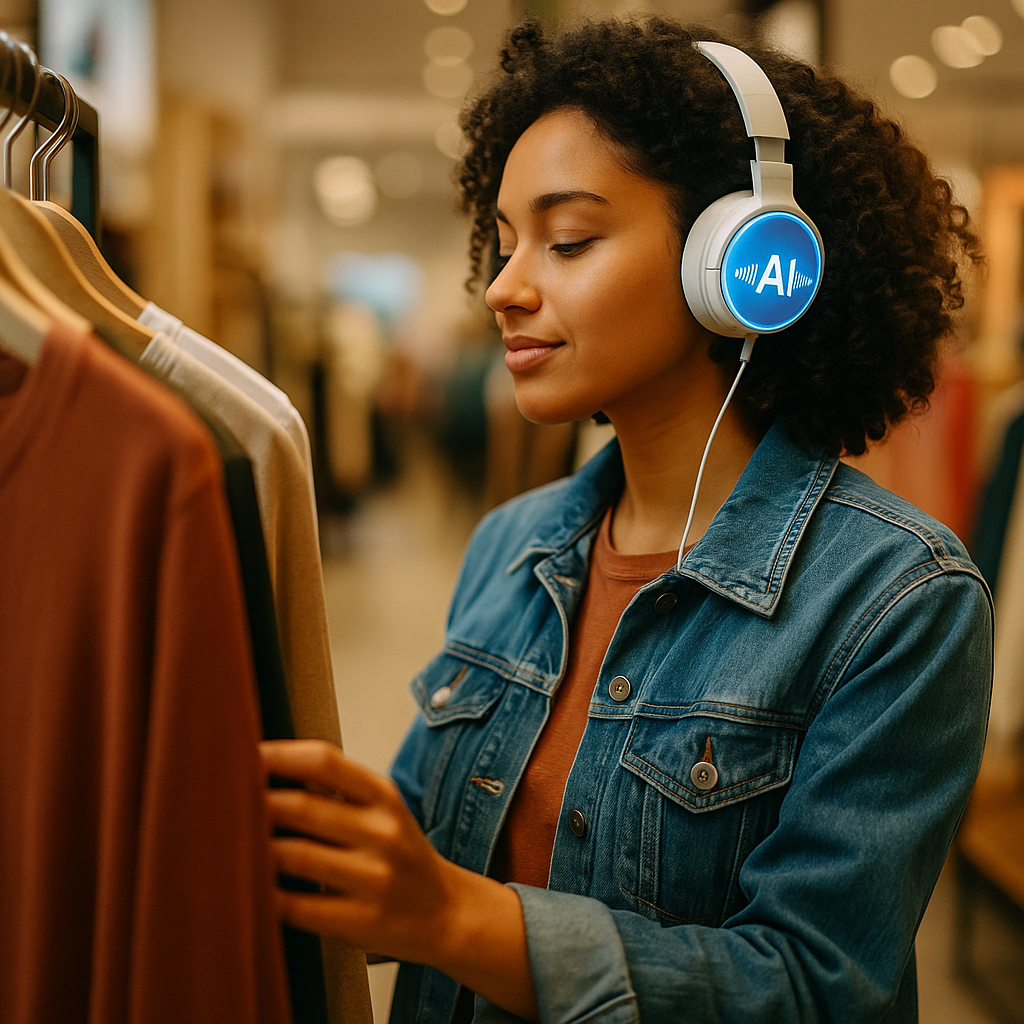
In 2025, retail is no longer judged only by visuals and service; it’s judged by how it feels. Using AI to Generate Hyper Niche Soundscapes for Branded Retail helps brands design audio that fits a specific store, audience, and moment—without relying on generic playlists. When sound becomes a controllable brand asset, it can improve dwell time, mood, and recall. The question is: how do you do it responsibly and effectively?
AI-generated soundscapes for retail brand identity
Sound is a brand signal. In physical retail, it can reinforce positioning as clearly as lighting, materials, and scent. AI-generated soundscapes add a new capability: audio that adapts to a brand’s micro-context—the exact store format, neighborhood, time of day, and campaign message.
“Hyper niche” means the sound is tailored beyond genre. It can incorporate tempo ranges that match your average footfall speed, instrument palettes aligned to cultural cues of your customer segments, and spatial mixing that supports store layout. For example, a premium skincare boutique may need a calm, breathable ambience with minimal rhythmic intrusion, while a streetwear drop zone may need forward motion and texture without masking staff-customer conversation.
To build identity instead of noise, treat the soundscape like a design system:
- Sonic brand pillars: 3–5 descriptors tied to brand values (e.g., “clean,” “modern,” “warm,” “precision,” “playful”).
- Guardrails: constraints on tempo, brightness, density, and vocal presence to prevent drift.
- Use cases: browse mode, peak traffic, queue, fitting room, high-consideration zones, and closing routine.
- Accessibility intent: volume ceilings, reduced harsh frequencies, and minimized sudden changes.
This approach answers a common follow-up question: Will AI make every store sound the same? Not if you define your “sonic DNA” first and force the model to create within it. The goal isn’t novelty; it’s recognizable consistency with situational flexibility.
Hyper niche audio branding with customer segmentation
Retail personalization often stops at CRM emails and app offers. Sound can personalize too—at the segment level—without being invasive. Hyper niche soundscapes start with segmentation that is meaningful in-store:
- Mission-based segments: fast replenishment vs. exploratory browsing.
- Product-zone segments: performance gear vs. lifestyle vs. accessories.
- Daypart segments: lunch rush vs. after-work peak vs. weekend family flow.
- Location segments: tourist-heavy flagships vs. local convenience formats.
AI systems can map each segment to audio parameters (not just playlists). You can specify tempo bands (e.g., 82–96 BPM for calm browsing), spectral balance (less high-frequency glare for comfort), dynamic range (stable loudness to reduce fatigue), and event cues (gentle transitions at staff shift changes).
A practical method is to build “sound modules”:
- Bed layer: continuous ambience that sets the emotional baseline.
- Texture layer: subtle rhythmic or tonal elements for brand character.
- Moment layer: short, controlled motifs tied to promotions or seasonal storytelling.
Then you generate variations per segment while preserving brand cohesion. This prevents the common pitfall: switching between unrelated tracks that break immersion and undermine perceived quality.
Another likely question is whether customers will notice the personalization. Some will, but the best outcome is that they simply feel the store is “right.” Hyper niche soundscapes aim for comfort, clarity, and congruence—not gimmicks.
Generative music workflow and sound design prompts
Implementing AI soundscapes requires a workflow that blends creative direction with operational discipline. In 2025, most brands succeed when they treat generative audio like a production pipeline rather than a one-off experiment.
1) Define constraints before you generate
- Brand intent: what should shoppers feel in the first 30 seconds?
- Speech clarity target: audio must not compete with staff or announcements.
- Volume policy: clear dB guidance with enforcement at device level.
- Loop strategy: avoid obvious repetition; plan long-form evolution.
2) Create a “prompt brief” instead of ad-hoc prompts
Prompts should specify attributes rather than famous artists or copyrighted references. A useful brief includes:
- Tempo range and rhythmic density: “light pulse, sparse percussion.”
- Instrumentation palette: “soft synth pads, brushed textures, no prominent leads.”
- Harmony and mood: “consonant, minimal tension, optimistic.”
- Mix constraints: “no sharp transients, controlled highs, stable loudness.”
- Structure: “slow evolution over 20–30 minutes, seamless transitions.”
3) Generate, then curate like a label
Even with strong prompts, AI outputs vary. Build a review checklist for:
- Brand fit: does it match the sonic pillars?
- Listener comfort: no fatigue-inducing frequencies or abrupt shifts.
- In-store usability: supports conversation; doesn’t mask POS beeps or safety cues.
- Technical quality: clean rendering, no artifacts, consistent loudness.
4) Prepare versions for different acoustic realities
A flagship with high ceilings needs different EQ and dynamics than a small boutique with reflective walls. Plan at least two mixes: a “bright” and a “soft” version, and validate on actual store speakers. This is where many rollouts fail: sound that works on studio monitors can become harsh or muddy in real stores.
In-store experience optimization with adaptive soundscapes
Static audio is easy to deploy but rarely optimal. Adaptive soundscapes respond to store conditions while staying within brand guardrails. In 2025, this can be done without creepy personalization by using aggregated operational signals instead of individual tracking.
Common inputs for adaptation include:
- Traffic level: higher density can justify slightly higher energy while keeping volume stable.
- Queue length: reduce perceived wait time with smoother, more engaging textures.
- Daypart: calm mornings, more momentum after work, softer close-down routine.
- Zone triggers: fitting rooms may benefit from calmer, lower-frequency-leaning sound.
Answering the next question—Does adaptive audio actually improve performance?—requires measurement. Use tests that respect retail reality:
- A/B by store-week: compare matched stores across similar weeks and promotions.
- Zone-based observation: staff notes on customer interaction ease and comfort.
- Operational KPIs: dwell time proxies, conversion by hour, queue abandonment, returns behavior.
- Customer feedback: short post-visit surveys that ask about “comfort” and “atmosphere,” not “music taste.”
Don’t over-claim causality. Sound is one variable among merchandising, staffing, pricing, and weather. But audio is one of the few environmental levers you can change quickly and test systematically.
Also plan for the human factor: empower store managers with a limited control panel. Give them a “calm / standard / energetic” selector and a hard volume ceiling. Too many controls create inconsistency; too few create frustration and workarounds.
Audio licensing, ethics, and compliance for AI music
EEAT-driven implementation means you address legal and ethical risk upfront. AI audio for retail touches copyright, licensing, privacy, and brand safety. Treat this section as part of your rollout plan, not a footnote.
Rights and licensing
- Commercial playback: retail environments typically require public performance rights even when music is “original.” Confirm requirements for your territory and venue type.
- Training data and model terms: choose vendors that clearly state how models are trained and what rights you receive to outputs.
- Output ownership: ensure your contract covers usage across stores, regions, and campaign durations.
- Sound-alike risk: avoid prompts that imitate identifiable artists or specific recordings.
Privacy and data minimization
If you adapt sound using sensors, prioritize aggregated, non-identifying signals. Avoid microphone-based inference unless you have a compelling reason, explicit disclosure, and strong governance. Most retailers can achieve effective adaptation without collecting personal data at all.
Accessibility and inclusion
- Volume discipline: consistent loudness prevents stress and supports neurodivergent customers.
- Frequency comfort: reduce piercing high frequencies and excessive bass resonance that can cause discomfort.
- Predictable transitions: minimize sudden drops or stingers that can startle.
Brand safety
AI can generate unexpected elements, including accidental vocal-like artifacts. Maintain a human approval gate, keep an audit trail of versions, and use a rollback mechanism in case a soundscape causes complaints or operational issues.
Retail audio strategy: implementation, governance, and ROI
To make AI soundscapes a durable capability, you need ownership, processes, and a realistic success definition. This is where EEAT shows up: expertise in acoustic realities, authoritativeness in governance, and trust through consistency and transparency.
Build a cross-functional owner group
- Brand/creative: defines sonic pillars and campaign alignment.
- Store operations: ensures usability and manager enablement.
- IT/security: manages devices, updates, and network reliability.
- Legal/procurement: handles licensing, vendor terms, and compliance.
Start with a pilot that answers specific questions
- Does it improve the perceived atmosphere? Use short surveys and staff feedback.
- Does it support conversation and selling? Validate speech clarity in peak hours.
- Does it reduce operational friction? Measure manager time spent fixing audio issues.
Define ROI in more than one way
Soundscape ROI can show up as:
- Brand lift: stronger recall of store experience and higher “premium” perception.
- Operational stability: fewer complaints, fewer manual playlist interventions.
- Commercial impact: improved conversion during key dayparts or reduced queue abandonment.
Also address a common executive question: Why not just use curated playlists? Curated playlists can work, but they struggle with localization, campaign synchronization, and acoustic tuning at scale. AI-generated soundscapes, governed well, provide consistent brand identity with controlled variation—without the abruptness and licensing complexity of track-based programming.
FAQs
What is a hyper niche soundscape in retail?
A hyper niche soundscape is a purpose-built audio environment tailored to a specific store context—such as location, daypart, customer mission, and product zone—using controlled parameters like tempo, tonal color, and dynamics. It goes beyond genre playlists to deliver consistent brand feel with situational variation.
Do AI-generated soundscapes replace music playlists completely?
Not necessarily. Many retailers use a hybrid approach: AI soundscapes for continuous ambience and transitions, with licensed songs reserved for explicit moments such as launches or events. The best mix depends on brand positioning and operational needs.
How do you keep AI audio on-brand across hundreds of stores?
Use a sonic style guide (pillars and guardrails), a standardized prompt brief, and a human approval workflow. Then deploy centrally managed versions with limited store-level controls and clear loudness policies.
Is AI retail audio legal to use in-store?
It can be, but legality depends on vendor terms, rights to outputs, and public performance requirements in your region. Choose vendors with transparent model/training disclosures, avoid imitation prompts, and confirm commercial playback obligations with legal counsel.
Will adaptive soundscapes require customer tracking?
No. Effective adaptation can rely on aggregated operational signals such as traffic density, queue length, and daypart scheduling. If any sensors are used, data minimization and clear disclosure help protect trust.
How long should a retail soundscape loop be?
Long enough to avoid noticeable repetition during an average visit. Many brands aim for slow-evolving sessions that can run for extended periods with seamless variation, supplemented by time-of-day “modes” to match store rhythm.
AI soundscapes are becoming a practical tool for retail teams that want consistent brand atmosphere without generic playlists. When you define sonic identity, build a disciplined generation workflow, and deploy adaptive modes with strong governance, audio becomes measurable and scalable. The takeaway for 2025: treat sound like a designed system, not background filler, and you can improve comfort, clarity, and brand recall across every store.