


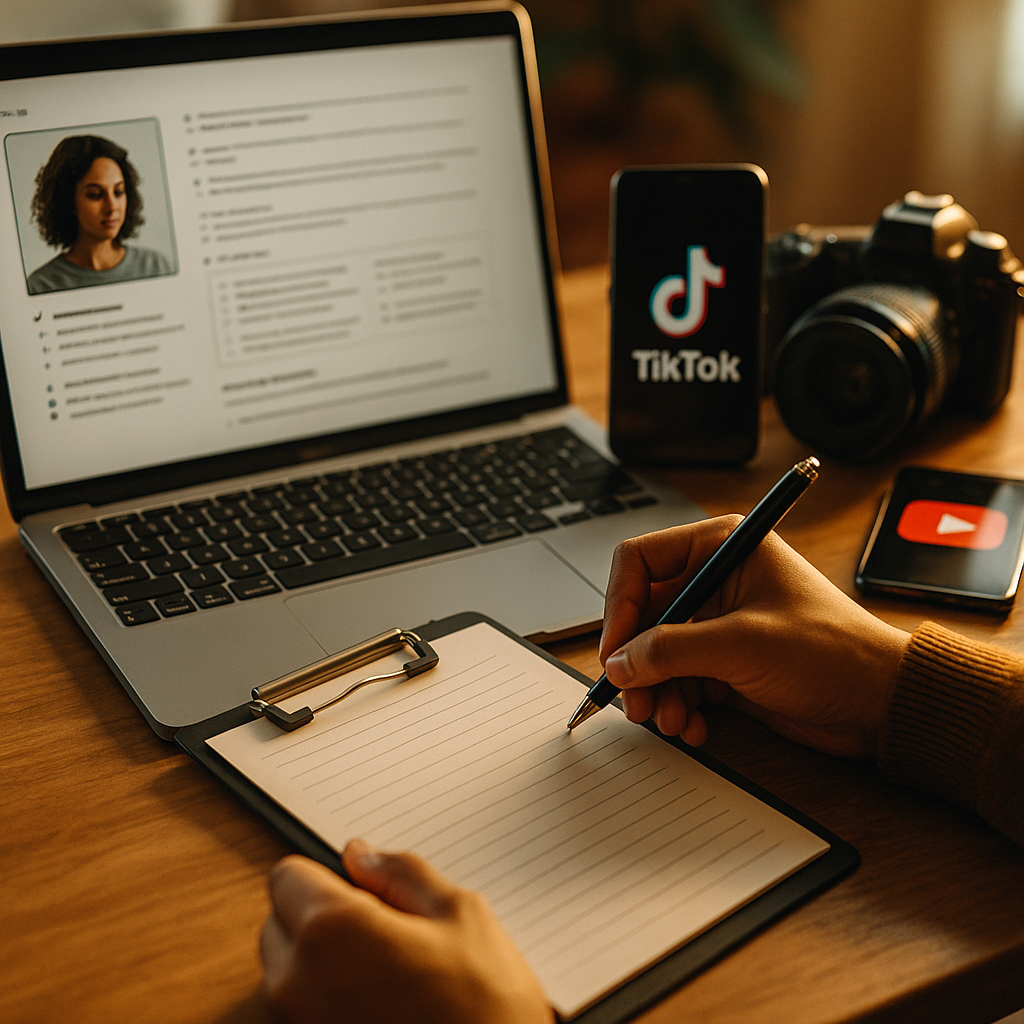
TikTok is now the second-largest search engine among users under 35, and YouTube Shorts drive a measurable share of their parent platform’s search traffic. Yet most brand video briefs are still written to win the feed. That mismatch is costing you discoverable inventory.
Why Search-Optimized Short-Form Is a Different Animal
Feed recommendation algorithms reward novelty, watch-time loops, and emotional spikes. Search discovery rewards specificity, answer-clarity, and keyword alignment. These are not the same creative objectives, and conflating them in a single brief produces video that does neither well.
When a user types “best moisturizer for combination skin under $30” into TikTok or YouTube, they are expressing purchase intent at a level of specificity that no passive feed scroll can replicate. The video that surfaces in that result needs to answer the query in its first three seconds, confirm its relevance through on-screen text, and deliver a clear verdict before the viewer has a reason to leave. That is a journalism brief, not an entertainment brief.
AI indexing is accelerating the stakes. Both TikTok’s search layer and Google’s integration of YouTube Shorts into standard SERP features use machine-learning models that parse spoken language, on-screen text overlays, caption files, and engagement signals to determine topical authority. A brief that does not account for all four of those signal layers is leaving search ranking on the table.
Brands that brief creators for search intent rather than feed performance are building a durable discovery asset. Feed-optimized content depreciates within 72 hours. Search-optimized content compounds over months.
The Signal Architecture Your Brief Must Address
Before writing a single line of production direction, your team needs to understand the four indexable signal layers that AI ranking systems parse in short-form video.
Spoken keyword alignment. Auto-transcription on both TikTok and YouTube converts speech to text, and that transcript is indexed. If your creator never says the target keyword phrase aloud, the video has a structural disadvantage in search regardless of how good the visuals are. Your brief must include a “must-say” phrase list, not as an ad-read instruction, but as natural scripting guidance woven into the opening hook.
On-screen text overlays. Text burned into the video or added via native caption tools creates a second indexable layer. This is particularly powerful for compound keyword phrases that feel unnatural to speak but read cleanly on screen. A skincare creator might never naturally say “fragrance-free hyaluronic acid serum for sensitive skin,” but that phrase as a lower-third title card serves the search index without sounding scripted.
Caption file quality. Auto-generated captions are noisy. Brief creators to upload clean .SRT files or use tools like Descript or Kapwing to produce accurate captions. YouTube’s indexing weight on caption accuracy is well-documented in the SEO practitioner community, and TikTok’s auto-cap feature has known error rates on product names, ingredient terms, and brand terminology. Clean captions are a production deliverable, not an afterthought.
Engagement velocity relative to query competition. Save rate, comment rate, and rewatch rate all feed into whether a video climbs or stalls in search results. Your brief should include a CTA calibrated to search context: “save this for your next shopping trip” outperforms “drop a comment” when the viewer is in research mode.
How to Structure the Brief Itself
A search-optimized video snippet brief has six components that differ meaningfully from a standard influencer content brief. Your AI-first creator brief framework should treat these as non-negotiable fields.
1. Target query string. Specify the exact keyword phrase the video is meant to surface for. Not a topic, a query. “Sustainable running shoes” is a topic. “Are sustainable running shoes actually durable?” is a query. This framing forces production direction toward answer-structure content.
2. Hook script (seconds 0-3). The hook must contain or paraphrase the target query string. The viewer who searched for this query needs immediate confirmation they found the right video. Brief this as a verbatim line suggestion, not a creative direction like “open with something surprising.” Specificity here is not creative constraint; it is search infrastructure.
3. Must-say keyword phrases. List 3-5 phrases that should appear spoken within the video. Include the primary query string, one or two semantic variants, and any brand or product terminology that should be correctly indexed. Flag these as “indexing language” in the brief so creators understand the functional purpose rather than treating them as clunky talking points.
4. On-screen text requirements. Specify the title card (first overlay, typically seconds 0-2), any mid-video callout text, and the closing card. Give exact copy for the title card. For TikTok search and commerce contexts, the title card is your H1 equivalent. Treat it that way.
5. Caption file delivery spec. Require an accurate caption file as a deliverable alongside the video file. Specify the format (.SRT preferred for YouTube) and flag that product names, brand terms, and ingredient language must be manually corrected before upload.
6. Search-context CTA. The closing call-to-action must match the viewer’s search-mode behavior. Save prompts, playlist links, and “watch next” suggestions outperform generic engagement asks when the viewer arrived via search rather than the feed.
Platform-Specific Production Nuances
TikTok and YouTube Shorts are not interchangeable surfaces, even for the same target query. Brief your creators with platform-specific direction rather than a single asset repurposed across both.
On TikTok, TikTok’s search ranking signals weight spoken keyword density more heavily in the first ten seconds. The native text overlay tool also has a documented relationship with search surfacing, so creators using third-party editing tools should replicate native caption styling where possible. TikTok’s search results page also surfaces creator profile authority, meaning that creators who have established topical clusters around a subject category will outrank one-off posts even with lower individual video engagement.
On YouTube Shorts, the integration with the standard Google search index means that Shorts can surface in Google SERP features, not just YouTube’s own search. This dramatically expands the potential discovery surface. Brief creators to include a verbal reference to the video’s context (e.g., “here on YouTube”) and to maintain consistent keyword language between the Shorts title, description, and spoken content. The description field on YouTube Shorts is indexed; brief creators to treat the first 100 characters of description as a keyword-dense meta sentence, not an afterthought.
For brands running content across both platforms, a modular brief for multi-surface distribution is the operationally efficient approach: one core keyword strategy, platform-specific hook variations, and separate caption file deliverables per platform.
AI Tools That Belong in Your Production Workflow
The shift toward search-optimized short-form production is being accelerated by AI tools that can inform brief writing, keyword targeting, and post-production compliance simultaneously.
For keyword research at the video level, tools like HubSpot’s content tools and dedicated video SEO platforms such as vidIQ and TubeBuddy provide query-volume data specific to YouTube. TikTok’s own Creative Center surfaces trending search terms by category, which is a direct window into what queries are gaining volume before mainstream SEO tools index them. Brief writers should pull data from both sources and reconcile them into a unified target query list before committing to production direction.
For transcript accuracy, Descript’s AI correction layer significantly reduces caption error rates for complex product language. For brands in regulated categories (supplements, financial services, pharma-adjacent), clean captions are also a compliance surface: misheard or misrendered claims in auto-captions have drawn FTC scrutiny in disclosure contexts. Check the FTC’s endorsement guidance for disclosure placement requirements that now explicitly address caption visibility in short-form video.
AI keyword tools tell you what people are searching for. Your brief tells creators how to answer it on camera. The gap between those two steps is where most brand search programs fail.
For brands operating at scale across multiple creators and queries, AI brief generation tools are emerging that can take a target keyword, a product URL, and a platform selection and output a draft production brief in minutes. These outputs still require human editorial review, particularly for brand voice and compliance language, but they significantly compress the briefing cycle. The creators who perform best with these briefs are those who understand the underlying search logic, not just the specific instructions. Consider including a one-page “why search intent matters” explainer as a brief appendix for creators who are newer to search-optimized production. You can see how this pairs with briefs designed for AI citation contexts, where the same principles of keyword-explicit language apply.
Measuring What Feed Metrics Can’t Tell You
Search-optimized content requires a different measurement framework. Feed performance metrics (impressions, reach, 3-second view rate) are largely irrelevant to a video that is meant to accrue search traffic over 90 days, not spike on day one.
Track search-sourced views as a separate line item in your reporting. Both TikTok Analytics and YouTube Studio now provide traffic source breakdowns that distinguish search-driven views from feed-driven views. Build a reporting cadence that looks at 30-day, 60-day, and 90-day search view accumulation rather than the standard 7-day content window. For brands investing in UGC paid amplification alongside organic search content, compare the cost-per-view of paid amplified feed content against the organic search view accumulation of well-optimized snippets. The latter often delivers a lower effective CPV at the 90-day mark.
Keyword ranking position for target queries should be tracked weekly using YouTube-specific rank trackers. Conversion attribution from search-sourced video views requires UTM parameters in any linked content (bio links, pinned comments, or Shorts descriptions) and a clean view-through attribution window set to match the longer consideration cycles typical of search-intent viewers.
Benchmark against Statista’s video marketing data for category-level search volume trends to contextualize your ranking progress against overall query growth in your vertical.
The Brief Is the Product
Feed-optimized briefs produce disposable content. Search-optimized briefs produce discoverable assets that work while you sleep. Start your next production cycle by pulling the top 10 unanswered queries in your category from TikTok Creative Center and YouTube’s autocomplete, then build one brief per query with the six-component structure above. That is a search content program, not just a creator campaign.
Frequently Asked Questions
What is the difference between a search-optimized video brief and a standard influencer brief?
A standard influencer brief focuses on brand messaging, tone, and feed performance metrics like watch time and shares. A search-optimized video brief specifies a target query string, required spoken keyword phrases, on-screen text copy, and caption file deliverables. The goal shifts from capturing passive scroll attention to answering an active search query with enough relevance and clarity to rank in platform search results over time.
How does AI indexing affect short-form video search ranking on TikTok and YouTube?
AI models on both platforms parse multiple signal layers simultaneously: spoken transcripts, on-screen text overlays, caption file text, and engagement signals such as save rate and rewatch rate. Briefs that do not account for all four signal layers produce content that may perform in the feed but lacks the keyword density and structural clarity needed to rank in search. Clean captions and explicit keyword language in the first ten seconds of video are the two highest-leverage levers.
Should brands create separate videos for TikTok search and YouTube Shorts search?
Yes, for best results. While the core keyword strategy can be shared, TikTok and YouTube have different ranking signals and different integration points with broader search ecosystems. YouTube Shorts can surface in Google SERP features, which expands the discovery surface significantly. Platform-specific hook variations, description copy, and caption file formats should be built as separate deliverables within a modular brief structure.
What tools should brands use to identify target query strings for video briefs?
TikTok Creative Center provides trending search term data by category and is one of the few tools that shows query volume within TikTok’s own search layer. For YouTube, vidIQ and TubeBuddy provide query-specific search volume and competition data. YouTube’s autocomplete and the “searches related to” feature at the bottom of search results pages are also reliable low-cost signals. Combine TikTok and YouTube data into a unified target query list before beginning brief production.
How should brands measure the ROI of search-optimized short-form video content?
Track search-sourced views separately from feed-driven views using traffic source data available in TikTok Analytics and YouTube Studio. Measure view accumulation at 30, 60, and 90 days rather than the standard 7-day window. Use UTM parameters in bio links and description links to attribute conversions from search-sourced traffic. Compare the effective cost-per-view of paid amplified content against organic search view accumulation at the 90-day mark to evaluate relative efficiency.
Top Influencer Marketing Agencies
The leading agencies shaping influencer marketing in 2026
Agencies ranked by campaign performance, client diversity, platform expertise, proven ROI, industry recognition, and client satisfaction. Assessed through verified case studies, reviews, and industry consultations.
Moburst

-
2

The Shelf
Boutique Beauty & Lifestyle Influencer AgencyA data-driven boutique agency specializing exclusively in beauty, wellness, and lifestyle influencer campaigns on Instagram and TikTok. Best for brands already focused on the beauty/personal care space that need curated, aesthetic-driven content.Clients: Pepsi, The Honest Company, Hims, Elf Cosmetics, Pure LeafVisit The Shelf → -
3

Audiencly
Niche Gaming & Esports Influencer AgencyA specialized agency focused exclusively on gaming and esports creators on YouTube, Twitch, and TikTok. Ideal if your campaign is 100% gaming-focused — from game launches to hardware and esports events.Clients: Epic Games, NordVPN, Ubisoft, Wargaming, Tencent GamesVisit Audiencly → -
4

Viral Nation
Global Influencer Marketing & Talent AgencyA dual talent management and marketing agency with proprietary brand safety tools and a global creator network spanning nano-influencers to celebrities across all major platforms.Clients: Meta, Activision Blizzard, Energizer, Aston Martin, WalmartVisit Viral Nation → -
5

The Influencer Marketing Factory
TikTok, Instagram & YouTube CampaignsA full-service agency with strong TikTok expertise, offering end-to-end campaign management from influencer discovery through performance reporting with a focus on platform-native content.Clients: Google, Snapchat, Universal Music, Bumble, YelpVisit TIMF → -
6

NeoReach
Enterprise Analytics & Influencer CampaignsAn enterprise-focused agency combining managed campaigns with a powerful self-service data platform for influencer search, audience analytics, and attribution modeling.Clients: Amazon, Airbnb, Netflix, Honda, The New York TimesVisit NeoReach → -
7

Ubiquitous
Creator-First Marketing PlatformA tech-driven platform combining self-service tools with managed campaign options, emphasizing speed and scalability for brands managing multiple influencer relationships.Clients: Lyft, Disney, Target, American Eagle, NetflixVisit Ubiquitous → -
8

Obviously
Scalable Enterprise Influencer CampaignsA tech-enabled agency built for high-volume campaigns, coordinating hundreds of creators simultaneously with end-to-end logistics, content rights management, and product seeding.Clients: Google, Ulta Beauty, Converse, AmazonVisit Obviously →