


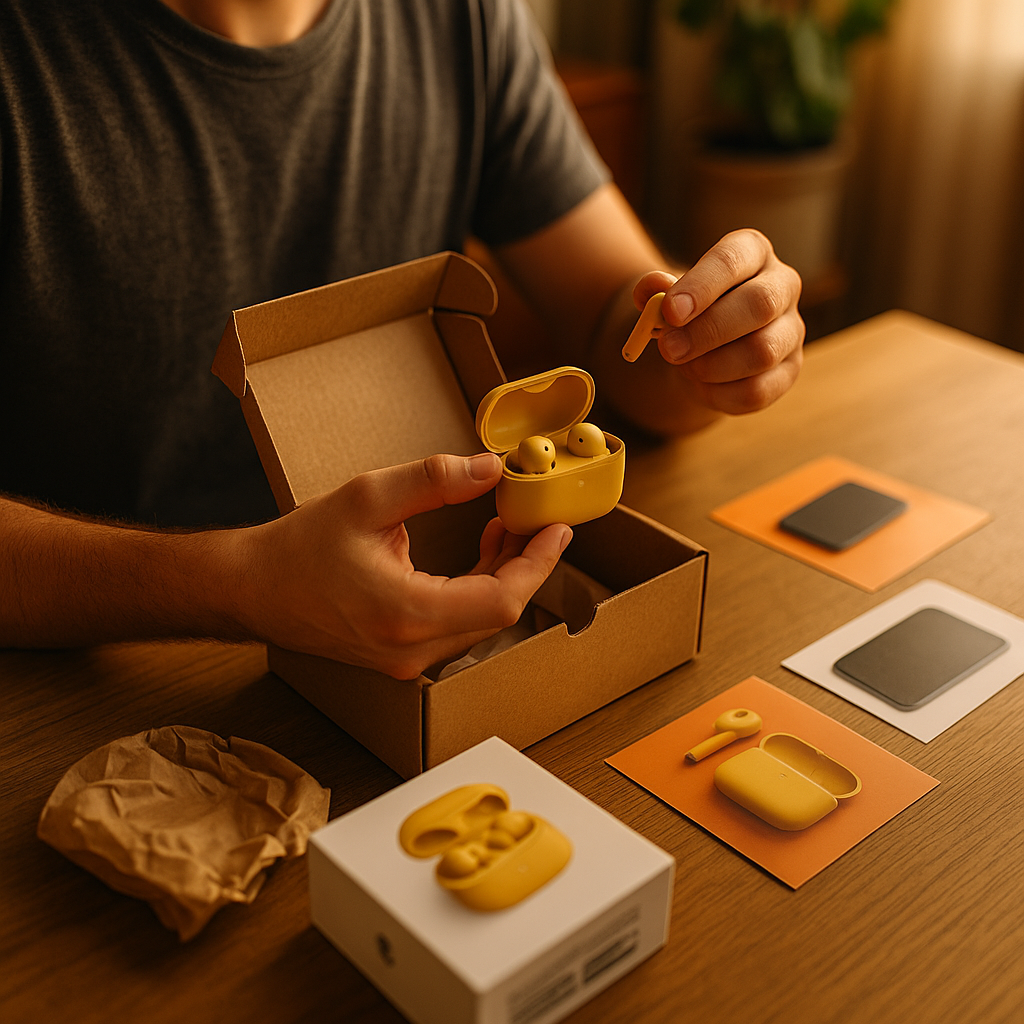
Forty-two percent of shoppers say they’ve made an unplanned purchase after watching an unboxing video. Not a review. Not a haul. An unboxing — the tape, the box flaps, the tissue paper. If your creator briefs still treat unboxings as filler content before the “real” review, you’re leaving conversion on the table. This is the unboxing-to-impulse-buy pipeline, and it needs its own brief.
Most brands hand creators a product and a vague “show the unboxing” note, then wonder why the video gets views but no clicks. The problem isn’t the creator. It’s the brief. Unboxing content converts through a specific emotional sequence, and if you don’t direct for it, you get pretty footage with no commercial teeth.
Why Unboxing Still Outperforms Polished Product Video
Unboxing footage feels unscripted even when it isn’t. That perceived authenticity is exactly why it converts better than studio product shots. Viewers aren’t watching an ad — they’re watching a stranger discover something, in close to real time. The anticipation-reveal-reaction loop mirrors the same dopamine pattern that makes gift-opening compelling on its own, and marketers have been slow to engineer for it deliberately.
Data from eMarketer has repeatedly shown that unboxing and haul-style content ranks among the highest-converting UGC categories on TikTok Shop and Instagram Reels, often outperforming traditional testimonial formats on click-through rate. The reveal moment does the selling. Your brief’s job is to make sure that moment is filmable, watchable, and tagged with a clear path to purchase.
Unboxing doesn’t sell the product. It sells the feeling of getting the product. Brief for the feeling, and the sales follow.
The 42 Percent Window: What Actually Happens in That Moment
Spontaneous purchase decisions during unboxing content cluster around a tight window — roughly the three to eight seconds after the product is fully revealed and the creator has their first unscripted reaction. Before that, viewers are still deciding whether to keep watching. After that, the emotional peak fades and rational evaluation kicks in.
This mirrors what we’ve covered in winning the first three seconds of spontaneous-purchase content generally, but unboxing has its own mechanics. The reveal is the hook. The reaction is the hero moment. Everything after is either reinforcement or dead air.
If your brief doesn’t explicitly call out this window and tell the creator what to do inside it, you’re relying on luck. Some creators nail it instinctively. Most need direction.
What the Brief Needs to Specify
- Reveal pacing: No more than 15 seconds of pre-reveal setup. Faster is almost always better for impulse categories like beauty, snacks, and gadgets.
- Unscripted reaction beat: Direct the creator to pause and react before narrating. Silence, a gasp, an “oh wow” — these micro-beats are what viewers subconsciously trust.
- Immediate use or demo: The product should be touched, opened, tried, or activated within seconds of the reveal. Delay kills momentum.
- On-screen purchase path: Link stickers, pinned comments, or shoppable tags need to appear at or right after the emotional peak, not buried in the caption.
That last point trips up more brands than anything else. You can have a perfect reveal and still lose the sale because the link showed up 40 seconds later, after the viewer already scrolled on.
Building the Brief: Section by Section
A creative brief for unboxing content should look different from your standard review or tutorial brief. Here’s the framework we recommend to clients running always-on unboxing programs.
1. Context, not script. Give the creator the “why now” — a restock, a limited drop, a seasonal tie-in — but don’t script their reaction. Scripted enthusiasm reads as fake within the first two seconds, and viewers are ruthless about detecting it.
2. Physical setup notes. Specify lighting and framing minimums, but leave room for mess. A slightly cluttered desk or kitchen counter often outperforms a styled flat-lay because it signals “real person,” not “brand set.” This is the same casual-over-polished logic we’ve detailed in briefing for casual over polished content.
3. The reveal sequence. This is the section most briefs skip entirely. Break it into three beats: approach (creator picks up or opens the package), reveal (product becomes visible), reaction (unscripted response, minimum two seconds before any talking). Name these beats explicitly in the brief. Creators respond well to structure when it doesn’t feel like a script.
4. The bridge to purchase. Immediately following the reaction beat, the creator needs a natural transition line and a visual cue. Something as simple as “this is going straight into my cart” delivered while tapping a link sticker does more work than a hard sell later in the video.
5. Compliance and disclosure. Every unboxing brief needs FTC disclosure language built in from the start, not bolted on after the edit. The FTC’s endorsement guidelines apply the moment a product is gifted or sponsored, regardless of format. Unboxing content is especially prone to compliance drift because it feels casual, and creators sometimes forget the disclosure rules still apply to a “just for fun” opening video.
The riskiest unboxing videos are the ones that feel too spontaneous to need a disclosure. Brief for compliance as carefully as you brief for the reveal.
Platform Differences You Can’t Brief Around
TikTok Shop unboxings behave differently from Instagram Reels unboxings, which behave differently from YouTube Shorts. TikTok rewards speed and native shopping integration — the product tag needs to be live and tapped within the video itself. Instagram leans more on Stories stickers and swipe-up mechanics inside Reels, and the audience there tolerates a slightly longer build-up.
If you’re running the same unboxing brief across every platform without adjusting the purchase-path mechanics, you’re underperforming somewhere. We’ve broken this down further in our short-form video brief for algorithm distribution, which covers how platform-native mechanics change what a “good” brief actually asks for.
One more nuance: TikTok’s creator tools increasingly favor content that keeps viewers on-platform through checkout. That means your brief should prioritize in-video shopping tags over external links whenever the format allows it. Sending viewers off-platform during an impulse moment is a conversion killer — friction is the enemy of spontaneity.
Multi-Product Unboxings Need a Different Structure
When creators unbox multiple SKUs in one video (common in beauty and subscription-box campaigns), the 42 percent window applies to each product individually, not the video as a whole. That means your brief needs a reveal-reaction-bridge sequence repeated for every item, which is more demanding on the creator and more expensive to produce well.
Brands often try to cut corners here by asking for one big reaction at the end. Don’t. It dilutes the emotional peak and gives viewers nothing to act on until it’s too late in the video for most of them to still be watching.
Measuring What Actually Matters
Views and likes tell you almost nothing about whether your unboxing brief worked. What you want to track:
- Click-through rate in the 0-10 second post-reveal window (available through TikTok Shop and Meta’s shopping analytics)
- Add-to-cart rate attributed to the specific creator video, not just campaign-level totals
- Time-to-purchase — spontaneous buyers convert fast, often within minutes of watching; a long lag suggests the impulse moment didn’t land
- Comment sentiment in the first hour, which tends to predict whether the reveal beat resonated before the algorithm has even fully surfaced the video
According to Sprout Social’s ongoing research into social commerce behavior, purchase intent signals show up in engagement patterns well before they show up in conversion dashboards. Watch the comments. If people are asking “where do I get this” instead of just reacting to the product, your reveal beat worked and your purchase path better be ready.
If you’re running unboxing content as part of a broader UGC library, it’s worth pairing this framework with a remixable asset brief so the reveal footage can be repurposed into paid social and product pages without a second shoot.
Next Step
Rewrite one existing unboxing brief this week using the reveal-reaction-bridge structure above, run it against a single high-intent SKU, and compare click-through rate in the post-reveal window against your last three campaigns. The gap will tell you exactly how much revenue your old briefs were leaving unclaimed.
FAQs
What makes unboxing content convert better than standard product reviews?
Unboxing content triggers a real-time anticipation-and-reveal emotional loop that feels unscripted, which builds trust faster than a rehearsed review. Viewers are watching a genuine reaction rather than a persuasive argument, and that authenticity shortens the path from interest to purchase.
How long is the actual impulse-buy window during an unboxing video?
Roughly three to eight seconds immediately after the product is fully revealed and the creator gives their first unscripted reaction. This is when purchase intent peaks, and it’s when your shoppable link or product tag needs to be visible.
Do FTC disclosure rules apply to casual or “just for fun” unboxing videos?
Yes. If the product was gifted, sponsored, or provided in exchange for content, disclosure is required regardless of how casual or spontaneous the video feels. Review the FTC’s endorsement guidance before finalizing any unboxing brief.
Should the purchase link appear in the caption or inside the video?
Inside the video, as close to the reveal-reaction moment as possible. Captions require an extra step that most impulse buyers won’t take. Native shopping tags on TikTok Shop or Instagram Reels convert significantly better because they remove friction at the exact moment intent peaks.
How is briefing for multi-product unboxings different?
Each product needs its own reveal-reaction-bridge sequence rather than one combined reaction at the end. Treating a multi-SKU unboxing as a single moment dilutes the emotional peak and gives viewers no clear action point for most of the products shown.
FAQs
Top Influencer Marketing Agencies
The leading agencies shaping influencer marketing in 2026
Agencies ranked by campaign performance, client diversity, platform expertise, proven ROI, industry recognition, and client satisfaction. Assessed through verified case studies, reviews, and industry consultations.
Moburst

-
2

The Shelf
Boutique Beauty & Lifestyle Influencer AgencyA data-driven boutique agency specializing exclusively in beauty, wellness, and lifestyle influencer campaigns on Instagram and TikTok. Best for brands already focused on the beauty/personal care space that need curated, aesthetic-driven content.Clients: Pepsi, The Honest Company, Hims, Elf Cosmetics, Pure LeafVisit The Shelf → -
3

Audiencly
Niche Gaming & Esports Influencer AgencyA specialized agency focused exclusively on gaming and esports creators on YouTube, Twitch, and TikTok. Ideal if your campaign is 100% gaming-focused — from game launches to hardware and esports events.Clients: Epic Games, NordVPN, Ubisoft, Wargaming, Tencent GamesVisit Audiencly → -
4

Viral Nation
Global Influencer Marketing & Talent AgencyA dual talent management and marketing agency with proprietary brand safety tools and a global creator network spanning nano-influencers to celebrities across all major platforms.Clients: Meta, Activision Blizzard, Energizer, Aston Martin, WalmartVisit Viral Nation → -
5

The Influencer Marketing Factory
TikTok, Instagram & YouTube CampaignsA full-service agency with strong TikTok expertise, offering end-to-end campaign management from influencer discovery through performance reporting with a focus on platform-native content.Clients: Google, Snapchat, Universal Music, Bumble, YelpVisit TIMF → -
6

NeoReach
Enterprise Analytics & Influencer CampaignsAn enterprise-focused agency combining managed campaigns with a powerful self-service data platform for influencer search, audience analytics, and attribution modeling.Clients: Amazon, Airbnb, Netflix, Honda, The New York TimesVisit NeoReach → -
7

Ubiquitous
Creator-First Marketing PlatformA tech-driven platform combining self-service tools with managed campaign options, emphasizing speed and scalability for brands managing multiple influencer relationships.Clients: Lyft, Disney, Target, American Eagle, NetflixVisit Ubiquitous → -
8

Obviously
Scalable Enterprise Influencer CampaignsA tech-enabled agency built for high-volume campaigns, coordinating hundreds of creators simultaneously with end-to-end logistics, content rights management, and product seeding.Clients: Google, Ulta Beauty, Converse, AmazonVisit Obviously →