


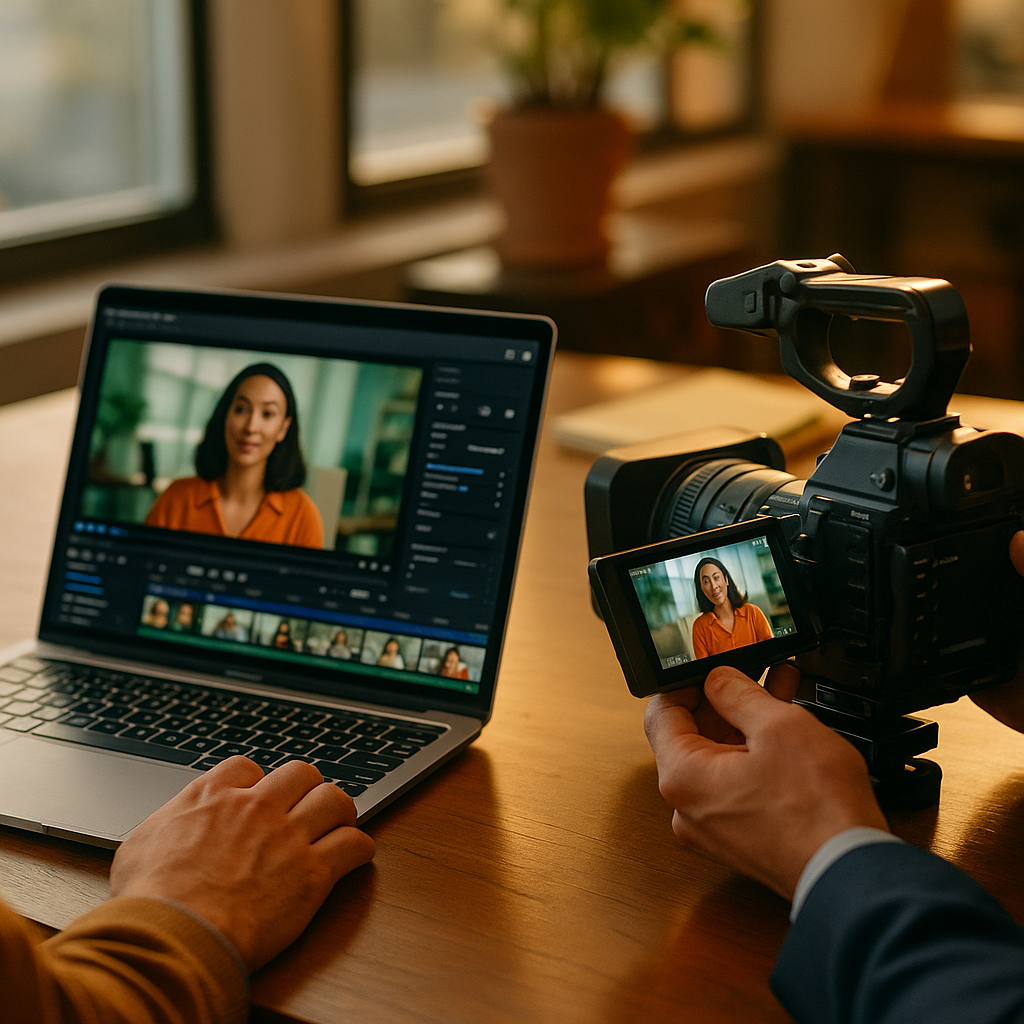
The Production Bottleneck Costing Commerce Teams Revenue
Brand commerce teams that still route every product-link-to-ad request through a traditional agency are leaving money on the table. According to eMarketer, shoppable video now drives a measurable share of social commerce conversion, yet the average agency turnaround for a single ad format still runs five to ten business days. That gap between product availability and live ad creative is not a workflow inconvenience — it is a revenue timing problem.
AI video production platforms built specifically for commerce workflows have changed the calculus. Platforms like NemoVideo, Waymark, and Pencil automate the journey from product feed or affiliate link to a finished, platform-optimized video ad. The question for brand and commerce teams is no longer whether AI can produce the asset. It is whether the output quality, creator network depth, and cost-per-format math justify a structural shift away from agency retainers.
What “Automated Product-Link-to-Ad” Actually Means
Strip away the vendor language and the pipeline works like this: a brand ingests a product catalog URL, a Shopify feed, or an affiliate link. The AI engine pulls visual assets, pricing, and copy. It renders the asset in multiple formats — 9:16 for TikTok and Reels, 1:1 for feed, 16:9 for YouTube pre-roll — and applies platform-specific pacing and caption rules. The brand reviews and approves. Total elapsed time: sometimes under two hours.
NemoVideo’s approach layers a creator network on top of this render pipeline, allowing brands to attach a real creator’s face, voiceover, or review clip to the AI-assembled frame. That distinction matters for commerce teams concerned about authenticity and compliance. A fully synthetic ad and a creator-narrated ad carry different trust signals with audiences and different disclosure obligations under FTC guidelines. For a deeper look at how NemoVideo’s cost structure compares to agency retainers on a per-asset basis, the NemoVideo TCO and CPA breakdown is worth reviewing before any procurement conversation.
Speed: Where AI Platforms Win Decisively
Time-to-live is the single clearest advantage. A manual agency production cycle for a 30-second commerce spot typically involves briefing, scripting, shoot logistics, editing, revision rounds, and format delivery. Even a lean agency with strong processes struggles to compress that below four business days. AI platforms compress it to hours.
For commerce teams running flash sales, reactive trend content, or high-SKU catalogs, this is not a marginal improvement. It is a structural one. A brand managing 200 active SKUs across three platforms needs hundreds of format variants per quarter. No agency retainer scales to that volume without significant cost escalation.
Commerce teams with large SKU catalogs are not choosing between AI and agency on quality grounds alone. They are choosing on operational capacity. Agencies cannot produce 500 format variants per month without ballooning headcount and cost.
Platforms like Pencil and NemoVideo publish internal benchmarks showing video generation times under 90 minutes for multi-format packages. Manual agency production for the same package, realistically, runs 3,000 to 5,000 dollars and one to two weeks. That is not a close race. For brands already evaluating AI video ads vs. agency retainer costs in DTC contexts, the speed delta reinforces the financial case.
Cost-Per-Format: The Math That Moves Budgets
Agency retainer contracts are typically structured around deliverable bundles, not per-format unit economics. That model made sense when brands needed a handful of hero assets. It falls apart when commerce teams need continuous creative refresh across TikTok Shop, Meta Shops, and Amazon video placements simultaneously.
AI platforms price on usage tiers, credits, or seat-based SaaS models. NemoVideo’s pricing structure, for instance, makes the per-format cost predictable and dramatically lower at volume. A brand producing 50 formats per month through an agency might pay 8,000 to 15,000 dollars in retainer fees and overage charges. The same volume through an AI platform typically runs 500 to 2,000 dollars depending on creator layer usage.
The gap closes when brands need genuinely high-production value: a lifestyle hero video for a brand launch, a campaign featuring a top-tier celebrity partner, or content requiring complex location shoots. Agency work retains a quality ceiling advantage in those scenarios. The honest framing for budget owners: AI platforms own the high-frequency, mid-fidelity commerce volume. Agencies own the low-frequency, high-fidelity brand moment. Most commerce teams need both, in different proportions than their current spend reflects.
The AI video editing vs. agency retainer analysis for DTC brands walks through this split-budget model in practical terms.
Creator Network Scale: The Variable No One Fully Prices
Access to creators is where AI platforms differentiate themselves beyond pure automation. NemoVideo connects its render pipeline to a vetted creator network, which means a brand can request a product demonstration video and receive both the AI-assembled frame and a creator-recorded UGC clip in a single workflow. Competing platforms like Vidsy and Billo take similar approaches, aggregating creator supply and tying it to automated post-production.
The scale question is real. Agencies typically manage bespoke creator relationships, which means deeper creative collaboration but slower throughput and higher per-creator cost. AI-connected creator marketplaces offer breadth over depth: hundreds of creators available within days, lower per-clip rates, but less control over creative direction and brand narrative consistency.
For commerce teams prioritizing social proof at volume — think product reviews, unboxing clips, and tutorial formats for TikTok Shop — creator marketplace scale is the right tool. For a brand narrative campaign requiring a specific creator persona, agency management still wins. The creator tech stack vetting guide covers how to evaluate creator network quality before committing to a platform contract.
Evaluation Criteria for Commerce Teams Choosing Between Models
Before signing a platform contract or renewing an agency retainer, run these four filters:
- Volume and velocity: How many format variants does your commerce calendar require per month? Above roughly 20 formats, AI platforms almost always win on cost.
- Platform fit: Does the platform natively export to your active channels? TikTok Shop, Meta Commerce Manager, and TikTok Ads Manager all have specific format requirements that matter at scale.
- Attribution integration: Can the platform’s output connect to your measurement stack? AI-generated ads without clean UTM logic and pixel tracking create attribution gaps. Platforms that integrate with tools covered in social commerce attribution guides reduce that risk.
- Creator quality controls: What vetting does the platform apply to creators in its network? Brand safety, FTC disclosure compliance, and content rights management are non-negotiable for any commerce team that has been through an influencer legal issue.
One overlooked factor: rendering quality on native commerce placements. Meta’s commerce ad formats and TikTok Shop ads have specific quality scoring signals that affect delivery auction performance. Poorly compressed AI-generated video underperforms in these auctions regardless of how good the underlying creative is. Ask any AI platform vendor specifically about how their output scores on native platform quality checks, not just how fast it renders.
The right question to ask any AI video platform is not “how fast can you make this?” It is “how does your output perform in Meta and TikTok’s ad quality auction relative to native creator content?” Speed without delivery efficiency is just fast waste.
Where Manual Agency Production Still Holds Ground
Agencies have not been rendered obsolete. They have been repositioned. The brands getting the most leverage from AI platforms are the ones that freed their agencies from high-frequency volume work and redirected that creative talent toward fewer, better brand-building assets. That is a harder internal conversation than signing a SaaS contract, but it is the one that produces real marketing efficiency gains.
Agencies also provide brand safety judgment, compliance review, and creative strategy that automated pipelines do not replicate. For regulated categories, luxury segments, or brands managing complex talent relationships, that human layer still earns its cost. The AI video ad platforms vs. manual production comparison for e-commerce provides a structured framework for identifying which production decisions belong in which model.
The commerce teams that will outperform in the next 18 months are not the ones who went all-in on AI or stayed fully agency-dependent. They are the ones who ran a rigorous cost-per-format audit, identified the creative tiers that automation can own, and redeployed agency relationships toward the work that actually requires human creative judgment. Start that audit this quarter, not after the next retainer renewal.
FAQs
What is an automated product-link-to-ad pipeline?
It is a workflow in which an AI platform ingests a product URL, catalog feed, or affiliate link and automatically generates video ad creative in multiple formats optimized for platforms like TikTok, Meta, and YouTube. The brand reviews and approves before the ads go live, typically within hours rather than days.
How does NemoVideo compare to traditional agency production for brand commerce?
NemoVideo combines an AI video render engine with a creator network, allowing brands to produce high-volume, platform-optimized commerce ads at a fraction of agency cost and in a fraction of the time. For mid-to-high SKU catalogs requiring continuous creative refresh, NemoVideo’s per-format economics typically outperform traditional agency retainer pricing by a significant margin.
What should commerce teams watch out for when evaluating AI video platforms?
Key risks include poor export quality that underperforms in platform ad auctions, limited attribution integration with existing measurement stacks, weak creator vetting that creates brand safety exposure, and contract structures that lock in volume minimums regardless of seasonal demand. Always request platform-specific quality scoring data before committing.
Is AI video production compliant with FTC influencer disclosure rules?
It depends on the content. Fully synthetic AI-generated ads require standard paid placement disclosures. Content that features a real creator’s likeness, voice, or performance requires disclosure of the material connection between the creator and the brand, consistent with FTC guidelines. Brands should review their AI vendor’s disclosure support features and consult legal counsel for regulated product categories.
When does a manual agency retainer still make sense for video production?
Agencies remain the stronger choice for low-frequency, high-fidelity brand campaigns, complex talent relationships, regulated product categories requiring legal review, and strategic creative work that benefits from human judgment. AI platforms are better suited to high-frequency, mid-fidelity commerce volume where speed and cost-per-format are the primary decision criteria.
Top Influencer Marketing Agencies
The leading agencies shaping influencer marketing in 2026
Agencies ranked by campaign performance, client diversity, platform expertise, proven ROI, industry recognition, and client satisfaction. Assessed through verified case studies, reviews, and industry consultations.
Moburst

-
2

The Shelf
Boutique Beauty & Lifestyle Influencer AgencyA data-driven boutique agency specializing exclusively in beauty, wellness, and lifestyle influencer campaigns on Instagram and TikTok. Best for brands already focused on the beauty/personal care space that need curated, aesthetic-driven content.Clients: Pepsi, The Honest Company, Hims, Elf Cosmetics, Pure LeafVisit The Shelf → -
3

Audiencly
Niche Gaming & Esports Influencer AgencyA specialized agency focused exclusively on gaming and esports creators on YouTube, Twitch, and TikTok. Ideal if your campaign is 100% gaming-focused — from game launches to hardware and esports events.Clients: Epic Games, NordVPN, Ubisoft, Wargaming, Tencent GamesVisit Audiencly → -
4

Viral Nation
Global Influencer Marketing & Talent AgencyA dual talent management and marketing agency with proprietary brand safety tools and a global creator network spanning nano-influencers to celebrities across all major platforms.Clients: Meta, Activision Blizzard, Energizer, Aston Martin, WalmartVisit Viral Nation → -
5

The Influencer Marketing Factory
TikTok, Instagram & YouTube CampaignsA full-service agency with strong TikTok expertise, offering end-to-end campaign management from influencer discovery through performance reporting with a focus on platform-native content.Clients: Google, Snapchat, Universal Music, Bumble, YelpVisit TIMF → -
6

NeoReach
Enterprise Analytics & Influencer CampaignsAn enterprise-focused agency combining managed campaigns with a powerful self-service data platform for influencer search, audience analytics, and attribution modeling.Clients: Amazon, Airbnb, Netflix, Honda, The New York TimesVisit NeoReach → -
7

Ubiquitous
Creator-First Marketing PlatformA tech-driven platform combining self-service tools with managed campaign options, emphasizing speed and scalability for brands managing multiple influencer relationships.Clients: Lyft, Disney, Target, American Eagle, NetflixVisit Ubiquitous → -
8

Obviously
Scalable Enterprise Influencer CampaignsA tech-enabled agency built for high-volume campaigns, coordinating hundreds of creators simultaneously with end-to-end logistics, content rights management, and product seeding.Clients: Google, Ulta Beauty, Converse, AmazonVisit Obviously →