


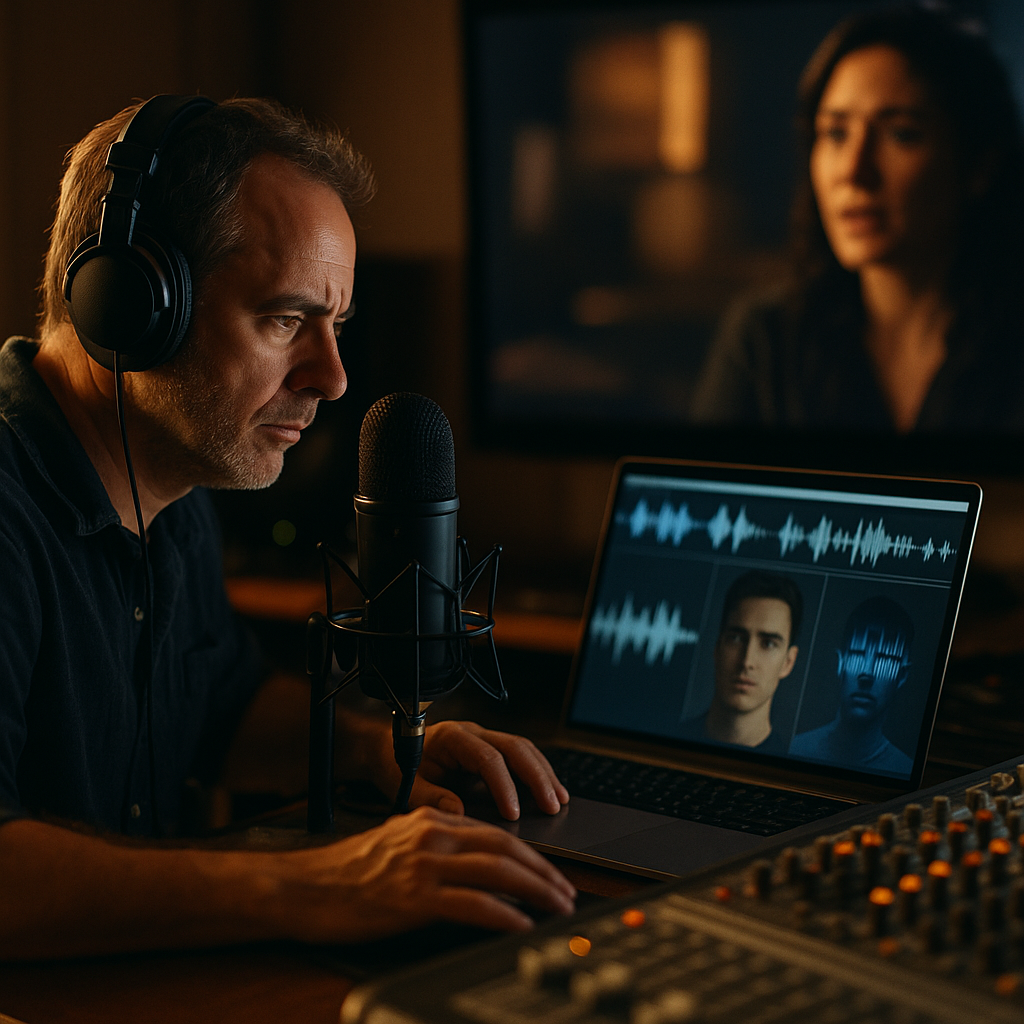
One creator, forty languages, zero new recording sessions. That’s the pitch behind AI voice cloning for content localization, and it’s why brands quietly piloting the tech report production cost drops of 60 to 80 percent on dubbed campaigns. But here’s the uncomfortable question nobody in the pitch deck wants to answer: does the audience know it’s not really that creator’s voice anymore?
AI voice cloning has moved from novelty to procurement line item faster than most legal teams can draft a policy. Tools like ElevenLabs, HeyGen, and Papercup now let brands take a single creator’s audio and generate synthetic dubs in dozens of languages, matching tone, pacing, and even emotional inflection. The ROI case is obvious. The risk case is murkier, and the disclosure gap sitting between them is where a lot of brand equity is quietly leaking out.
The Economics Are Too Good to Ignore
Global campaigns used to mean hiring local voice talent, booking studio time in each market, and waiting weeks for dubbed assets to clear review. Voice cloning collapses that timeline to days. A single creator video can spin into Spanish, Hindi, Portuguese, and Japanese versions without the creator ever touching a second microphone.
For agencies managing multi-market rollouts, that’s not a marginal efficiency gain. It’s a structural shift in how localization budgets get allocated. Money that used to fund local talent fees now funds tooling subscriptions and legal review, and the speed advantage lets brands react to trends in real time rather than waiting a quarter for translated assets to clear approval chains.
Voice cloning doesn’t just cut localization costs, it compresses a six week production cycle into a 48 hour turnaround, which changes what “reactive marketing” even means for global brands.
That speed is also why compute and tooling costs are becoming a real budget line rather than a rounding error. Teams evaluating this shift should look at how rising AI compute costs squeeze creator budgets before assuming the savings are purely additive.
Where the Risk Actually Lives
Cost savings are the easy part of this story. The harder part is what happens when a synthetic voice says something the creator never said, in a market they’ve never worked in, under a contract that never anticipated cloning rights.
Most influencer agreements written before this year didn’t include explicit voice cloning clauses. That means brands using AI dubbing on older contracts may be operating in a legal gray zone, regardless of how good the tool sounds. Creators are starting to push back, too. Voice actors’ unions have already fought and won protections against unauthorized cloning in entertainment, and creator talent reps are watching closely, borrowing that playbook for influencer deals.
- Contractual exposure: Does the creator agreement explicitly grant rights to synthetic voice replication, or is the brand assuming consent that was never given?
- Reputational exposure: If a cloned voice delivers a claim the creator wouldn’t personally endorse, whose name takes the hit when it goes wrong?
- Regulatory exposure: Disclosure rules written for text and image content haven’t fully caught up to synthetic audio, but that doesn’t mean regulators won’t apply existing standards retroactively.
The FTC has already signaled interest in AI-generated endorsements under existing deceptive practices rules, and the UK’s Information Commissioner’s Office has flagged synthetic media as a growing compliance concern. Brands betting that “nobody’s enforcing this yet” are betting against a very short runway.
Disclosure: The Gap Nobody’s Closing
Ask ten marketing directors whether their localized, AI-dubbed content includes a synthetic voice disclosure, and you’ll get ten different answers, most of them vague. That inconsistency is the actual problem. It’s not that brands are trying to deceive audiences. It’s that nobody’s built a standard yet, so everyone’s improvising.
Some platforms are stepping in where brands haven’t. Meta and TikTok have both rolled out AI content labeling requirements, but enforcement is inconsistent across markets and creator categories. A cloned voice used for dubbing doesn’t always trigger the same labeling logic as a fully synthetic avatar, which means a lot of dubbed content is slipping through without disclosure simply because the tooling wasn’t built with that use case in mind.
This matters more than it sounds like it should. Audience trust in influencer content already runs on thin margins. A Sprout Social survey found trust in influencer authenticity drops sharply the moment audiences suspect content is manufactured rather than personally created, and voice is one of the most intimate signals of authenticity a creator has. Lose that, and you lose the thing that made the creator partnership valuable in the first place.
The disclosure gap isn’t a legal footnote, it’s a trust liability sitting on the brand’s balance sheet whether or not anyone’s measuring it yet.
What Actual ROI Looks Like When You Do It Right
None of this means voice cloning should sit on the shelf. Done with proper consent, clear disclosure, and contract language that anticipates the use case, it’s one of the highest-leverage localization tools available right now. The brands seeing real ROI aren’t the ones cutting corners, they’re the ones building governance into the workflow from the start.
That looks like three things in practice. First, updated creator contracts that explicitly cover synthetic voice rights, usage duration, and revocation terms. Second, a disclosure standard applied consistently across every market, not just the ones with strict regulators. Third, a review process that catches claims a cloned voice might make that the creator never actually reviewed or approved in that market’s language.
Brands already building agentic workflows into their content operations have a natural place to slot this governance in. The same audit logic used for agentic AI foundation standards before launch applies directly to voice cloning pipelines, since both require a clear consent trail before anything ships. Teams that have already mapped creator attribution through deterministic ID mapping are better positioned to track which cloned assets trace back to which original consent agreement, which matters enormously when a regulator or a creator’s lawyer comes asking.
How to Build a Cloning Policy Without Killing Your Timeline
Governance doesn’t have to mean slowing everything to a crawl. Most brands that get this right treat it as a checklist baked into the brief, not a separate legal review that bottlenecks production.
- Add explicit voice cloning and synthetic dubbing clauses to every new creator contract, with clear scope on markets, duration, and revocation rights.
- Standardize a disclosure label for AI-dubbed content across every platform and market, even where local law doesn’t yet require it.
- Route every cloned-voice script through a creator or their rep for sign-off before it ships in a new market, not after.
- Log consent and usage data in the same system tracking campaign attribution, so a compliance question doesn’t turn into a scavenger hunt.
- Reassess vendor tools annually. Voice cloning platforms are evolving fast, and today’s compliant workflow might not match next year’s regulatory expectations.
Brands running agentic media buying at scale should treat this as an extension of existing rights management problems, not a brand new category. The same lag that shows up when agentic media buyers bundle UGC into bids without clean rights tracking is exactly the failure mode waiting inside unmanaged voice cloning pipelines.
Is This Actually Worth the Operational Headache?
For brands running localized campaigns across five or more markets, yes, almost certainly. The cost and speed advantages are too large to ignore, and audiences in most markets aren’t rejecting AI dubbing outright, they’re rejecting the feeling of being deceived about it. That’s a solvable problem with disclosure and consent infrastructure, not a reason to abandon the tool.
For brands running one or two markets with strong existing creator relationships, the calculus is closer. The operational lift of building a proper consent and disclosure pipeline might outweigh the savings if the volume isn’t there yet. That’s a legitimate reason to wait, not a reason to skip governance when the volume does arrive.
Frequently Asked Questions
Does AI voice cloning require the creator’s explicit consent?
Yes, in nearly every jurisdiction with right-of-publicity or personality rights laws, using someone’s cloned voice without documented consent creates legal exposure regardless of whether the content performs well.
Are platforms like Meta and TikTok requiring AI voice disclosure labels?
Both platforms have introduced AI content labeling policies, but enforcement varies by market and content type, and dubbed voice content doesn’t always trigger the same detection as fully synthetic video.
How much can brands actually save using voice cloning for localization?
Reported savings on production and turnaround range from 60 to 80 percent compared to traditional dubbing with local voice talent, though savings shrink if legal and consent review isn’t built into the workflow upfront.
What happens if a cloned voice misstates a product claim in a new market?
Liability typically falls on the brand that commissioned the content, not the platform or vendor, which is why review sign-off from the original creator or their representative matters before any dubbed asset ships.
Should older creator contracts be renegotiated before using voice cloning?
Yes. Most contracts signed before the technology became widely available don’t address synthetic voice rights, and using cloning without updated language leaves both parties exposed to disputes.
Next step: audit your active creator contracts this quarter for voice cloning language, and if the clause isn’t there, don’t run the localized dub until it is. The savings aren’t worth the exposure if consent isn’t on paper.
Frequently Asked Questions
Does AI voice cloning require the creator’s explicit consent?
Yes, in nearly every jurisdiction with right-of-publicity or personality rights laws, using someone’s cloned voice without documented consent creates legal exposure regardless of whether the content performs well.
Are platforms like Meta and TikTok requiring AI voice disclosure labels?
Both platforms have introduced AI content labeling policies, but enforcement varies by market and content type, and dubbed voice content doesn’t always trigger the same detection as fully synthetic video.
How much can brands actually save using voice cloning for localization?
Reported savings on production and turnaround range from 60 to 80 percent compared to traditional dubbing with local voice talent, though savings shrink if legal and consent review isn’t built into the workflow upfront.
What happens if a cloned voice misstates a product claim in a new market?
Liability typically falls on the brand that commissioned the content, not the platform or vendor, which is why review sign-off from the original creator or their representative matters before any dubbed asset ships.
Should older creator contracts be renegotiated before using voice cloning?
Yes. Most contracts signed before the technology became widely available don’t address synthetic voice rights, and using cloning without updated language leaves both parties exposed to disputes.
Top Influencer Marketing Agencies
The leading agencies shaping influencer marketing in 2026
Agencies ranked by campaign performance, client diversity, platform expertise, proven ROI, industry recognition, and client satisfaction. Assessed through verified case studies, reviews, and industry consultations.
Moburst

-
2

The Shelf
Boutique Beauty & Lifestyle Influencer AgencyA data-driven boutique agency specializing exclusively in beauty, wellness, and lifestyle influencer campaigns on Instagram and TikTok. Best for brands already focused on the beauty/personal care space that need curated, aesthetic-driven content.Clients: Pepsi, The Honest Company, Hims, Elf Cosmetics, Pure LeafVisit The Shelf → -
3

Audiencly
Niche Gaming & Esports Influencer AgencyA specialized agency focused exclusively on gaming and esports creators on YouTube, Twitch, and TikTok. Ideal if your campaign is 100% gaming-focused — from game launches to hardware and esports events.Clients: Epic Games, NordVPN, Ubisoft, Wargaming, Tencent GamesVisit Audiencly → -
4

Viral Nation
Global Influencer Marketing & Talent AgencyA dual talent management and marketing agency with proprietary brand safety tools and a global creator network spanning nano-influencers to celebrities across all major platforms.Clients: Meta, Activision Blizzard, Energizer, Aston Martin, WalmartVisit Viral Nation → -
5

The Influencer Marketing Factory
TikTok, Instagram & YouTube CampaignsA full-service agency with strong TikTok expertise, offering end-to-end campaign management from influencer discovery through performance reporting with a focus on platform-native content.Clients: Google, Snapchat, Universal Music, Bumble, YelpVisit TIMF → -
6

NeoReach
Enterprise Analytics & Influencer CampaignsAn enterprise-focused agency combining managed campaigns with a powerful self-service data platform for influencer search, audience analytics, and attribution modeling.Clients: Amazon, Airbnb, Netflix, Honda, The New York TimesVisit NeoReach → -
7

Ubiquitous
Creator-First Marketing PlatformA tech-driven platform combining self-service tools with managed campaign options, emphasizing speed and scalability for brands managing multiple influencer relationships.Clients: Lyft, Disney, Target, American Eagle, NetflixVisit Ubiquitous → -
8

Obviously
Scalable Enterprise Influencer CampaignsA tech-enabled agency built for high-volume campaigns, coordinating hundreds of creators simultaneously with end-to-end logistics, content rights management, and product seeding.Clients: Google, Ulta Beauty, Converse, AmazonVisit Obviously →