


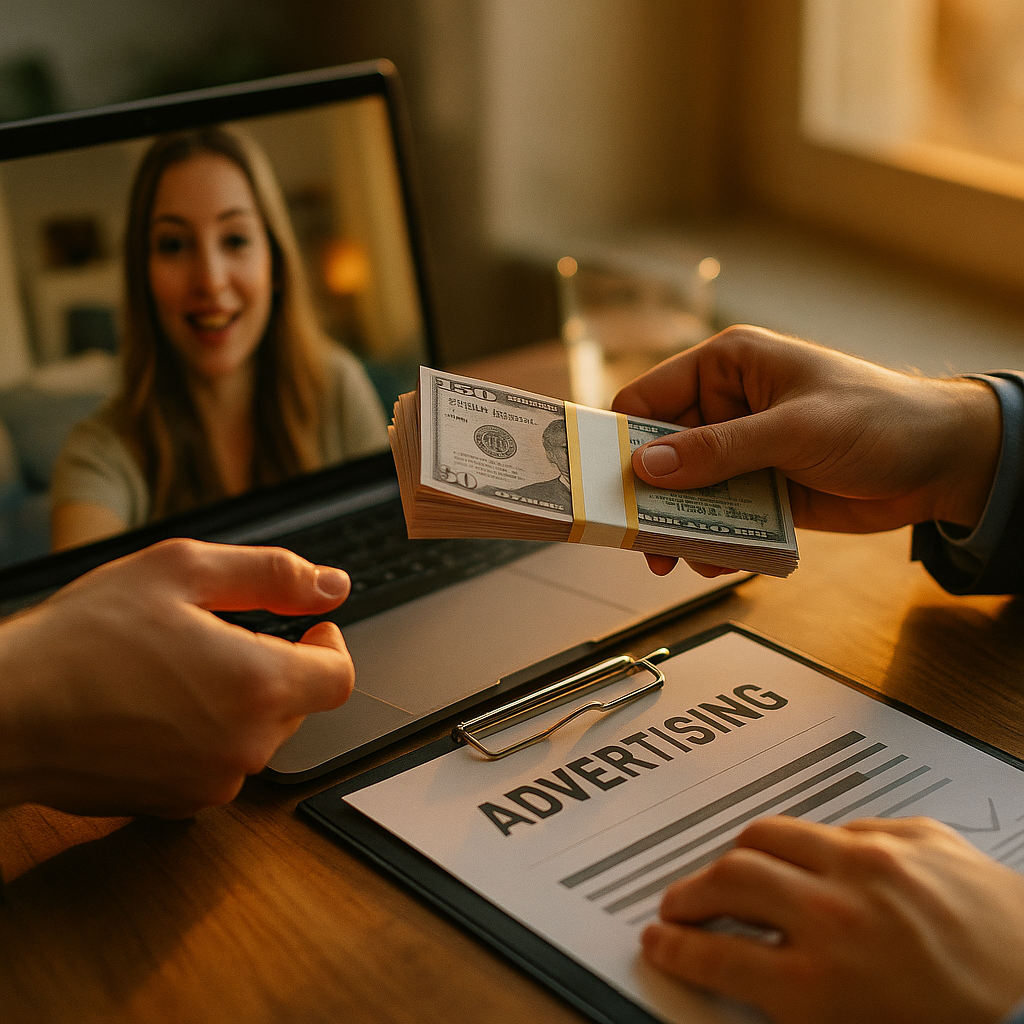
By 2027, brands will spend as much boosting creator content through paid amplification as they do paying creators upfront. That’s the blunt takeaway buried in eMarketer’s latest creator spend forecast, and it should be reshaping every media plan sitting on your desk right now. The amplification-sponsorship spend crossover isn’t a future trend. It’s a budgeting problem you need to solve this planning cycle.
The Forecast, Plainly Stated
Here’s the shift in one sentence: brands are increasingly treating creator content the way they treat media, not the way they treat talent fees. Flat sponsorship payments, the classic “pay a creator $15,000 for three posts” model, have been the default line item in influencer budgets for a decade. eMarketer’s projection says that by 2027, dollars spent amplifying creator content through paid social, boosted posts, and whitelisting will approach parity with dollars spent on the original sponsorship itself.
That’s not a marginal reallocation. It’s a structural rewrite of how influencer budgets get built, approved, and reported on.
Why does this matter to you specifically? Because most brand media plans still treat “creator spend” as a single bucket sitting inside the influencer marketing line, separate from paid social. Once amplification spend rivals flat fees, that separation stops making sense. You end up with two teams, two budgets, and two sets of KPIs fighting over what is functionally one investment.
When amplification spend equals sponsorship spend, the creator fee stops being the campaign. It becomes the raw material for a paid media campaign you haven’t budgeted for yet.
Why Brands Are Pouring Money Into Boosting, Not Just Booking
Three forces are driving this crossover, and none of them are going away.
- Organic reach keeps shrinking. Even a creator with a genuinely engaged audience can’t guarantee reach anymore. Platform algorithms increasingly favor paid distribution over organic discovery, which means the content you paid a creator to make sits idle unless you pay again to push it.
- Whitelisting and spark ads outperform brand-owned creative. Creator-native content run through paid channels routinely beats brand-produced ads on click-through and conversion, because it doesn’t look like an ad. Meta and TikTok have both built entire ad products around this insight.
- Attribution pressure from finance. CFOs want to see media-grade reporting on creator spend. Sponsorship fees alone don’t generate the impression-level, cost-per-result data that amplification spend does. So marketers lean into boosting partly because it’s more measurable, not just more effective.
None of this is new individually. What’s new is the scale. Creator ad spend crossing $44 billion already signaled the category was maturing past experimental budgets. The amplification crossover is the next phase: creator spend behaving less like talent payments and more like programmatic media.
What This Does to Your 2027 Budget Structure
If you’re building next year’s plan around a single “influencer marketing” line, stop. That structure was designed for a world where the creator fee was the whole campaign cost. It isn’t anymore.
Practically, this means:
- Sponsorship fees and amplification spend need separate forecasting. A $10,000 creator fee might require an additional $8,000-$12,000 in paid boosting to hit reach targets, depending on category and platform. Budget for both, not just the first.
- Usage rights and whitelisting terms belong in the initial contract, not a renegotiation later. Brands that fail to secure paid usage rights upfront end up paying a premium later, or worse, can’t amplify at all because the creator’s agent wants a second fee.
- Media buying teams and influencer teams need a shared dashboard. If your paid social team doesn’t know which creator content is being boosted and why, you’re duplicating spend and losing attribution clarity.
This is the same operational tension covered in the ongoing debate over creator ROI measurement: without a shared metric framework, amplification spend and sponsorship spend get evaluated on different scorecards, which makes the crossover invisible until finance asks why the influencer budget doubled.
Is This Really a “Crossover,” or Just Inflation?
Fair question. Skeptics will say amplification spend rising simply reflects rising media costs generally, not a fundamental shift in how brands value creator content. There’s some truth to that. CPMs across paid social have climbed steadily, and any category running paid distribution will show cost growth.
But the crossover framing holds up because it’s about ratio, not raw dollars. eMarketer isn’t just saying amplification spend is growing. It’s saying amplification spend is growing fast enough to catch up with flat-fee spend, which had been the dominant cost center for years. That ratio shift indicates a genuine behavioral change: brands choosing to fund distribution at levels comparable to talent fees, rather than treating distribution as an afterthought.
It also tracks with a broader move the industry has already been documenting. The shift from one-off creator deals to media partnerships is essentially the same story told from the contract side. Brands aren’t buying posts anymore. They’re buying a content asset plus a distribution plan, and both cost money.
What Happens to Flat-Fee-Only Deals?
They don’t disappear, but their role narrows. Flat fees still make sense for:
- Awareness-stage campaigns where organic authenticity matters more than scaled reach
- Long-term ambassador relationships where the creator’s personal audience is the entire point
- Smaller or niche creators whose content isn’t intended for paid amplification at all
But for any campaign built around performance, conversion, or broad reach, a flat-fee-only structure increasingly looks incomplete. It’s like buying a billboard but not paying for the location with traffic. The creative exists, but nobody’s guaranteed to see it.
This is part of why pay-per-view and clipper-style deals are gaining ground against traditional flat fees. Both models are responses to the same underlying problem: brands want to pay for guaranteed outcomes, not just content production. Amplification spend is the paid-media version of that same instinct.
Operational Risks Nobody’s Pricing In Yet
A few risks tend to get overlooked when brands chase the amplification upside.
Contract ambiguity. Many existing creator agreements don’t specify whitelisting duration, ad account access, or revocation terms clearly. If your legal team hasn’t reviewed usage rights language against current amplification practices, you’re exposed. The FTC’s endorsement guidelines still apply regardless of whether content is organic or boosted, and disclosure requirements don’t relax just because a post is running as a paid ad.
Cross-border complexity. Amplification spend often means running the same creator content across multiple regions with different disclosure and platform rules. That’s a compliance headache that flat-fee-only campaigns never had to deal with at scale. The IAB’s cross-border marketing standards guidance is a useful starting point if your amplification plans span multiple markets.
Platform concentration. If your amplification strategy leans almost entirely on one platform’s ad products, you inherit that platform’s risk. Algorithm changes, policy shifts, or ad account restrictions can strand your spend overnight. Platform diversification isn’t just a content strategy anymore, it’s a media-buying necessity.
The brands that win the amplification-sponsorship crossover won’t be the ones spending the most. They’ll be the ones who negotiated usage rights, disclosure terms, and measurement frameworks before the ad dollars started flowing.
Building the 2027 Plan Now
Practically, here’s where planning conversations should start:
- Model amplification as a mandatory line item, not a discretionary add-on. Budget for it at the campaign brief stage, not after content is delivered.
- Renegotiate usage rights in every new creator contract to include specific whitelisting terms, duration, and ad spend caps.
- Merge reporting frameworks between influencer and paid social teams so amplification performance and sponsorship performance are measured against the same outcome metrics, not siloed dashboards.
- Audit your current creator roster for whitelisting compatibility. Not every creator agreement allows for paid boosting, and retrofitting old contracts takes time you won’t have once budgets lock.
None of this requires abandoning the sponsorship model. It requires treating it as one half of a two-part spend, the way TV buyers have long treated production cost separately from media cost. The creator upfront marketplace borrowing from TV’s playbook is already pushing brands toward this bifurcated thinking, and the amplification crossover is the natural next step.
Tools tracking this shift, including Sprout Social’s paid social analytics and platform-native reporting from TikTok Ads Manager and Meta Business Suite, are increasingly built to blend organic creator performance with paid amplification data. If your martech stack still separates the two, that’s worth flagging to whoever owns your ad-tech budget.
Frequently Asked Questions
FAQs
What is the amplification-sponsorship spend crossover?
It refers to eMarketer’s forecast that brand spending on paid amplification of creator content, such as whitelisting and boosted posts, will approach parity with traditional flat-fee sponsorship payments by 2027. It signals a shift from treating creator fees as the whole campaign cost to treating them as one part of a two-part media investment.
Why is amplification spend growing faster than flat fees?
Organic reach on most platforms has declined, making paid distribution necessary to guarantee visibility. Whitelisted creator content also tends to outperform brand-produced ads on click-through and conversion, and finance teams increasingly want media-grade attribution data that amplification spend naturally provides.
Do brands still need flat-fee sponsorship deals?
Yes. Flat fees remain suited to awareness campaigns, long-term ambassador relationships, and niche creators not intended for paid distribution. But for performance-driven or broad-reach campaigns, pairing sponsorship fees with a dedicated amplification budget is becoming standard practice.
What contract terms should brands secure before amplifying creator content?
Whitelisting duration, ad account access permissions, spend caps, revocation terms, and cross-border disclosure compliance should all be defined in the original creator agreement rather than negotiated after content is delivered.
How should brands budget for this shift in the next planning cycle?
Treat amplification as a mandatory line item tied to every sponsorship, not an optional add-on. Model it into campaign briefs upfront, align influencer and paid social reporting frameworks, and audit existing creator contracts for whitelisting compatibility before budgets lock.
The brands still budgeting creator spend as a single line item will be the ones scrambling mid-year when amplification costs blow past projections. Start splitting sponsorship and amplification into separate forecasts now, and renegotiate usage rights before your next contract cycle locks you out of the option entirely.
Top Influencer Marketing Agencies
The leading agencies shaping influencer marketing in 2026
Agencies ranked by campaign performance, client diversity, platform expertise, proven ROI, industry recognition, and client satisfaction. Assessed through verified case studies, reviews, and industry consultations.
Moburst

-
2

The Shelf
Boutique Beauty & Lifestyle Influencer AgencyA data-driven boutique agency specializing exclusively in beauty, wellness, and lifestyle influencer campaigns on Instagram and TikTok. Best for brands already focused on the beauty/personal care space that need curated, aesthetic-driven content.Clients: Pepsi, The Honest Company, Hims, Elf Cosmetics, Pure LeafVisit The Shelf → -
3

Audiencly
Niche Gaming & Esports Influencer AgencyA specialized agency focused exclusively on gaming and esports creators on YouTube, Twitch, and TikTok. Ideal if your campaign is 100% gaming-focused — from game launches to hardware and esports events.Clients: Epic Games, NordVPN, Ubisoft, Wargaming, Tencent GamesVisit Audiencly → -
4

Viral Nation
Global Influencer Marketing & Talent AgencyA dual talent management and marketing agency with proprietary brand safety tools and a global creator network spanning nano-influencers to celebrities across all major platforms.Clients: Meta, Activision Blizzard, Energizer, Aston Martin, WalmartVisit Viral Nation → -
5

The Influencer Marketing Factory
TikTok, Instagram & YouTube CampaignsA full-service agency with strong TikTok expertise, offering end-to-end campaign management from influencer discovery through performance reporting with a focus on platform-native content.Clients: Google, Snapchat, Universal Music, Bumble, YelpVisit TIMF → -
6

NeoReach
Enterprise Analytics & Influencer CampaignsAn enterprise-focused agency combining managed campaigns with a powerful self-service data platform for influencer search, audience analytics, and attribution modeling.Clients: Amazon, Airbnb, Netflix, Honda, The New York TimesVisit NeoReach → -
7

Ubiquitous
Creator-First Marketing PlatformA tech-driven platform combining self-service tools with managed campaign options, emphasizing speed and scalability for brands managing multiple influencer relationships.Clients: Lyft, Disney, Target, American Eagle, NetflixVisit Ubiquitous → -
8

Obviously
Scalable Enterprise Influencer CampaignsA tech-enabled agency built for high-volume campaigns, coordinating hundreds of creators simultaneously with end-to-end logistics, content rights management, and product seeding.Clients: Google, Ulta Beauty, Converse, AmazonVisit Obviously →