


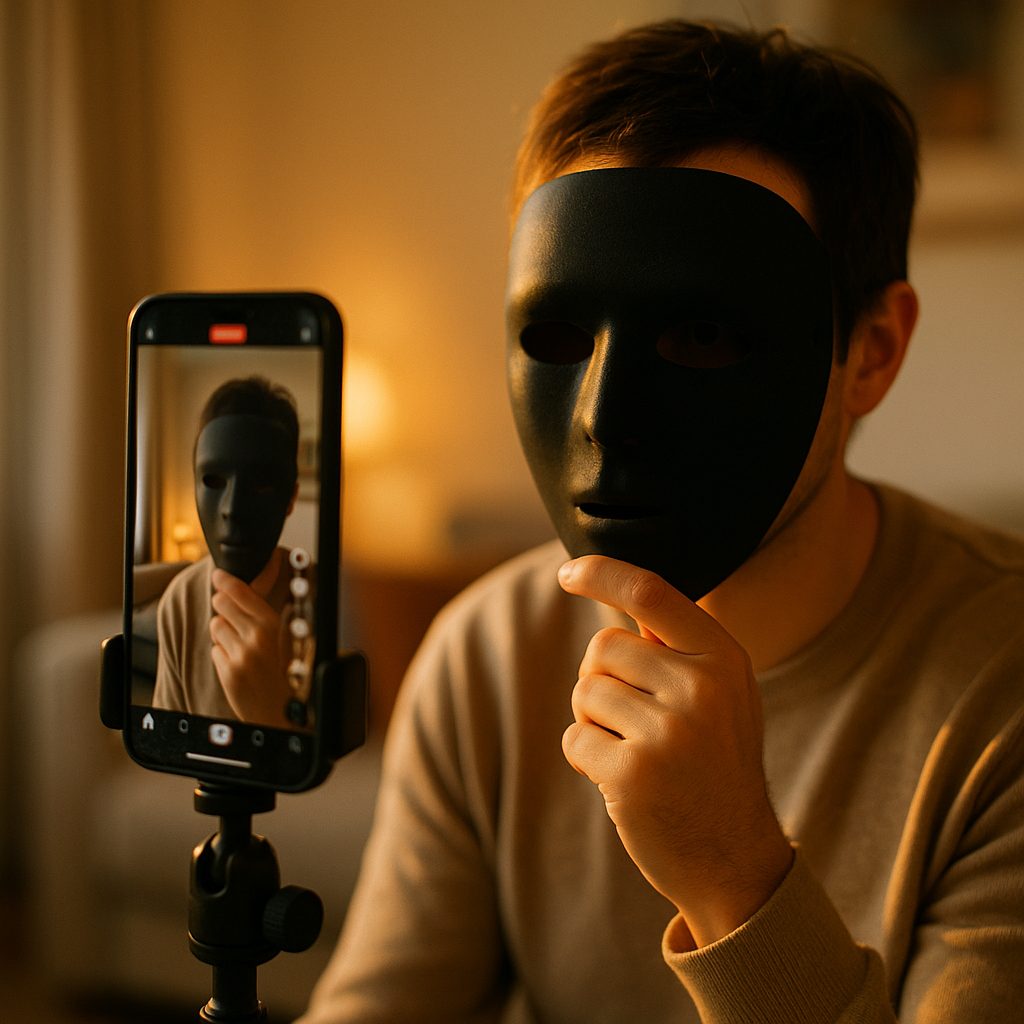
In 2025, audiences want useful recommendations without giving up personal data. That tension is reshaping creator culture and brand strategy, especially in finance, health, and cybersecurity. The rise of the anonymous influencer is not a novelty; it is a response to surveillance fatigue, platform risks, and stricter privacy expectations. What happens when trust is built without a face or real name?
Privacy-focused markets and anonymous influencer marketing
Privacy-focused markets include categories where customers treat data as sensitive, high-risk, or valuable: password managers, VPNs, encrypted messaging, security hardware, privacy browsers, fintech tools, sexual wellness, mental health services, and certain B2B security products. These buyers are skeptical by default. They read policies, compare threat models, and look for independent verification.
Anonymous influencer marketing fits these markets because the creator can model the same privacy practices the audience wants. An influencer who refuses to disclose identity, avoids invasive platforms, and communicates through privacy-respecting channels signals alignment. That alignment matters when the product promise is “reduce tracking,” “minimize data collection,” or “protect identity.”
Brands also benefit because anonymity lowers certain risks. A creator who does not rely on personal image can be harder to dox, less vulnerable to reputation shocks tied to private life, and more consistent over time. However, the brand must replace traditional “celebrity trust” with demonstrable credibility: clear disclosures, repeatable evidence, and an audience that can audit claims.
Readers often ask whether anonymity is the same as being fake. It is not. Anonymous creators can be real experts with legitimate experience who choose not to expose their legal name or face. The goal is selective disclosure: sharing enough to earn trust while withholding what increases risk.
Consumer trust signals in anonymous creator economy
In privacy-focused markets, trust rarely comes from charisma alone. It comes from signals that can be checked. Anonymous creators who succeed usually build a “verifiable identity” rather than a “public identity.” Common trust signals include:
- Consistent technical accuracy: clear explanations, correct terminology, and updates when products change.
- Transparent incentives: visible sponsorship labels, affiliate disclosures, and an honest description of what the creator received.
- Reproducible methods: step-by-step tests, screenshots or screen recordings, and configuration details others can replicate.
- Documented boundaries: stating what data the creator will never collect (for example, no email tracking pixels, no invasive sign-up forms).
- Community corroboration: engaged comments, peer review, and corrections from knowledgeable followers that the creator addresses.
Many anonymous influencers publish “how I evaluate tools” pages, threat-model templates, or public checklists. This turns trust into a process. It also answers a common follow-up question: “Why should I trust you if I don’t know who you are?” The best response is, “Because you can verify what I’m saying.”
To align with Google’s EEAT expectations, content should show experience and expertise through specifics: which features were tested, what settings were used, what limitations exist, and what trade-offs the buyer should consider. Anonymous creators can demonstrate authority by citing primary documentation (vendor white papers, audited reports, CVEs, independent lab results) and by correcting their own posts when new evidence emerges.
Platform strategy for pseudonymous influencers and privacy-first channels
Anonymous creators tend to diversify platforms to reduce exposure and dependence. In 2025, the most effective strategies balance reach with privacy. High-reach networks can still work, but creators often route audiences toward spaces they control more tightly.
Common channel mix:
- Email newsletters with minimal data collection: double opt-in, no tracking pixels, and clear retention policies.
- Privacy-respecting communities: forums, invite-based chat, or self-hosted community software where moderation and data handling are explicit.
- Video and live streams with identity protection: screen-only tutorials, voice modulation if needed, and careful metadata handling.
- Podcasts: strong for expertise, easy to anonymize, and well-suited to long-form product reasoning.
- Search-led content hubs: evergreen guides, comparison pages, and update logs that prove ongoing maintenance.
Creators should treat operational security as part of the content brand. That includes compartmentalized accounts, secure device practices, and disciplined sharing habits. Brands partnering with anonymous creators often underestimate this and accidentally pressure creators into identity exposure, such as requiring personal photos or public appearances. A better approach is to accept privacy constraints and design campaigns around deliverables that do not require identity leakage: tutorials, audits, explainers, and product walkthroughs.
Another frequent question is whether anonymity hurts distribution because platforms reward personal identity. It can, but the effect is shrinking in privacy-heavy niches where audience intent is high. Search, podcasts, and newsletters can outperform viral feeds when the buyer is already researching. The key is consistent publishing and content that directly answers “what should I do next?” with concrete steps.
Brand partnerships, disclosures, and compliance for anonymous influencers
Partnerships work when both sides treat privacy and compliance as non-negotiable. In privacy-focused categories, weak disclosure is not just a legal risk; it is a trust killer. Anonymous creators should be even more explicit than typical influencers because audiences may already be suspicious.
Best practices that protect both brand and creator:
- Clear sponsorship labeling: place disclosures near the recommendation, not buried at the end.
- Contract language that respects anonymity: allow pseudonyms on invoices, avoid requirements for face reveal, and specify acceptable verification methods.
- Claims control: prohibit unverified performance claims; require that any security or privacy claims be backed by documentation.
- Data minimization: avoid sharing detailed audience data that could identify individuals; use aggregated metrics.
- Review and correction policy: define how updates will be handled if product terms change or a security issue is disclosed.
Brands often ask how to run due diligence if the creator is anonymous. The answer is to verify competence and integrity without demanding identity exposure. Options include private verification under NDA, third-party references, review of prior work, and technical interviews. What matters is whether the creator can reliably produce accurate content and follow compliance requirements.
Creators should also avoid turning anonymity into a marketing gimmick. “Trust me, I’m hidden” is not a value proposition. A stronger stance is: “Here is how to assess this product yourself, and here is what I observed.” That approach reduces dependency on persona and increases resilience if a platform changes policies.
Risk management: fraud prevention and safety in privacy niches
Anonymity creates opportunity and risk. It can protect legitimate creators, but it can also attract impersonators, affiliate-spam pages, or fake “security experts.” Privacy-focused audiences are attentive to this, so both brands and creators need risk controls.
How audiences can evaluate anonymous recommendations:
- Check for falsifiable details: specific steps, settings, and constraints beat vague praise.
- Look for balanced trade-offs: credible reviewers mention limitations and who should not buy.
- Verify external references: audits, independent tests, and official documentation should be linkable and consistent.
- Watch for pressure tactics: countdown timers and fear-based messaging undermine credibility in security and privacy topics.
How brands can reduce fraud and reputation risk:
- Whitelist official creator channels: publish verified handles on brand sites to reduce impersonation.
- Use unique codes and landing pages: track performance without demanding personal data from the creator’s audience.
- Monitor for policy misalignment: ensure creators do not promote unsafe configurations or misleading guarantees.
Creators should prioritize personal safety. Doxing, harassment, and targeted phishing are real threats in security and finance topics. Practical safeguards include using separate devices for content production, stripping metadata, avoiding location clues, and keeping legal/financial admin off public accounts. A creator’s safety posture is also part of EEAT: it demonstrates responsible practice in the same domain they advise on.
Future outlook: identity, proof, and trust without exposure
The anonymous influencer trend is likely to strengthen as privacy regulation tightens and as consumers demand clearer data handling from both platforms and brands. The next competitive edge will not be “who is loudest,” but “who can prove value with minimal data.”
Expect more creators to adopt proof-based credibility systems, such as:
- Public methodology pages: standardized review frameworks that make comparisons fair.
- Update logs: visible change histories when products, policies, or security conditions change.
- Independent validation: collaborations with known experts, peer review, or third-party testing references.
- Audience-first data practices: no invasive retargeting, minimal tracking, and clear opt-outs.
Brands will also mature in how they measure success. In privacy markets, the best outcomes often show up as qualified leads, lower churn, and stronger brand trust, not just raw impressions. That shift supports anonymous creators whose audiences may be smaller but more intent-driven.
For readers planning a strategy, the practical takeaway is to treat anonymity as a constraint that forces better systems: clearer claims, stronger evidence, and cleaner data practices. When the process is strong, the persona matters less.
FAQs about anonymous influencers in privacy-focused markets
-
Are anonymous influencers legal for paid partnerships?
Yes, as long as disclosures meet applicable advertising rules and the partnership agreement is properly executed. Brands can verify identity privately under NDA while allowing the creator to remain public-facing under a pseudonym.
-
How can a brand trust an anonymous creator?
Trust the work, not the face. Review past content quality, require transparent methodologies, validate claims against documentation, and use contracts that define deliverables, disclosures, and correction procedures.
-
What content formats work best for anonymous creators?
Screen-based tutorials, podcasts, newsletters, and search-optimized guides work well because they emphasize expertise and repeatable steps. These formats also reduce pressure to reveal personal identity.
-
How should anonymous creators handle affiliate links without harming credibility?
Disclose affiliate relationships near the recommendation, explain how commissions work, and separate editorial criteria from payouts. Ideally, include non-affiliate alternatives and note when a product is not a fit.
-
Can anonymous influencers build EEAT without personal credentials?
Yes. They can demonstrate experience through detailed testing, show expertise with accurate explanations, build authority via consistent performance and citations, and earn trust with transparent disclosures and correction habits.
-
What are the biggest risks in this niche?
Impersonation, misleading security claims, and doxing. Risk drops when creators practice strong operational security, brands publish verified channel lists, and both sides prioritize evidence-based messaging.
Anonymous influence is growing because privacy-focused buyers reward proof over personality. In 2025, creators can earn trust without revealing their identity by publishing reproducible tests, disclosing incentives clearly, and maintaining strong safety practices. Brands win by adapting contracts, measurement, and creative expectations to privacy constraints. The clear takeaway: make verification easy, and anonymity becomes an asset.
Top Influencer Marketing Agencies
The leading agencies shaping influencer marketing in 2026
Agencies ranked by campaign performance, client diversity, platform expertise, proven ROI, industry recognition, and client satisfaction. Assessed through verified case studies, reviews, and industry consultations.
Moburst

-
2

The Shelf
Boutique Beauty & Lifestyle Influencer AgencyA data-driven boutique agency specializing exclusively in beauty, wellness, and lifestyle influencer campaigns on Instagram and TikTok. Best for brands already focused on the beauty/personal care space that need curated, aesthetic-driven content.Clients: Pepsi, The Honest Company, Hims, Elf Cosmetics, Pure LeafVisit The Shelf → -
3

Audiencly
Niche Gaming & Esports Influencer AgencyA specialized agency focused exclusively on gaming and esports creators on YouTube, Twitch, and TikTok. Ideal if your campaign is 100% gaming-focused — from game launches to hardware and esports events.Clients: Epic Games, NordVPN, Ubisoft, Wargaming, Tencent GamesVisit Audiencly → -
4

Viral Nation
Global Influencer Marketing & Talent AgencyA dual talent management and marketing agency with proprietary brand safety tools and a global creator network spanning nano-influencers to celebrities across all major platforms.Clients: Meta, Activision Blizzard, Energizer, Aston Martin, WalmartVisit Viral Nation → -
5

The Influencer Marketing Factory
TikTok, Instagram & YouTube CampaignsA full-service agency with strong TikTok expertise, offering end-to-end campaign management from influencer discovery through performance reporting with a focus on platform-native content.Clients: Google, Snapchat, Universal Music, Bumble, YelpVisit TIMF → -
6

NeoReach
Enterprise Analytics & Influencer CampaignsAn enterprise-focused agency combining managed campaigns with a powerful self-service data platform for influencer search, audience analytics, and attribution modeling.Clients: Amazon, Airbnb, Netflix, Honda, The New York TimesVisit NeoReach → -
7

Ubiquitous
Creator-First Marketing PlatformA tech-driven platform combining self-service tools with managed campaign options, emphasizing speed and scalability for brands managing multiple influencer relationships.Clients: Lyft, Disney, Target, American Eagle, NetflixVisit Ubiquitous → -
8

Obviously
Scalable Enterprise Influencer CampaignsA tech-enabled agency built for high-volume campaigns, coordinating hundreds of creators simultaneously with end-to-end logistics, content rights management, and product seeding.Clients: Google, Ulta Beauty, Converse, AmazonVisit Obviously →