


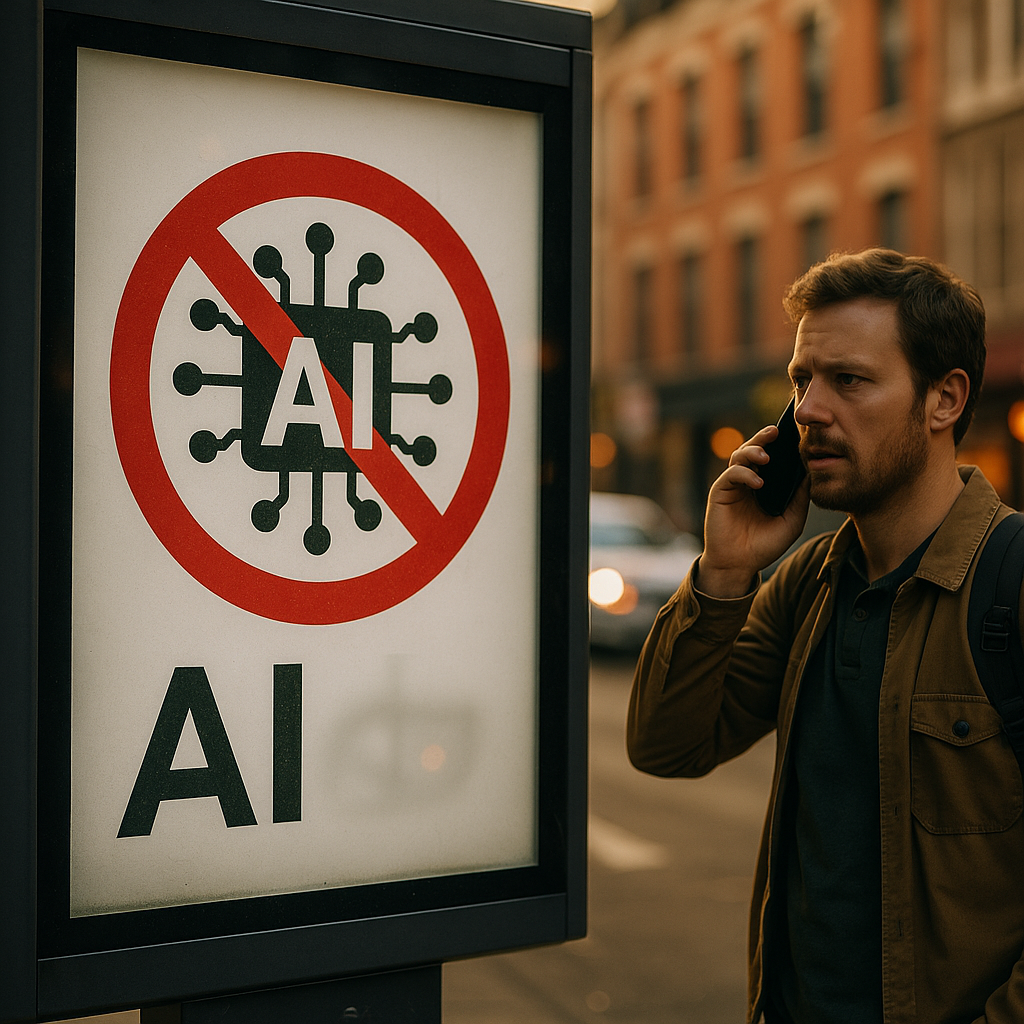
Sixty-two percent of consumers say they trust brands less when they suspect AI made the ad. That single data point should worry every CMO who greenlit a generative campaign this year. The Windhoek beer ad got the headlines, but the anti-AI backlash is bigger, older, and stickier than one South African brand’s viral misstep. It’s becoming a structural feature of the market.
One Ad Didn’t Start This
Windhoek’s decision to run a campaign built around rejecting AI-generated content struck a nerve because it named the discomfort millions of consumers already felt. It didn’t create that discomfort. Sentiment tracking from multiple research houses shows the erosion has been building for at least two years, quietly, across categories that have nothing to do with beer.
What makes this moment different is measurability. We’re no longer talking about anecdotal grumbling on social media. We’re talking about repeatable survey instruments, brand lift studies, and purchase-intent data that show the same pattern across markets: consumers can increasingly detect AI-generated marketing, and detection correlates with distrust. That’s not a vibe. That’s a variable you can build into a media plan.
Anti-AI sentiment has moved from a niche cultural complaint to a quantifiable brand-trust variable that shows up in lift studies, churn data, and purchase-intent surveys across categories.
What the Data Actually Shows
Look past the Windhoek case study and the numbers get more interesting, and more uncomfortable for brand teams that leaned hard into generative production this year.
- Detection is rising, not falling. Consumers are getting better at spotting AI-generated visuals and copy, not worse. Recent tracking covered in our piece on AI-generated ads and trust erosion shows detection accuracy climbing as familiarity with AI tools spreads.
- The trust hit is durable, not situational. It’s not a one-time penalty. Consumers who identify AI-generated content report lasting skepticism toward the brand’s broader marketing, not just the flagged asset.
- Fatigue compounds the distrust problem. Our analysis of AI ad fatigue data found creative wear-out happening faster for AI-assisted campaigns than human-made ones, meaning brands get less mileage out of content that’s already trusted less.
- Segment variance is wide. Gen Alpha and younger Gen Z show sharper skepticism curves. Our coverage of Gen Alpha ad skepticism found these cohorts assume AI involvement by default and reward brands that disclose it, rather than hide it.
Put those four points together and you get a market force, not a moment. Detection is up, penalty is durable, fatigue accelerates, and the most valuable future customer segment is the most skeptical. That’s a structural headwind, and it’s not going away when the next viral ad cycle fades.
Why “It’s Just One Market” Doesn’t Hold Up
The instinct in a lot of boardrooms is to file Windhoek under “regional PR stunt, not a global signal.” That’s a mistake. Sentiment data from the Global Consumer Trust Index shows AI ad skepticism showing up across North America, Western Europe, and parts of APAC, with different intensity but the same directional trend everywhere it’s measured.
The regulatory backdrop matters here too. Markets moving fastest on AI transparency rules also happen to be markets where consumer skepticism is highest, which is not a coincidence. Our breakdown of ad regulation divergence shows regulators responding to the same sentiment data brands should already be tracking internally. When the EU tightens disclosure requirements and consumer distrust in AI marketing is simultaneously rising in EU markets, that’s cause and effect running in both directions, and it means the backlash isn’t a temporary PR problem you can wait out.
The Compliance Angle Nobody’s Pricing In
Brand and legal teams have mostly treated AI disclosure as a checkbox: “did we label it, yes or no.” That framing is already outdated. The FTC has signaled increasing interest in AI-generated endorsements and synthetic content, and the UK’s ICO has flagged transparency expectations around automated content generation touching personal data. Our piece on the Digital Services Act’s impact on influencer marketing covers how these disclosure rules are tightening creator-brand contracts specifically.
Here’s the part that should change budget conversations: transparent AI disclosure isn’t just a compliance requirement anymore, it’s becoming a trust differentiator. Brands that over-disclose are, counterintuitively, testing better on trust metrics than brands that try to slip AI content past consumers. Hiding it is now riskier than admitting it.
Where the Money Is Actually Moving
Follow the budget reallocations and you’ll see brands already pricing in this backlash, even if nobody’s calling it that internally.
Production budgets are splitting into two lanes: fast, cheap AI-assisted content for low-stakes, high-volume placements (product feeds, retargeting variants, localization), and human-led, higher-trust content for brand-building and hero campaigns. This mirrors the trend our team covered in Kantar’s data on content volume versus narrative platforms, where brands are pulling back from sheer output and reinvesting in fewer, more trusted pieces of content.
Media buyers are also shifting spend toward channels where trust is structurally higher. Creator-led content, particularly from mid-tier and micro creators who shoot and edit their own work, is benefiting from the same skepticism that’s punishing generic AI creative. Our analysis of TikTok micro-creator pricing power found rosters commanding premiums specifically because their content reads as unmistakably human-made.
CTV and long-form video are getting a similar bump for related reasons. Higher production trust, less ambiguity about authorship. That trend shows up in our coverage of CTV inventory growth outpacing social.
Brands aren’t abandoning AI production. They’re segmenting it: AI for volume and speed in low-trust-sensitivity placements, human creators for anything touching brand equity or emotional connection.
The In-House Wrinkle
There’s a complicating factor worth naming. A lot of brands have spent the last cycle moving creative production in-house, partly to cut agency fees and partly to move faster with AI tools. Our reporting on brands ditching agencies for in-house AI teams found real cost savings, but also less external scrutiny over disclosure practices and creative authenticity.
That’s a governance gap. Agencies, for all their overhead, often had review layers that caught disclosure issues before launch. In-house teams moving fast on AI tools don’t always have that same check. Combine that with the content governance crisis Kantar’s data has been flagging, and you’ve got a structural risk sitting quietly inside a cost-saving initiative. Brands cutting costs with in-house AI production need to rebuild the review layer they removed, or they’ll absorb the trust cost later at a much higher price.
What Should Actually Change in Your Planning Cycle
Treat anti-AI sentiment as a tracked KPI, not a reputational risk you handle reactively. Concretely, that means:
- Segment creative trust testing by placement type before launch, the way you’d test message-market fit. Cheap AI content in a retargeting unit carries different risk than AI content in a hero brand film.
- Default to disclosure rather than treating it as a legal minimum. The data increasingly shows disclosed AI content outperforming hidden AI content on trust metrics, especially with younger, AI-literate audiences.
- Audit your in-house governance if you’ve recently pulled production in-house. Missing review layers are where disclosure mistakes happen.
- Reallocate, don’t retreat. The move isn’t away from AI tools entirely, our coverage of AI versus manual program management costs still shows clear efficiency gains in operational areas like reporting and creator matching, where consumers never see the tool.
Industry data platforms like eMarketer and Statista are both now tracking AI-in-advertising sentiment as a standalone metric category, which itself signals this has graduated from a cultural talking point to a line item brands are expected to monitor. If your quarterly reporting doesn’t include some version of “AI detection sentiment” alongside standard brand health metrics, you’re already behind the teams that do.
What This Means for Budget Season
Every reallocation conversation happening right now, covered in depth in our piece on where to reallocate budgets as ad spend growth slows, needs an anti-AI sentiment lens applied to it. Shifting dollars toward CTV or creator content without accounting for trust differentials is optimizing for the wrong variable. The channel mix matters less than whether the audience can tell a human made it, and increasingly, they can.
Next step: add an AI-detection trust metric to your next brand health survey, segment it by creative format and placement, and use that data, not agency pitch decks, to decide where AI production actually belongs in your mix.
Frequently Asked Questions
Is the anti-AI backlash just a reaction to one viral campaign like Windhoek’s beer ad?
No. Windhoek’s campaign amplified an existing trend rather than creating it. Sentiment tracking shows AI detection and distrust rising steadily across multiple markets and categories over the past two years, independent of any single viral moment.
Does disclosing AI use in ads actually help or hurt brand trust?
Current data suggests disclosure helps more than it hurts. Brands that transparently label AI-generated content tend to test better on trust metrics than brands whose AI use is discovered rather than disclosed, particularly among younger, AI-literate audiences.
Should brands stop using AI in advertising production entirely?
Not necessarily. The data supports a segmented approach: AI tools for high-volume, low-trust-sensitivity placements like retargeting or localization, and human-led production for brand-building creative where trust and emotional connection matter most.
How can brands measure anti-AI sentiment before it shows up in sales data?
Add AI-detection and trust questions to existing brand health surveys, segment results by creative format and audience cohort, and track changes over time the same way you’d track any other brand equity metric.
Are younger consumers more or less tolerant of AI-generated advertising?
Younger cohorts, particularly Gen Alpha and younger Gen Z, tend to detect AI content more easily and assume its use by default. They generally respond better to brands that disclose AI use openly rather than brands that appear to be concealing it.
FAQPage Schema
Top Influencer Marketing Agencies
The leading agencies shaping influencer marketing in 2026
Agencies ranked by campaign performance, client diversity, platform expertise, proven ROI, industry recognition, and client satisfaction. Assessed through verified case studies, reviews, and industry consultations.
Moburst

-
2

The Shelf
Boutique Beauty & Lifestyle Influencer AgencyA data-driven boutique agency specializing exclusively in beauty, wellness, and lifestyle influencer campaigns on Instagram and TikTok. Best for brands already focused on the beauty/personal care space that need curated, aesthetic-driven content.Clients: Pepsi, The Honest Company, Hims, Elf Cosmetics, Pure LeafVisit The Shelf → -
3

Audiencly
Niche Gaming & Esports Influencer AgencyA specialized agency focused exclusively on gaming and esports creators on YouTube, Twitch, and TikTok. Ideal if your campaign is 100% gaming-focused — from game launches to hardware and esports events.Clients: Epic Games, NordVPN, Ubisoft, Wargaming, Tencent GamesVisit Audiencly → -
4

Viral Nation
Global Influencer Marketing & Talent AgencyA dual talent management and marketing agency with proprietary brand safety tools and a global creator network spanning nano-influencers to celebrities across all major platforms.Clients: Meta, Activision Blizzard, Energizer, Aston Martin, WalmartVisit Viral Nation → -
5

The Influencer Marketing Factory
TikTok, Instagram & YouTube CampaignsA full-service agency with strong TikTok expertise, offering end-to-end campaign management from influencer discovery through performance reporting with a focus on platform-native content.Clients: Google, Snapchat, Universal Music, Bumble, YelpVisit TIMF → -
6

NeoReach
Enterprise Analytics & Influencer CampaignsAn enterprise-focused agency combining managed campaigns with a powerful self-service data platform for influencer search, audience analytics, and attribution modeling.Clients: Amazon, Airbnb, Netflix, Honda, The New York TimesVisit NeoReach → -
7

Ubiquitous
Creator-First Marketing PlatformA tech-driven platform combining self-service tools with managed campaign options, emphasizing speed and scalability for brands managing multiple influencer relationships.Clients: Lyft, Disney, Target, American Eagle, NetflixVisit Ubiquitous → -
8

Obviously
Scalable Enterprise Influencer CampaignsA tech-enabled agency built for high-volume campaigns, coordinating hundreds of creators simultaneously with end-to-end logistics, content rights management, and product seeding.Clients: Google, Ulta Beauty, Converse, AmazonVisit Obviously →