


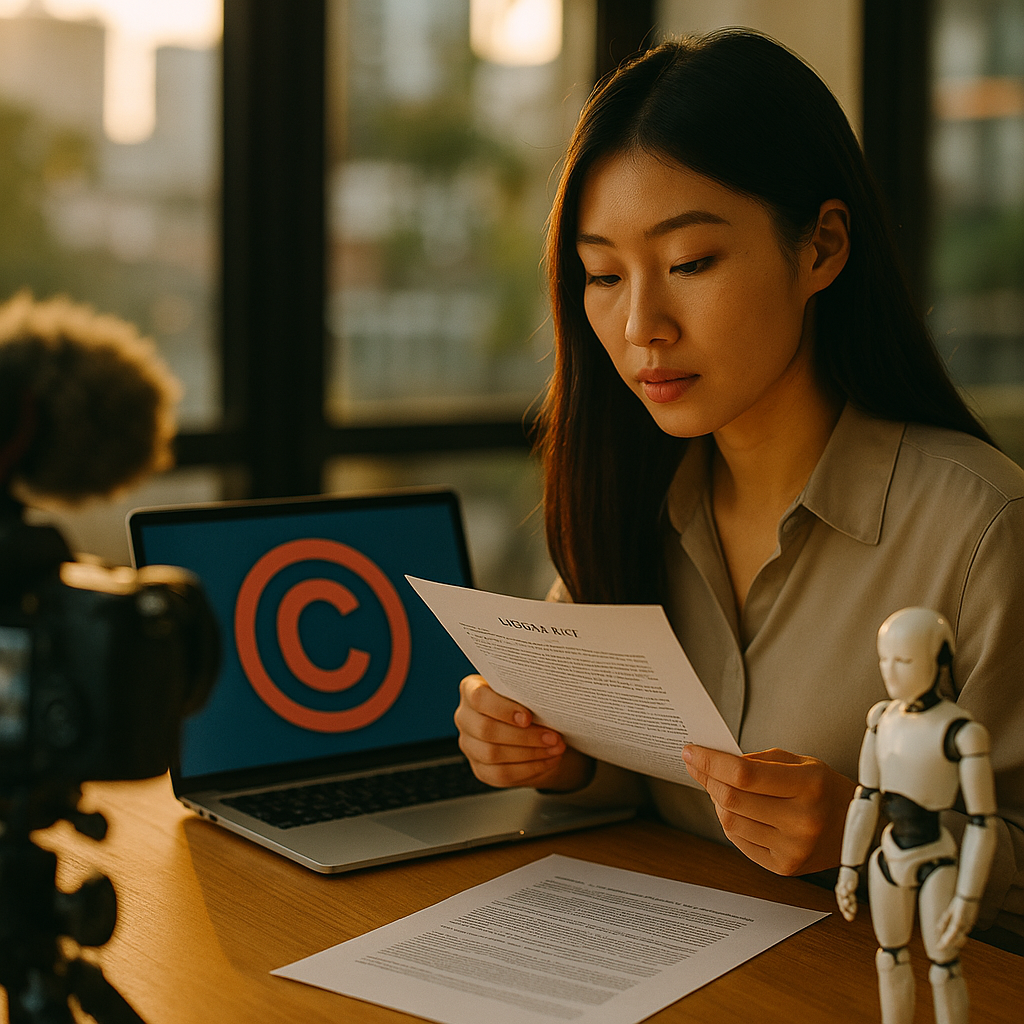
Asia-Pacific now accounts for over 40% of global creator economy revenue, yet most Western-headquartered brands still apply a single global playbook to markets that operate on fundamentally different IP ownership norms, platform dynamics, and AI regulatory timelines. That gap is closing fast, and APOS is where regional executives are setting the agenda.
What APOS Signals for Brand Strategists Operating in APAC
APOS — the annual Asia Pacific pay-TV and streaming summit — has evolved well beyond its broadcast origins. The conference now serves as one of the clearest windows into how regional media executives, platform operators, and creator economy leaders are structuring the next generation of content and IP deals. For brand strategists, the signals coming out of APOS carry real operational weight.
Three recurring themes from recent APOS sessions deserve direct attention: the formalization of creator-originated IP as a licensable asset class, the maturation of vertical content formats as a brand entry point, and the accelerating urgency around AI governance frameworks that differ sharply from what Western brands expect. None of these are abstract trends. Each one has a direct implication for how you structure creator partnership agreements, allocate APAC budgets, and manage compliance exposure.
Creator IP Is No Longer Informal — and That Changes Your Contracts
For years, APAC creator partnerships operated with loose IP arrangements. A creator made content, a brand licensed it for a campaign window, and both parties moved on. That model is under pressure from multiple directions simultaneously.
Regional executives at APOS have outlined a clear directional shift: creators across Southeast Asia, South Korea, Japan, and India are increasingly building IP-first businesses, not audience-first ones. The distinction matters enormously for brand deal structure. When a creator’s primary asset is an IP property — a character, a recurring format, a branded universe — the licensing conversation becomes far more complex than a standard content brief and usage rights clause.
Brands entering APAC creator partnerships without explicit IP ownership, sublicensing, and derivative rights clauses are leaving themselves exposed to both commercial and reputational risk as regional creators professionalize their IP portfolios.
South Korean creators and entertainment companies have been particularly sophisticated here. The K-content ecosystem, anchored by companies like HYBE and CJ ENM, has demonstrated that creator-adjacent IP can be licensed across merchandise, gaming, virtual environments, and brand integrations simultaneously. For a global brand entering a partnership with a mid-tier creator in Seoul or Busan, the expectation of IP layering is now baseline, not advanced.
Practically, this means your legal and partnership teams need to audit standard creator contract templates before any APAC-facing program launches. Review how your current frameworks handle IP reversion, character licensing, and AI-generated derivatives of creator likenesses. The contract and attribution infrastructure you use in North America will need regional modification, not light editing.
Vertical Content as a Brand Entry Point — Getting the Format Logic Right
Vertical short-form content is not a new concept. But the way APAC platforms are structuring vertical content ecosystems is increasingly different from TikTok’s Western rollout or Instagram Reels’ global template.
In markets like Indonesia, Vietnam, and the Philippines, platform-specific vertical formats are being engineered around shopping, community interaction, and live commerce in ways that fundamentally change what “a piece of creator content” means to a brand. TikTok Shop in Southeast Asia operates with conversion mechanics that are more analogous to QVC than to traditional influencer posting. Brands that treat these placements as awareness plays will consistently underperform on ROAS.
APOS discussions have centered on vertical content as a full-funnel architecture, not a top-of-funnel tactic. Regional executives have emphasized that creators building scalable vertical content programs in APAC are packaging format, audience segment, and commerce infrastructure together as a single offering. For brands, this means the evaluation of creator programs needs to include platform-native commerce capability as a selection criterion, not an afterthought.
Japan presents a different dynamic. Vertical content performs strongly in entertainment and gaming verticals, but Japanese audiences maintain higher skepticism toward overt brand integrations. The operational implication: creator briefs for Japan require more indirect integration strategy, longer trust-building timelines, and content formats that prioritize entertainment value over conversion signals. Scaling creator programs across APAC without market-level format customization will consistently degrade performance.
AI Governance in APAC: A Patchwork You Cannot Ignore
This is where many global brand teams are most exposed, and most underprepared.
AI governance across APAC is not a single framework. It is an actively diverging regulatory patchwork. China has implemented generative AI regulations requiring algorithmic disclosure and content labeling. India is developing AI oversight guidelines through the Ministry of Electronics and Information Technology. Singapore has positioned itself as an AI governance hub through its Model AI Governance Framework, which has influenced regional platform policy across Southeast Asia. South Korea introduced AI-specific provisions under its data protection and media content laws.
For brands running AI-assisted creator campaigns — AI-generated scripts, AI voice replication of creator likenesses, AI-synthesized product placements in creator content — each of these frameworks creates distinct compliance obligations. The assumption that your global AI usage policy covers APAC exposure is almost certainly wrong.
If your creator partnership agreements include AI content generation clauses written primarily for FTC compliance, they are not adequate for markets operating under Singapore’s AI governance model, China’s generative AI regulations, or India’s emerging AI oversight requirements.
APOS regional executives have flagged that platform-level AI governance policies — particularly around creator likeness replication and synthetic content labeling — are being developed faster than most brand legal teams are tracking. AI-first program infrastructure built for APAC needs explicit compliance checkpoints mapped to each market’s current regulatory posture, not a single global policy footnote. The FTC’s disclosure framework is the baseline for North America; APAC requires layered market-specific governance.
Operationalizing These Insights: Four Structural Moves
Translating conference signals into operational change requires specificity. Here is what a well-structured APAC creator partnership architecture looks like when these three APOS themes are properly embedded:
- IP audit and contract tiering: Segment APAC creator partners by IP complexity. Standard content creators, IP-owning creators, and character/format IP creators require three distinct contract templates with separate IP ownership, reversion, and derivative rights clauses. Work with regional legal counsel in each target market.
- Format-market mapping: Build a vertical content specification matrix by market. What counts as high-performing vertical content in Indonesia differs from South Korea and Japan. Creator briefs should be market-specific, not regional templates with a language swap.
- AI governance checkpoint by market: Before any AI-assisted content element is deployed in an APAC creator campaign, run a market-level governance check against current regulations in that jurisdiction. Flag China, Singapore, India, and South Korea as requiring the most granular review.
- Platform commerce integration review: For Southeast Asian campaigns specifically, evaluate whether creator partners have active commerce infrastructure on the relevant platform before signing. A creator with 2 million followers but no live commerce track record on TikTok Shop is a different commercial asset than one with proven conversion history. Review CPA-focused KPI frameworks to align expectations with finance teams upfront.
One structural oversight many global teams make: they assign APAC creator programs to a regional generalist rather than building market-level expertise into the team. The creator economy in APAC is not a region, it is a collection of distinct ecosystems. Indonesia alone has creator economy dynamics that differ fundamentally from Singapore, despite sharing a geographic region. For a sharper view of how AI is reshaping team structures on this side of the equation, the analysis on AI’s impact on the CMO role is directly relevant to APAC program staffing decisions.
External benchmarking from Statista’s creator economy data consistently shows APAC market growth outpacing Western counterparts, while eMarketer’s APAC digital ad forecasts underscore the commerce-driven nature of platform growth in the region. These are not projections to file away — they are inputs to your budget reallocation conversations for the next planning cycle.
For brands exploring how voice discovery on platforms like JioHotstar is reshaping creator campaign strategy in South Asia specifically, that layer of platform-native discovery shifts creator selection criteria in ways that standard reach-and-engagement metrics will not capture. Factor that into how you evaluate creator partners in India.
The APAC creator economy is moving toward institutional maturity at a pace that rewards brands who build proper infrastructure now. The governance models, IP frameworks, and vertical content architectures being outlined at forums like APOS are not aspirational — they are operational specifications for the current deal environment.
Audit your APAC creator contract templates against these three dimensions this quarter. If your IP clauses, AI governance provisions, and format specifications cannot pass a market-level review in Seoul, Jakarta, and Singapore simultaneously, you have structural gaps that will surface in your next renewal cycle, not your next campaign brief.
Frequently Asked Questions
What is APOS and why does it matter for creator economy strategy?
APOS (Asia Pacific, Online Video, Pay-TV and Streaming Summit) is an annual media conference focused on the Asia-Pacific region’s content, streaming, and platform industries. It has become a key venue where regional executives outline IP frameworks, platform strategy, and AI governance priorities that directly affect how brands should structure creator partnerships in APAC markets.
How does creator IP ownership work differently in APAC compared to Western markets?
In APAC, particularly in South Korea, Japan, and parts of Southeast Asia, creators are increasingly building IP-first businesses centered on characters, formats, and branded content universes that carry licensing value beyond individual campaign windows. Western contract templates that focus on basic usage rights and content licensing periods are insufficient. APAC creator agreements require explicit IP ownership, derivative rights, sublicensing, and reversion clauses tailored to each market’s legal framework.
What AI governance regulations should brands watch in APAC?
The key jurisdictions to monitor are China (which has active generative AI regulations requiring content labeling and algorithmic disclosure), Singapore (Model AI Governance Framework influencing regional platform policy), India (Ministry of Electronics and Information Technology AI oversight guidelines in development), and South Korea (AI-specific provisions in data protection and media content law). Brands using AI-generated scripts, creator likeness replication, or synthetic content in APAC campaigns need market-level compliance review, not a single global AI policy.
How should brands structure vertical content strategy differently for APAC markets?
Vertical content in APAC functions as a full-funnel architecture, especially in Southeast Asian markets where live commerce and platform-native shopping are deeply integrated into the creator content model. Brands should build market-specific content format specifications rather than applying a single regional brief. Indonesia, South Korea, and Japan each have distinct audience expectations around brand integration, conversion mechanics, and content style that require separate creative direction.
What are the most important contract changes brands need to make before entering APAC creator partnerships?
Brands should audit and update their creator contract templates to include: tiered IP ownership and reversion clauses based on creator IP complexity; market-specific AI content governance provisions for China, Singapore, India, and South Korea; vertical content format specifications tied to platform commerce infrastructure; and regional legal counsel review in each target market. Using a North America-focused contract template for APAC creator partnerships creates commercial and compliance exposure as the regional creator economy matures.
Top Influencer Marketing Agencies
The leading agencies shaping influencer marketing in 2026
Agencies ranked by campaign performance, client diversity, platform expertise, proven ROI, industry recognition, and client satisfaction. Assessed through verified case studies, reviews, and industry consultations.
Moburst

-
2

The Shelf
Boutique Beauty & Lifestyle Influencer AgencyA data-driven boutique agency specializing exclusively in beauty, wellness, and lifestyle influencer campaigns on Instagram and TikTok. Best for brands already focused on the beauty/personal care space that need curated, aesthetic-driven content.Clients: Pepsi, The Honest Company, Hims, Elf Cosmetics, Pure LeafVisit The Shelf → -
3

Audiencly
Niche Gaming & Esports Influencer AgencyA specialized agency focused exclusively on gaming and esports creators on YouTube, Twitch, and TikTok. Ideal if your campaign is 100% gaming-focused — from game launches to hardware and esports events.Clients: Epic Games, NordVPN, Ubisoft, Wargaming, Tencent GamesVisit Audiencly → -
4

Viral Nation
Global Influencer Marketing & Talent AgencyA dual talent management and marketing agency with proprietary brand safety tools and a global creator network spanning nano-influencers to celebrities across all major platforms.Clients: Meta, Activision Blizzard, Energizer, Aston Martin, WalmartVisit Viral Nation → -
5

The Influencer Marketing Factory
TikTok, Instagram & YouTube CampaignsA full-service agency with strong TikTok expertise, offering end-to-end campaign management from influencer discovery through performance reporting with a focus on platform-native content.Clients: Google, Snapchat, Universal Music, Bumble, YelpVisit TIMF → -
6

NeoReach
Enterprise Analytics & Influencer CampaignsAn enterprise-focused agency combining managed campaigns with a powerful self-service data platform for influencer search, audience analytics, and attribution modeling.Clients: Amazon, Airbnb, Netflix, Honda, The New York TimesVisit NeoReach → -
7

Ubiquitous
Creator-First Marketing PlatformA tech-driven platform combining self-service tools with managed campaign options, emphasizing speed and scalability for brands managing multiple influencer relationships.Clients: Lyft, Disney, Target, American Eagle, NetflixVisit Ubiquitous → -
8

Obviously
Scalable Enterprise Influencer CampaignsA tech-enabled agency built for high-volume campaigns, coordinating hundreds of creators simultaneously with end-to-end logistics, content rights management, and product seeding.Clients: Google, Ulta Beauty, Converse, AmazonVisit Obviously →