


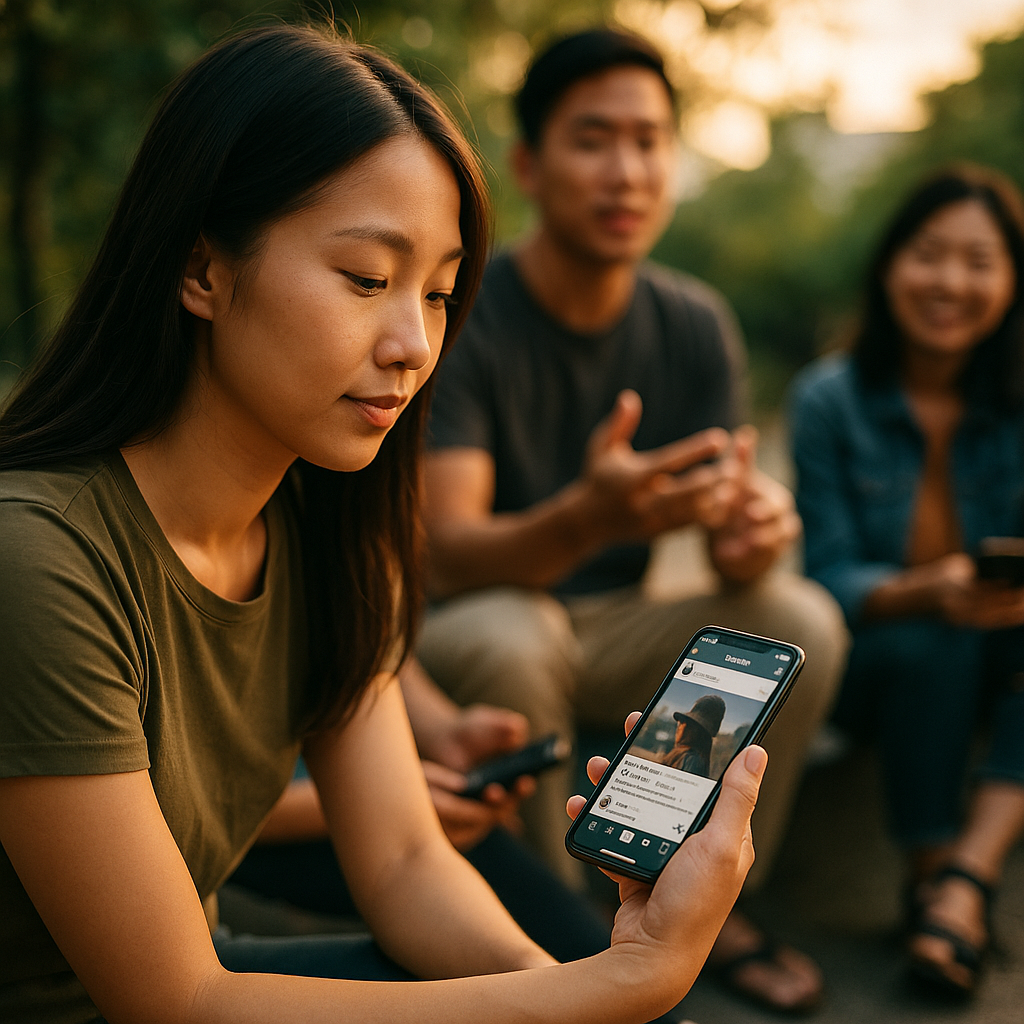
A 25% engagement lift isn’t a rounding error. It’s a strategy signal. Across APAC, brands running micro-community programs are outperforming traditional influencer campaigns by that margin, and the gap is widening. If your team is still allocating budget like it’s a follower-count game, the data says you’re leaving reach — and revenue — on the table.
Why Micro-Communities Are Outperforming the Feed
The core mechanic isn’t complicated. Micro-communities — think Discord servers, private LINE groups, Telegram channels, niche subreddits, KakaoTalk chats — operate on trust density rather than reach breadth. A follower on Instagram sees a post once, maybe. A member of a 400-person skincare Discord sees the same recommendation reinforced five times across a week, often from people they’ve interacted with directly.
That repetition, inside a closed trust loop, is why engagement lift runs higher. Marketers in Seoul, Jakarta, and Singapore have been quietly shifting budget toward these formats for the past few cycles, and the performance data is starting to catch up with the anecdotal buzz.
Brands running structured micro-community programs in APAC are seeing engagement lift roughly 25% above benchmark campaign averages, driven primarily by repeat interaction within closed groups rather than one-off impressions.
This isn’t just a regional quirk. It’s consistent with the broader pattern where micro and nano creators now claim half of influencer budgets globally. APAC is simply moving faster because the platform infrastructure for closed communities — super-app chat ecosystems, regional social apps — is more mature there than in the West.
What “Engagement Lift” Actually Measures
Let’s be precise, because “engagement lift” gets thrown around loosely in pitch decks. In this context, it typically refers to the delta between baseline engagement rate on open-platform content and the engagement rate generated when the same message or creator collaboration runs through a closed community channel first, then radiates outward.
Three things drive the lift:
- Repetition without fatigue. Community members re-share, discuss, and reference content multiple times without the annoyance factor of repeated ad exposure.
- Peer validation loops. When five people in a group chat vouch for a product, that carries more weight than an algorithmic recommendation.
- Lower noise-to-signal ratio. Closed groups filter out casual scrollers. Everyone left is at least moderately invested.
None of this works if brands treat micro-communities like another distribution channel to blast messaging into. The lift disappears fast when members sense they’re being farmed for reach. This is the same trust erosion problem playing out on open platforms — algorithm trust collapses forcing brands to rethink discovery already, and micro-communities are not immune to the same fatigue if mismanaged.
The APAC-Specific Drivers Behind the Number
Why is this pattern more pronounced in APAC than in the US or Europe? A few structural reasons.
First, chat-app culture is dominant. WhatsApp, LINE, KakaoTalk, and WeChat function as primary social infrastructure across much of the region, not secondary messaging tools. Community formation happens natively inside these apps, which means brands don’t need to build a separate community platform from scratch — they plug into existing behavior.
Second, platform algorithm fragmentation is pushing brands toward owned and semi-owned channels. As detailed in There Is No Universal Algorithm, Just Four Different Ones, the days of one content strategy working across platforms are over. Micro-communities sidestep that problem entirely because distribution is human-mediated, not algorithm-mediated.
Third, and this matters more than people admit: trust in AI-curated feeds is declining even as engagement metrics on those feeds tick upward. That paradox — AI-curated feeds boost engagement but trust keeps eroding — is pushing consumers toward smaller, human-vetted spaces where they feel less manipulated. Micro-communities are, functionally, a trust refuge.
Budget Reallocation: What Brands Are Actually Doing
Talk to media planners running APAC accounts right now and you’ll hear a consistent story: budgets are splitting into three tiers instead of the old two-tier macro/micro split.
- Anchor creators for top-of-funnel reach and brand credibility.
- Community-embedded micro-creators who already have standing in relevant Discord, LINE, or niche forum communities.
- Retained community managers or creator liaisons whose job is ongoing presence, not campaign bursts.
That third tier is new, and it’s where the ROI math gets interesting. One-off activations inside communities tend to underperform because members can smell a drive-by. Sustained presence — a brand rep who shows up in the group repeatedly, answers questions, doesn’t just drop promo codes — is what sustains the 25% lift over multiple quarters rather than one campaign spike.
This mirrors a broader shift already documented in creator economics: 63% of creator deals don’t renew, and retainers win on ROI precisely because sustained relationships compound trust in ways single campaigns can’t. Micro-communities are the community-side mirror of that same principle.
Where the Number Breaks Down
Skeptical of the 25% figure? You should be, a little. Lift metrics are notoriously easy to game with cherry-picked baselines. A few caveats worth flagging before you rebuild your APAC media plan around this stat:
- Community size caps the ceiling. Lift percentages look great on a 500-person Discord. They don’t scale linearly to reach a mass-market KPI. If your brand needs 10 million impressions this quarter, micro-communities alone won’t get you there.
- Measurement inconsistency. Not every brand defines “engagement” the same way across chat apps, forums, and Discord. Comparing a reaction emoji to a genuine reply is sloppy math, and plenty of agencies still do it.
- Attribution remains messy. Closed communities are, by definition, harder to instrument than open social feeds. Pixel tracking doesn’t work inside a private Telegram channel. Brands need workaround measurement — UTM-tagged links, unique promo codes, post-purchase surveys — and most aren’t doing this rigorously yet.
This attribution gap connects to a wider industry problem. Firms with mature measurement stacks are already pulling ahead: strong attribution infrastructure drives 23% more martech spend because leadership trusts the numbers enough to keep funding the channel. Micro-community programs without equivalent rigor risk getting cut in the next budget review, lift or no lift.
Building a Micro-Community Program That Doesn’t Collapse in a Quarter
A few operational lessons from brands that have sustained this beyond a single campaign cycle:
Pick creators who are members, not visitors. The creator needs standing in the community before the brand shows up. Parachuting in a macro-influencer to post in a niche Discord usually backfires — the mismatch is obvious and the lift evaporates. This is closely related to why the creator middle class outgrows macro influencers on ROI: proximity and relevance beat raw follower count.
Vet the creator’s actual community health, not just follower count. A creator claiming an active Discord might have a ghost town behind the invite link. Ask for screenshots of recent activity, message frequency, and member retention before committing spend.
Localize, don’t just translate. APAC micro-communities are linguistically and culturally distinct market by market. A campaign that works in a Bangkok Line group won’t automatically translate to a Manila Discord. Localization costs matter here too — as detailed in AI creator localization costs across 12 languages, automated translation tools have limits, and community trust is exactly where those limits show up fastest.
Budget for retention, not just launch. Community trust decays quickly if brand presence is inconsistent. Treat this like an owned-channel investment with quarterly renewal, not a campaign line item.
For teams evaluating whether this fits their broader creator mix, it’s worth reviewing how the creator economy’s growth past $250B is forcing budget rebuilds more broadly — micro-community investment is one line item in a much larger reallocation happening across the industry right now.
What This Means for Platform Selection
If micro-community engagement outperforms open-feed engagement by a quarter, platform selection criteria need to change. Reach-per-dollar is no longer the only metric that matters; trust-density-per-dollar deserves a seat at the table too.
Practically, this means marketing teams should be asking vendors and agencies: which platforms host the densest, most active niche communities relevant to our category? Tools that track sentiment and activity inside Discord servers or Telegram channels are still immature compared to platforms like Sprout Social for open social monitoring, so expect to do more manual diligence here for now.
Industry data from eMarketer and Statista continues to show APAC leading global growth in social commerce and community-driven discovery, which tracks with what practitioners are reporting anecdotally on the ground. Expect more formal benchmarking data to catch up over the next few reporting cycles.
Next Step
Don’t chase the 25% number as a universal benchmark — audit your own community-embedded creator relationships this quarter, measure engagement against your open-feed baseline using consistent definitions, and reallocate only where the lift holds up under your own attribution, not someone else’s press release.
FAQs
What counts as a “micro-community” in influencer marketing?
A micro-community is a small, closed or semi-closed group — a Discord server, private chat group, niche forum, or subreddit — where members interact repeatedly around a shared interest. It’s distinct from an open social media following because engagement happens in a trusted, repeat-interaction environment rather than a single algorithmic feed exposure.
Why is engagement lift higher in APAC micro-communities specifically?
APAC’s chat-app-centric social infrastructure (LINE, KakaoTalk, WeChat, WhatsApp) means community formation is native to daily digital behavior, not a separate platform brands need to build. Combined with declining trust in algorithmic feeds, consumers are gravitating toward smaller, human-vetted spaces where peer validation drives higher engagement.
How do brands measure ROI inside closed communities like Discord or Telegram?
Standard pixel tracking doesn’t work inside private chat apps. Brands typically rely on UTM-tagged links, unique promo codes, post-purchase attribution surveys, and manual activity tracking to approximate engagement and conversion, though measurement remains less precise than open-platform analytics.
Can micro-community strategy scale to mass-market campaigns?
Not directly. Micro-communities excel at trust density and engagement quality, not raw reach. Brands needing mass awareness should treat community programs as a complementary layer alongside broader creator tiers, not a replacement for scaled reach campaigns.
What’s the biggest risk in micro-community marketing programs?
Member trust erodes quickly if brands treat communities as another broadcast channel. One-off promotional drops without sustained, authentic presence typically kill engagement lift within one or two campaign cycles.
Top Influencer Marketing Agencies
The leading agencies shaping influencer marketing in 2026
Agencies ranked by campaign performance, client diversity, platform expertise, proven ROI, industry recognition, and client satisfaction. Assessed through verified case studies, reviews, and industry consultations.
Moburst

-
2

The Shelf
Boutique Beauty & Lifestyle Influencer AgencyA data-driven boutique agency specializing exclusively in beauty, wellness, and lifestyle influencer campaigns on Instagram and TikTok. Best for brands already focused on the beauty/personal care space that need curated, aesthetic-driven content.Clients: Pepsi, The Honest Company, Hims, Elf Cosmetics, Pure LeafVisit The Shelf → -
3

Audiencly
Niche Gaming & Esports Influencer AgencyA specialized agency focused exclusively on gaming and esports creators on YouTube, Twitch, and TikTok. Ideal if your campaign is 100% gaming-focused — from game launches to hardware and esports events.Clients: Epic Games, NordVPN, Ubisoft, Wargaming, Tencent GamesVisit Audiencly → -
4

Viral Nation
Global Influencer Marketing & Talent AgencyA dual talent management and marketing agency with proprietary brand safety tools and a global creator network spanning nano-influencers to celebrities across all major platforms.Clients: Meta, Activision Blizzard, Energizer, Aston Martin, WalmartVisit Viral Nation → -
5

The Influencer Marketing Factory
TikTok, Instagram & YouTube CampaignsA full-service agency with strong TikTok expertise, offering end-to-end campaign management from influencer discovery through performance reporting with a focus on platform-native content.Clients: Google, Snapchat, Universal Music, Bumble, YelpVisit TIMF → -
6

NeoReach
Enterprise Analytics & Influencer CampaignsAn enterprise-focused agency combining managed campaigns with a powerful self-service data platform for influencer search, audience analytics, and attribution modeling.Clients: Amazon, Airbnb, Netflix, Honda, The New York TimesVisit NeoReach → -
7

Ubiquitous
Creator-First Marketing PlatformA tech-driven platform combining self-service tools with managed campaign options, emphasizing speed and scalability for brands managing multiple influencer relationships.Clients: Lyft, Disney, Target, American Eagle, NetflixVisit Ubiquitous → -
8

Obviously
Scalable Enterprise Influencer CampaignsA tech-enabled agency built for high-volume campaigns, coordinating hundreds of creators simultaneously with end-to-end logistics, content rights management, and product seeding.Clients: Google, Ulta Beauty, Converse, AmazonVisit Obviously →