


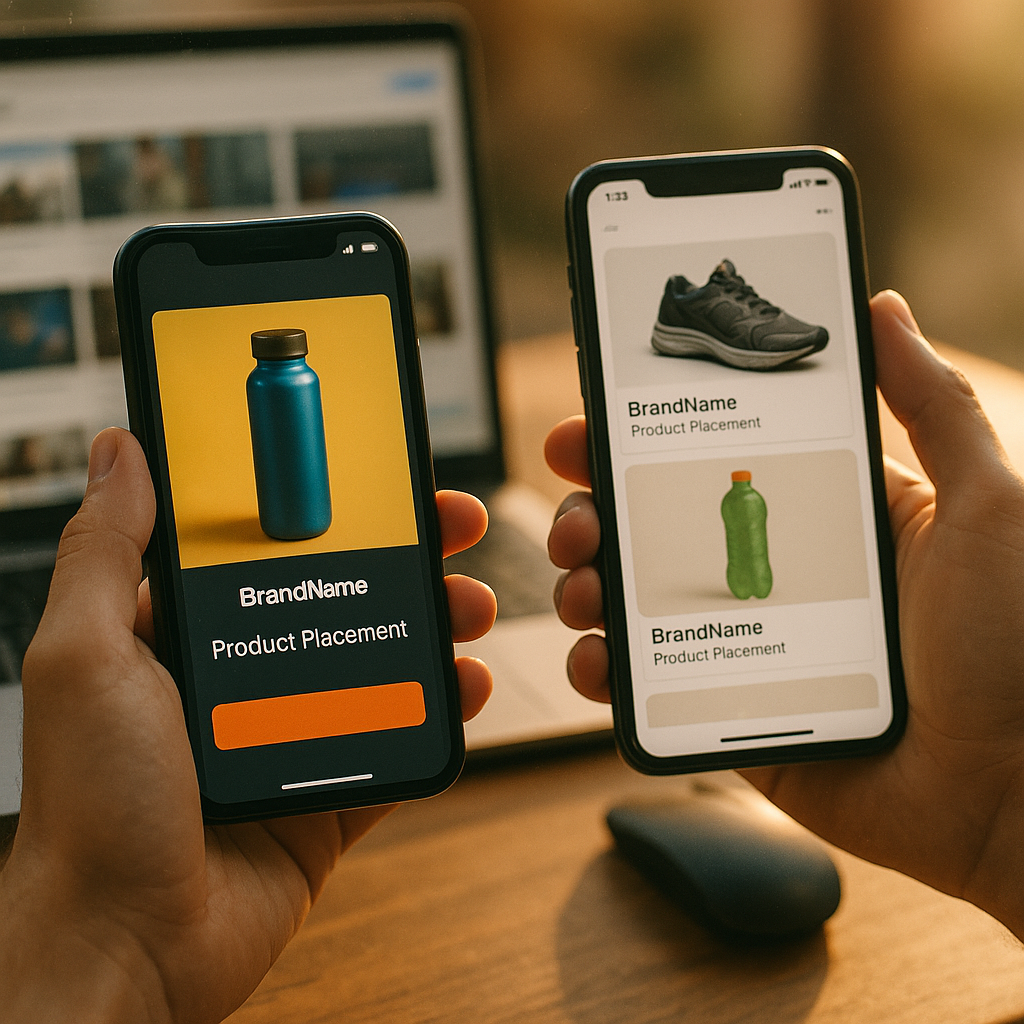
Roughly 61% of shoppers under 35 say they’d trust an AI agent to pick a product for them, according to recent consumer surveys, yet almost none of them know whether that pick was sponsored. That’s the problem sitting at the center of the Atlas Browser vs Comet comparison: two agentic browsers, two very different approaches to surfacing product content, and zero industry standard for disclosure. Brands need to understand the mechanics now, not after their product gets buried or their competitor gets an unlabeled boost.
Why This Comparison Matters to Brand Teams
OpenAI’s Atlas and Perplexity’s Comet aren’t just browsers with chatbots bolted on. They’re agentic systems that browse, compare, and transact on a user’s behalf. When someone asks either tool to “find me the best running shoes under $150,” the browser doesn’t return ten blue links. It returns a synthesized recommendation, often with one or two products surfaced prominently.
That single moment, the recommendation, is the new battleground for brand visibility. If your product isn’t in that shortlist, you don’t exist for that query. This is the same shift we’ve tracked in how AI Mode kills blue links, except agentic browsers take it a step further: they can also click “buy” without the user ever seeing a product page.
In agentic browsing, the difference between “recommended” and “ignored” isn’t ranking position anymore — it’s binary inclusion in a shortlist of one to three products.
How Atlas Surfaces Product Content
Atlas, built on OpenAI’s GPT-based agent stack, pulls product data primarily through a combination of live web browsing, retrieval from indexed merchant feeds, and OpenAI’s existing shopping integrations. In our test queries across categories (electronics, skincare, outdoor gear), Atlas tended to favor merchants with structured product feeds and clean schema markup. Retailers using Merchant Center-style feeds or robust product schema showed up more consistently than smaller DTC sites with thin metadata.
Sponsored placement inside Atlas is murkier. OpenAI has talked publicly about shopping ads and sponsored product placements inside ChatGPT and Atlas, but during our audit, disclosure was inconsistent. Some sessions showed a small “sponsored” tag next to a product card. Others didn’t, even when the same brand appeared to get preferential placement across repeated queries. That inconsistency alone should worry any compliance-minded brand team.
A few technical patterns stood out:
- Products with rich structured data (price, availability, reviews) were cited more often and more accurately.
- Atlas leaned heavily on a small number of trusted retail domains, meaning smaller brands often surfaced only as “available at [retailer]” rather than direct brand mentions.
- Sponsored-looking placements appeared more frequently in high-commercial-intent queries (e.g., “best noise-canceling headphones”) than in informational ones.
Comet’s Retrieval Model Looks Different
Comet, Perplexity’s agentic browser, takes a citation-first approach that mirrors Perplexity’s core search product. Every product recommendation tends to come with a visible source link, and in our testing, Comet was noticeably more transparent about where a claim or price point originated. That’s consistent with Perplexity’s broader brand positioning around answer-engine transparency, something we’ve covered in the context of answer engine optimization platforms.
Where Comet differs most is in how it treats sponsored content. Perplexity has been explicit about testing sponsored answers and “sponsored follow-up questions” in its core search product, and Comet inherits that framework. In our audit, sponsored product cards inside Comet carried a more consistent visual label than what we saw in Atlas, though the label’s prominence still varied by query type and screen real estate.
Comet also appeared to weight organic mentions from reviews, forums, and editorial content more heavily than Atlas did. A product with strong Reddit or niche-publication buzz sometimes outranked a bigger brand with a thinner organic footprint, even in shopping-intent queries. That’s a meaningfully different retrieval signal, and it means SEO/GEO strategies built purely around retailer feeds won’t fully translate to Comet visibility.
Comet’s heavier reliance on citation-based organic content means brand mentions in earned media and community discussion carry more weight than in Atlas, where retailer feed quality dominates.
Sponsored vs. Organic: A Side-by-Side Breakdown
Here’s what the technical audit surfaced when we ran matched queries across both browsers, tracking disclosure, citation depth, and source diversity:
- Disclosure consistency: Comet labeled sponsored placements more reliably; Atlas showed gaps, particularly on repeated sessions with the same query.
- Source diversity: Atlas leaned on fewer, larger retail domains. Comet pulled from a wider mix, including editorial reviews, Reddit threads, and comparison sites.
- Citation visibility: Comet consistently displayed clickable source links next to claims. Atlas sometimes synthesized a recommendation without a visible, checkable source.
- Feed dependency: Atlas rewarded clean product schema and merchant feeds far more heavily than Comet did.
- Query sensitivity: Both browsers showed more sponsored-style placements on high-commercial-intent queries than informational ones, a pattern that mirrors what we’ve seen in traditional social commerce trends.
None of this is static. Both companies are iterating fast, and any audit like this one is a snapshot, not a permanent map. That’s precisely why brands need a recurring audit cadence rather than a one-time check, similar to the discipline we recommend in auditing agentic AI media-buying error rates.
What This Means for Attribution and Spend
If a user asks Comet or Atlas for a recommendation and buys directly through the agent, your existing attribution stack probably won’t catch it cleanly. Click-through referral data gets thin or disappears entirely when the “click” happens inside a closed agentic loop. This is the exact challenge covered in agentic search forcing a rethink of campaign attribution, and it applies directly here.
Brand teams should assume that a meaningful share of “direct” or “unattributed” traffic and revenue in the coming year is actually agentic-browser-driven. Google’s own guidance on structured data and merchant feeds, found on Google Support, is a reasonable proxy for the kind of feed hygiene both Atlas and Comet reward, even outside Google’s ecosystem.
Budget-wise, this also raises a hard question: should brands start bidding into “sponsored” slots inside these agentic browsers now, while inventory is thin and competition is low? Or wait until measurement matures? There’s no universal answer, but the calculus mirrors what we’ve seen with early agentic AI advertising placements — early movers get cheaper visibility, at the cost of murkier ROI reporting.
Compliance Risk Is the Quiet Story Here
Regulators haven’t caught up. The FTC’s endorsement and disclosure guidance, available at ftc.gov, was written for human influencers and traditional native advertising, not agentic browser recommendations that blend sponsored and organic results in a single synthesized answer. That gray area won’t last. When it closes, brands paying for placement inside Atlas or Comet without clear internal documentation of what’s sponsored versus organic will be exposed.
Practical steps worth taking now:
- Document every paid placement or feed relationship tied to AI shopping surfaces, including Atlas and Comet, in a single compliance log.
- Audit disclosure labeling monthly, since both platforms are actively changing how (and whether) they flag sponsored content.
- Loop procurement and legal into any vendor conversation about “AI shopping visibility” packages, the same way you’d treat AI agent kill-switch certification for media-buying tools.
This isn’t hypothetical caution. Regulatory bodies like the UK’s ICO have already signaled scrutiny of AI-driven personalization and recommendation systems more broadly. Product discovery inside agentic browsers is a natural next target.
Practical Next Steps for Brand Teams
Run your own matched-query audit before trusting anyone else’s, including this one. Test five to ten of your highest-intent product queries across both Atlas and Comet, weekly, and track whether your brand appears, how it’s sourced, and whether sponsored labeling is visible. Pair that with a feed hygiene check: if your product schema, pricing, and availability data aren’t clean, neither browser will surface you reliably, sponsored or not.
FAQs
What’s the core difference between Atlas Browser and Comet for product discovery?
Atlas leans heavily on structured merchant feeds and a smaller set of trusted retail domains, while Comet weights organic citations, reviews, and community content more heavily and shows more consistent sponsored labeling.
Does either browser clearly disclose sponsored product placements?
Comet was more consistent with visible sponsored labels during testing. Atlas showed gaps, with some sponsored-looking placements appearing unlabeled across repeated sessions.
Can brands track sales that happen inside these agentic browsers?
Not reliably yet. Purchases completed inside a closed agentic loop often don’t pass standard referral or click-through data back to a brand’s analytics stack, creating attribution blind spots.
Should brands optimize product feeds specifically for Atlas or Comet?
Yes. Clean, structured product data (price, availability, reviews) improved visibility in Atlas specifically, while strong earned media and review coverage mattered more for Comet.
Is there regulatory risk in paying for placement in these browsers?
Potentially significant risk. Current disclosure rules from bodies like the FTC weren’t written for blended sponsored/organic AI recommendations, and enforcement is likely to catch up quickly.
FAQs
What’s the core difference between Atlas Browser and Comet for product discovery?
Atlas leans heavily on structured merchant feeds and a smaller set of trusted retail domains, while Comet weights organic citations, reviews, and community content more heavily and shows more consistent sponsored labeling.
Does either browser clearly disclose sponsored product placements?
Comet was more consistent with visible sponsored labels during testing. Atlas showed gaps, with some sponsored-looking placements appearing unlabeled across repeated sessions.
Can brands track sales that happen inside these agentic browsers?
Not reliably yet. Purchases completed inside a closed agentic loop often don’t pass standard referral or click-through data back to a brand’s analytics stack, creating attribution blind spots.
Should brands optimize product feeds specifically for Atlas or Comet?
Yes. Clean, structured product data (price, availability, reviews) improved visibility in Atlas specifically, while strong earned media and review coverage mattered more for Comet.
Is there regulatory risk in paying for placement in these browsers?
Potentially significant risk. Current disclosure rules from bodies like the FTC weren’t written for blended sponsored/organic AI recommendations, and enforcement is likely to catch up quickly.
Top Influencer Marketing Agencies
The leading agencies shaping influencer marketing in 2026
Agencies ranked by campaign performance, client diversity, platform expertise, proven ROI, industry recognition, and client satisfaction. Assessed through verified case studies, reviews, and industry consultations.
Moburst

-
2

The Shelf
Boutique Beauty & Lifestyle Influencer AgencyA data-driven boutique agency specializing exclusively in beauty, wellness, and lifestyle influencer campaigns on Instagram and TikTok. Best for brands already focused on the beauty/personal care space that need curated, aesthetic-driven content.Clients: Pepsi, The Honest Company, Hims, Elf Cosmetics, Pure LeafVisit The Shelf → -
3

Audiencly
Niche Gaming & Esports Influencer AgencyA specialized agency focused exclusively on gaming and esports creators on YouTube, Twitch, and TikTok. Ideal if your campaign is 100% gaming-focused — from game launches to hardware and esports events.Clients: Epic Games, NordVPN, Ubisoft, Wargaming, Tencent GamesVisit Audiencly → -
4

Viral Nation
Global Influencer Marketing & Talent AgencyA dual talent management and marketing agency with proprietary brand safety tools and a global creator network spanning nano-influencers to celebrities across all major platforms.Clients: Meta, Activision Blizzard, Energizer, Aston Martin, WalmartVisit Viral Nation → -
5

The Influencer Marketing Factory
TikTok, Instagram & YouTube CampaignsA full-service agency with strong TikTok expertise, offering end-to-end campaign management from influencer discovery through performance reporting with a focus on platform-native content.Clients: Google, Snapchat, Universal Music, Bumble, YelpVisit TIMF → -
6

NeoReach
Enterprise Analytics & Influencer CampaignsAn enterprise-focused agency combining managed campaigns with a powerful self-service data platform for influencer search, audience analytics, and attribution modeling.Clients: Amazon, Airbnb, Netflix, Honda, The New York TimesVisit NeoReach → -
7

Ubiquitous
Creator-First Marketing PlatformA tech-driven platform combining self-service tools with managed campaign options, emphasizing speed and scalability for brands managing multiple influencer relationships.Clients: Lyft, Disney, Target, American Eagle, NetflixVisit Ubiquitous → -
8

Obviously
Scalable Enterprise Influencer CampaignsA tech-enabled agency built for high-volume campaigns, coordinating hundreds of creators simultaneously with end-to-end logistics, content rights management, and product seeding.Clients: Google, Ulta Beauty, Converse, AmazonVisit Obviously →