


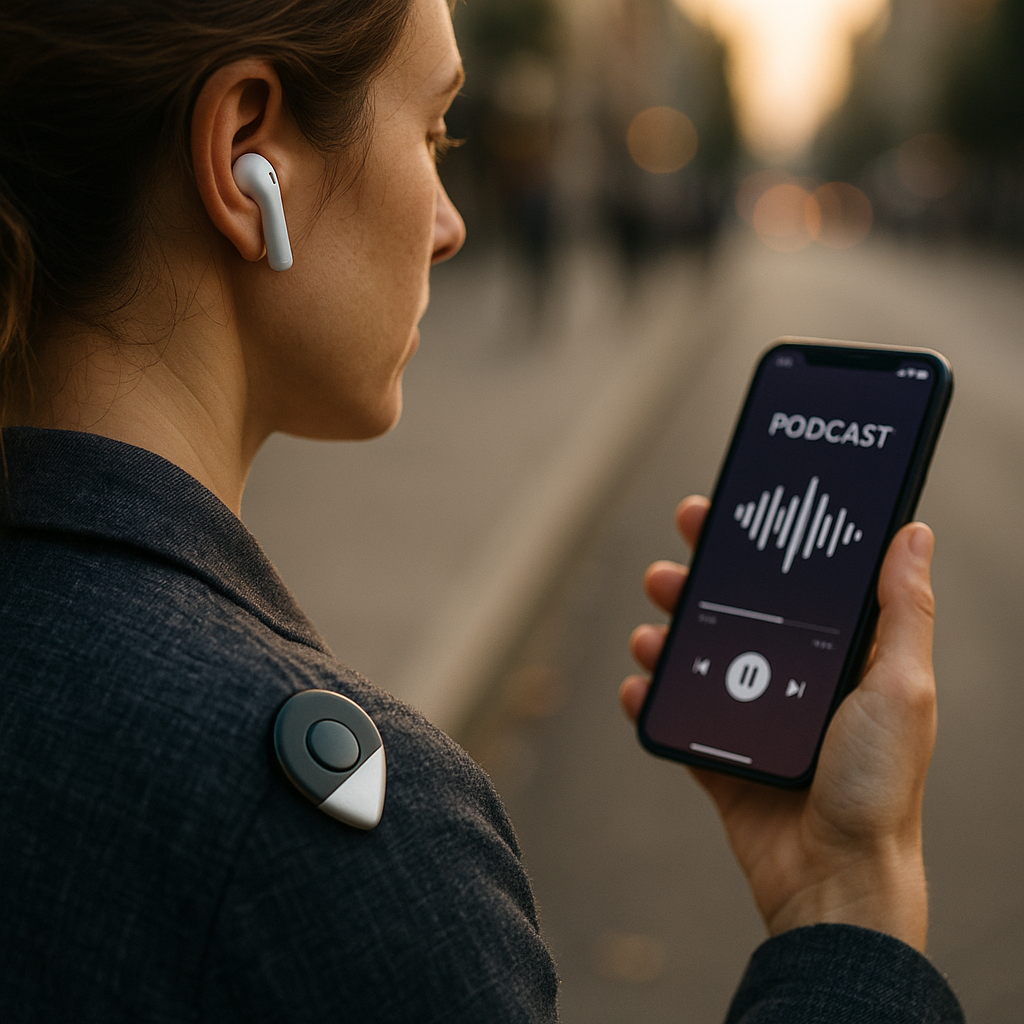
As screens shrink and ambient computing expands, audio first marketing is becoming a practical strategy for brands exploring wearable smart pins. These compact AI devices create intimate, voice-led moments that can outperform crowded visual channels when used responsibly. The opportunity is real, but so are the risks around privacy, usefulness, and measurement. Here is the playbook marketers need.
Why wearable smart pins matter for ambient marketing
Wearable smart pins sit at the edge of a larger shift toward ambient marketing. Instead of asking users to unlock a phone, open an app, or scroll through a feed, these devices bring assistance, reminders, summaries, and spoken prompts into daily life. They are designed to be present without demanding full visual attention. That changes how brands should think about discovery, engagement, and loyalty.
In 2026, the key question is not whether every consumer will wear a smart pin. It is whether enough high-intent, early-adopter users will rely on voice-led wearables to justify experimentation. For many categories, the answer is yes. Travel, retail, health and wellness, productivity, entertainment, local commerce, and customer service all have use cases where quick audio interactions feel natural.
These devices differ from smart speakers and earbuds in one important way: they are wearable, context-aware, and often paired with AI assistants that summarize information in real time. That makes them useful for:
- Micro-moments such as reminders, recommendations, and status updates
- Hands-busy scenarios like commuting, cooking, shopping, or walking
- Contextual decision support based on time, place, task, and previous behavior
- Low-friction service interactions that replace taps with speech
For marketers, this means the message must be shorter, more relevant, and more useful than what works on a screen. Audio on smart pins is not a place for recycled ad copy. It is a channel for concise assistance that earns attention by solving a problem immediately.
Building an audio UX strategy for smart pin users
A strong audio UX strategy starts with the reality of how people listen. Users cannot scan a spoken message the way they scan a page. If your point is buried, it is missed. If the prompt is too long, it feels intrusive. If the brand voice sounds artificial, trust drops fast.
Design for spoken clarity first. Every branded interaction should answer three questions:
- Why is this message arriving now?
- What should the user understand in five seconds?
- What simple action can happen next by voice?
Keep the structure tight. Lead with the purpose, then the value, then the choice. For example, instead of saying, “We wanted to let you know that based on your recent activity and our latest offers, there may be a new option you would like,” say, “Your usual coffee shop has a two-minute pickup slot open now. Want me to reserve it?”
That format works because it respects listener attention. It is specific, timely, and actionable.
Brands should also establish an audio identity that feels human without trying too hard. This includes:
- Tone that matches the context, such as calm for health, energetic for retail, or direct for travel
- Pacing that allows comprehension without dragging
- Vocabulary that sounds natural when spoken aloud
- Confirmation patterns that reassure users after an action
Accessibility is not optional. Spoken interactions must account for hearing differences, accents, speech variation, and noisy environments. Offer multimodal follow-up where possible, such as a summary sent to the phone. The best experiences do not force audio when text is more practical; they use audio when it adds speed, convenience, or comfort.
Finally, treat interruptions with care. Smart pins live close to the body and feel more personal than a banner ad or push notification. If a brand overuses that access, the device will become a source of friction rather than value. Frequency caps, explicit preferences, and easy opt-outs are foundational.
Voice commerce opportunities in audio first marketing
Voice commerce on wearable smart pins works best when it removes friction from a known intent. It is not ideal for complex browsing. It is highly effective for reorders, replenishment, local recommendations, appointment scheduling, service updates, and guided decision making.
Think about the customer journey in layers:
- Discovery: the assistant surfaces a relevant option based on context
- Consideration: the user hears a brief comparison or recommendation
- Conversion: a voice confirmation completes the action
- Retention: follow-up support and reminders improve the experience
For example, a grocery brand can support replenishment with a simple prompt: “You are low on coffee filters. Reorder the same pack?” A travel brand can say: “Your gate changed to B12. Want walking directions and a lounge offer on the way?” A fitness brand can trigger a recovery reminder tied to routine behavior rather than a random promo.
The lesson is clear: monetize utility, not interruption.
To do this well, brands need a content framework for audio prompts:
- Intent-led offers tied to behavior, location, or timing
- Single-action choices that are easy to say yes or no to
- Trust signals such as price, timing, or source transparency
- Post-action confirmation so users know what happened
Marketers should also work closely with product, legal, and CX teams. A spoken recommendation on a wearable device can influence immediate behavior. That raises the standard for accuracy, suitability, and consent. If the offer is wrong, the damage is not just a missed conversion. It is a trust failure in a highly personal environment.
Privacy and consent in conversational AI advertising
No playbook for smart pins is credible without a serious view of conversational AI advertising and privacy. These devices often process contextual inputs that can feel sensitive, including location, schedule cues, environmental audio, and behavioral patterns. Users will only accept branded experiences if the value exchange is obvious and the controls are clear.
Use these principles as non-negotiables:
- Explicit consent before enabling branded audio interactions
- Clear explanations of what data informs recommendations
- Granular controls for frequency, categories, and quiet hours
- Easy revocation without friction or hidden steps
- Data minimization so only necessary signals are used
Trust is part of performance. Users who understand why a recommendation appears are more likely to act on it. Users who feel watched will disengage. That is why the best brands speak plainly about data use. They avoid vague language and explain the benefit in user terms, not policy terms.
There is also a safety dimension. Audio prompts should not distract users in risky contexts such as crossing streets, cycling, or driving. Build suppression rules for those moments. If the brand has no way to know the context reliably, it should avoid non-essential prompts entirely.
EEAT matters here. Helpful content on this topic should reflect operational experience, clear standards, and realistic limitations. Marketers should document pilot learnings, involve compliance teams early, and publish preference controls that users can understand. Authority in emerging channels comes from responsible execution, not from making inflated claims.
Measuring wearable attribution and performance
Measurement is where many experiments with smart pins will either mature or stall. Wearable attribution is possible, but it requires a narrower definition of success than traditional impression models. Audio interactions are intimate and often low-volume. That does not make them weak. It means they should be judged on quality signals.
Start with metrics that reflect actual usefulness:
- Opt-in rate for branded audio experiences
- Prompt completion rate to see whether users listen through
- Voice response rate after a spoken suggestion
- Task completion rate for actions like reorder, booking, or save
- Retention lift among users who engage with the audio feature
- Satisfaction signals such as thumbs-up, ratings, or follow-up behavior
Do not overvalue raw reach. A small audience that repeatedly acts on timely prompts can produce more value than a large audience that ignores them. Smart pin marketing should be assessed against incremental outcomes: faster purchases, fewer support contacts, better reactivation, improved routine adherence, or stronger loyalty.
To measure incrementality, use controlled tests where possible. Compare users who receive contextual audio help with similar users who receive no prompt or a non-audio alternative. Track downstream impact over a realistic period. Audio may influence not just immediate conversions but also trust and habit formation.
Qualitative feedback matters too. Ask users whether the prompt felt useful, mistimed, unclear, or too promotional. The answers will improve performance faster than dashboards alone. Since this channel is still emerging, direct user learning is a competitive advantage.
Launching a smart device advertising pilot that scales
A practical smart device advertising pilot should be small, specific, and testable. Do not begin with a broad campaign objective like “own the wearable future.” Start with one customer problem and one audio behavior the device can improve.
A proven rollout sequence looks like this:
- Select one use case with clear user value, such as reorder reminders, travel alerts, or appointment confirmations
- Define the trigger based on permissioned context, such as time, location, inventory, or routine behavior
- Write short voice scripts that lead with utility and end with one action
- Set safety and privacy rules covering consent, quiet hours, risky contexts, and exclusions
- Choose success metrics focused on task completion and retention, not vanity reach
- Run a controlled pilot with clear audience boundaries
- Review transcripts and feedback to improve wording, timing, and relevance
- Scale only what users keep rather than what the brand wants to push
Creative testing should focus on variables unique to audio: timing, brevity, voice style, confirmation language, and offer framing. A difference of a few words can change whether a prompt sounds helpful or salesy. Test versions that emphasize convenience, savings, trust, or urgency, but keep the message honest.
Operationally, make sure customer support knows the pilot exists. Users may ask how the recommendation appeared, how to disable it, or whether a spoken action was completed. If support teams cannot answer confidently, the experience breaks trust.
Most importantly, build for permanence only after the pilot proves consistent value. Emerging hardware categories can shift quickly. The durable asset is not a one-off campaign. It is the capability to design, govern, and optimize voice-led customer experiences across ambient devices.
FAQs about audio first marketing on wearable smart pins
What is audio first marketing?
Audio first marketing is a strategy that designs brand interactions primarily for spoken delivery and listening behavior rather than screens. On wearable smart pins, that means concise, contextual, voice-led prompts that help users act quickly.
Why are wearable smart pins different from smart speakers?
Smart pins are wearable and often context-aware throughout the day. They support more personal, real-time interactions tied to movement, location, schedule, and routine, which changes how brands should time and frame messages.
Which industries benefit most from smart pin marketing?
Retail, travel, health and wellness, productivity, local services, media, and customer support are strong fits. The best use cases involve quick decisions, reminders, reorders, status updates, and assistance during hands-busy moments.
How long should an audio prompt be on a smart pin?
Most branded prompts should be brief enough to communicate value in a few seconds. If the user needs more detail, offer a follow-up by voice or send a summary to a companion app instead of forcing a long spoken message.
What are the biggest privacy risks?
The main risks are unclear consent, overuse of contextual data, poorly explained personalization, and prompts delivered in sensitive or unsafe situations. Clear controls, transparent data practices, and strict suppression rules reduce these risks.
How do you measure ROI for audio first marketing?
Focus on opt-ins, prompt completion, voice responses, task completion, retention lift, and incremental business outcomes. Controlled tests are especially useful because they show whether audio support creates better results than non-audio alternatives.
Should brands use synthetic voices or human voices?
Either can work if the output is clear, natural, and trustworthy. The key is consistency, intelligibility, and fit with the use case. Overly polished or gimmicky voices usually reduce trust in a wearable environment.
What is the biggest mistake brands make in this channel?
The biggest mistake is treating smart pins like another ad placement. Users expect utility, not interruption. If the message is not timely, relevant, and easy to act on, it will feel invasive and damage adoption.
Wearable smart pins reward brands that think like product designers, not just advertisers. The winning approach to audio first marketing in 2026 is simple: earn permission, deliver immediate utility, protect privacy, and measure real outcomes. Start with one focused use case, test rigorously, and scale only when users clearly benefit. In this channel, relevance is the creative and trust is the strategy.