


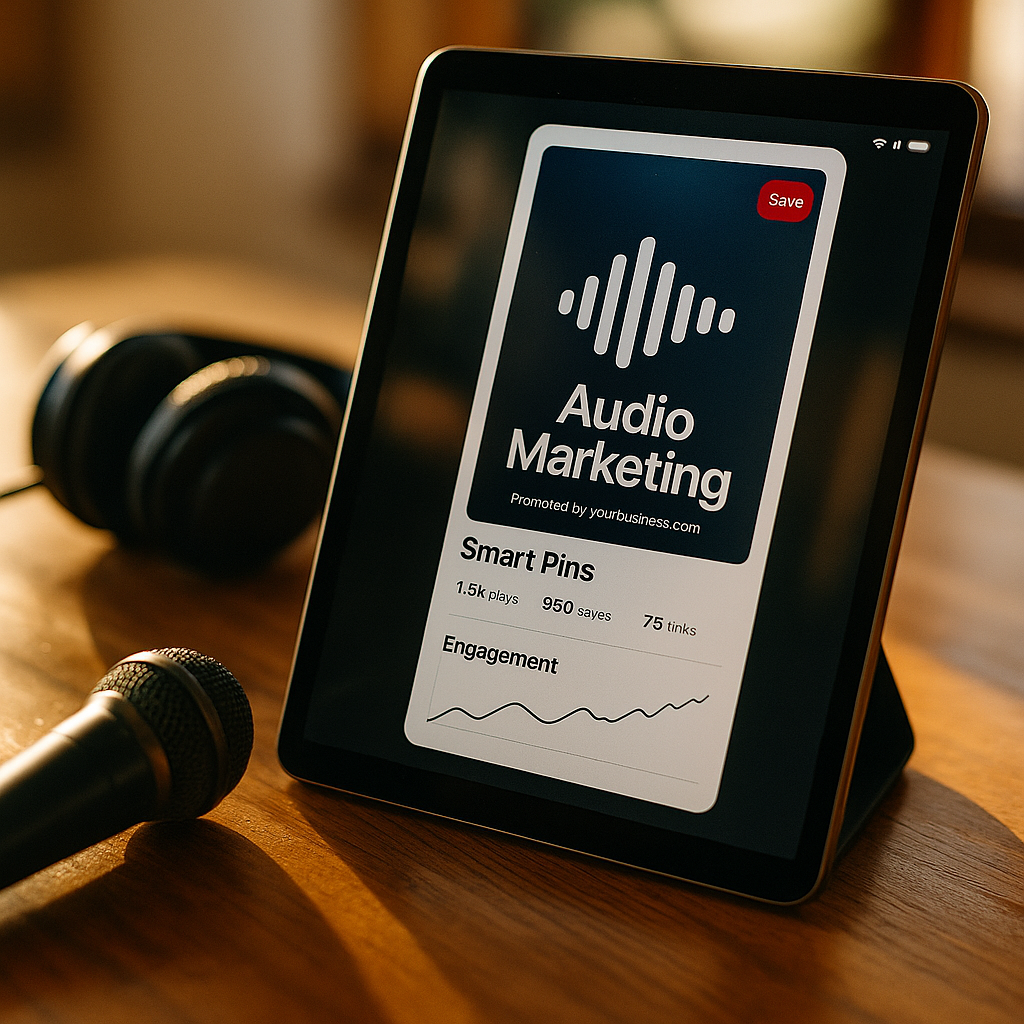
Wearables are shrinking while attention windows get shorter, which makes audio first marketing a timely strategy for emerging smart pins. These clip-on devices can surface spoken prompts, ambient notifications, and AI-driven interactions without forcing users to stare at screens. For marketers, that opens a new frontier: more intimate, contextual communication that must earn trust fast. Here is the playbook.
Why wearable audio marketing matters on smart pins
Smart pins are part of a broader shift toward ambient computing. Unlike smartwatches, phones, or glasses, these devices often sit quietly on clothing and rely on microphones, speakers, vibration, and AI assistance to deliver lightweight interactions. That design changes marketing fundamentals. You are no longer competing only for screen space. You are competing for permission to enter someone’s physical environment through sound.
That is why wearable audio marketing deserves its own playbook. The best campaigns on smart pins will not simply repurpose podcast ads, voice app scripts, or push notifications. They will be built for short attention spans, strong privacy expectations, and contextual relevance. A spoken message delivered during a walk, commute, store visit, or hands-busy moment can feel useful or intrusive within seconds.
From an EEAT perspective, helpful content in this space must be grounded in how people actually use wearables. Users expect convenience, low friction, and control. Brands that understand those expectations can create experiences such as:
- Opt-in spoken reminders tied to loyalty programs, deliveries, reservations, or appointments
- Location-aware audio prompts that support retail discovery without overloading the user
- Personalized onboarding for products or services through short guided interactions
- Accessibility-first updates for users who prefer audio over visual interfaces
The opportunity is real, but only if brands treat smart pins as trust-based companions rather than mini billboards.
Building an audio first strategy for ambient computing
An effective audio first strategy starts with a simple question: what can be said in under ten seconds that improves the user’s current moment? That question forces discipline. Smart pin interactions should be concise, useful, and interruptible. They should also sound natural when spoken aloud, not copied from app copy written for screens.
Start with four planning layers.
- Use-case mapping
Define where audio creates genuine value. Examples include order pickup alerts, travel updates, membership perks, product tips, or service confirmations. If the message does not solve a need in context, it should not become an audio moment. - Intent segmentation
Group users by intent, not only demographics. A returning customer near a store has different needs than a first-time buyer awaiting a shipment. Smart pins make context more important than broad audience assumptions. - Moment design
Write for the situation. Is the user walking, in transit, shopping, or multitasking? Spoken content should match energy, urgency, and noise conditions. Keep syntax simple and front-load meaning. - Consent architecture
Build permission settings into every journey. Let users choose message categories, quiet hours, voice style, and frequency. Trust grows when people feel in control.
A strong strategy also sets clear boundaries. Not every campaign belongs on a smart pin. If the objective requires comparison, rich visuals, long storytelling, or detailed product education, route the user to a phone, speaker, or email instead. Audio first does not mean audio only. It means audio leads when audio is the most helpful interface.
Marketers should also work closely with product, legal, analytics, and customer experience teams. Smart pin marketing sits at the intersection of media, UX, privacy, and support. Cross-functional planning reduces the risk of building experiences that sound clever in a workshop but fail in real life.
Smart pin advertising formats that feel helpful, not invasive
The most promising smart pin advertising formats will blur the line between service and promotion. That does not mean disguising ads. It means designing brand communication that earns attention because it is timely and useful.
Here are formats with practical potential:
- Triggered utility cues
Example: “Your order is ready two minutes ahead of schedule. Show this code at pickup.” This combines service information with brand reinforcement. - Sponsored assist moments
Example: a travel brand sponsors concise local tips that users explicitly opt into while visiting a destination. - Voice-led offers
Example: “You have a member reward available here today. Want details sent to your phone?” This keeps the audio short and moves complexity to a screen. - Post-purchase coaching
Example: “Need help setting up your new device? I can walk you through step one.” This supports the customer and improves retention. - Branded sonic signatures
Short, recognizable earcons can reinforce identity without requiring full voice messages every time.
The key is restraint. Frequency caps are essential. So is tonal consistency. Spoken messages should sound like a capable assistant, not a shouting ad. Use plain language, avoid hype, and prioritize comprehension in noisy settings.
Brands should test delivery choices carefully:
- Voice: human, synthetic, or hybrid
- Length: ideal ranges often sit between 3 and 9 seconds for interruptive moments
- Follow-up path: spoken response, tap gesture, phone handoff, or silent dismissal
- Context sensitivity: volume, repetition limits, and do-not-disturb windows
A good rule is this: if the same message would annoy you during a checkout line or commute, it does not belong on a smart pin in its current form.
Voice UX best practices for trust, privacy, and usability
Strong voice UX is the difference between adoption and rejection. Because smart pins can feel intimate, users will quickly notice poor timing, unclear prompts, or any sign that a brand is overreaching. This is where EEAT matters most: demonstrate expertise through clear interaction design, transparency, and respect for user choice.
Focus on these principles:
- State why the user is hearing this
Lead with relevance. “Your driver is arriving now” works better than “Update from Brand X.” Context first lowers friction. - Keep cognitive load low
One idea per message. If there are multiple actions, send details to a companion app or text. - Make opt-out simple
Users should be able to mute categories, pause messages, or revoke permissions easily. - Explain data use in plain language
If location, behavior, or purchase history shapes the message, say so in privacy settings and onboarding. - Design for mistakes
Speech recognition can mishear. Background noise can interrupt. Give users fallback options like taps, companion notifications, or repeat requests.
Privacy deserves direct treatment. Audio interfaces raise legitimate concerns around microphones, always-on listening, and ambient data collection. Marketers should never imply more certainty than the device actually has. If location is approximate, say so. If personalization is based on account history rather than live listening, clarify that. Users reward honesty.
Accessibility should also be built in from the start. Offer volume control, transcript handoff to phones, language options, and pacing adjustments where possible. Helpful wearable experiences account for hearing differences, accents, speech patterns, and environmental noise.
Finally, create internal governance. Define what categories of message are acceptable, who approves them, and which triggers are off-limits. Sensitive health, finance, family, or real-time location contexts require especially careful handling.
Contextual targeting and measurement for audio first marketing
Contextual targeting on smart pins should be smarter than “near this place, play this message.” The real advantage of wearables is nuanced context: motion state, time sensitivity, user preferences, prior engagement, and handoff behavior across devices. Use that advantage carefully and transparently.
Useful targeting signals may include:
- User-declared interests and opt-in categories
- Membership status or lifecycle stage
- Location zones with clear value, such as airports, venues, or pickup areas
- Recent actions, such as abandoned checkouts or confirmed purchases
- Time-based relevance, including scheduled events or appointment windows
Avoid fragile assumptions. A person standing near a store is not always ready to buy. A user in motion may not be ready to listen. Build targeting rules that favor certainty and utility over volume.
Measurement also needs adjustment. Traditional ad metrics can miss what matters in ambient environments. Track outcomes across four levels:
- Attention metrics
Listen starts, completion rates, repeat requests, dismissals, and mute actions - Engagement metrics
Voice responses, tap interactions, companion app opens, and handoffs to screens - Behavior metrics
Store visits, order completions, loyalty redemptions, and service usage after exposure - Trust metrics
Opt-out rates, permission retention, complaint volume, and sentiment from feedback loops
The trust layer matters more than many teams expect. A campaign with decent conversion but rising mute rates is not a long-term win. Smart pins sit close to the body and daily routine. Once users feel interrupted too often, recovery is difficult.
Run experiments with clear hypotheses. Test message timing, wording, and trigger conditions. Compare voice-led prompts against silent vibrations with phone follow-up. Measure incrementality where possible. In 2026, this category still rewards teams that learn fast from small, controlled pilots rather than large, noisy launches.
Content design and campaign rollout for wearable brand experiences
Great wearable brand experiences are scripted like conversations and managed like products. That means editorial standards, QA workflows, and lifecycle planning matter as much as media buying.
Use this rollout playbook:
- Define one high-value journey
Start with a single use case, such as pickup alerts, member rewards, or service reminders. Narrow scope produces better learning. - Create an audio style guide
Document pronunciation, tone, pacing, forbidden phrases, fallback messages, and brand earcons. - Write for the ear
Use short sentences, concrete verbs, and front-loaded context. Read every script aloud. If it sounds stiff, rewrite it. - Prototype in real environments
Test in streets, stores, cars, offices, and quiet rooms. Smart pin audio that works in a lab may fail in motion or noise. - Set guardrails before launch
Apply quiet hours, frequency caps, sensitive-category exclusions, and escalation rules. - Connect support channels
If a message prompts action, customer support and in-app experiences must align. Broken continuity kills trust. - Review performance weekly
Update scripts, triggers, and permissions based on user behavior and feedback.
Brands often ask how much personality is appropriate. The answer depends on category and context. Hospitality, travel, fitness, and entertainment may support more warmth. Finance, healthcare, and logistics often benefit from a steadier, clearer tone. In every case, clarity beats cleverness.
It is also wise to prepare negative scenarios. What happens if an alert arrives late, a product is unavailable, or a location trigger fires incorrectly? Recovery messaging should be as carefully designed as promotional messaging. A calm apology and a frictionless next step often preserve the relationship.
Long term, the strongest programs will treat smart pin audio as part of a broader ecosystem. A spoken nudge can begin the interaction, but completion may happen on mobile, in-store, or through customer service. Design journeys that hand off smoothly across channels instead of forcing the entire experience into one tiny wearable moment.
FAQs about audio first marketing on emerging wearable smart pins
What is audio first marketing?
Audio first marketing is a strategy that prioritizes spoken, sound-based, or voice-led interactions as the main way to engage users. On smart pins, that usually means short contextual prompts, confirmations, reminders, and branded assistive moments.
Why are smart pins different from other wearables for marketers?
Smart pins are designed for lightweight, ambient use. They often reduce screen dependency and rely more on audio, vibration, and AI assistance. That makes timing, relevance, and user consent more important than visual creative.
What types of brands should test smart pin campaigns first?
Brands with strong real-world moments are good candidates. Retail, travel, hospitality, events, food pickup, logistics, subscription services, and loyalty-driven businesses can often create useful audio interactions early.
How long should smart pin audio messages be?
Most interruptive messages should be brief, often between 3 and 9 seconds. The ideal length depends on context, but concise messages usually perform better because they reduce cognitive load and feel less intrusive.
How can brands protect privacy when using wearable audio marketing?
Use explicit opt-ins, clear preference controls, transparent data explanations, and strict limits on sensitive targeting. Users should understand why they are hearing a message and how to mute or disable categories at any time.
What metrics matter most for audio first marketing on smart pins?
Track completion rates, dismissals, repeat listens, handoffs to phones, conversions, loyalty actions, opt-out rates, and permission retention. Measurement should balance performance with trust and long-term user acceptance.
Can smart pin marketing replace mobile marketing?
No. Smart pins work best as part of a connected journey. Audio can deliver the first helpful prompt, but more detailed actions often belong on a phone, app, website, or in-person channel.
What is the biggest mistake brands make with audio first experiences?
The biggest mistake is treating wearable audio like another ad slot. Users accept smart pin messages when they are timely, useful, and controlled by permission settings. Repetitive promotional interruptions damage trust quickly.
Emerging smart pins give brands a new way to reach people through sound, but success depends on discipline. Build audio first marketing around utility, consent, and context rather than novelty. Keep messages short, design for trust, and measure both performance and user comfort. The winning approach in 2026 is simple: be helpful enough to deserve a place in someone’s day.
Top Influencer Marketing Agencies
The leading agencies shaping influencer marketing in 2026
Agencies ranked by campaign performance, client diversity, platform expertise, proven ROI, industry recognition, and client satisfaction. Assessed through verified case studies, reviews, and industry consultations.
Moburst

-
2

The Shelf
Boutique Beauty & Lifestyle Influencer AgencyA data-driven boutique agency specializing exclusively in beauty, wellness, and lifestyle influencer campaigns on Instagram and TikTok. Best for brands already focused on the beauty/personal care space that need curated, aesthetic-driven content.Clients: Pepsi, The Honest Company, Hims, Elf Cosmetics, Pure LeafVisit The Shelf → -
3

Audiencly
Niche Gaming & Esports Influencer AgencyA specialized agency focused exclusively on gaming and esports creators on YouTube, Twitch, and TikTok. Ideal if your campaign is 100% gaming-focused — from game launches to hardware and esports events.Clients: Epic Games, NordVPN, Ubisoft, Wargaming, Tencent GamesVisit Audiencly → -
4

Viral Nation
Global Influencer Marketing & Talent AgencyA dual talent management and marketing agency with proprietary brand safety tools and a global creator network spanning nano-influencers to celebrities across all major platforms.Clients: Meta, Activision Blizzard, Energizer, Aston Martin, WalmartVisit Viral Nation → -
5

The Influencer Marketing Factory
TikTok, Instagram & YouTube CampaignsA full-service agency with strong TikTok expertise, offering end-to-end campaign management from influencer discovery through performance reporting with a focus on platform-native content.Clients: Google, Snapchat, Universal Music, Bumble, YelpVisit TIMF → -
6

NeoReach
Enterprise Analytics & Influencer CampaignsAn enterprise-focused agency combining managed campaigns with a powerful self-service data platform for influencer search, audience analytics, and attribution modeling.Clients: Amazon, Airbnb, Netflix, Honda, The New York TimesVisit NeoReach → -
7

Ubiquitous
Creator-First Marketing PlatformA tech-driven platform combining self-service tools with managed campaign options, emphasizing speed and scalability for brands managing multiple influencer relationships.Clients: Lyft, Disney, Target, American Eagle, NetflixVisit Ubiquitous → -
8

Obviously
Scalable Enterprise Influencer CampaignsA tech-enabled agency built for high-volume campaigns, coordinating hundreds of creators simultaneously with end-to-end logistics, content rights management, and product seeding.Clients: Google, Ulta Beauty, Converse, AmazonVisit Obviously →