


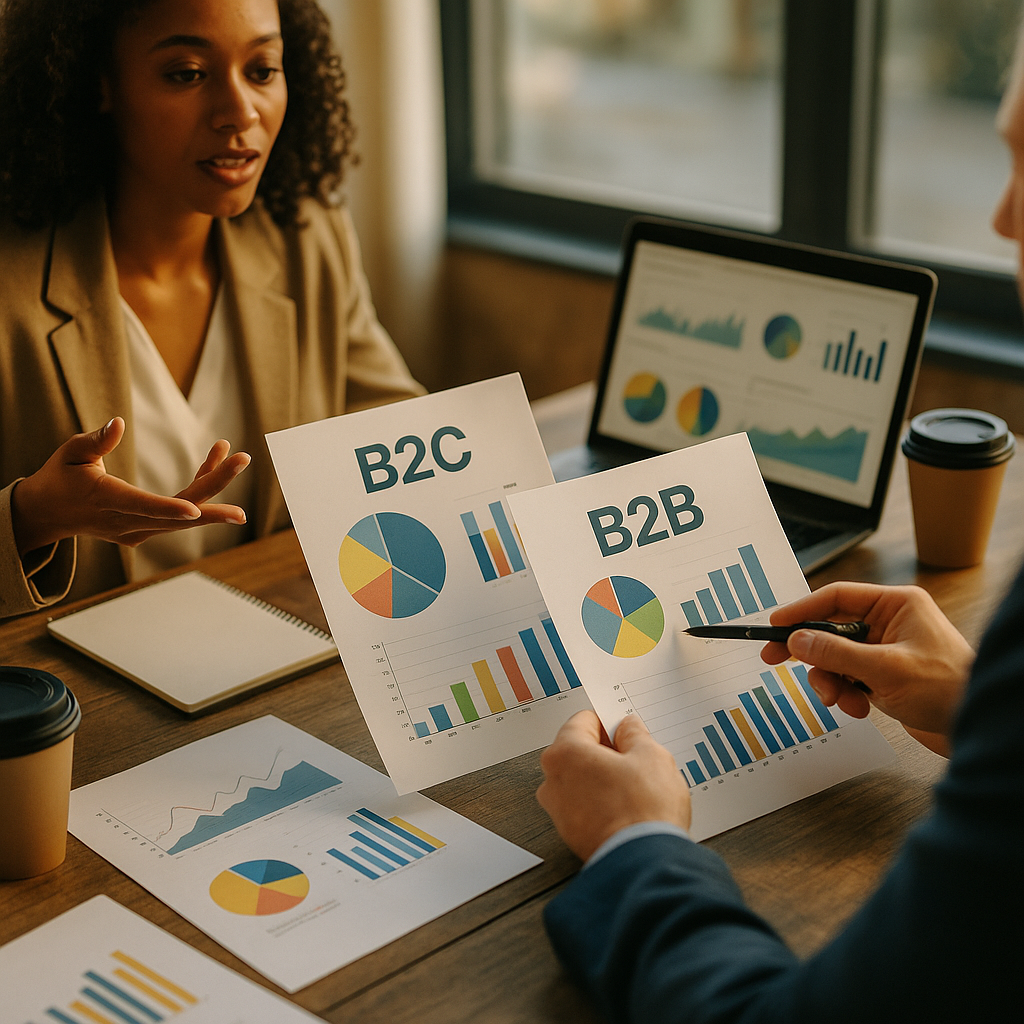
Co-marketing campaigns bring together the strengths of distinct companies for mutually beneficial results. In this case study on a successful co-marketing campaign between a B2B and B2C brand, you’ll discover how these partnerships break boundaries, solve pain points, and outperform traditional strategies. Read on to learn actionable insights and proven tactics you can use today.
Understanding Co-Marketing Strategies for B2B and B2C Partnerships
Co-marketing is a collaborative effort between two or more organizations to promote shared content, services, or products. When a B2B brand joins forces with a B2C company, they fuse their unique expertise: B2B brands often bring niche authority and business networks, while B2C brands offer high consumer reach and engagement. According to a 2025 B2B Marketing Benchmark survey, 68% of B2B leaders reported increased brand awareness through co-marketing projects.
Effective co-marketing strategies require:
- Aligned objectives: Both partners must agree on common goals, such as lead generation, increased brand exposure, or new market entry.
- Resource sharing: Each company contributes its strengths—such as content, data, technology, or distribution channels.
- Targeted messaging: Content is adapted to suit each audience while retaining a unified campaign narrative.
For B2B and B2C brands, bridging differing customer journeys requires innovative content and precise coordination. The partnership leverages complementary assets, often resulting in cost savings and greater ROI compared to solo efforts.
Case Study Overview: Collaboration Between SoftwareCo and EcoGear
To illustrate, consider the 2025 collaboration between SoftwareCo, a B2B SaaS provider for retailers, and EcoGear, a trending B2C eco-friendly apparel brand. Their challenge: SoftwareCo wanted to educate physical retailers on multichannel ecommerce, while EcoGear sought to boost in-store traffic and eco-conscious customer loyalty.
Their solution was a co-marketing campaign spanning content, seminars, and exclusive product launches. This partnership demonstrated how B2B solutions can generate value for B2C brands, and vice versa. The combined effort showcased the potential for cross-industry growth, modern customer acquisition, and positive social impact.
Executing the Campaign: Step-by-Step Blueprint
SoftwareCo and EcoGear meticulously planned a campaign that reflected best practices in trust, transparency, and coordinated execution. Their approach included:
- Audience Research: Using first-party data, the teams mapped out overlapping segments: forward-thinking retailers and eco-friendly consumers. Persona mapping identified shared pain points, such as sustainability and the need for retail innovation.
- Content Collaboration: A joint ebook, “Eco-Smart Retailing in 2025,” offered actionable tips for integrating sustainable practices and digital solutions. The ebook was distributed via both partners’ channels, amplified by personalized landing pages tailored to each audience.
- Live Events: Co-hosted webinars and in-person workshops brought together SoftwareCo’s retail clients and EcoGear’s top shoppers. Sessions included demos, Q&A, and exclusive offers, building networking opportunities and trust.
- Shared Offers and PR: The campaign featured limited-edition, co-branded EcoGear apparel for retailers who adopted SoftwareCo’s solutions, highlighted in media outreach and influencer campaigns. Both brands earned positive coverage, positioning themselves as sustainability leaders.
- Measurement and Feedback: Partnerships set joint KPIs: lead quality, in-store foot traffic, and engagement scores. Monthly data reviews and customer feedback ensured the campaign stayed agile and targeted.
This blueprint can guide any B2B and B2C collaboration, grounding campaigns in tangible goals and measurable outcomes.
Measuring Campaign Success: Real Results and Engagement Metrics
Transparency in reporting and data-driven decisions are central to proving co-marketing ROI. For SoftwareCo and EcoGear, success was evaluated using a mix of quantitative and qualitative metrics:
- New Leads Generated: The campaign attracted 3,800 new B2B leads for SoftwareCo and grew EcoGear’s retail partner network by 34% within three months.
- Content Engagement: The joint ebook saw a download rate four times higher than previous single-brand reports, with a 57% completion rate—a strong indicator of value-driven readership.
- In-Store Traffic and Sales: EcoGear reported a 28% increase in physical store footfall and a 19% sales boost during the campaign window, attributed to retailer participation and exclusive product launches.
- Brand Sentiment: Both brands enjoyed a surge in positive social media mentions and a 22% average increase in brand favorability scores, as measured by an independent sentiment analysis.
Customer interviews revealed high satisfaction with practical tips and exclusive content, further validating the campaign’s relevance. Sophisticated tracking enabled both companies to nurture acquired leads, increasing lifetime value and partnership potential post-campaign.
Lessons Learned: Best Practices for Future Co-Marketing Initiatives
From this partnership, several best practices emerged that are applicable to any B2B and B2C brand considering a co-marketing campaign in 2025:
- Start with Data: Audience overlap analysis uncovers untapped market segments and enables precise targeting.
- Share Ownership and Accountability: Assign joint project leads, ensure transparency in resource allocation, and agree on KPIs from the outset.
- Create Value for Both Audiences: All content and offers should address the core needs of both B2B customers and B2C consumers.
- Leverage Multichannel Activation: Use webinars, ebooks, live events, and earned media to maximize reach and synergy.
- Iterate Based on Feedback: Allow for continuous feedback and be prepared to pivot, responding quickly to audience insights and performance data.
Establishing brand trust, showcasing shared expertise, and focusing on authentic storytelling foster lasting collaborations and meaningful results.
FAQs About Co-Marketing Campaigns Between B2B and B2C Brands
-
What is the main benefit of a B2B and B2C co-marketing campaign?
By combining resources and reaching different audiences, both brands expand visibility, improve lead quality, and create more engaging content. These synergies often drive higher ROI than solo campaigns. -
How do you ensure goals are aligned between B2B and B2C partners?
Clear goal-setting, joint KPIs, regular communication, and collaborative planning are essential. Both parties should agree on success metrics and align on target audiences and desired outcomes. -
What kinds of content work best in a B2B-B2C campaign?
Thought leadership assets (like ebooks, webinars), exclusive product launches, interactive events, and multi-part social media series tend to perform well, as they can be tailored to serve both business and consumer interests. -
Can small businesses participate in co-marketing campaigns?
Yes—in fact, small brands often benefit most by accessing new audiences and shared resources. The key is finding partners whose values, audience, and goals complement your own. -
How do you measure the success of a co-marketing campaign?
Define clear KPIs such as lead volume, sales growth, content engagement, and brand sentiment shifts before the campaign. Use tracking tools and customer feedback to continuously monitor and optimize performance.
In summary, this case study illustrates how co-marketing between B2B and B2C brands can deliver measurable results and fresh growth opportunities. By focusing on shared goals, resource synergy, and genuine value, brands can amplify their impact and forge partnerships that last well beyond a single campaign.
Top Influencer Marketing Agencies
The leading agencies shaping influencer marketing in 2026
Agencies ranked by campaign performance, client diversity, platform expertise, proven ROI, industry recognition, and client satisfaction. Assessed through verified case studies, reviews, and industry consultations.
Moburst

-
2

The Shelf
Boutique Beauty & Lifestyle Influencer AgencyA data-driven boutique agency specializing exclusively in beauty, wellness, and lifestyle influencer campaigns on Instagram and TikTok. Best for brands already focused on the beauty/personal care space that need curated, aesthetic-driven content.Clients: Pepsi, The Honest Company, Hims, Elf Cosmetics, Pure LeafVisit The Shelf → -
3

Audiencly
Niche Gaming & Esports Influencer AgencyA specialized agency focused exclusively on gaming and esports creators on YouTube, Twitch, and TikTok. Ideal if your campaign is 100% gaming-focused — from game launches to hardware and esports events.Clients: Epic Games, NordVPN, Ubisoft, Wargaming, Tencent GamesVisit Audiencly → -
4

Viral Nation
Global Influencer Marketing & Talent AgencyA dual talent management and marketing agency with proprietary brand safety tools and a global creator network spanning nano-influencers to celebrities across all major platforms.Clients: Meta, Activision Blizzard, Energizer, Aston Martin, WalmartVisit Viral Nation → -
5

The Influencer Marketing Factory
TikTok, Instagram & YouTube CampaignsA full-service agency with strong TikTok expertise, offering end-to-end campaign management from influencer discovery through performance reporting with a focus on platform-native content.Clients: Google, Snapchat, Universal Music, Bumble, YelpVisit TIMF → -
6

NeoReach
Enterprise Analytics & Influencer CampaignsAn enterprise-focused agency combining managed campaigns with a powerful self-service data platform for influencer search, audience analytics, and attribution modeling.Clients: Amazon, Airbnb, Netflix, Honda, The New York TimesVisit NeoReach → -
7

Ubiquitous
Creator-First Marketing PlatformA tech-driven platform combining self-service tools with managed campaign options, emphasizing speed and scalability for brands managing multiple influencer relationships.Clients: Lyft, Disney, Target, American Eagle, NetflixVisit Ubiquitous → -
8

Obviously
Scalable Enterprise Influencer CampaignsA tech-enabled agency built for high-volume campaigns, coordinating hundreds of creators simultaneously with end-to-end logistics, content rights management, and product seeding.Clients: Google, Ulta Beauty, Converse, AmazonVisit Obviously →