


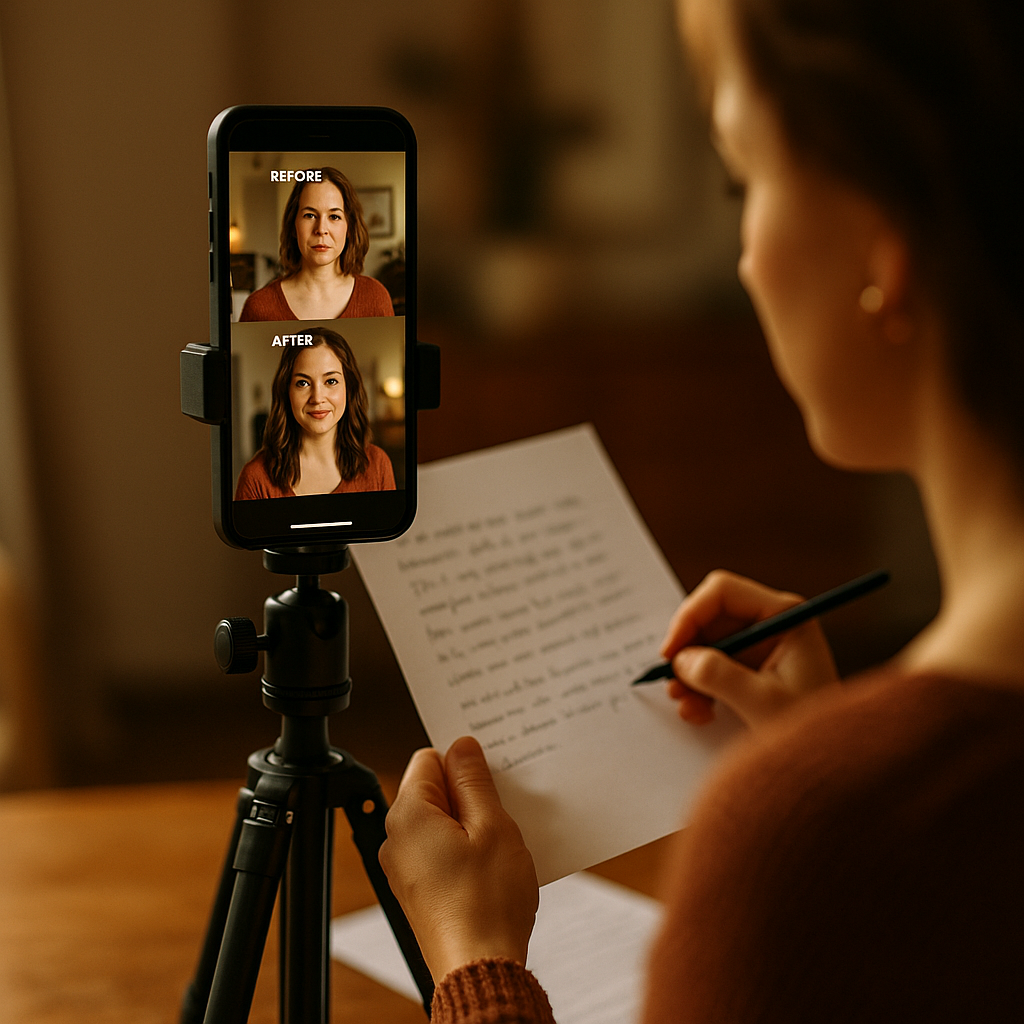
Transformation content gets 2.3 times more saves than standard product demos, yet most brands still script it like a highlight reel instead of a case study. That gap is why so many before and after transformation reels flop despite flawless lighting and a genuinely good product. Viewers aren’t skeptical of the glow-up. They’re skeptical of the proof behind it.
If you run influencer programs or approve UGC briefs, you already know the pressure: show real results, keep legal happy, and still make something scroll-stopping. This piece breaks down how to script that balance, section by section, so your creators stop guessing and your reels start converting.
Why Most Transformation Reels Fail Before They Even Launch
The format looks simple. Film the “before,” film the “after,” cut between them, add a trending sound. Simple, and almost always weak. Creators default to vague framing (“here’s my skin now vs. three weeks ago”) without establishing conditions, timeframe, or what else changed in between. Audiences have seen enough filtered comparisons to smell a setup from a mile away.
There’s also a brand risk angle nobody wants to deal with until it’s a problem. The FTC’s guidance on endorsements treats atypical results claims as a compliance issue, not a creative choice. A reel that implies “this will work for you too” without disclosure or substantiation isn’t just weak marketing, it’s a liability waiting for a complaint.
A before and after reel is a testimonial with visual evidence attached. Script it like evidence, not like a highlight reel, and both conversion and compliance improve together.
The Four Beats That Make Transformation Content Believable
Every high-performing transformation reel follows a structure, whether the creator realizes it or not. Build the brief around these four beats and you’ll get footage that actually survives scrutiny.
- Baseline establishment: Show the starting point with context, not just an image. What was the problem? How long had it existed? What had the creator already tried?
- Process transparency: This is the beat most brands skip, and it’s the one that builds trust fastest. Show the actual usage, the timeline, the frequency. “I used this twice a day for 21 days” beats “it just works” every time.
- Result with specificity: Vague improvement claims read as fake. Specific, measurable, or at least descriptive outcomes read as real. “My routine went from 40 minutes to 12” lands harder than “life changing.”
- Honest caveat: One sentence acknowledging limitations (“this won’t work overnight” or “results vary by skin type”) does more for credibility than ten seconds of hype. It also happens to be the line that keeps your legal team calm.
Skip the caveat beat and you’re not just risking a compliance flag. You’re leaving conversion on the table, because audiences trust creators who admit limits more than ones who promise miracles.
Scripting the Brief: What to Hand Creators Before They Film
Most transformation reels fall apart at the brief stage, not the filming stage. Creators improvise the “proof” part because nobody gave them a framework for it. Fix the brief, fix the reel.
A workable brief for this format should specify:
- The exact claim being made (and the exact claim that must NOT be made)
- Required disclosure language and where it needs to appear on screen
- The documentation the creator needs to retain (dated photos, receipts, usage logs) in case the brand needs to substantiate the claim later
- A required caveat line, written in the creator’s own voice, not legal copy-paste
- The minimum timeframe between “before” and “after” footage, so creators can’t fake a 48 hour turnaround for a six week result
This isn’t about stripping creativity out of the format. It’s about giving creators guardrails so they can focus their creative energy on pacing, hook, and delivery instead of guessing what’s legally safe. The same logic applies to adjacent formats like split screen comparison ads, where side-by-side claims carry similar substantiation requirements.
The Hook Matters More Than the Transformation
Here’s an uncomfortable truth: a strong transformation won’t save a weak hook. The first two seconds decide whether anyone sees the “after” at all. Pattern interrupts work better than polished intros. A creator mid-sentence, a shaky zoom into the “before” state, a blunt question like “why did nobody tell me this sooner” all outperform a clean studio setup.
Test hooks the same way you’d test ad copy. Sprout Social’s engagement benchmarks consistently show that the drop-off in the first three seconds predicts most of a video’s total watch time. If your transformation reel loses viewers before the “before” photo even loads, the rest of the script doesn’t matter.
This is also where format borrowing helps. Techniques from storytime text overlays translate well here, since text-driven hooks can front-load curiosity before the visual proof even appears.
Pacing the Middle So It Doesn’t Sag
Transformation reels have a natural pacing trap: the middle. Before is exciting, after is satisfying, and the middle (the actual process) is where retention dies if you’re not careful. The fix isn’t to cut the middle entirely. It’s to compress it into rhythm, not duration.
Think jump cuts on a four-to-six day cadence instead of a linear daily diary. Overlay a running counter (day 3, day 9, day 17) so viewers feel momentum without sitting through every update. Pair each cut with a one-line voiceover or on-screen text that moves the narrative forward, not just a date stamp. This mirrors the pacing discipline used in customer interview clips, where editors compress long conversations into tight, evidence-driven moments.
The middle of a transformation reel isn’t filler. It’s the only part of the video that proves the result wasn’t staged in an afternoon.
Handling Skepticism Inside the Script, Not Just the Comments
Smart brands now script a pre-emptive objection into the video itself, rather than waiting to fight it out in the comment section. A line like “I know this looks edited, so here’s the raw clip from day one” does more work than any disclaimer buried in the caption. It’s the same instinct behind myth busting scripts, where naming the doubt upfront disarms it before it turns into a credibility attack.
If your product category gets a lot of “fake” or “paid actor” accusations, consider briefing creators to include a brief, unscripted-feeling moment: fumbling a line, laughing at themselves, referencing something mundane and unrelated. Perfection reads as staged. A little friction reads as real. This is also why formats like confessional booth testimonials consistently outperform polished studio testimonials on trust metrics, even when the production value is lower.
Measuring What Actually Matters
Views are the vanity metric here. What you actually want to track is save rate, share rate, and (if you can tie it to a landing page or promo code) conversion lift against a control group running standard product content. HubSpot’s content benchmarking resources are a reasonable starting point if you’re building this measurement framework from scratch.
Worth noting: eMarketer’s creator economy research has repeatedly flagged that transformation and testimonial formats drive disproportionate down-funnel action compared to their view counts, which means a reel with modest reach but high save rate may be outperforming a viral hit on actual business impact. Don’t let a low view count talk you out of a format that’s quietly converting.
If you’re running this at scale across multiple creators, pull in the structure from reaction content beat sheets to standardize how each creator documents proof, since consistency across creators makes your aggregate data far more reliable when you’re reporting results up to leadership.
Next step: Pull your last five transformation reels and check them against the four-beat structure (baseline, process, result, caveat). Any reel missing the process or caveat beat is underperforming on both trust and conversion, and it’s the fastest fix you can make this week.
FAQs
What makes a before and after transformation reel believable instead of staged?
Specificity and process transparency. Vague claims and jump cuts straight from before to after read as staged, while documented timeframes, usage details, and an honest caveat about limitations build credibility.
Do before and after reels need FTC disclosure?
Yes, if the creator is compensated or has a material connection to the brand, standard endorsement disclosure rules apply, and claims about atypical results generally need substantiation or a clear disclaimer.
How long should a transformation reel be?
Most high-performing versions run between 30 and 60 seconds, long enough to establish baseline and process, short enough to hold retention through the result.
What’s the biggest mistake brands make when briefing this format?
Skipping the process beat. Brands brief for a dramatic before and a satisfying after, but leave the middle (the part that actually proves the result is real) to improvisation.
Can this format work for B2B or service brands, not just physical products?
Yes. Workflow time savings, cost reductions, or process simplifications translate well into the same before and after structure, as long as the “before” state is documented with real specifics rather than a generic complaint.
FAQs
What makes a before and after transformation reel believable instead of staged?
Specificity and process transparency. Vague claims and jump cuts straight from before to after read as staged, while documented timeframes, usage details, and an honest caveat about limitations build credibility.
Do before and after reels need FTC disclosure?
Yes, if the creator is compensated or has a material connection to the brand, standard endorsement disclosure rules apply, and claims about atypical results generally need substantiation or a clear disclaimer.
How long should a transformation reel be?
Most high-performing versions run between 30 and 60 seconds, long enough to establish baseline and process, short enough to hold retention through the result.
What’s the biggest mistake brands make when briefing this format?
Skipping the process beat. Brands brief for a dramatic before and a satisfying after, but leave the middle (the part that actually proves the result is real) to improvisation.
Can this format work for B2B or service brands, not just physical products?
Yes. Workflow time savings, cost reductions, or process simplifications translate well into the same before and after structure, as long as the “before” state is documented with real specifics rather than a generic complaint.
Top Influencer Marketing Agencies
The leading agencies shaping influencer marketing in 2026
Agencies ranked by campaign performance, client diversity, platform expertise, proven ROI, industry recognition, and client satisfaction. Assessed through verified case studies, reviews, and industry consultations.
Moburst

-
2

The Shelf
Boutique Beauty & Lifestyle Influencer AgencyA data-driven boutique agency specializing exclusively in beauty, wellness, and lifestyle influencer campaigns on Instagram and TikTok. Best for brands already focused on the beauty/personal care space that need curated, aesthetic-driven content.Clients: Pepsi, The Honest Company, Hims, Elf Cosmetics, Pure LeafVisit The Shelf → -
3

Audiencly
Niche Gaming & Esports Influencer AgencyA specialized agency focused exclusively on gaming and esports creators on YouTube, Twitch, and TikTok. Ideal if your campaign is 100% gaming-focused — from game launches to hardware and esports events.Clients: Epic Games, NordVPN, Ubisoft, Wargaming, Tencent GamesVisit Audiencly → -
4

Viral Nation
Global Influencer Marketing & Talent AgencyA dual talent management and marketing agency with proprietary brand safety tools and a global creator network spanning nano-influencers to celebrities across all major platforms.Clients: Meta, Activision Blizzard, Energizer, Aston Martin, WalmartVisit Viral Nation → -
5

The Influencer Marketing Factory
TikTok, Instagram & YouTube CampaignsA full-service agency with strong TikTok expertise, offering end-to-end campaign management from influencer discovery through performance reporting with a focus on platform-native content.Clients: Google, Snapchat, Universal Music, Bumble, YelpVisit TIMF → -
6

NeoReach
Enterprise Analytics & Influencer CampaignsAn enterprise-focused agency combining managed campaigns with a powerful self-service data platform for influencer search, audience analytics, and attribution modeling.Clients: Amazon, Airbnb, Netflix, Honda, The New York TimesVisit NeoReach → -
7

Ubiquitous
Creator-First Marketing PlatformA tech-driven platform combining self-service tools with managed campaign options, emphasizing speed and scalability for brands managing multiple influencer relationships.Clients: Lyft, Disney, Target, American Eagle, NetflixVisit Ubiquitous → -
8

Obviously
Scalable Enterprise Influencer CampaignsA tech-enabled agency built for high-volume campaigns, coordinating hundreds of creators simultaneously with end-to-end logistics, content rights management, and product seeding.Clients: Google, Ulta Beauty, Converse, AmazonVisit Obviously →