


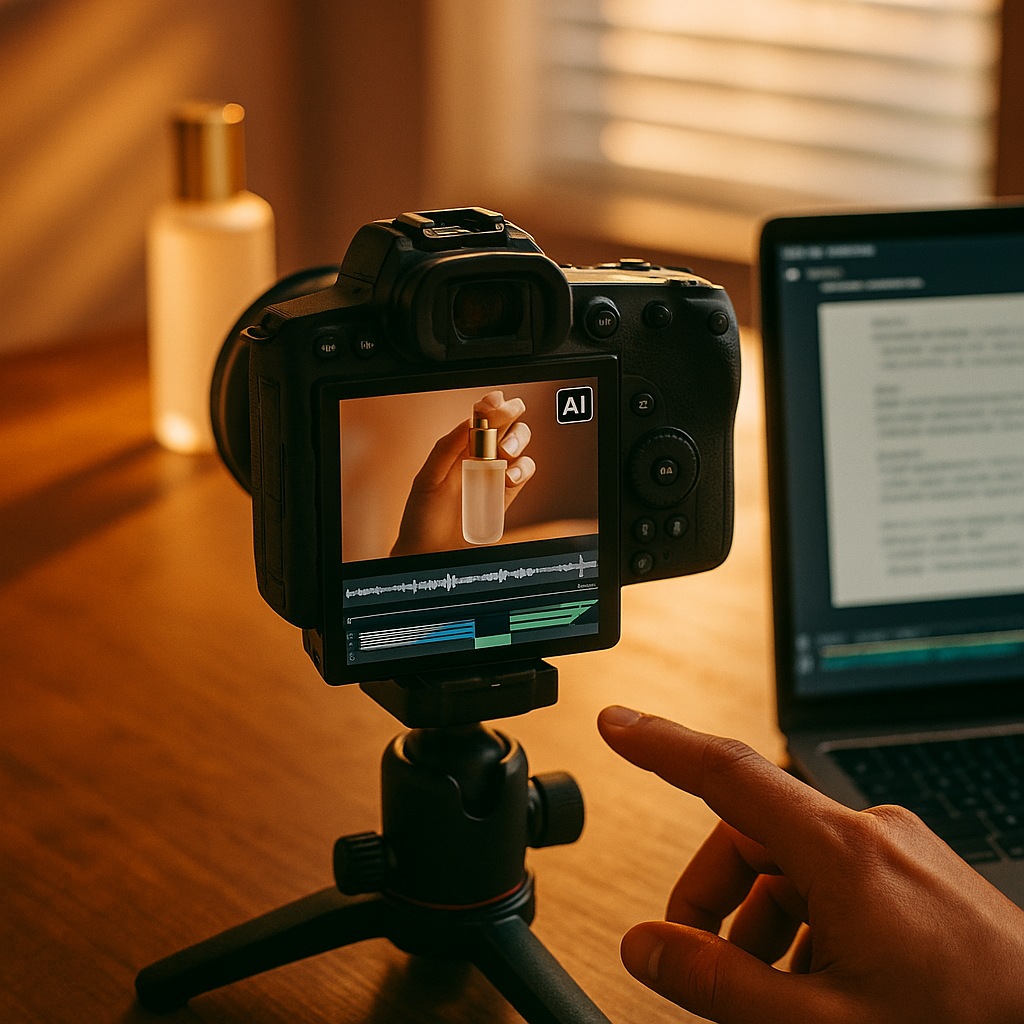
A single product photo now costs less to animate than it does to caption. Brands running image to video AI ads are turning flat Amazon listing shots into scroll-stopping creator style clips in minutes, not weeks, and the performance gap between those clips and traditional studio footage is shrinking fast enough to make procurement teams nervous. If your creative pipeline still starts with a photographer and ends with a six-week turnaround, you’re already behind.
What Image to Video AI Actually Does
Strip away the hype and the mechanics are simple. You upload a static product image, the model infers depth, lighting, and plausible motion, then outputs a short video clip that mimics camera pans, hand interactions, or ambient movement. Tools like Runway, Luma Dream Machine, and Kling have made this accessible to anyone with a product catalog and a Shopify login. Some platforms go further, layering in synthetic voiceover or text overlays so the output resembles a creator unboxing or demo video rather than a rotating product render.
The output isn’t perfect. Anyone who’s watched an AI-generated hand bend through a bottle cap knows the uncanny valley is still very much open for business. But for top-of-funnel ad creative, where attention spans are measured in fractions of a second, “good enough and fast” is beating “perfect and late” more often than creative directors want to admit.
Why Static Product Shots Were Always the Bottleneck
Product photography solved e-commerce catalog needs, not ad creative needs. A clean white-background shot tells a shopper what they’re buying. It does nothing to tell them why they should care, and it performs terribly against native, creator-shot video in feed. That’s not opinion, it’s a pattern most paid social teams have watched play out across dozens of campaigns: static product ads get scrolled past, video that looks user-generated gets watched.
The problem was never strategic. It was operational. Booking creators, shipping product, managing usage rights, and waiting on edits turns a single campaign concept into a multi-week project. Brands with hundreds of SKUs simply couldn’t scale creator shoots fast enough to keep pace with product launches, seasonal drops, or algorithm-driven creative fatigue.
The real unlock isn’t that AI video looks good. It’s that it collapses a six-week creative cycle into an afternoon, which changes how many ideas a team can actually test.
That shift in testing velocity matters more than the novelty of the technology itself. Marketing teams that previously tested three creative concepts per quarter can now test thirty, and the ones that win get scaled with real budget instead of a hunch.
The ROI Math: What Changes When You Skip the Shoot?
Run the numbers on a mid-size DTC brand launching twelve SKUs a quarter. A traditional creator shoot for each product, including sourcing, usage rights, and editing, often lands between $800 and $2,500 per asset depending on market and creator tier. Multiply that across a real content calendar and you’re looking at a six-figure annual line item before media spend even enters the conversation.
Image to video tools compress that cost dramatically. You’re not eliminating creators entirely (more on that below), but you’re removing the shoot bottleneck for early-stage testing. Brands can generate a dozen variants of a single product video, each with different framing, pacing, or implied use case, and let the ad platform’s algorithm find the winner before committing real production budget to the concept that actually resonates.
This is the same logic behind structured creative refresh calendars built to beat ad fatigue. The faster you can cycle new variants, the longer a campaign stays profitable before CPMs climb and conversion rates decay.
Where This Breaks: Disclosure, Brand Safety, and the Uncanny Valley
Here’s where legal and compliance teams should be paying closer attention than they currently are. If an AI-generated clip is styled to look like organic creator content, does it need AI disclosure? In most jurisdictions, yes, and the FTC’s endorsement guidelines are increasingly explicit that synthetic content presented as authentic testimonial or demonstration can trigger the same disclosure obligations as a paid influencer post. Brands that skip this step aren’t just risking a platform strike, they’re risking a regulatory inquiry.
There’s also a trust cost that doesn’t show up in a performance dashboard right away. Audiences are getting sharper at spotting synthetic video, and a brand caught passing AI output off as a real customer review can do more reputational damage than the campaign was ever worth. The smarter approach is upfront labeling paired with creative that’s genuinely good enough to hold attention anyway, something covered in more depth in our breakdown of AI disclosure that actually holds up under scrutiny.
Platform policy adds another layer. Meta and TikTok have both tightened rules around synthetic and AI-generated ad content, and enforcement is inconsistent enough that brands running large-scale campaigns should build review checkpoints into their workflow rather than assuming a clip will clear automatically. Check current guidance on Meta’s advertising standards and TikTok’s ad policies before scaling spend behind any AI-generated creative set.
Building a Workflow That Doesn’t Feel Like a Shortcut
The brands getting real results from this aren’t treating image to video AI as a replacement for creator content. They’re treating it as a first-pass testing layer that feeds into a smarter creator briefing process. Generate a dozen AI variants, see which angle, pacing, or hook performs, then hand the winning concept to an actual creator for a polished, compliant version that scales spend safely.
- Start with the hook, not the product. AI video tools are better at motion and atmosphere than at nailing a scroll-stopping first three seconds, so write the hook first and let the model build around it.
- Batch test by category, not by SKU. Testing twelve variants of one hero product tells you more than one variant each across twelve products.
- Pair outputs with tight creative briefs. The same scripting discipline used in nano creator briefs for authentic UGC at scale applies directly to AI prompt structure. A vague brief produces vague output regardless of who, or what, is executing it.
- Design for reclipping. Build each video with modular beats so a 30-second ad can be recut into three separate 8-second hooks, an approach outlined in our piece on clippable content design.
Teams running animated or stylized product content already have a head start here. The scripting logic used for AI cartoon product demos translates well to photorealistic image-to-video work, since both formats depend on tight pacing and a clear single-action focus rather than trying to cram a full feature list into eight seconds.
Picking Tools Without Getting Locked In
The tool landscape is moving fast enough that committing to a single vendor contract right now is a gamble. Most mid-size teams are better served piloting two or three platforms against the same product set and comparing output quality, render speed, and cost per clip before scaling spend on licenses. Watch render consistency closely, since a tool that nails one product category can produce distorted or unusable output on another (reflective packaging and glass products remain a known weak spot across most current models).
Budget for human review time too. Even the best outputs need a pass for brand consistency, claim accuracy, and compliance before they go live. According to recent industry benchmarking from eMarketer, AI-assisted creative production is accelerating output volume faster than most internal review processes can keep up, which is exactly the kind of operational gap that turns a cost saving into a compliance headache. Data from Statista on video ad spend growth suggests the volume problem is only going to intensify as more brands adopt these tools in parallel.
For teams managing review at scale, borrowing structure from AR filter creative briefing frameworks can help standardize how AI-generated assets get approved before they hit paid media, keeping legal, brand, and performance marketing aligned without slowing the whole pipeline down to a crawl.
Next Step
Don’t retire your product photography budget yet. Instead, run a two-week pilot: pick five underperforming product ads, generate AI video variants for each, and test them against the originals with the same spend and audience. Let the data, not the novelty, decide what gets scaled.
FAQs
What is image to video AI advertising?
It’s the process of using AI models to convert a static product photo into a short video clip, often styled to resemble organic creator content, for use in paid social or app store advertising.
Is AI-generated video content required to carry a disclosure label?
In many cases, yes. If the content mimics a real testimonial or demonstration, regulators including the FTC generally expect clear disclosure that the content is synthetic or AI-assisted.
Does image to video AI replace creator partnerships?
No. Most successful workflows use AI video for rapid concept testing, then hand winning concepts to real creators for polished, compliant assets that scale with paid media spend.
What products work best with image to video AI tools?
Matte, solid-surface products with simple geometry tend to render cleanly. Reflective packaging, glass, and complex textures remain challenging for most current models.
How much does image to video AI save compared to a traditional shoot?
Costs vary by platform and usage tier, but teams typically cut per-asset creative costs significantly compared to booking creators or studio shoots for early-stage testing content.
Top Influencer Marketing Agencies
The leading agencies shaping influencer marketing in 2026
Agencies ranked by campaign performance, client diversity, platform expertise, proven ROI, industry recognition, and client satisfaction. Assessed through verified case studies, reviews, and industry consultations.
Moburst

-
2

The Shelf
Boutique Beauty & Lifestyle Influencer AgencyA data-driven boutique agency specializing exclusively in beauty, wellness, and lifestyle influencer campaigns on Instagram and TikTok. Best for brands already focused on the beauty/personal care space that need curated, aesthetic-driven content.Clients: Pepsi, The Honest Company, Hims, Elf Cosmetics, Pure LeafVisit The Shelf → -
3

Audiencly
Niche Gaming & Esports Influencer AgencyA specialized agency focused exclusively on gaming and esports creators on YouTube, Twitch, and TikTok. Ideal if your campaign is 100% gaming-focused — from game launches to hardware and esports events.Clients: Epic Games, NordVPN, Ubisoft, Wargaming, Tencent GamesVisit Audiencly → -
4

Viral Nation
Global Influencer Marketing & Talent AgencyA dual talent management and marketing agency with proprietary brand safety tools and a global creator network spanning nano-influencers to celebrities across all major platforms.Clients: Meta, Activision Blizzard, Energizer, Aston Martin, WalmartVisit Viral Nation → -
5

The Influencer Marketing Factory
TikTok, Instagram & YouTube CampaignsA full-service agency with strong TikTok expertise, offering end-to-end campaign management from influencer discovery through performance reporting with a focus on platform-native content.Clients: Google, Snapchat, Universal Music, Bumble, YelpVisit TIMF → -
6

NeoReach
Enterprise Analytics & Influencer CampaignsAn enterprise-focused agency combining managed campaigns with a powerful self-service data platform for influencer search, audience analytics, and attribution modeling.Clients: Amazon, Airbnb, Netflix, Honda, The New York TimesVisit NeoReach → -
7

Ubiquitous
Creator-First Marketing PlatformA tech-driven platform combining self-service tools with managed campaign options, emphasizing speed and scalability for brands managing multiple influencer relationships.Clients: Lyft, Disney, Target, American Eagle, NetflixVisit Ubiquitous → -
8

Obviously
Scalable Enterprise Influencer CampaignsA tech-enabled agency built for high-volume campaigns, coordinating hundreds of creators simultaneously with end-to-end logistics, content rights management, and product seeding.Clients: Google, Ulta Beauty, Converse, AmazonVisit Obviously →