


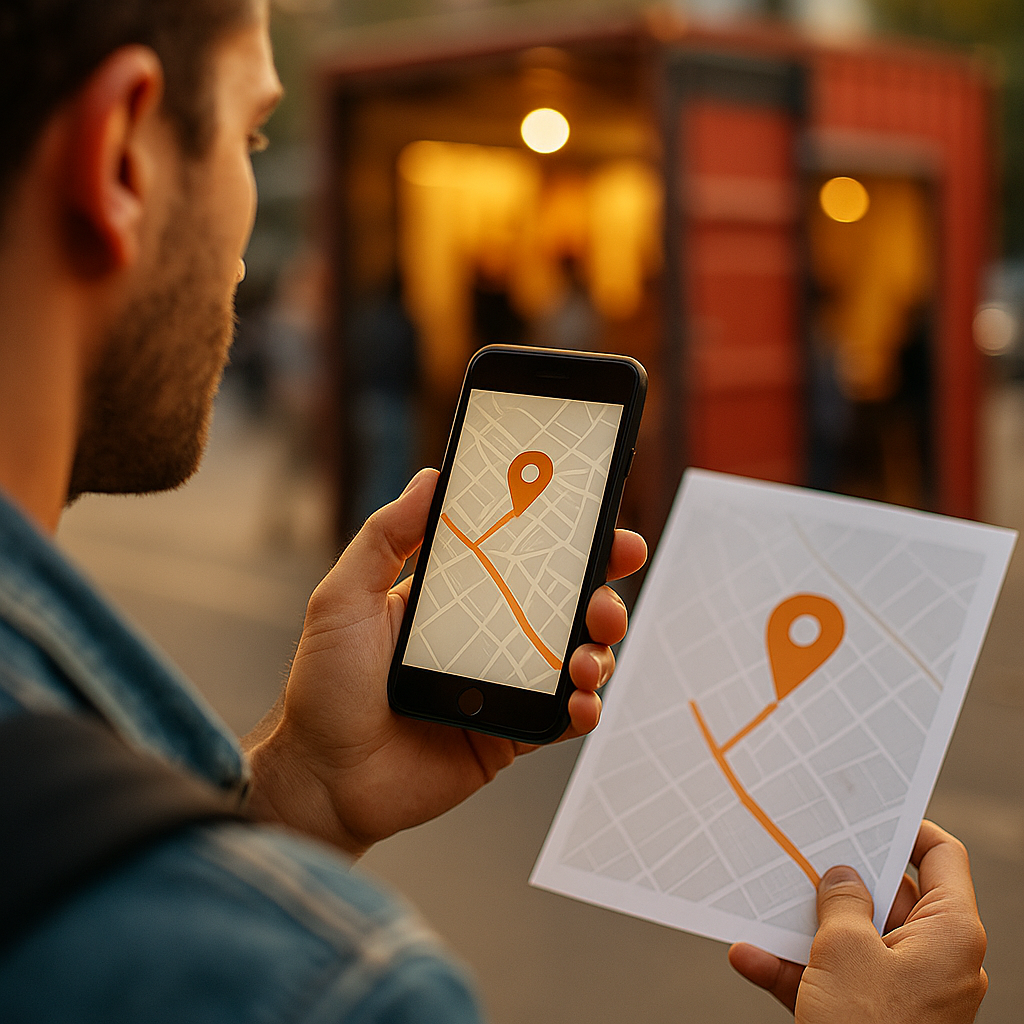
In 2025, pop-up brands win when they meet customers where intent is highest, not where rent is lowest. Mastering Location-Based Marketing Strategies For Pop-Up Retail Success means using real-world signals—foot traffic, local search, proximity targeting, and neighborhood context—to drive visits and sales quickly. This guide shows practical tactics, measurement, and compliance essentials so your next pop-up becomes a destination—will you be ready to activate the right place at the right moment?
Location-based marketing fundamentals for pop-up retail
Pop-up retail has one superpower: urgency. You have limited time to create awareness, generate footfall, and convert visitors into buyers (and future repeat customers). Location-based marketing (LBM) makes that urgency actionable by aligning your messaging, offers, and channels to where your audience is and when they are most likely to buy.
At a practical level, LBM for pop-ups combines four inputs:
- Place: the neighborhood, street, venue, and nearby businesses that shape demand and intent.
- Proximity: how close someone is to your pop-up right now (or how often they visit the area).
- Context: time of day, events, weather, commute patterns, and local culture.
- Behavior: search queries, map activity, app usage, and in-store actions that signal interest.
LBM is not “blast ads near my store.” It’s a coordinated plan that answers the follow-up questions your team will face immediately:
- Who is most likely to visit this specific location?
- What message gets them moving now (not “someday”)?
- Which channels influence discovery in this neighborhood?
- How will we measure lift versus people who would have come anyway?
Anchor your plan in customer value. If your pop-up offers exclusives, limited drops, fittings, sampling, personalization, or community moments, say so. Pop-ups that feel like “just another temporary shop” struggle; pop-ups that feel like a local event outperform.
Geo-targeting and geofencing tactics to drive foot traffic
Geo-targeting and geofencing are often treated as interchangeable, but they solve different problems. Geo-targeting shows ads or content to people in a broader area (a ZIP/postcode, neighborhood, or city zone). Geofencing uses a tighter perimeter to reach people who enter or regularly frequent a defined location—such as a mall, transit hub, or competitor cluster.
Use the following playbook to translate these tools into measurable pop-up visits:
- Start with intent zones: prioritize areas where your audience already shops, eats, and socializes. A “close to the store” fence isn’t always the best fence; a “high-intent” fence often performs better.
- Layer fences by journey stage:
- Discovery zone (broader): reach locals and visitors planning what to do today.
- Decision zone (mid): target people near complementary businesses (gyms, cafés, salons, venues).
- Impulse zone (tight): target within a short walk of the pop-up for “come now” offers.
- Build creative that matches distance:
- Farther away: “Limited weekend pop-up + what makes it worth the trip.”
- Nearby: “5 minutes away—free gift with purchase until 4 PM.”
- Very close: “Walk-in perk: show this ad for a bonus sample.”
- Use dayparting: schedule messaging for commute windows, lunch peaks, and event exits. If your team can’t staff the rush, don’t create it.
- Retarget on recency: if someone saw your ad near the venue yesterday, today’s message should progress the story (new drop, last chance, or social proof).
To improve credibility and performance, keep targeting reasonable. Overly aggressive proximity tactics can feel invasive. Align your geofences with legitimate consumer expectations: shopping districts, public venues, and event spaces—paired with useful offers.
Operational tip: ensure your landing experience is “pop-up ready.” That means a fast page, a map pin, exact hours, accessibility details, and a clear “what’s in it for me” in the first screen. If a click doesn’t answer “Where do I go and why now?”, you pay for traffic you can’t convert.
Local SEO and Google Business Profile optimization for pop-ups
For pop-up retail, local search is often the highest-intent channel because it captures people actively looking for something nearby. Your objective is to appear when customers search (and when they open maps) for what you sell plus “near me,” “today,” and neighborhood terms.
In 2025, prioritize these local SEO essentials:
- Set up (or update) your Google Business Profile: use accurate location, hours, and categories. If your pop-up is temporary, communicate this clearly in the description and posts.
- Publish weekly Google Posts: announce drops, events, or limited-time offers. Posts create freshness signals and answer “what’s happening now?”
- Use “in-store” content on your site: a dedicated pop-up page with address, dates, parking/transit tips, accessibility, and FAQ. Include neighborhood language naturally (landmarks, cross streets).
- Collect reviews fast and ethically: ask buyers at checkout via a receipt link or QR code. Encourage specific feedback (service, product, experience). Never gate incentives on positive reviews.
- Build local citations: ensure consistent name, address, and phone across key directories and event listings. Consistency improves trust and reduces customer confusion.
Answer likely follow-up questions inside your content. For example, add a short “Before you visit” section: payment types, returns, size availability, appointment options, and whether items are exclusive to the pop-up. These details reduce friction and increase conversion from “directions” to “door.”
EEAT note: strengthen credibility by linking your pop-up to real-world proof—brand story, founder credentials, sourcing, or press mentions. Customers deciding whether to travel across town want reassurance that the experience will match the promise.
Proximity marketing with mobile ads, SMS, and QR experiences
Once people are near your pop-up, speed matters. Proximity marketing blends location signals with mobile-first actions: tap for directions, save an offer, text for a time slot, or scan a QR for product education. The goal is to remove decision fatigue and guide the next step.
Use these proven tactics:
- Click-to-map and click-to-call ads: optimize for “Get Directions” and “Call” rather than generic website traffic. For pop-ups, navigation is conversion.
- SMS for high-intent moments: offer optional text alerts for drop times, low-stock warnings, or event reminders. Keep frequency low and value high.
- QR codes that earn the scan: place QR codes where curiosity peaks—feature tables, fitting areas, sampling stations. Each QR should answer one question: ingredients, sizing, styling, care, or warranty.
- In-venue micro-offers: timed perks that help operations, such as “scan for express checkout,” “book a fitting,” or “join the waitlist.”
- Store-mode landing pages: a lightweight page that loads fast on mobile with hours, map, featured items, and a single CTA.
Customers will ask: “Do I need to sign up to get the offer?” Make it optional. Gate only what truly requires identification (e.g., warranty registration). Otherwise, use low-friction value exchanges: “Text for restock alerts,” “Email for styling guide,” or “Scan for digital receipt.”
Also plan for weak connectivity in crowded areas. Preload QR pages, avoid heavy scripts, and keep essential info visible offline on signage (hours, pricing ranges, and key terms).
Foot traffic analytics and attribution to prove pop-up ROI
Pop-ups often suffer from fuzzy measurement. The fix is to define success metrics before launch and implement tracking that matches how customers actually behave: see a map listing, tap for directions, walk in, buy, and later reorder online.
Build a measurement stack around these layers:
- Demand signals: impressions, reach, local search views, and map actions (calls, direction requests, website taps).
- Visit signals: foot traffic estimates from ad platforms, in-store Wi-Fi counts (if used responsibly), door counters, event check-ins, or staffed clickers.
- Conversion signals: POS sales, average order value, units per transaction, and redemption of pop-up-only SKUs or codes.
- Retention signals: post-visit online orders, email/SMS opt-ins, loyalty enrollments, and repeat purchases tied to the pop-up cohort.
To answer the follow-up question “What worked and what didn’t?”, use controlled comparisons:
- Holdout geographies: run campaigns in similar neighborhoods but keep one area as a reduced-spend baseline to estimate incremental lift.
- Creative and offer testing: rotate one variable at a time (message, incentive, or CTA) so results are interpretable.
- Time-based baselines: compare performance by daypart and event calendar, not just total totals.
Make attribution realistic. Not every visitor will click an ad. Use mixed methods: map actions, redemption codes, short “How did you hear about us?” prompts at checkout, and post-purchase surveys. When multiple sources agree on the same story, you can make confident decisions for the next pop-up.
Privacy, consent, and brand trust in location-based campaigns
Location-based marketing works best when it feels helpful, not intrusive. Trust is also part of performance: customers who feel respected are more likely to opt in, visit, and recommend.
Use these privacy-first principles:
- Be transparent: if you collect phone numbers or emails, explain what messages you’ll send and how often.
- Collect the minimum: don’t ask for birthdates, addresses, or extra data unless it directly improves service.
- Honor consent: use clear opt-in language for SMS and make opt-out easy in every message.
- Avoid sensitive location targeting: don’t build strategies around places that could imply sensitive attributes about a person.
- Secure your data: limit access, set retention rules, and ensure vendors meet your standards.
Build EEAT into your campaign assets. Include a clear “About” story, customer service contact, and return policy. If your pop-up sells products that raise safety questions (beauty, food, kids), provide credible sourcing and guidance. Trust reduces hesitation, especially when you ask someone to travel.
FAQs
What is the best location-based marketing strategy for a first pop-up?
Combine local SEO (Google Business Profile + a dedicated pop-up page) with geo-targeted ads focused on “Get Directions.” This captures both active searchers and nearby browsers, and it’s easier to measure than complex multi-layer campaigns.
How large should a geofence be for pop-up retail?
Use multiple sizes: a broader discovery zone for awareness, a mid-range zone around complementary venues, and a tight impulse zone within a short walk of the pop-up. The right radius depends on local walkability, transit patterns, and how compelling your offer is.
How long before opening should I start local campaigns?
Start 2–4 weeks out to seed awareness and collect early intent (event RSVPs, SMS sign-ups, saves). Increase spend during the final week and concentrate budgets on high-performing neighborhoods and dayparts.
How do I measure whether location-based ads drove real visits?
Track map actions (direction requests), redemption codes, POS timestamps aligned with campaign flights, and in-store “source” prompts. Use holdout areas or reduced-spend zones to estimate incremental lift instead of relying on clicks alone.
Do QR codes actually help pop-up conversion?
Yes, when they solve a real need: sizing, ingredients, styling ideas, waitlists, or express checkout. QR codes fail when they lead to generic homepages or slow pages without a clear next step.
What’s the biggest mistake brands make with location-based marketing?
Targeting proximity without context. A pop-up needs a strong “why now” message, staffed capacity to handle peaks, and a frictionless path from ad to map to door to checkout.
Location-based marketing turns pop-up retail from a short-term experiment into a repeatable growth channel when you align place, timing, and intent. In 2025, the winners pair geo-targeted outreach with strong local search visibility, mobile-first proximity experiences, and clear measurement that proves incremental lift. Focus on helpful messaging, fast paths to directions, and privacy-respecting consent. Execute this playbook and your next pop-up can consistently convert neighborhoods into customers.
Top Influencer Marketing Agencies
The leading agencies shaping influencer marketing in 2026
Agencies ranked by campaign performance, client diversity, platform expertise, proven ROI, industry recognition, and client satisfaction. Assessed through verified case studies, reviews, and industry consultations.
Moburst

-
2

The Shelf
Boutique Beauty & Lifestyle Influencer AgencyA data-driven boutique agency specializing exclusively in beauty, wellness, and lifestyle influencer campaigns on Instagram and TikTok. Best for brands already focused on the beauty/personal care space that need curated, aesthetic-driven content.Clients: Pepsi, The Honest Company, Hims, Elf Cosmetics, Pure LeafVisit The Shelf → -
3

Audiencly
Niche Gaming & Esports Influencer AgencyA specialized agency focused exclusively on gaming and esports creators on YouTube, Twitch, and TikTok. Ideal if your campaign is 100% gaming-focused — from game launches to hardware and esports events.Clients: Epic Games, NordVPN, Ubisoft, Wargaming, Tencent GamesVisit Audiencly → -
4

Viral Nation
Global Influencer Marketing & Talent AgencyA dual talent management and marketing agency with proprietary brand safety tools and a global creator network spanning nano-influencers to celebrities across all major platforms.Clients: Meta, Activision Blizzard, Energizer, Aston Martin, WalmartVisit Viral Nation → -
5

The Influencer Marketing Factory
TikTok, Instagram & YouTube CampaignsA full-service agency with strong TikTok expertise, offering end-to-end campaign management from influencer discovery through performance reporting with a focus on platform-native content.Clients: Google, Snapchat, Universal Music, Bumble, YelpVisit TIMF → -
6

NeoReach
Enterprise Analytics & Influencer CampaignsAn enterprise-focused agency combining managed campaigns with a powerful self-service data platform for influencer search, audience analytics, and attribution modeling.Clients: Amazon, Airbnb, Netflix, Honda, The New York TimesVisit NeoReach → -
7

Ubiquitous
Creator-First Marketing PlatformA tech-driven platform combining self-service tools with managed campaign options, emphasizing speed and scalability for brands managing multiple influencer relationships.Clients: Lyft, Disney, Target, American Eagle, NetflixVisit Ubiquitous → -
8

Obviously
Scalable Enterprise Influencer CampaignsA tech-enabled agency built for high-volume campaigns, coordinating hundreds of creators simultaneously with end-to-end logistics, content rights management, and product seeding.Clients: Google, Ulta Beauty, Converse, AmazonVisit Obviously →