


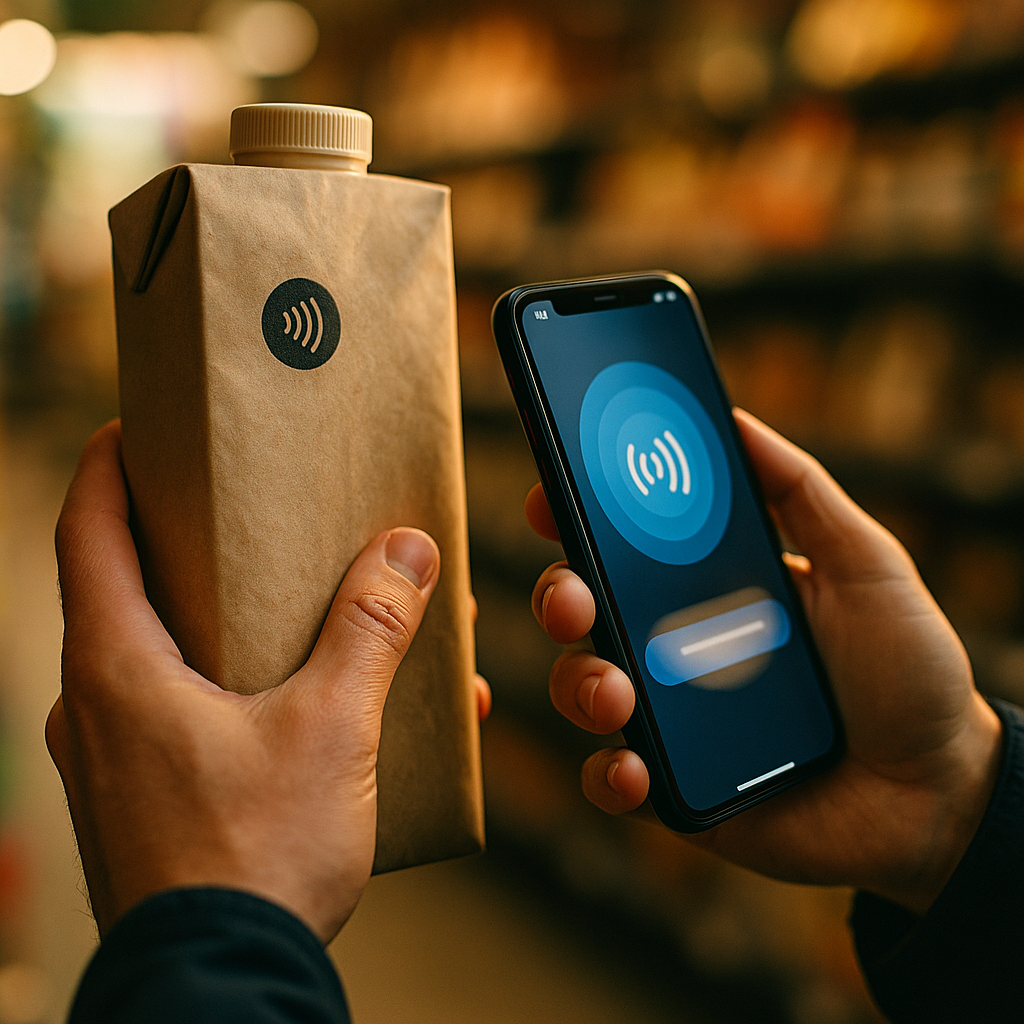
In 2025, mobile marketers fight a familiar problem: shoppers download an app, browse once, and disappear. This case study shows how one mid-market retailer improved repeat engagement by turning every product into a digital touchpoint with NFC embedded packaging. You’ll see the strategy, the numbers, the operational details, and the mistakes avoided—plus the exact steps you can copy to keep users coming back.
App retention strategy: turning packaging into a re-engagement channel
The retailer in this case study—an omnichannel personal-care brand with 180 stores and a fast-growing eCommerce business—had strong top-of-funnel acquisition. Paid social and search drove steady app installs, and in-store associates prompted downloads at checkout. The issue was what happened after the first session.
Internal analytics showed a pattern common in retail apps: customers installed to claim a discount, check stock, or track an order, then stopped opening the app once the immediate task was complete. The brand wanted a retention play that did not depend on constant discounting or intrusive push notifications.
The team chose a simple principle: every reorder moment should be a re-entry moment. Their products were consumed over 30–60 days, which meant packaging sat on bathroom counters and in gym bags—high-frequency visibility. They decided to convert that physical presence into a persistent digital entry point by embedding NFC tags into packaging, then linking each tap to useful in-app experiences.
Key objectives were defined before any pilot work:
- Increase returning users by creating a low-friction path back into the app.
- Reduce reliance on discounts by delivering utility: how-to content, replenishment reminders, and support.
- Improve customer trust through authentication and transparent product information.
- Measure impact cleanly with consistent tagging, controlled rollouts, and store-level comparisons.
Instead of treating packaging as a static label, the brand treated it as owned media with a measurable call to action. That decision shaped every design and technical choice that followed.
NFC packaging technology: tag selection, UX flow, and security
The retailer’s product team, packaging engineering lead, and mobile engineering manager ran the pilot together. That cross-functional ownership mattered because NFC success depends on more than a tag—it depends on the end-to-end experience after the tap.
Tag and packaging choices were made to balance cost, read reliability, and sustainability requirements:
- NFC tag type: a widely supported, standards-based tag compatible with modern iOS and Android tap-to-open behavior.
- Placement: near the side panel where hands naturally hold the product, with a small printed “Tap for tips + rewards” indicator.
- Encoding: a dynamic URL (not a hard-coded deep link) so the destination could change without reprinting packaging.
- Durability: tags laminated inside a label layer to protect against moisture in bathrooms and gym environments.
UX flow was designed to remove friction while still driving app engagement:
- If the app was installed, the tap opened a deep-linked in-app screen tied to the product SKU.
- If the app was not installed, the tap opened a lightweight mobile page with two options: “Continue in app” (store link) or “Continue on web”. The web path mirrored core value so non-app users still benefited.
- After the first app-open from NFC, the user saw a one-time prompt to enable replenishment reminders and set a preferred reorder cadence.
Security and trust were addressed early to avoid backlash and fraud:
- The dynamic URL redirected through a secure domain controlled by the retailer, preventing malicious re-encoding attempts.
- The in-app experience included product authenticity checks (batch info and manufacturing details) for select higher-risk items.
- The privacy policy was linked directly from the NFC landing experience, and the team avoided collecting sensitive data at tap time.
This combination—dynamic routing, deep linking, and privacy-forward design—kept the experience helpful rather than gimmicky, which became crucial for retention.
Smart packaging customer experience: content, loyalty, and value after the tap
The retailer avoided a common pitfall: sending NFC traffic to a generic homepage. Each tap landed on a product-specific “Care Hub” screen built around three high-intent jobs customers actually wanted done.
1) Use-it-better guidance
Customers often used the products incorrectly (too much, wrong order, wrong frequency), which led to lower satisfaction and fewer repeats. The Care Hub offered short, scannable guidance:
- Two-step routine instructions tailored to the SKU
- “Best with” cross-sell pairings based on dermatologist-reviewed routines
- Storage tips and travel guidance
2) Replenishment and one-tap reorder
The app pre-filled the user’s last purchase quantity and offered:
- One-tap reorder with Apple Pay/Google Pay where available
- A “Subscribe and save” option with transparent skip/pause controls
- Inventory-aware suggestions: pick up in-store if shipping would be slower
3) Loyalty and service that doesn’t feel like spam
The retailer tied the NFC interaction to loyalty without making it purely transactional:
- Points for completing helpful actions (e.g., setting a replenishment cadence, watching a 20-second how-to)
- Instant access to live chat and order lookup from the Care Hub
- A “scan history” screen so users could revisit prior products and tips
To prevent fatigue, the brand used frequency caps for incentives. A tap always delivered utility, but points were limited to meaningful moments. This protected margins and kept customers from perceiving NFC as a constant coupon trigger.
The team also answered a likely shopper question inside the interface: “Does tapping track me?” They provided a plain-language explanation and an option to continue without personalization. That transparency reduced support tickets and boosted opt-in rates for reminders.
Retail mobile engagement metrics: pilot design and retention results
The retailer ran a 12-week pilot across three product lines and 60 stores, plus online orders for the same SKUs. They used a controlled rollout: half the store locations received NFC-enabled inventory first, while the rest continued with standard packaging for baseline comparisons.
Measurement approach
- Every NFC tap hit a redirect service that logged anonymized event metadata (timestamp, SKU, channel, and whether the app opened).
- Deep links carried campaign parameters into the app to attribute sessions and downstream actions to NFC.
- Retention was evaluated using standard cohort views in the retailer’s analytics stack, separating NFC-sourced returning sessions from other sources.
What changed
The pilot generated three clear outcomes that convinced leadership to scale:
- Higher returning app sessions: users who tapped packaging at least once returned to the app more often than comparable purchasers who did not. The strongest lift appeared in replenishment windows (weeks 4–8 after purchase).
- Faster path to second purchase: the time between first and second order decreased for NFC-engaged users, driven by one-tap reorder and store pickup options.
- Lower dependence on push notifications: the team reduced promotional pushes for pilot SKUs without sacrificing repeat purchases, because the packaging itself prompted re-entry.
Operationally meaningful engagement signals
Beyond retention, the retailer tracked signals that made the program more defensible to finance and operations:
- Customer support deflection: product FAQs and batch info reduced “how do I use this?” contacts.
- Subscription adoption: more customers chose flexible subscribe options when offered right at the moment of product use.
- Higher loyalty profile completion: replenishment settings and preferred store selections increased, improving future personalization without invasive tracking.
Because the pilot used store-level comparisons and consistent attribution, the results were treated as credible internally, not just “marketing uplift.” That credibility unlocked the scale phase.
Omnichannel marketing integration: store ops, supply chain, and rollout plan
NFC packaging affects more than marketing. The retailer built a rollout plan that respected supply chain realities and store workflows, which kept execution clean and minimized shrink and confusion.
Packaging and inventory management
- They introduced NFC packaging first on high-velocity SKUs to ensure enough tap volume for learning.
- They used lot-level tracking so the team could correlate tap patterns with production runs and packaging variations.
- They phased in by region to avoid mixing NFC and non-NFC units in the same shelf set for too long.
Store associate enablement
Associates were given a short script and a single job: help customers understand where to tap and what they’d get. Training emphasized usefulness (tips, reorder, support) rather than “download our app.” That subtle shift improved customer receptivity.
- A small counter card demonstrated tapping on both iPhone and Android.
- Receipts and bag stuffers were avoided; the packaging itself became the primary prompt.
Omnichannel continuity
The same Care Hub experience appeared whether the product was bought in-store or online. For eCommerce orders, a brief insert explained that the package could be tapped for usage guidance and fast reorders. The retailer also integrated NFC events into lifecycle messaging:
- If a user tapped and viewed “How to use,” the app suppressed redundant tutorial emails.
- If a user tapped repeatedly without reordering, the app offered a support check-in instead of a discount.
This prevented channel conflict and ensured customers didn’t feel chased by disconnected systems.
Digital product passport compliance: privacy, accessibility, and lessons learned
In 2025, smart packaging programs face scrutiny: customers expect privacy clarity, and regulators increasingly focus on transparency and product information. The retailer designed for trust to protect long-term retention.
Privacy and consent
- The NFC landing page clearly stated what data was collected (event-level interaction data) and what was not (no background location tracking).
- Personalization features (like replenishment reminders) were opt-in, with easy controls in the app.
Accessibility
- The Care Hub used readable font sizes, high contrast, and screen-reader-friendly labels.
- Critical information (ingredients, allergen notes, and safety warnings) was accessible without requiring app install.
What they would do differently
- Make the tap target clearer: early packaging runs had too subtle an indicator. A clearer “Tap here” mark increased successful taps and reduced frustration.
- Plan for edge cases: some customers used older phones or had NFC disabled. The team added a visible QR fallback on the same panel to avoid dead ends.
- Keep content lightweight: long videos reduced completion. Short, task-based content drove more repeat behavior.
Why this aligns with emerging digital product passport expectations
Even without making regulatory claims, the retailer benefited from a passport-like approach: batch details, ingredient transparency, and traceable product info delivered on demand. That improved trust and reduced returns—an underappreciated driver of retention.
FAQs: NFC embedded packaging for app retention
Does NFC embedded packaging require customers to open an app manually?
No. On most modern smartphones, a tap can open a web page or deep link directly into the app if it’s installed. A well-designed flow also offers a web option so customers still get value without installing anything.
How do you attribute app retention to NFC taps accurately?
Use a dynamic redirect URL that logs the tap event, then pass campaign parameters through to the app via deep links. Evaluate retention using cohorts that separate NFC-sourced sessions from other channels, and run controlled rollouts by store, region, or SKU.
What content works best after an NFC tap to improve retention?
Utility wins: product-specific usage tips, one-tap reorder, replenishment settings, and quick support access. Avoid generic brand pages. Keep the experience fast, scannable, and tied to the customer’s immediate job.
Is NFC packaging secure, or can tags be copied?
No system is perfect, but risk is manageable. Use a controlled redirect domain, monitor for anomalies, and avoid storing sensitive data on the tag. For authentication use cases, add server-side validation and tamper-evident packaging where appropriate.
What if a customer’s phone doesn’t support NFC or it’s turned off?
Add a QR fallback on the package that routes to the same experience. Also include simple instructions for enabling NFC where relevant, but never force it—make the path to value obvious either way.
How expensive is NFC embedded packaging at scale?
Costs vary by tag type, volume, placement method, and packaging format. Many retailers start with a pilot on high-velocity SKUs, measure retention and reorder lift, then scale once unit economics are proven.
By treating packaging as a persistent re-engagement surface, the retailer turned routine product use into a helpful reason to reopen the app. NFC taps delivered practical value—guidance, service, and replenishment—without training customers to wait for discounts. The takeaway is clear: build a low-friction post-purchase experience, measure it with disciplined attribution, and let smart packaging earn retention one useful tap at a time.