


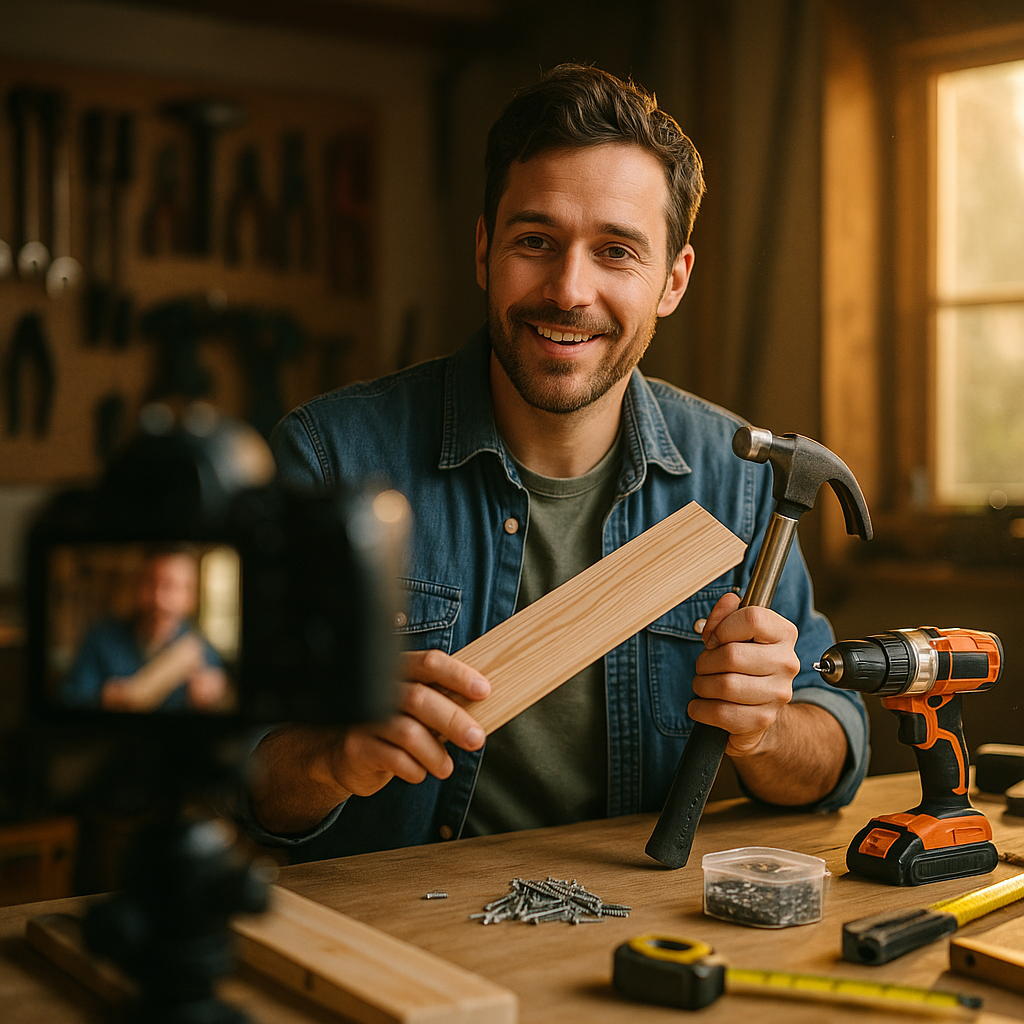
Partnering with maker influencers on DIY and how-to content that sells product is a smart marketing strategy that leverages trust and creativity. This approach not only introduces products to new audiences but also demonstrates their real-world uses. Want to accelerate your brand’s growth while building credibility? Discover how strategic influencer partnerships can drive sales with measurable impact.
Why Maker Influencers Are Vital for DIY Product Marketing
Maker influencers are content creators with a passion for hands-on projects, crafts, and inventive solutions. Their audiences actively seek practical ideas and recommendations. In 2025, recent surveys show over 68% of DIY enthusiasts consider influencer opinions as purchase drivers when shopping for tools, materials, or gadgets.
This unique trust factor, paired with a loyal following, means that recommending a product through a maker’s channel can deliver authentic exposure. Unlike traditional ads, influencer-created how-to guides or build videos create context and desirability around a product, helping potential buyers visualize its utility and quality in real situations.
Successful partnerships with maker influencers enable brands to:
- Humanize their products through credible demonstrations
- Reach specific, engaged communities
- Showcase real-time product performance and versatility
- Drive curiosity and encourage direct purchases
Selecting the Right DIY Influencers for Your Brand
Effective collaborations hinge on choosing maker influencers whose values, craft, and audience intersect with your brand’s mission. In 2025, brands should prioritize authenticity and expertise over follower counts alone. Consider:
- Niche alignment: Does the influencer regularly feature projects related to your product category?
- Audience demographics: Are their viewers potential customers who fit your ideal buyer profile?
- Engagement metrics: Quality comments, shares, and active conversations indicate real influence, not just reach.
- Content style: Does their video or tutorial format align with how you want your product represented?
Tools like Upfluence and CreatorIQ now offer AI-powered analysis of influencer trust and compatibility, helping brands make data-driven decisions for high-conversion partnerships.
Crafting Effective How-To Campaigns with Maker Influencers
The best DIY influencer marketing campaigns are collaborative and educational, focusing on empowering audiences to achieve results with your products. To maximize value:
- Involve influencers early: Let them test, review, and provide honest feedback before content creation.
- Co-create project ideas: Work with the influencer to design unique how-to tutorials that solve recognizable challenges.
- Prioritize transparency: Clearly disclose your partnership as per FTC guidelines to maintain user trust.
- Provide high-quality assets: Supply clear specs, images, and support so influencers can create detailed, error-free demonstrations.
- Encourage step-by-step documentation: Tutorials, time-lapse builds, and tips ensure that the product use is central and easily replicable by viewers.
When audiences see their favorite makers achieve impressive results with your tools, materials, or kits, it builds confidence—and urgency—to buy.
Enhancing Product Sales Through Influencer Led Storytelling
Consumers in 2025 value inspirational stories over overt advertisements. Maker influencers excel at weaving your product’s features into compelling narratives. Instead of a simple pitch, their “watch me build” stories foster emotional resonance while highlighting practical advantages.
For example, a woodworking influencer might tell the story of upgrading her workspace for her daughter, using your cordless drill. This personal angle resonates with viewers, showing your product’s role in moments that matter—helping translate interest into actual purchases.
Success lies in:
- Empowering influencers to narrate real use scenarios
- Integrating subtle yet clear product mentions
- Sharing customer testimonials and real-case builds within the content
By focusing on narrative-driven content, audiences build both an emotional and rational connection to your product.
Measuring the Impact: Analytics, Attribution, and ROI
Tracking the effectiveness of DIY influencer partnerships is essential for both accountability and optimization. In 2025, brands have access to advanced attribution tools that go beyond basic traffic or sales.
- Unique codes and affiliate links: Assign custom URLs or discount codes to measure direct conversions from each influencer campaign.
- Engagement analysis: Track video watches, saves, shares, and comment sentiment for a deeper look at audience response.
- Brand lift studies: Use pre- and post-campaign surveys to gauge shifts in product consideration and purchase intent.
- Long-term community growth: Evaluate how influencer campaigns boost your own social following, newsletter sign-ups, and repeat buyers.
Regularly reviewing these metrics enables brands to refine partnership strategies, improve content direction, and achieve greater marketing ROI with every campaign.
Maximizing Longevity and Value of Influencer Content
DIY and how-to content holds lasting value because it remains relevant for months or years after initial publishing. Brands can extend the return on investment from influencer partnerships by:
- Reposting or repurposing tutorials on owned social channels, blogs, or newsletters for fresh engagement.
- Incorporating influencer content into product pages, giving proof of effectiveness to shoppers deciding whether to buy.
- Using influencer testimonials in advertising creatives to leverage social proof from skilled makers.
- Updating and refreshing guides as products evolve or as new use cases arise, keeping content up-to-date and discoverable.
Sustained collaboration nurtures trust both with influencers and their audiences, turning one-off campaigns into compounding brand equity.
Conclusion
Partnering with maker influencers on DIY and how-to content that sells product unlocks trust, creativity, and measurable sales growth. By carefully selecting collaborators, focusing on educational storytelling, and tracking ROI, brands can consistently move shoppers from inspiration to purchase. The future of product discovery lies in genuine, project-based partnerships—don’t let your brand miss out.
FAQs: Partnering with Maker Influencers on DIY and How-To Content
-
What is a maker influencer?
A maker influencer creates hands-on DIY, crafting, or building content and shares project tutorials, reviews, and creative ideas with a dedicated online community. -
How do I choose the right DIY influencer?
Look for influencers whose project style, audience, and values match your brand. Prioritize engagement rates and authentic content over just follower numbers. -
Is it better to work with micro or macro influencers?
Micro-influencers often have higher engagement and niche relevance, while macro influencers provide larger reach. The best choice depends on your target audience and campaign goals. -
How do I measure sales from influencer campaigns?
Use trackable affiliate links, custom discount codes, and analytics tools to attribute web traffic and conversions directly to influencer content. -
What are best practices for content collaboration?
Foster early communication, co-create projects, provide clear product info, and encourage detailed, transparent step-by-step demonstrations to maximize campaign success.
Top Influencer Marketing Agencies
The leading agencies shaping influencer marketing in 2026
Agencies ranked by campaign performance, client diversity, platform expertise, proven ROI, industry recognition, and client satisfaction. Assessed through verified case studies, reviews, and industry consultations.
Moburst

-
2

The Shelf
Boutique Beauty & Lifestyle Influencer AgencyA data-driven boutique agency specializing exclusively in beauty, wellness, and lifestyle influencer campaigns on Instagram and TikTok. Best for brands already focused on the beauty/personal care space that need curated, aesthetic-driven content.Clients: Pepsi, The Honest Company, Hims, Elf Cosmetics, Pure LeafVisit The Shelf → -
3

Audiencly
Niche Gaming & Esports Influencer AgencyA specialized agency focused exclusively on gaming and esports creators on YouTube, Twitch, and TikTok. Ideal if your campaign is 100% gaming-focused — from game launches to hardware and esports events.Clients: Epic Games, NordVPN, Ubisoft, Wargaming, Tencent GamesVisit Audiencly → -
4

Viral Nation
Global Influencer Marketing & Talent AgencyA dual talent management and marketing agency with proprietary brand safety tools and a global creator network spanning nano-influencers to celebrities across all major platforms.Clients: Meta, Activision Blizzard, Energizer, Aston Martin, WalmartVisit Viral Nation → -
5

The Influencer Marketing Factory
TikTok, Instagram & YouTube CampaignsA full-service agency with strong TikTok expertise, offering end-to-end campaign management from influencer discovery through performance reporting with a focus on platform-native content.Clients: Google, Snapchat, Universal Music, Bumble, YelpVisit TIMF → -
6

NeoReach
Enterprise Analytics & Influencer CampaignsAn enterprise-focused agency combining managed campaigns with a powerful self-service data platform for influencer search, audience analytics, and attribution modeling.Clients: Amazon, Airbnb, Netflix, Honda, The New York TimesVisit NeoReach → -
7

Ubiquitous
Creator-First Marketing PlatformA tech-driven platform combining self-service tools with managed campaign options, emphasizing speed and scalability for brands managing multiple influencer relationships.Clients: Lyft, Disney, Target, American Eagle, NetflixVisit Ubiquitous → -
8

Obviously
Scalable Enterprise Influencer CampaignsA tech-enabled agency built for high-volume campaigns, coordinating hundreds of creators simultaneously with end-to-end logistics, content rights management, and product seeding.Clients: Google, Ulta Beauty, Converse, AmazonVisit Obviously →