


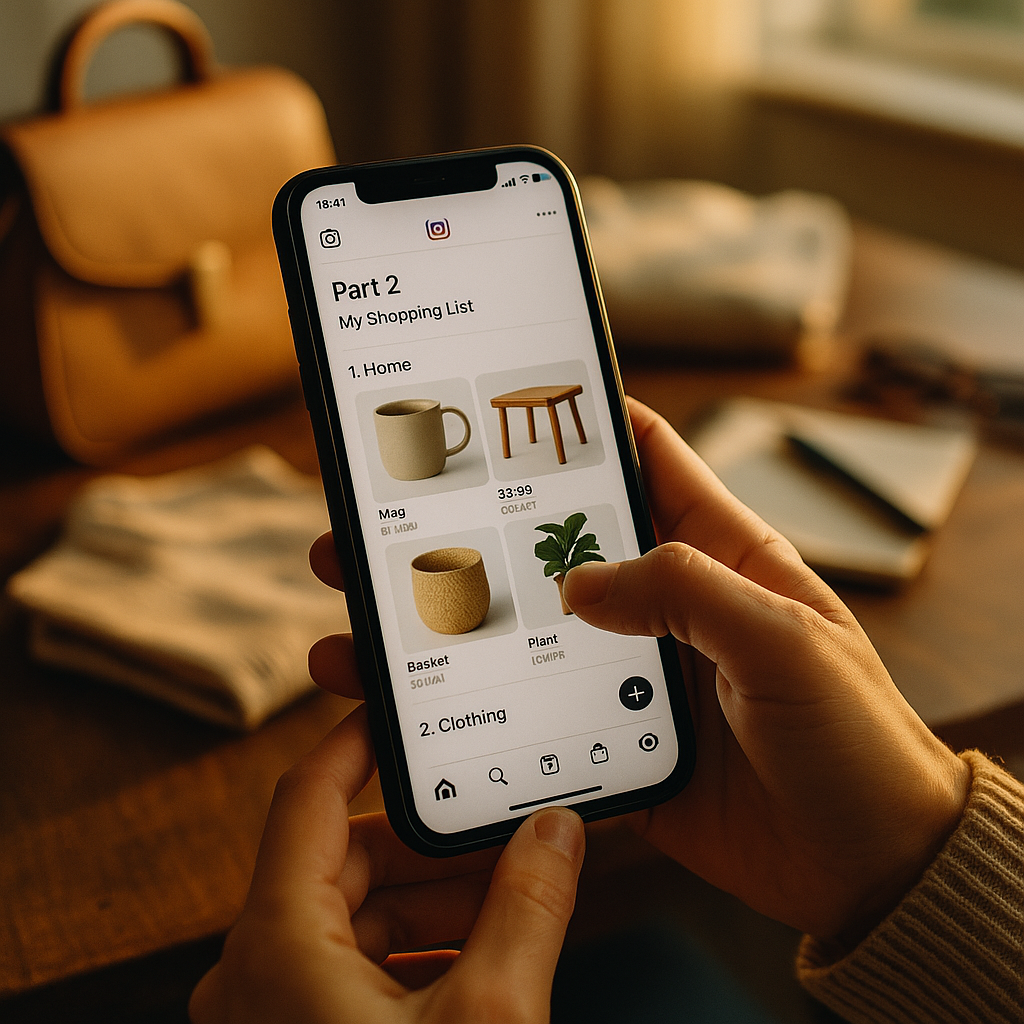
Instagram’s algorithm forgets your Reel in 72 hours. Its Guides feature doesn’t. While brands chase fleeting engagement on short form video, a quieter format is quietly compounding traffic month after month: multi part Instagram Guides that package creator expertise into structured, shoppable lists. If your content strategy has no evergreen layer, you’re renting attention instead of owning it.
What Multi Part Instagram Guides Actually Are
Instagram Guides let creators and brands curate existing posts, products, or places into a scrollable, themed list. A “multi part” guide simply splits a broad topic into a connected series: Part One might cover skincare basics, Part Two layering routines, Part Three dupes and budget swaps. Each part lives as its own Guide, cross-linked in captions and pinned to a profile’s Guides tab.
Unlike a single viral Reel, a Guide doesn’t need fresh algorithmic push to stay useful. It sits on the profile, gets discovered through search, saves, and shares, and keeps earning impressions weeks or months after publication. That’s the entire pitch: content that works while your team sleeps.
A well-built Guide series behaves less like a social post and more like an owned landing page, except it lives inside the platform where your audience already shops.
Why Evergreen Beats Episodic for Shopping Behavior
Short form video drives spikes. Guides drive slow burns. For purchase decisions that require comparison (skincare routines, supplement stacks, home office setups), consumers don’t convert on first exposure. They come back, screenshot, compare prices, and revisit. A Guide format mirrors that behavior naturally because it’s built to be revisited, saved, and referenced like a bookmarked article rather than consumed once and scrolled past.
Data from Sprout Social’s platform research consistently shows save and share rates correlate more tightly with purchase intent than likes or views. Guides are built almost entirely around the save action. That alignment is not accidental, it’s a structural advantage brands should exploit deliberately rather than treating Guides as an afterthought feature.
The Operational Case: Low Cost, High Shelf Life
Here’s the part that should get a CFO’s attention. A multi part Guide series doesn’t require new production. It repurposes content you’ve already paid for: creator reviews, comparison grid carousels, price breakdown videos, even old UGC sitting unused in a content library. You’re not briefing new shoots. You’re organizing existing assets into a structure that search and save behavior reward.
Run the math on cost per impression over a six month window. A Reel might generate strong reach in week one and near zero afterward. A Guide, properly tagged and cross-promoted, keeps surfacing in profile visits and search results indefinitely. The marginal cost of maintaining it is close to zero once built. That’s the kind of asymmetric ROI brand teams should be hunting for heading into the next budget cycle.
How to Structure a Series That Doesn’t Fall Apart
Most multi part Guides fail not because the idea is weak, but because the execution is sloppy. A few rules keep the series coherent:
- Define the arc before you build Part One. Map the full journey (awareness, comparison, purchase, maintenance) across three to five parts so each Guide has a distinct job.
- Cross-link relentlessly. Every Guide should reference the next and previous parts in its intro text, not just the caption of the post that announces it.
- Anchor each part to a creator’s specific expertise. A dermatologist-adjacent skincare creator owns the “why” part. A budget-focused creator owns the “dupes and alternatives” part. Mixing voices without clear lanes confuses the audience and dilutes authority.
- Update quarterly, not annually. Products get discontinued, prices shift, and stale links kill trust fast. Build a lightweight audit cadence into your content calendar.
Creators who already run routine-based video formats are natural fits for Guide series because their content is already sequential by nature. You’re not asking them to invent a new structure, just to formalize one they’re already using informally.
Turning Expertise Into a Shopping List, Not a Catalog
The biggest mistake brands make with Guides is treating them like a product catalog with a creator’s name slapped on top. That’s not expertise, that’s a sponsored directory, and audiences spot the difference instantly.
Real expertise shows up in the sequencing and the “why not” as much as the “why.” A nutrition creator building a supplement Guide shouldn’t just list products, they should explain which ones to skip for specific conditions, what order to introduce them, and what trade-offs exist between price tiers. This is where formats like myth busting content and versus comparison scripts feed directly into Guide structure: the groundwork of trust gets built in short form, then the Guide becomes the permanent reference document that captures it.
A shopping list built on documented expertise converts at a different rate than one built on affiliate convenience. Audiences can tell which is which.
Disclosure and Compliance Don’t Disappear Because It’s Evergreen
Here’s a trap brand teams fall into: because Guides feel like organic content, disclosure sometimes gets forgotten. It shouldn’t. If a Guide includes paid placements, affiliate links, or gifted products, the FTC’s endorsement guidance still applies, and so do platform-level disclosure tools inside Meta’s business tools. The fact that a Guide persists for months actually raises the compliance stakes, not lowers them. A disclosure that’s accurate at launch but becomes misleading after a product relationship ends is a liability sitting in plain sight on a creator’s profile.
Build a review clause into creator contracts specifically for evergreen formats: who updates the Guide if the partnership ends, who’s responsible for removing outdated claims, and how often compliance gets re-checked. This is operational hygiene, not bureaucracy, and it protects both the brand and the creator from stale claims turning into regulatory headaches.
Measuring What Actually Matters
Standard engagement metrics undersell Guides. Likes and comments were never the point. Track these instead:
- Saves per Guide part, compared against the account’s baseline save rate
- Profile visits attributed to Guide traffic (available through Instagram’s native insights)
- Click-through on tagged products or linked shops within each Guide
- Return visit rate to the Guides tab over a 30, 60, and 90 day window
If you’re running paid amplification alongside organic Guide content, benchmark against broader category data from eMarketer’s creator economy research to see whether your save and conversion rates are tracking above or below sector norms. Guides without measurement discipline just become expensive bookmarks nobody checks.
Where This Fits in a Broader Content Stack
Multi part Guides work best as the connective tissue between short form discovery content and owned commerce. A try on series builds initial proof, a swipe to reveal carousel drives the shoppable moment, and the Guide becomes the archive that ties it all together for someone who finds the creator three months later via search. Treat Guides as the permanent record of a campaign’s best insights rather than a one-off deliverable, and the format starts paying for itself long after the original budget line closes.
For teams still debating whether Guides deserve a dedicated line item, consider this: most brands already pay creators to generate the expertise. The Guide format is simply the cheapest possible way to make that expertise keep working.
Next Step
Pick one high-performing creator partnership from the last quarter, audit the content you already own, and build a three part Guide series around it this month. Measure saves and profile visits at 30 and 90 days before committing to a larger rollout.
Frequently Asked Questions
What makes a multi part Instagram Guide different from a single Guide?
A multi part series breaks a broad topic into sequential, cross-linked Guides, each covering a distinct stage of a buyer’s journey rather than cramming everything into one long list.
Do Instagram Guides actually drive sales, or just engagement?
Guides are built around saves and revisits, behaviors that correlate more strongly with purchase intent than likes or views, especially for considered purchases like skincare or home products.
How often should a brand update an evergreen Guide series?
Quarterly audits are a reasonable minimum to catch discontinued products, outdated prices, or expired creator partnerships that could create compliance issues.
Does FTC disclosure still apply to content that stays live indefinitely?
Yes. Ongoing visibility raises the stakes rather than lowering them, since disclosures that were accurate at launch can become misleading once a paid relationship ends.
What existing content works best for building a Guide series?
Comparison carousels, price breakdown videos, and routine-based reviews translate well because they’re already structured around sequence and decision-making, which mirrors how Guides are consumed.
Top Influencer Marketing Agencies
The leading agencies shaping influencer marketing in 2026
Agencies ranked by campaign performance, client diversity, platform expertise, proven ROI, industry recognition, and client satisfaction. Assessed through verified case studies, reviews, and industry consultations.
Moburst

-
2

The Shelf
Boutique Beauty & Lifestyle Influencer AgencyA data-driven boutique agency specializing exclusively in beauty, wellness, and lifestyle influencer campaigns on Instagram and TikTok. Best for brands already focused on the beauty/personal care space that need curated, aesthetic-driven content.Clients: Pepsi, The Honest Company, Hims, Elf Cosmetics, Pure LeafVisit The Shelf → -
3

Audiencly
Niche Gaming & Esports Influencer AgencyA specialized agency focused exclusively on gaming and esports creators on YouTube, Twitch, and TikTok. Ideal if your campaign is 100% gaming-focused — from game launches to hardware and esports events.Clients: Epic Games, NordVPN, Ubisoft, Wargaming, Tencent GamesVisit Audiencly → -
4

Viral Nation
Global Influencer Marketing & Talent AgencyA dual talent management and marketing agency with proprietary brand safety tools and a global creator network spanning nano-influencers to celebrities across all major platforms.Clients: Meta, Activision Blizzard, Energizer, Aston Martin, WalmartVisit Viral Nation → -
5

The Influencer Marketing Factory
TikTok, Instagram & YouTube CampaignsA full-service agency with strong TikTok expertise, offering end-to-end campaign management from influencer discovery through performance reporting with a focus on platform-native content.Clients: Google, Snapchat, Universal Music, Bumble, YelpVisit TIMF → -
6

NeoReach
Enterprise Analytics & Influencer CampaignsAn enterprise-focused agency combining managed campaigns with a powerful self-service data platform for influencer search, audience analytics, and attribution modeling.Clients: Amazon, Airbnb, Netflix, Honda, The New York TimesVisit NeoReach → -
7

Ubiquitous
Creator-First Marketing PlatformA tech-driven platform combining self-service tools with managed campaign options, emphasizing speed and scalability for brands managing multiple influencer relationships.Clients: Lyft, Disney, Target, American Eagle, NetflixVisit Ubiquitous → -
8

Obviously
Scalable Enterprise Influencer CampaignsA tech-enabled agency built for high-volume campaigns, coordinating hundreds of creators simultaneously with end-to-end logistics, content rights management, and product seeding.Clients: Google, Ulta Beauty, Converse, AmazonVisit Obviously →