


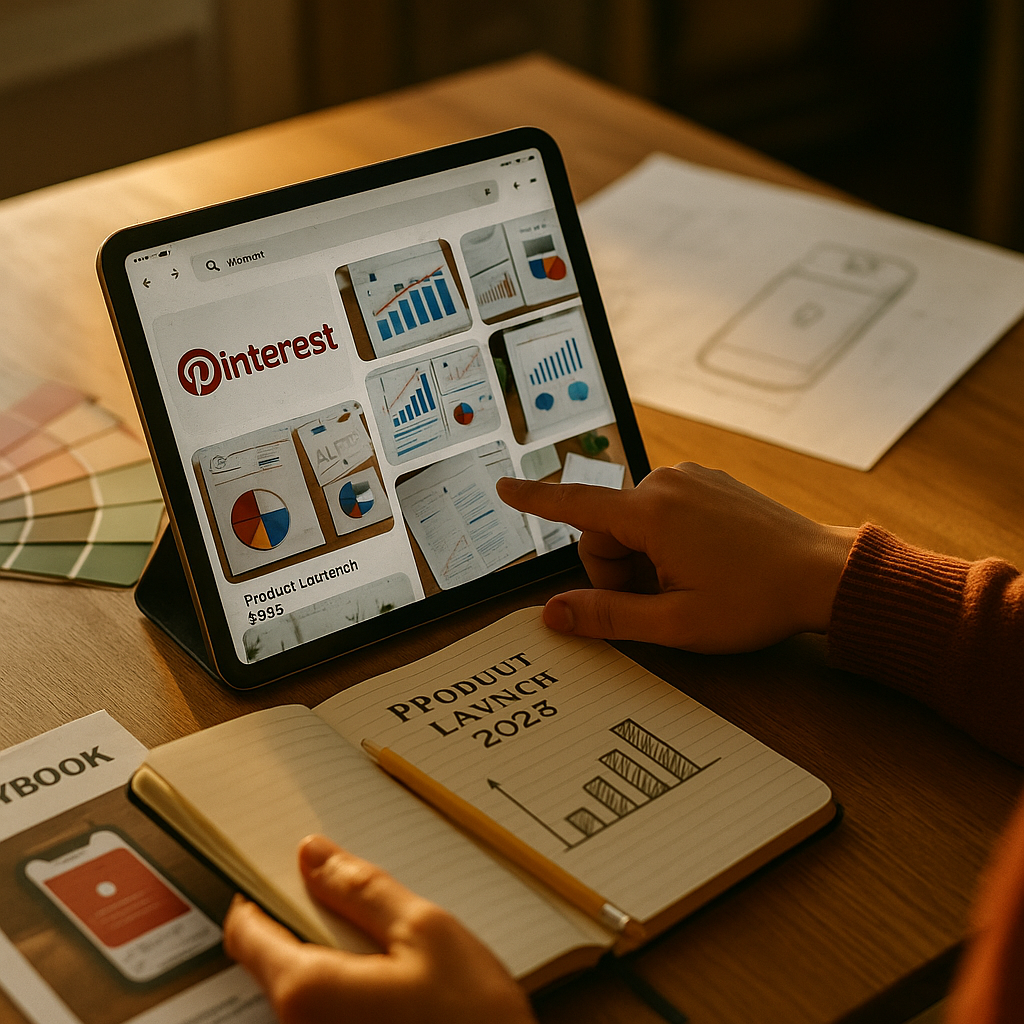
Launching a new product line is an exciting challenge, and using a Pinterest Creator Playbook for new product lines can help brands stand out in a competitive marketplace. With over 520 million users, Pinterest offers immense discovery potential. To reach your ideal audience and drive sales, here’s your step-by-step guide for success on Pinterest in 2025.
Pinterest Strategy Development for New Products
Setting up a smart Pinterest strategy is crucial when introducing new products. Begin by identifying your product’s unique value staked against trends and audience needs. Research keywords and competitor pins to pinpoint what’s currently gaining traction. Build visual mood boards that outline the aesthetic and storytelling angle for your new line. Remember, shoppers come to Pinterest with purchase intent, so focus your content towards actionable inspiration, not just beautiful images.
After solidifying your vision, define SMART goals (Specific, Measurable, Achievable, Relevant, Timely) for your product line launch. According to a 2025 Social Sprout study, product pins with clear calls to action outperform generic visuals by 27% in click-through rates. Use this data to ground your approach in measurable outcomes around website traffic, repins, and conversions.
Optimizing Pinterest Business Profiles for Product Discovery
Your business profile is your Pinterest storefront, so it needs optimization for discovery and conversion. Start by enabling a Pinterest Business Account, which gives access to advanced analytics and advertising features. Craft a descriptive profile bio using primary and secondary keywords related to your new line, such as “sustainable home décor” or “vegan beauty essentials.”
Organize boards by collection or need state, and incorporate keyword-rich descriptions. Feature Pinned Stories and Showcase modules to highlight your latest product news, limited-time launches, or behind-the-scenes content. Verified merchant status also establishes trust, increasing conversion rates by up to 34% according to Pinterest’s 2025 trends report.
Creating High-Performance Product Pins and Idea Pins
Pin design is where first impressions are made. Invest in high-quality imagery with a consistent, on-brand color palette. Vertical formats (2:3 ratio) now dominate the platform, and shoppable tags streamline purchasing decisions. Use clear titles, concise overlay text, and compelling calls to action on every pin.
In 2025, Pinterest’s Idea Pins drive significant engagement. These multi-page, interactive pins let you showcase step-by-step tutorials, product demos, or the story behind your new line. Use Idea Pin analytics to measure performance—look at saves, comments, and click-throughs to optimize future content. Ensure every pin is linked to a relevant landing page with speedy load times for a seamless experience.
Leveraging Pinterest SEO and Hashtags in 2025
Pinterest functions like a visual search engine. Mastering Pinterest SEO ensures your new products get discovered. Each pin, board, and bio should include target keywords naturally—not keyword stuffing, but authentic placement. Research trending searches and add “long-tail” keywords unique to your brand for increased visibility.
Hashtags remain effective in 2025 when used strategically—limit them to 3-5 relevant tags per pin, focusing on product features, category, and target audience. For example, use #EcoFashion2025 or #MinimalistKitchen, but avoid generic tags like #fashion. This increases content relevance and improves chance for discovery among niche shopper segments.
Building Trust and Authority to Maximize EEAT Signals
To win on Pinterest, showcase expertise, experience, authority, and trustworthiness (EEAT). Share product design stories, customer testimonials, and authentic reviews. Host Q&A sessions via Idea Pins or collaborate with micro-influencers whose followers trust their product recommendations.
Keep product information accurate and up-to-date. Pinterest’s Verified Merchant Program and consistent branding both strengthen authority signals. Feature press mentions, certifications, and educational content demonstrating your knowledge (e.g., “7 Ways Our Organic Fabrics Outperform Synthetics”). As visual proof, include user-generated content—real buyers using your new products—as social validation.
Analyzing Pinterest Metrics for Continuous Improvement
Continuous improvement is key. Monitor Pinterest Analytics weekly to track important metrics such as impressions, saves, outbound clicks, and conversion rates. Compare the performance of standard pins versus Idea Pins to identify which drives more sales or engagement for your new product line.
Run A/B tests on pin designs, descriptions, and CTAs. Use Pinterest’s audience insights to refine targeting—for example, segmenting by age group or platform device. In 2025, AI-powered analytics tools provide predictive insights, suggesting which products or visuals could trend next quarter. Stay agile and iterate your playbook based on data-driven learnings.
Launching your new product line on Pinterest in 2025 demands strategy, creativity, and data-driven refinement. By mastering discovery, design, EEAT, and analytics, you’ll maximize your product’s reach and sales potential on today’s visual-first, shopper-focused platform.
FAQs About Pinterest Creator Playbook for New Product Lines
-
How often should I post new product pins?
Post at least 3-5 product pins per week during a launch phase. Consistency improves visibility and engagement. Monitor analytics for the best timing.
-
What’s the difference between Idea Pins and standard product pins?
Idea Pins are multi-page, interactive content designed for storytelling and higher engagement, while standard pins are single static images. Both can drive discovery, but Idea Pins perform well for brand storytelling and tutorials.
-
Should I use Pinterest Ads for my new product line?
Pinterest Ads can greatly increase reach, especially during launches. Use them alongside organic pins for maximum visibility and conversion, targeting keywords and interests relevant to your new products.
-
How can I use Pinterest to drive sales to my ecommerce store?
Link every product pin to a fast-loading product page, use shoppable tags, and offer exclusive Pinterest-only promotions. Verified Merchant status and positive user reviews further boost sales conversion.
-
What is the Pinterest Verified Merchant Program?
This program verifies your business’ legitimacy, adds trust badges to pins, and grants exclusive access to shopping features. In 2025, it’s a proven way to increase customer confidence and sales.
-
Are hashtags still important on Pinterest?
Yes. Targeted hashtags help your content surface in niche searches but should be used sparingly—prefer 3-5 per pin for optimal results in 2025.
Top Influencer Marketing Agencies
The leading agencies shaping influencer marketing in 2026
Agencies ranked by campaign performance, client diversity, platform expertise, proven ROI, industry recognition, and client satisfaction. Assessed through verified case studies, reviews, and industry consultations.
Moburst

-
2

The Shelf
Boutique Beauty & Lifestyle Influencer AgencyA data-driven boutique agency specializing exclusively in beauty, wellness, and lifestyle influencer campaigns on Instagram and TikTok. Best for brands already focused on the beauty/personal care space that need curated, aesthetic-driven content.Clients: Pepsi, The Honest Company, Hims, Elf Cosmetics, Pure LeafVisit The Shelf → -
3

Audiencly
Niche Gaming & Esports Influencer AgencyA specialized agency focused exclusively on gaming and esports creators on YouTube, Twitch, and TikTok. Ideal if your campaign is 100% gaming-focused — from game launches to hardware and esports events.Clients: Epic Games, NordVPN, Ubisoft, Wargaming, Tencent GamesVisit Audiencly → -
4

Viral Nation
Global Influencer Marketing & Talent AgencyA dual talent management and marketing agency with proprietary brand safety tools and a global creator network spanning nano-influencers to celebrities across all major platforms.Clients: Meta, Activision Blizzard, Energizer, Aston Martin, WalmartVisit Viral Nation → -
5

The Influencer Marketing Factory
TikTok, Instagram & YouTube CampaignsA full-service agency with strong TikTok expertise, offering end-to-end campaign management from influencer discovery through performance reporting with a focus on platform-native content.Clients: Google, Snapchat, Universal Music, Bumble, YelpVisit TIMF → -
6

NeoReach
Enterprise Analytics & Influencer CampaignsAn enterprise-focused agency combining managed campaigns with a powerful self-service data platform for influencer search, audience analytics, and attribution modeling.Clients: Amazon, Airbnb, Netflix, Honda, The New York TimesVisit NeoReach → -
7

Ubiquitous
Creator-First Marketing PlatformA tech-driven platform combining self-service tools with managed campaign options, emphasizing speed and scalability for brands managing multiple influencer relationships.Clients: Lyft, Disney, Target, American Eagle, NetflixVisit Ubiquitous → -
8

Obviously
Scalable Enterprise Influencer CampaignsA tech-enabled agency built for high-volume campaigns, coordinating hundreds of creators simultaneously with end-to-end logistics, content rights management, and product seeding.Clients: Google, Ulta Beauty, Converse, AmazonVisit Obviously →