


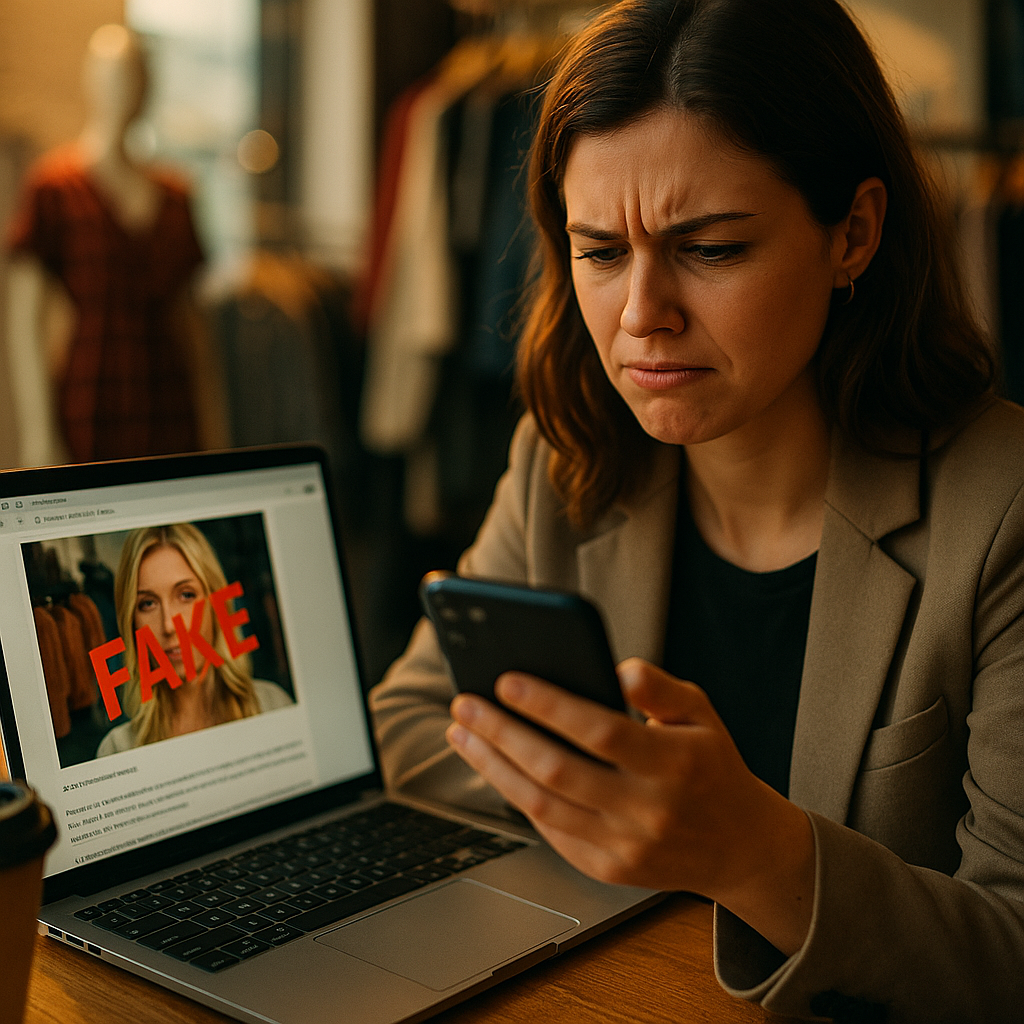
In 2025, brand trust can collapse in hours when misinformation spreads faster than facts. This case study follows a mid-sized fashion label as it faced a sudden surge of false claims across social platforms and search results. By treating the moment as both a communications and operations problem, the team rebuilt confidence with evidence, speed, and empathy. Would their playbook hold under real pressure?
Early-warning signals in a misinformation crisis
The label—known for premium basics and limited seasonal drops—noticed a sharp spike in customer service tickets and refund requests within one afternoon. The issue was not product quality. Customers were citing a viral post alleging the brand used unsafe dyes and exploited factory labor. Neither claim was true, but the narrative was spreading through reposts, reaction videos, and screenshots shared without context.
What made the situation dangerous:
- Speed: Social sharing outpaced the brand’s normal monitoring cadence.
- Search visibility: The brand name began auto-suggesting negative phrases, and a few high-engagement posts started ranking for branded queries.
- Authority cues: A creator presented unverified “documents” with confident commentary, which many viewers interpreted as proof.
- Customer uncertainty: Shoppers did not ask for a debate; they asked whether it was safe to wear the clothing and whether the brand was ethical.
The leadership team treated those signals as a formal incident. They created a “single source of truth” workspace, pulled in legal counsel, compliance, customer support, e-commerce, and social leads, and set a 30-minute response SLA for internal updates. This prevented the most common early mistake: letting different departments answer the same question differently.
Follow-up question you might have: Should a brand respond immediately or wait for facts? The label responded in two phases: a fast holding statement acknowledging concern and promising evidence within hours, followed by a documented rebuttal once verification was complete. That balance protected credibility while buying time to assemble proof.
Social media crisis management with fast, verifiable facts
In the first six hours, the team focused on clarity and distribution. Instead of posting a defensive thread, they built a simple response package: a short statement, a longer explainer, and a set of proof links that any customer could check without special knowledge.
Actions taken within the first day:
- Published a pinned statement across the brand’s primary social accounts and storefront banner: what the claim was, what was true, what was being verified, and when the next update would arrive.
- Created a dedicated FAQ page titled around the specific rumor terms customers were searching, using plain language and avoiding jargon.
- Released “receipts” responsibly: third-party lab test results for dyes and materials, supplier audit summaries, and compliance certificates. Sensitive supplier identifiers were redacted to protect partners while preserving substance.
- Used consistent phrasing across every channel so screenshots shared out of context would still convey the core message.
They also avoided two traps that often inflame misinformation. First, they did not ridicule the creator or the audience. Second, they did not overclaim certainty. Where details were still being confirmed, they said so, and they explained the verification steps.
How they answered the hardest question—“Why should we trust you?” They leaned on independent evidence and made it easy to validate: direct links to lab and audit providers, a timeline of when tests were run, and the exact product SKUs tested. They also committed to publishing updated test panels for new production runs, turning a reactive proof point into a proactive standard.
Brand reputation recovery using transparency and EEAT
In a misinformation event, reputation recovery depends on perceived expertise, experience, authority, and trust—not on volume of posts. The label reworked its communications to match how people evaluate credibility under stress: they look for specificity, third-party confirmation, and accountable leadership.
EEAT moves that shifted sentiment:
- Expert voice: The brand’s Head of Product Quality recorded a short briefing explaining dye safety standards, what “restricted substances” lists are, and how the company tests for compliance.
- Experience: The sourcing lead walked through the factory onboarding process, including how corrective actions are tracked and what causes a supplier to be paused.
- Authority: The company referenced recognized compliance frameworks and provided documentation showing alignment, rather than asking customers to take statements on faith.
- Trust: The CEO signed the main update with direct contact pathways for media and customers, and the brand published a clear corrections policy for future issues.
They also built a “myth vs fact” format that addressed the rumor’s exact wording. This mattered because customers were copying and pasting claims into search. Matching that language helped the brand’s corrective content surface where confusion was happening, without resorting to sensationalism.
Follow-up question: Does transparency mean sharing everything? No. The label shared what materially answered the safety and ethics questions while protecting confidential supplier data and employee privacy. The standard they used was: disclose enough for an independent party to verify the conclusion.
Stakeholder communication plan for customers, partners, and media
Misinformation rarely stays on one platform. The label segmented stakeholders and tailored messages without changing the facts. Each group needed different detail levels and different calls to action.
1) Customers
- Customer support scripts were updated every two hours for the first day, then daily as the story evolved.
- Order reassurance emails went to recent purchasers with direct links to test results and the FAQ page.
- Refund policy clarity was emphasized: customers who felt uncomfortable could return items easily. This reduced anger and created space for facts to land.
2) Retail and supply partners
- Partner briefings were conducted in a live video call with Q&A, then followed by a document pack partners could share internally.
- Inventory guidance explained what was safe to keep on shelves and how to answer shopper questions without improvising.
3) Media and creators
- Press note with evidence links was sent to fashion and business desks, avoiding emotional framing and sticking to verifiable points.
- Selective outreach focused on reporters who cover supply chains and consumer safety, not gossip channels that thrive on escalation.
Key operational decision: A single spokesperson handled live interviews while subject-matter leads provided written technical answers. This reduced the risk of contradictions and improved clarity.
Follow-up question: Should you contact the person who started the rumor? The label did, but carefully. Legal counsel drafted a request for corrections that included evidence and asked for a link to the brand’s documentation. They avoided threats that might provoke a backlash, while still asserting the facts.
Digital PR and SEO strategy to outrank false claims
Even after social sentiment stabilized, the label faced a second battle: search results. Viral posts and low-quality summaries were ranking for branded queries, creating a “research loop” where shoppers encountered misinformation while trying to confirm it.
The SEO plan focused on helpfulness, not manipulation:
- Built a crisis hub that included the FAQ, test documentation, supplier standards overview, and contact options. It used clear internal linking from the homepage, footer, and relevant product pages.
- Optimized for intent: pages answered “Is it safe?”, “Is it ethical?”, “What testing do you do?”, and “Where are products made?” with concise summaries and expandable detail.
- Added structured clarity through consistent headings, definitions, and scannable bullet lists, making it easier for readers to find answers quickly.
- Earned credible coverage by offering interviews and documentation to reputable outlets and industry newsletters, which created authoritative references that search engines and humans trust.
- Updated regularly with date-stamped notes (without inflating claims) so both users and crawlers saw the content as maintained.
The label also monitored “People also ask” questions and autocomplete suggestions to understand confusion in real time. When a new variant of the rumor appeared—such as a claim about a specific colorway—they added a targeted answer to the FAQ rather than launching a separate campaign that could amplify the rumor.
What they did not do: They did not buy spammy backlinks, create thin “reputation” microsites, or flood channels with repetitive denials. Those approaches can backfire by weakening trust signals and extending the news cycle.
Post-crisis lessons and resilience against future viral rumors
Once the initial wave subsided, the label treated the incident as a diagnostic. They ran a post-mortem and formalized a playbook so the next event would be less chaotic and less expensive.
Improvements implemented:
- 24/7 listening triggers: alerts for sudden spikes in brand mentions, negative sentiment, and branded-search anomalies.
- Pre-approved response templates: holding statements, evidence disclosure formats, and escalation checklists reviewed by legal and compliance.
- Proof readiness: a centralized repository of the latest lab tests, audit summaries, certifications, and traceability statements—kept current and easy to publish.
- Training: customer support and retail partners received scenario-based coaching so frontline responses remained calm and consistent.
- Product-level transparency: the brand added clearer material and testing notes on product pages, reducing the “information gap” that rumors exploit.
The label also adjusted its influencer strategy. Instead of relying on broad awareness partnerships, it invested in relationships with creators who prioritize evidence, craftsmanship, and supply-chain literacy. That shift created a more resilient ecosystem: when the next rumor surfaced, trusted voices asked for proof before sharing outrage.
Clear takeaway for leaders: misinformation is not only a PR problem. It is a systems problem. Brands that can publish verifiable proof quickly—and do so with human, accountable communication—recover faster and often come out with stronger trust foundations than before.
FAQs about a viral misinformation crisis in fashion
-
How fast should a fashion brand respond to a viral rumor?
Within hours with a holding statement that acknowledges concern and commits to a specific update time. Then follow with evidence-backed details as soon as verification is complete.
-
What evidence works best to counter safety or materials misinformation?
Independent lab test results tied to specific SKUs, a clear explanation of standards used, and a repeatable testing cadence for new production runs. Make the evidence easy to access and interpret.
-
Should brands delete comments or posts spreading false claims?
Remove content only when it violates platform rules (harassment, doxxing, dangerous instructions) and document moderation standards publicly. Over-moderation can look like concealment and increase distrust.
-
How do you protect suppliers while being transparent?
Share audit outcomes, compliance approaches, and third-party verification while redacting sensitive identifiers. The goal is independent verifiability of conclusions without exposing confidential partner details.
-
How long does it take to repair search results after misinformation?
It depends on how widely the rumor was cited and how authoritative those pages are. A well-linked, frequently updated crisis hub plus credible media coverage typically improves branded search quickly, while full cleanup can take longer.
-
What should be in a brand’s crisis playbook for misinformation?
Monitoring triggers, escalation roles, pre-approved statements, a documentation repository, legal review pathways, customer-support scripts, partner comms templates, and a post-mortem process with measurable outcomes.
Viral misinformation tests a fashion label’s credibility, not its creativity. This case study shows that speed matters, but proof matters more: independent documentation, consistent messaging, and accountable spokespeople turned a chaotic rumor into a moment of transparency. The strongest brands prepare evidence before they need it and treat customers as partners in truth-seeking. Build your proof pipeline now—before the next spike hits.
Top Influencer Marketing Agencies
The leading agencies shaping influencer marketing in 2026
Agencies ranked by campaign performance, client diversity, platform expertise, proven ROI, industry recognition, and client satisfaction. Assessed through verified case studies, reviews, and industry consultations.
Moburst

-
2

The Shelf
Boutique Beauty & Lifestyle Influencer AgencyA data-driven boutique agency specializing exclusively in beauty, wellness, and lifestyle influencer campaigns on Instagram and TikTok. Best for brands already focused on the beauty/personal care space that need curated, aesthetic-driven content.Clients: Pepsi, The Honest Company, Hims, Elf Cosmetics, Pure LeafVisit The Shelf → -
3

Audiencly
Niche Gaming & Esports Influencer AgencyA specialized agency focused exclusively on gaming and esports creators on YouTube, Twitch, and TikTok. Ideal if your campaign is 100% gaming-focused — from game launches to hardware and esports events.Clients: Epic Games, NordVPN, Ubisoft, Wargaming, Tencent GamesVisit Audiencly → -
4

Viral Nation
Global Influencer Marketing & Talent AgencyA dual talent management and marketing agency with proprietary brand safety tools and a global creator network spanning nano-influencers to celebrities across all major platforms.Clients: Meta, Activision Blizzard, Energizer, Aston Martin, WalmartVisit Viral Nation → -
5

The Influencer Marketing Factory
TikTok, Instagram & YouTube CampaignsA full-service agency with strong TikTok expertise, offering end-to-end campaign management from influencer discovery through performance reporting with a focus on platform-native content.Clients: Google, Snapchat, Universal Music, Bumble, YelpVisit TIMF → -
6

NeoReach
Enterprise Analytics & Influencer CampaignsAn enterprise-focused agency combining managed campaigns with a powerful self-service data platform for influencer search, audience analytics, and attribution modeling.Clients: Amazon, Airbnb, Netflix, Honda, The New York TimesVisit NeoReach → -
7

Ubiquitous
Creator-First Marketing PlatformA tech-driven platform combining self-service tools with managed campaign options, emphasizing speed and scalability for brands managing multiple influencer relationships.Clients: Lyft, Disney, Target, American Eagle, NetflixVisit Ubiquitous → -
8

Obviously
Scalable Enterprise Influencer CampaignsA tech-enabled agency built for high-volume campaigns, coordinating hundreds of creators simultaneously with end-to-end logistics, content rights management, and product seeding.Clients: Google, Ulta Beauty, Converse, AmazonVisit Obviously →