


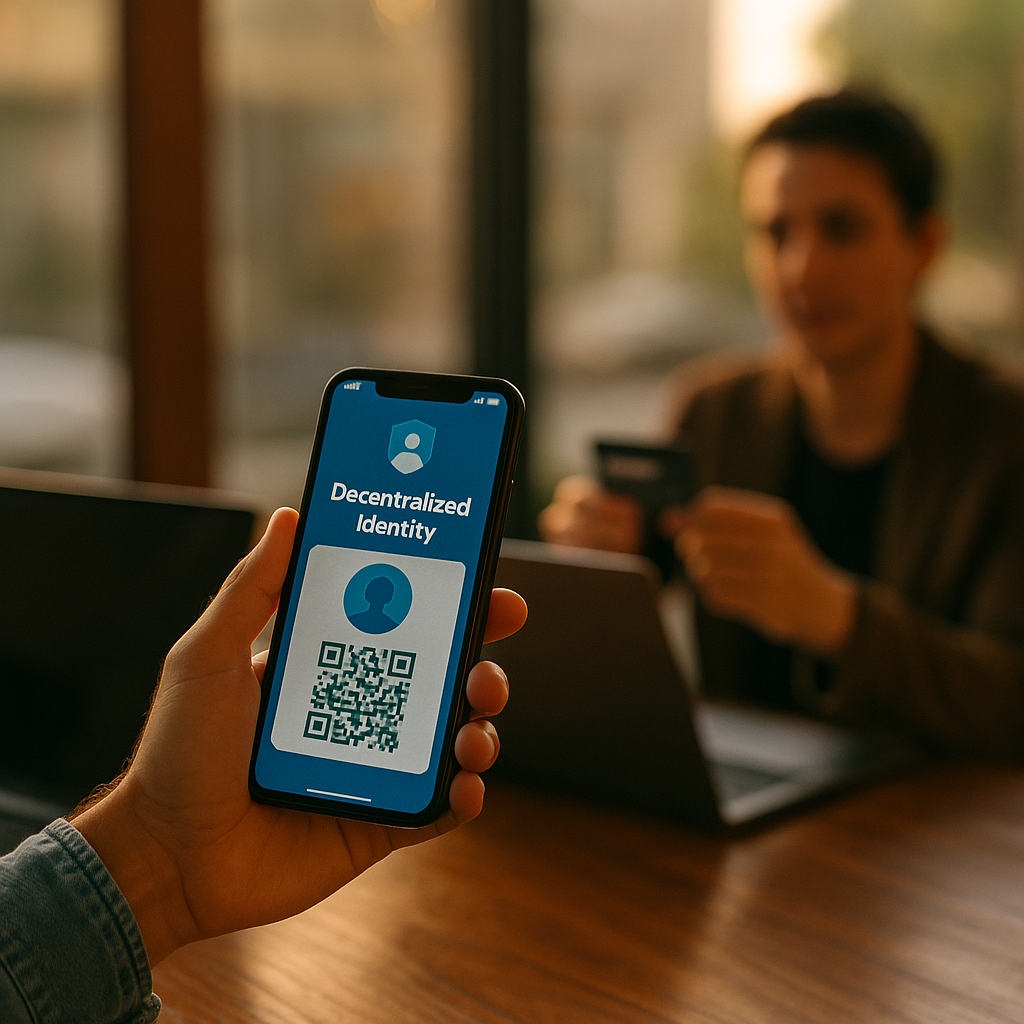
Brands are rapidly adopting decentralized identity solutions in 2026 as privacy pressure, fraud risks, and weak third-party data models reshape digital trust. Companies now need secure, user-controlled identity systems that improve compliance, customer experience, and data accuracy at the same time. The shift is not just technical or regulatory; it is becoming a competitive advantage with lasting implications.
Privacy compliance is accelerating adoption of decentralized identity
One of the biggest reasons brands are moving toward decentralized identity solutions is the growing complexity of privacy compliance. In 2026, businesses operate under stricter expectations around consent, data minimization, user control, and breach prevention. Traditional identity systems often rely on centralized databases that store large volumes of personally identifiable information, creating both legal and operational risk.
Decentralized identity changes that model. Instead of forcing brands to collect and retain every piece of customer data, decentralized systems let users hold their own verifiable credentials in digital wallets or other secure identity tools. A brand can request proof of a claim, such as age, residency, or account ownership, without storing the underlying raw data.
This approach supports privacy-by-design principles in practical ways:
- Less data stored by the brand, reducing breach exposure
- More precise consent management, because users choose what to share
- Improved auditability, since credentials and permissions can be verified more clearly
- Stronger alignment with evolving global regulations, especially where data portability and user control matter
For legal, compliance, and security teams, this is not theoretical. Lower data retention can directly reduce the cost and complexity of compliance programs. For customers, it creates a clearer value exchange. They know what they are sharing, with whom, and for what purpose.
That trust matters. Consumers are more selective about the brands they engage with, and they increasingly expect secure digital experiences without excessive data collection. Decentralized identity helps companies meet that expectation while protecting the business from unnecessary liability.
Digital identity security is becoming a board-level priority
Security is another major driver. Centralized identity systems remain attractive targets for attackers because they concentrate valuable data in one place. A single successful attack can expose millions of records, trigger regulatory action, damage brand reputation, and create long recovery cycles.
Decentralized identity does not eliminate risk, but it changes the attack surface. Because credentials can be issued, held, and presented without centralizing all user data in one database, the impact of a breach can be significantly reduced. Brands are recognizing that architecture decisions now play a direct role in cyber resilience.
Several security benefits explain the shift:
- Reduced honeypot risk from massive centralized identity stores
- Cryptographic verification that improves trust in identity claims
- Selective disclosure, which allows users to share only necessary attributes
- Lower fraud potential when credentials can be verified against trusted issuers
This matters across industries. Retail brands need to reduce account takeover and loyalty fraud. Financial services companies need stronger onboarding and verification. Healthcare organizations need secure identity processes that protect sensitive information. Travel, gaming, and marketplaces all face rising pressure to verify users without adding friction.
Brand leaders are also asking a more strategic question: what is the cost of continuing with outdated identity infrastructure? In many cases, the answer includes higher fraud losses, slower customer onboarding, heavier compliance burdens, and declining trust. Decentralized identity solutions offer a path to modernize all four at once.
Customer experience benefits are driving self-sovereign identity interest
Security and compliance may start the conversation, but customer experience often closes the deal. Many identity systems still create friction through repetitive forms, password dependence, document re-submission, and inconsistent verification across channels. In 2026, customers expect faster and more elegant experiences.
This is where self-sovereign identity has gained traction. At its core, the model gives individuals more control over how they prove who they are online. Instead of rebuilding identity from scratch at every interaction, users can present trusted, reusable credentials. That can simplify onboarding, checkout, account recovery, and loyalty participation.
For brands, the experience gains are practical:
- Faster registration and onboarding with fewer manual steps
- Lower abandonment rates during identity checks
- Smoother cross-channel interactions across app, web, and in-store environments
- More trusted personalization based on verified data rather than inferred data alone
Consider a common scenario. A customer wants to verify eligibility for a service that requires age and residency checks. In a conventional flow, they may upload documents, wait for review, and repeat the process later on another platform. In a decentralized identity model, they can share a verified credential that confirms only the required facts. The process becomes faster, more private, and more reliable.
Brands also benefit from better data quality. Verified credentials can reduce false information at the point of entry, which improves downstream operations in CRM, support, payments, and marketing. That means fewer customer service escalations and better decision-making across the business.
The key takeaway is simple: decentralized identity is not only about locking data down. It is also about removing friction from legitimate interactions.
Verifiable credentials are improving trust across the customer journey
A critical building block behind decentralized identity is the use of verifiable credentials. These are digitally signed credentials issued by trusted organizations and presented by users when needed. In 2026, brands are increasingly interested in them because they create stronger trust signals without requiring the brand to become the original source of every fact.
That has powerful implications across the customer journey.
During onboarding, a verifiable credential can confirm identity, age, business affiliation, certification status, or membership. During transactions, it can validate eligibility for discounts, financial products, gated communities, or regulated purchases. During ongoing engagement, it can support secure logins, account linking, and fraud prevention.
Brands see value because the model is both efficient and adaptable. They do not need to issue every credential themselves. They can accept trusted credentials from partners, institutions, employers, government-related entities, or ecosystem participants depending on the use case.
Here is why this matters commercially:
- Trust becomes portable across systems and interactions
- Manual verification costs decline in service and operations teams
- Fraud detection improves when claims are cryptographically verifiable
- Partner ecosystems become easier to manage with shared trust frameworks
For example, in loyalty and membership programs, verifiable credentials can help confirm account ownership and prevent abuse. In B2B environments, they can streamline access for vendors, contractors, and employees without overexposing internal systems. In marketplaces, they can increase confidence between buyers and sellers by improving identity assurance.
Executives often ask whether customers are ready for this model. The better question is whether the use case is clear and the experience is intuitive. When brands focus on convenience, transparency, and visible value, adoption barriers fall quickly.
Zero-party data strategy is stronger with decentralized identity solutions
As third-party data remains less dependable and more restricted, brands are putting more emphasis on direct, consented data relationships. A strong zero-party data strategy depends on trust. Customers must believe a brand will use their information responsibly and only request what is relevant. Decentralized identity supports that shift by making data sharing more intentional and more transparent.
In practical terms, a brand can ask users to share specific verified attributes instead of collecting broad profiles and inferring intent later. That changes the quality of customer data in several ways:
- Shared data is more accurate because it is verified or directly user-provided
- Consent is clearer because the request is specific and contextual
- Personalization becomes more defensible because it is based on permissioned information
- Data governance improves because unnecessary collection is reduced
This is especially valuable in sectors where relevance and trust directly affect conversion. A customer may be willing to share a credential proving student status, premium membership, or location eligibility if it unlocks immediate value. They are far less likely to respond well to vague data collection practices that feel excessive or intrusive.
Marketing, product, and legal teams are increasingly aligned on this point: better identity infrastructure leads to better first-party and zero-party data strategies. It helps businesses build durable customer relationships rather than chasing unstable signals.
There is also a branding advantage. Companies that visibly respect customer control tend to differentiate themselves in crowded markets. In 2026, privacy and transparency are no longer side messages buried in policy pages. They are part of the customer promise.
Identity interoperability is shaping the future of brand ecosystems
Another reason brands are investing in decentralized identity solutions is the growing need for identity interoperability. Customers no longer engage with brands in a single environment. They move across apps, websites, devices, physical locations, partner platforms, and community spaces. Identity systems that cannot work across those contexts create friction and inconsistency.
Decentralized identity is appealing because it supports more flexible trust frameworks. Instead of every organization maintaining isolated identity silos, interoperable models allow credentials and proofs to move more efficiently between approved systems. This can reduce duplication, simplify integrations, and support better ecosystem collaboration.
For brands, interoperability delivers several strategic benefits:
- Unified customer experiences across channels and partners
- More scalable identity architecture as ecosystems expand
- Faster entry into new markets or services with reusable trust models
- Better vendor and partner coordination around secure access and verification
This matters for enterprises building connected services, loyalty coalitions, embedded finance experiences, digital health journeys, and omnichannel retail environments. It also matters for smaller brands that want to avoid locking themselves into fragile identity stacks that cannot evolve.
Of course, implementation still requires discipline. Brands need governance policies, wallet and credential design choices, issuer trust criteria, revocation processes, and clear user education. Not every use case demands a fully decentralized architecture. The best programs begin with a defined business problem, measurable outcomes, and a realistic rollout plan.
That said, the direction is increasingly clear. Identity is becoming a shared layer of digital trust, not just a login function. Brands that understand this shift are positioning themselves for stronger security, better compliance, and more resilient customer relationships.
FAQs about decentralized identity for brands
What is decentralized identity in simple terms?
Decentralized identity is a model where users control their digital identity credentials instead of relying entirely on a central platform to store and manage them. Brands can verify claims, such as age or account ownership, without collecting and storing all the underlying personal data.
Why are brands adopting decentralized identity in 2026?
Brands are adopting it to reduce privacy risk, improve security, cut fraud, meet compliance demands, and deliver smoother customer experiences. The model also supports stronger first-party and zero-party data strategies.
Does decentralized identity replace passwords?
In some use cases, yes. It can support passwordless or low-friction authentication models using verified credentials, digital wallets, or cryptographic proofs. However, many brands use it alongside existing authentication systems during transition periods.
Is decentralized identity only relevant for large enterprises?
No. Large enterprises often lead adoption because of scale and compliance complexity, but mid-sized companies can benefit too. Any brand dealing with sensitive data, onboarding friction, fraud, or partner ecosystem complexity can find value in the model.
What are verifiable credentials?
Verifiable credentials are digitally signed pieces of information issued by a trusted party and presented by a user when needed. They can prove facts such as age, employment, certification, eligibility, or membership without exposing unnecessary personal data.
Will customers understand how to use decentralized identity tools?
Adoption depends on design. Customers do not need to understand the technical architecture if the experience is intuitive. The strongest implementations focus on convenience, transparency, and clear value at the moment of use.
How should a brand start with decentralized identity?
Start with a high-value use case such as onboarding, age verification, account recovery, loyalty security, or partner access. Define success metrics, involve legal and security teams early, and choose technology partners that support interoperability and user-centered design.
Brands are moving toward decentralized identity solutions because the model addresses multiple pressures at once: privacy, fraud, compliance, experience, and data quality. In 2026, identity is no longer a back-end utility. It is a trust strategy. Companies that adopt it thoughtfully can reduce risk, improve customer relationships, and build a more resilient foundation for digital growth.