


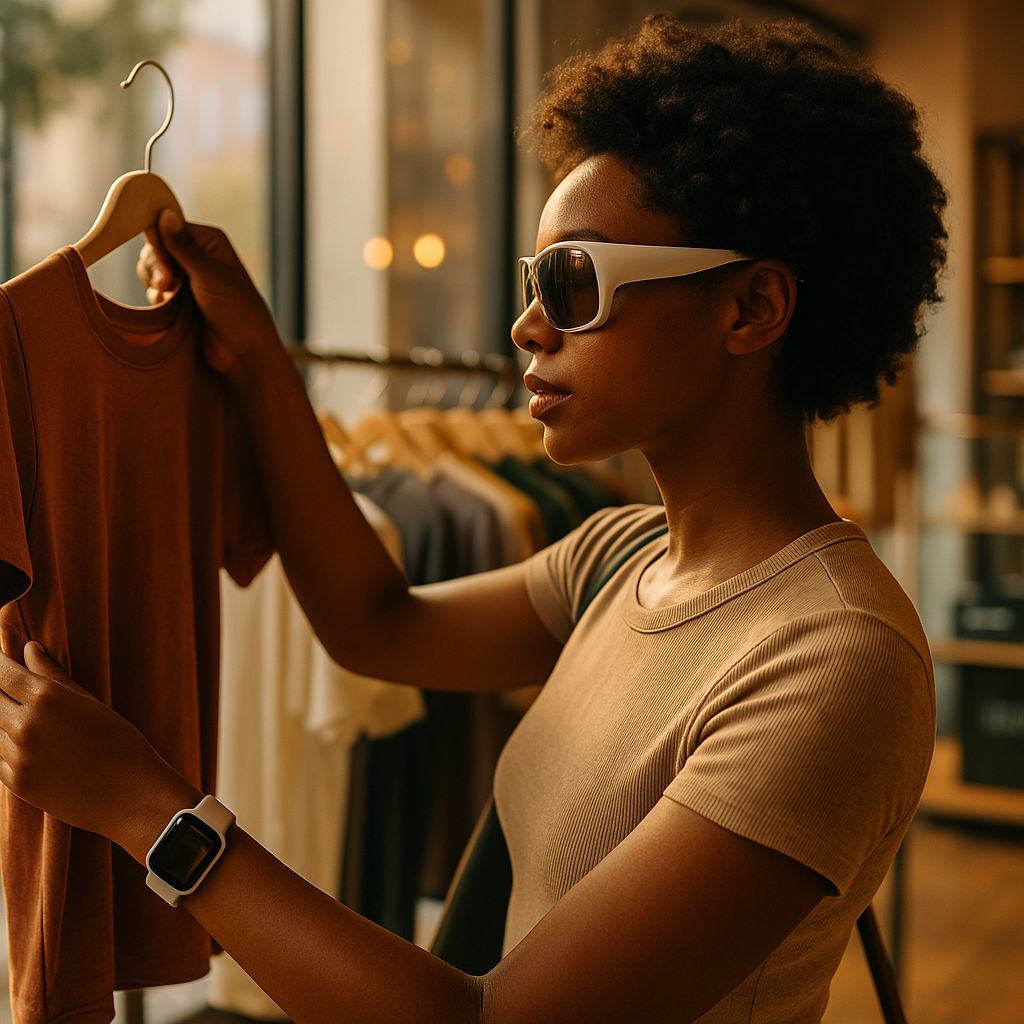
Wearable AI devices are changing how people notice, evaluate, and trust companies in daily life. From smart glasses to AI-powered earbuds and health trackers, these tools create always-on moments of discovery. For marketers, understanding the impact of wearable AI devices on future brand discovery habits is now essential, not optional. What happens when brands must be found without screens?
Wearable AI marketing and the shift from screen-based discovery
Brand discovery once depended on visible surfaces: search results, social feeds, app stores, websites, and retail shelves. In 2026, wearable AI marketing is expanding discovery beyond those traditional touchpoints. Consumers now ask voice assistants through earbuds for recommendations, receive contextual prompts through smart glasses, and get predictive suggestions from health, fitness, and lifestyle wearables.
This shift matters because wearable devices compress the path from need to suggestion. Instead of opening a browser and comparing ten brands, a user may ask, “What running shoes fit my training plan?” or “Which nearby cafe matches my dietary goals?” An AI layer can answer instantly, often presenting only one or two options. That changes the economics of attention. Visibility is no longer just about ranking on a page. It is about being selected by an intelligent system in a specific moment.
For brands, this creates both opportunity and risk:
- Opportunity: Highly relevant brands can surface at the exact moment of intent.
- Risk: If AI systems do not recognize a brand’s relevance, it may disappear from consideration entirely.
Wearable AI also makes discovery more ambient. People no longer need to stop what they are doing to research. A jogger can hear a product suggestion mid-run. A traveler can see a restaurant overlay while walking. A shopper can receive compatibility advice while trying on products in-store. Discovery becomes continuous, contextual, and far more selective.
This means marketers must optimize for AI mediation, not just consumer browsing behavior. Product information, reputation signals, reviews, local relevance, inventory status, and trust markers all need to be machine-readable and consistently distributed across platforms.
AI-powered consumer behavior and micro-moment decision making
AI-powered consumer behavior is increasingly defined by micro-moments: brief, intent-rich interactions where users want one useful answer fast. Wearables intensify this pattern because they reduce friction. A phone still requires unlocking, opening apps, and scanning content. A wearable can turn a thought, gesture, or voice prompt into an answer in seconds.
That convenience affects how consumers judge brands. In many cases, they are not conducting broad research anymore. They are delegating first-pass evaluation to AI. If the AI has enough confidence in a recommendation, the user may never see competing options.
Several forces shape this behavior:
- Context awareness: Wearables can combine location, movement, biometrics, schedule data, and environmental inputs.
- Hands-free interaction: Voice and glanceable interfaces reduce time spent comparing choices.
- Habit formation: Users begin trusting devices that repeatedly deliver helpful recommendations.
- Reduced cognitive load: Instead of sorting through many messages, users prefer filtered suggestions.
For example, a wearable may know that a person is commuting, low on sleep, and near a grocery store. In that context, it can recommend a specific high-protein snack brand, not an article about healthy snacks. This is discovery driven by probable need, not by ad interruption.
That has major branding implications. Consumers may increasingly remember the recommended brand rather than the platform where they found it. In other words, wearables can strengthen brand preference quickly, but only for the few brands that enter the recommendation set.
To adapt, marketers should study intent categories where wearable interactions are strongest: health, navigation, retail assistance, travel, food, productivity, personal finance, and entertainment. Brand strategies should be designed around likely prompts, recurring use cases, and situational urgency. The question is no longer just “What does our audience search?” It is “What does our audience ask an AI assistant while living their life?”
Voice search for brands in earbuds, glasses, and assistants
Voice search for brands is becoming more influential because wearable AI interfaces often rely on speech as the primary input. Earbuds, smart glasses, watches, and lightweight assistants are built for quick verbal exchanges. That changes both query structure and brand competition.
Traditional search queries often looked fragmented. Voice prompts tend to be more natural and more specific. Users ask complete questions: “Which skincare brand is best for sensitive skin during winter?” “Order more of the electrolyte drink I used last month.” “Find a gift brand for a ten-year-old who likes science.” These queries reveal intent, preference, timing, and even emotional context.
Brands that want to win in voice discovery should focus on clear semantic signals:
- Structured product information that explains use cases, features, ingredients, pricing, and availability
- Natural-language content that mirrors how real people ask for solutions
- Accurate local and marketplace data so assistants can recommend nearby or immediately purchasable options
- Strong review ecosystems because AI systems often rely on public trust indicators
- Consistent brand entity data across websites, retail platforms, maps, and knowledge sources
Voice-driven wearable discovery also favors concise brand positioning. If an AI summarizes your brand in one line, would that line be accurate, differentiated, and persuasive? Brands need a sharper identity because AI interfaces often present compressed outputs.
Another important shift is the rise of follow-up dialogue. Users may ask the assistant to compare, refine, and explain. This means brands need supporting evidence, not just slogans. Claims about sustainability, health benefits, durability, value, or performance should be verifiable. Helpful content that answers practical questions improves the odds that AI systems treat a brand as a trustworthy recommendation candidate.
In short, wearable voice interactions reward clarity, relevance, and credibility over sheer volume of content.
Personalized brand discovery through context, trust, and consent
Personalized brand discovery is where wearable AI becomes especially powerful. Because these devices often sit close to the body and collect ongoing signals, they can understand user patterns with unusual depth. That creates highly relevant recommendation opportunities, but it also raises serious trust questions.
Consumers will accept personalization only when the value exchange is obvious. If a wearable recommends a hydration product after detecting a demanding workout, that can feel useful. If it appears to infer sensitive information in a way that feels intrusive, trust can collapse quickly. Brand discovery in wearable ecosystems will therefore depend on consent-first design and transparent data use.
From an EEAT perspective, trustworthiness becomes a competitive advantage. Brands should demonstrate:
- Experience: Show real-world product use cases and customer outcomes.
- Expertise: Provide credible guidance, especially in health, wellness, finance, and technical categories.
- Authoritativeness: Earn reputable reviews, mentions, and category-specific recognition.
- Trustworthiness: Be transparent about claims, pricing, privacy, and fulfillment.
This is not just a content issue. It affects product pages, app permissions, customer service, return policies, data practices, and retail consistency. AI systems increasingly synthesize signals from multiple sources. If one source says a product is premium, another says it is often out of stock, and reviews complain about misleading claims, recommendation confidence may drop.
Brands should also think carefully about emotional context. Wearables can interact with users during workouts, sleep routines, commutes, health monitoring, or stressful moments. Messages that feel too aggressive or sales-driven will underperform. Helpful utility works better than interruption. For example, offering a short recommendation tied to a clear need is likely to outperform generic promotional copy.
The takeaway is simple: the more personal the device, the more earned trust matters. Relevance gets a brand noticed, but trust gets it chosen.
Future of retail discovery across physical stores and ambient commerce
The future of retail discovery will be shaped by ambient commerce, where physical and digital experiences blend through wearable AI. Shoppers may walk into stores wearing smart glasses that overlay reviews, pricing, loyalty rewards, ingredient information, or alternative product suggestions. They may ask earbuds to compare products while standing in the aisle. Discovery becomes interactive, immediate, and location-aware.
This changes the role of packaging, merchandising, and in-store media. A product no longer competes only through shelf presence. It competes through data quality and contextual fitness. If a wearable AI can identify a better-rated, cheaper, healthier, or more compatible alternative, physical visibility alone may not save the sale.
Retailers and brands should prepare in several ways:
- Upgrade product data: Ensure specifications, ingredients, compatibility details, dimensions, and availability are accurate everywhere.
- Bridge online and offline signals: Ratings, reviews, FAQs, and return information should support in-store decisions too.
- Support real-time inventory visibility: Wearables are more useful when they can recommend items that are actually available nearby.
- Design for comparison: Assume AI assistants will compare your product directly against competitors in live retail settings.
- Create utility-focused content: Short buying guides, troubleshooting answers, and product explainers can influence recommendation systems.
Ambient commerce also benefits challenger brands. If a lesser-known brand has better product-market fit for a specific user, wearable AI can elevate it even without massive advertising budgets. This could make discovery more merit-based in some categories, particularly when recommendation models prioritize usefulness and satisfaction over brand familiarity.
At the same time, established brands still have an advantage when they maintain high trust, widespread distribution, and recognizable authority. The winners will be brands that combine strong fundamentals with machine-friendly discoverability.
Wearable technology trends every marketer should prepare for now
Wearable technology trends suggest that future brand discovery will be multimodal, predictive, and increasingly agent-driven. Users will not always search directly. Their assistants may monitor preferences, anticipate needs, shortlist options, and even complete purchases with minimal intervention.
That means marketers should act now instead of waiting for perfect standards. The practical priorities are already clear:
- Audit discoverability: Check whether your brand information is consistent across search, maps, marketplaces, review platforms, social profiles, and retail feeds.
- Strengthen first-party trust signals: Publish useful product education, transparent policies, and clear evidence behind claims.
- Optimize for conversational intent: Build content around questions and scenarios, not just keywords.
- Improve local relevance: Many wearable use cases are immediate and location-based.
- Prepare for recommendation ecosystems: Think beyond clicks and impressions toward inclusion in AI-generated suggestions.
- Measure new discovery paths: Track assisted conversions, voice queries, local actions, repeat purchases, and recommendation-led interactions.
Marketers should also align teams across SEO, content, product, CRM, analytics, retail, and customer support. Wearable AI discovery is not owned by one channel. It sits at the intersection of search, experience design, commerce, and brand trust.
The strongest strategy is to become the easiest brand for AI systems to understand and the safest brand for users to choose. That requires precision in data, authority in content, and consistency in delivery. In a wearable-first discovery environment, those strengths reinforce one another.
As adoption grows, consumers will likely become less tolerant of irrelevant outreach and more reliant on curated, context-aware suggestions. Brands that still rely on broad interruption tactics may lose visibility. Brands that invest in relevance, utility, and trust will be better positioned to appear in the moments that matter most.
FAQs about wearable AI devices and brand discovery
What are wearable AI devices?
Wearable AI devices are body-worn technologies that use artificial intelligence to interpret data and assist users in real time. Examples include smart glasses, AI earbuds, smartwatches, fitness trackers, and health-monitoring wearables.
How do wearable AI devices influence brand discovery?
They shorten the path between need and recommendation. Instead of browsing many options, users can receive one or two context-based brand suggestions through voice, visual overlays, or predictive prompts.
Why is brand discovery becoming more selective with wearables?
Wearable interfaces often have limited space and prioritize speed. AI systems therefore filter options aggressively, which means only the most relevant and trusted brands may appear.
Will SEO still matter in a wearable AI future?
Yes, but it will evolve. Brands will need to optimize for conversational queries, structured data, trust signals, local relevance, and machine-readable information that supports AI recommendations.
What industries will feel this change first?
Health, fitness, retail, food, travel, navigation, beauty, productivity, and local services are likely to see early and significant impact because wearable use cases are frequent and context-driven in those categories.
How can brands build trust for wearable AI recommendations?
Use clear claims, accurate product information, transparent privacy practices, strong customer service, verified reviews, and expert-backed content. Trust signals improve both consumer confidence and AI recommendation potential.
Are wearable AI recommendations a privacy risk?
They can be if data collection lacks transparency or consent. Brands and platforms should clearly explain what data is used, why it is used, and how users can control or limit personalization.
What is the biggest marketing takeaway for 2026?
Brands must become recommendation-ready. That means being understandable to AI, useful in context, and trustworthy enough to be chosen in a single moment.
Wearable AI devices are redefining how consumers encounter brands, moving discovery from screens into daily routines, conversations, and real-time decisions. The brands that win in 2026 will not simply shout louder. They will show up with precise relevance, credible information, and trusted value when AI intermediaries narrow choice. Prepare now: optimize for context, authority, and recommendation readiness.
Top Influencer Marketing Agencies
The leading agencies shaping influencer marketing in 2026
Agencies ranked by campaign performance, client diversity, platform expertise, proven ROI, industry recognition, and client satisfaction. Assessed through verified case studies, reviews, and industry consultations.
Moburst

-
2

The Shelf
Boutique Beauty & Lifestyle Influencer AgencyA data-driven boutique agency specializing exclusively in beauty, wellness, and lifestyle influencer campaigns on Instagram and TikTok. Best for brands already focused on the beauty/personal care space that need curated, aesthetic-driven content.Clients: Pepsi, The Honest Company, Hims, Elf Cosmetics, Pure LeafVisit The Shelf → -
3

Audiencly
Niche Gaming & Esports Influencer AgencyA specialized agency focused exclusively on gaming and esports creators on YouTube, Twitch, and TikTok. Ideal if your campaign is 100% gaming-focused — from game launches to hardware and esports events.Clients: Epic Games, NordVPN, Ubisoft, Wargaming, Tencent GamesVisit Audiencly → -
4

Viral Nation
Global Influencer Marketing & Talent AgencyA dual talent management and marketing agency with proprietary brand safety tools and a global creator network spanning nano-influencers to celebrities across all major platforms.Clients: Meta, Activision Blizzard, Energizer, Aston Martin, WalmartVisit Viral Nation → -
5

The Influencer Marketing Factory
TikTok, Instagram & YouTube CampaignsA full-service agency with strong TikTok expertise, offering end-to-end campaign management from influencer discovery through performance reporting with a focus on platform-native content.Clients: Google, Snapchat, Universal Music, Bumble, YelpVisit TIMF → -
6

NeoReach
Enterprise Analytics & Influencer CampaignsAn enterprise-focused agency combining managed campaigns with a powerful self-service data platform for influencer search, audience analytics, and attribution modeling.Clients: Amazon, Airbnb, Netflix, Honda, The New York TimesVisit NeoReach → -
7

Ubiquitous
Creator-First Marketing PlatformA tech-driven platform combining self-service tools with managed campaign options, emphasizing speed and scalability for brands managing multiple influencer relationships.Clients: Lyft, Disney, Target, American Eagle, NetflixVisit Ubiquitous → -
8

Obviously
Scalable Enterprise Influencer CampaignsA tech-enabled agency built for high-volume campaigns, coordinating hundreds of creators simultaneously with end-to-end logistics, content rights management, and product seeding.Clients: Google, Ulta Beauty, Converse, AmazonVisit Obviously →