


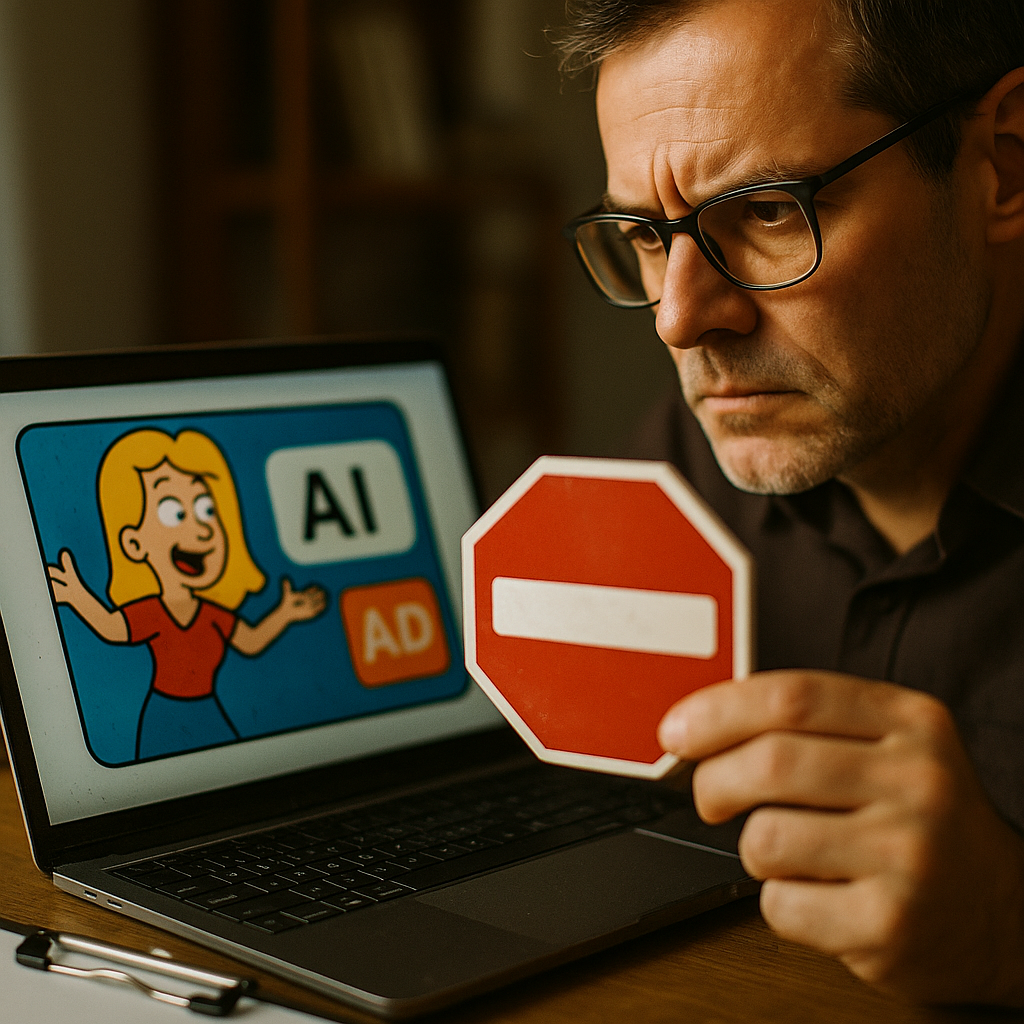
Over 60% of marketers now use generative AI somewhere in their ad production pipeline, according to recent industry surveys, and cartoon style AI ad generators are the fastest-growing corner of that trend. Tools like 1min.AI promise a finished animated spot in minutes. But here’s the question nobody’s asking in the rush to ship content: who’s checking what the AI actually generated before it hits a paid media account? AI cartoon ad generators move fast. Brand safety teams, legal, and procurement usually don’t.
Why Cartoon Style AI Ads Took Over So Fast
Cartoon and animated styles solve a real production problem. They sidestep the uncanny valley issues that plague photorealistic AI video, they’re cheaper to iterate on, and they travel well across markets without needing new talent shoots. A brand can generate fifty variants of a mascot-driven ad for less than the cost of a single live-action shoot day. That math is irresistible to a performance marketing team chasing creative fatigue.
It’s the same logic driving the broader shift toward synthetic and UGC-style creative, something we covered in depth when looking at how AI UGC generators turn a single shoot into a full content calendar. Cartoon generators are just the animated cousin of that same cost-per-asset obsession.
The problem is that speed and volume are exactly the conditions under which brand safety controls fail quietly. Nobody notices a compliance gap until a creative has already run three thousand times.
The Brand Safety Risks Hiding Inside Stylized Content
Cartoon ads feel safe because they’re obviously not real. No deepfake panic, no likeness lawsuit from a confused consumer thinking a celebrity actually endorsed a product. That’s the pitch, anyway. The reality is messier.
- Training data provenance. Most cartoon ad generators are built on diffusion or transformer models trained on scraped visual datasets. If a brand can’t get a clear answer on what the model was trained on, it can’t assess copyright exposure.
- Style mimicry. A tool that generates “cartoon ad in the style of” a known animation studio or illustrator is a lawsuit waiting to happen. Several AI image generators have already faced legal action over outputs that too closely mirror a specific artist’s signature style.
- Embedded bias and stereotyping. Cartoon generators simplify human features by design. That simplification can accidentally reproduce racial, gender, or cultural stereotypes the brand never intended and may not catch until a community manager flags it publicly.
- Inconsistent brand voice. Generated mascots and characters can drift in tone across batches, undermining years of brand-building with off-model visuals nobody signed off on.
A cartoon ad that never shows a real human face can still create real legal exposure. Brand safety review has to apply to synthetic content with the same rigor as live-action footage, not less.
This is the same governance gap we flagged when discussing how AI creative variant generators need tiered governance rather than a single blanket approval process. Not every asset carries the same risk, and treating them identically either slows everything down or lets the risky ones slip through.
Compliance Is Not Optional Just Because the Output Looks Like a Cartoon
Marketing and legal teams sometimes assume animated content gets a regulatory pass. It doesn’t. The FTC has been explicit that disclosure requirements for sponsored and AI-generated content apply regardless of format. An animated spokesperson endorsing a supplement still triggers substantiation requirements if it makes health claims. A cartoon influencer collaboration still needs clear disclosure if it’s paid.
Here’s where it gets tricky for teams using tools like 1min.AI at scale: generative platforms often don’t track or watermark outputs in a way that satisfies audit requirements. If a regulator or platform asks for proof of how an ad was produced, what data informed it, or whether a human reviewed the final cut, “the AI made it” is not an answer anyone wants to give in a deposition.
Data protection adds another layer. If a cartoon generator ingests customer images, survey responses, or first-party data to personalize ad variants, that’s a processing activity that falls under frameworks like GDPR. Brands operating in the UK or EU should check guidance from the ICO before assuming a creative tool is exempt simply because its output is stylized rather than photographic.
The Disclosure Blind Spot
Most brand safety reviews focus on content. Fewer focus on process documentation. Compliance teams increasingly want an answer trail: who generated the asset, what prompt was used, what guardrails were applied, and who approved the final version. Without that trail, a brand is exposed the moment a regulator or journalist starts asking questions. This mirrors the lesson from agentic AI contract redlines needing human checkpoints: automation without a documented review step is a liability, not a shortcut.
A Practical Framework for Evaluating These Tools
So how should a brand actually vet a cartoon ad generator before it gets procurement sign-off and a seat in the martech stack? Run it through five checkpoints.
- Training data transparency. Ask the vendor directly what datasets trained the model and whether any opt-out or licensing agreements exist with original content creators. Vague answers are a red flag.
- Output audit logging. Can the platform export a record of prompts, versions, and approvals for every asset generated? If not, your compliance team is flying blind.
- IP indemnification. Does the vendor’s contract include indemnification if an output infringes on existing copyright or trademark? Many AI tool vendors still push this liability back onto the customer in the fine print.
- Bias and stereotype testing. Has the vendor published any third-party audit of its model’s tendency to reproduce stereotypes in character generation? If this doesn’t exist, plan to run your own sample batch tests before launch.
- Human-in-the-loop enforcement. Does the platform allow a mandatory review gate before publishing, or does it push straight to export and schedule? Tools that skip this step are optimizing for speed over risk management.
This checklist isn’t about slowing creative teams down for the sake of bureaucracy. It’s about building the kind of audit trail that protects the brand when (not if) something goes sideways. The same discipline applies to influencer fraud detection, where bot follower audit tools catch fraud before contracts sign, rather than after a campaign has already paid out against fake engagement.
Questions to Ask Before You Sign a Contract
Procurement conversations with AI creative vendors tend to focus on price per generation and turnaround time. Those matter, but they’re not the questions that prevent a brand safety incident. Before signing with a tool like 1min.AI or any comparable cartoon ad generator, push for written answers on these points:
- What happens to uploaded brand assets and customer data after a generation session ends?
- Does the vendor retain rights to use your generated outputs for its own model training?
- Is there a content moderation layer that flags outputs before they’re delivered, or is moderation entirely the brand’s responsibility?
- What’s the vendor’s incident response process if a generated asset is later found to infringe on existing IP?
- Can the tool integrate with existing approval workflows, or does it require a parallel review process?
Vendors that answer these quickly and specifically are generally the ones that have already been through enterprise procurement cycles. Vendors that hedge or redirect to marketing copy haven’t thought through the risk, which means you’ll be the one absorbing it later.
It’s also worth benchmarking against broader industry data. eMarketer and Statista both track generative AI adoption rates in advertising, and the gap between adoption speed and governance maturity keeps widening year over year. That gap is exactly where brand safety incidents live.
Where This Fits Into the Bigger Governance Picture
Cartoon ad generators are one tool in a much larger stack of autonomous and semi-autonomous AI systems now touching brand creative. The same governance logic applies whether you’re talking about a chatbot drafting a brief or an animation engine producing a finished spot: autonomous AI agents need governance before brands scale them, not after the first incident forces a scramble.
Brands that treat generative creative tools as a procurement decision, not just a creative one, end up with fewer surprises. That means looping in legal, compliance, and data privacy teams at evaluation stage, not at launch week. It also means building the kind of guardrails discussed in our look at how agentic creative engines need guardrails to protect brand voice, since an ungoverned tool will drift from brand standards faster than most teams expect.
Platforms like Meta Business have also started tightening ad transparency requirements around AI-generated content, which means the compliance burden isn’t just internal anymore. Ad platforms themselves are starting to ask for disclosure at upload, and brands that can’t answer those prompts risk having campaigns rejected or flagged mid-flight.
Frequently Asked Questions
Are AI cartoon ad generators riskier than photorealistic AI video tools?
Not necessarily riskier, just risky in different ways. Photorealistic tools carry deepfake and likeness concerns. Cartoon generators carry higher exposure around style mimicry, copyright on training data, and embedded stereotyping in character design.
Do FTC disclosure rules apply to animated or cartoon AI ads?
Yes. Disclosure and substantiation requirements apply based on the claims being made and the commercial relationship involved, not the visual format of the ad. An animated spot making a product claim needs the same backing as a live-action one.
What should a brand ask a vendor like 1min.AI about data privacy?
Ask what happens to uploaded brand or customer data after generation, whether outputs are used to train future models, and whether the vendor retains any rights to reuse your generated assets.
Can AI cartoon ad generators infringe on existing copyright?
Yes, particularly if a model was trained on scraped artist portfolios or studio animation styles without licensing. Brands should request training data transparency and contractual indemnification before using outputs in paid media.
How can a brand audit AI generated ads for bias?
Run sample batches through internal diversity and representation review before launch, and ask vendors whether they’ve published third-party bias audits of their character and face generation models.
Cartoon ad generators aren’t going away, and the speed advantage is real. But speed without an audit trail is how brand safety incidents happen quietly, then explode publicly. Build the evaluation checklist before procurement signs the contract, not after the first flagged asset.
Frequently Asked Questions
Are AI cartoon ad generators riskier than photorealistic AI video tools?
Not necessarily riskier, just risky in different ways. Photorealistic tools carry deepfake and likeness concerns. Cartoon generators carry higher exposure around style mimicry, copyright on training data, and embedded stereotyping in character design.
Do FTC disclosure rules apply to animated or cartoon AI ads?
Yes. Disclosure and substantiation requirements apply based on the claims being made and the commercial relationship involved, not the visual format of the ad. An animated spot making a product claim needs the same backing as a live-action one.
What should a brand ask a vendor like 1min.AI about data privacy?
Ask what happens to uploaded brand or customer data after generation, whether outputs are used to train future models, and whether the vendor retains any rights to reuse your generated assets.
Can AI cartoon ad generators infringe on existing copyright?
Yes, particularly if a model was trained on scraped artist portfolios or studio animation styles without licensing. Brands should request training data transparency and contractual indemnification before using outputs in paid media.
How can a brand audit AI generated ads for bias?
Run sample batches through internal diversity and representation review before launch, and ask vendors whether they’ve published third-party bias audits of their character and face generation models.
Top Influencer Marketing Agencies
The leading agencies shaping influencer marketing in 2026
Agencies ranked by campaign performance, client diversity, platform expertise, proven ROI, industry recognition, and client satisfaction. Assessed through verified case studies, reviews, and industry consultations.
Moburst

-
2

The Shelf
Boutique Beauty & Lifestyle Influencer AgencyA data-driven boutique agency specializing exclusively in beauty, wellness, and lifestyle influencer campaigns on Instagram and TikTok. Best for brands already focused on the beauty/personal care space that need curated, aesthetic-driven content.Clients: Pepsi, The Honest Company, Hims, Elf Cosmetics, Pure LeafVisit The Shelf → -
3

Audiencly
Niche Gaming & Esports Influencer AgencyA specialized agency focused exclusively on gaming and esports creators on YouTube, Twitch, and TikTok. Ideal if your campaign is 100% gaming-focused — from game launches to hardware and esports events.Clients: Epic Games, NordVPN, Ubisoft, Wargaming, Tencent GamesVisit Audiencly → -
4

Viral Nation
Global Influencer Marketing & Talent AgencyA dual talent management and marketing agency with proprietary brand safety tools and a global creator network spanning nano-influencers to celebrities across all major platforms.Clients: Meta, Activision Blizzard, Energizer, Aston Martin, WalmartVisit Viral Nation → -
5

The Influencer Marketing Factory
TikTok, Instagram & YouTube CampaignsA full-service agency with strong TikTok expertise, offering end-to-end campaign management from influencer discovery through performance reporting with a focus on platform-native content.Clients: Google, Snapchat, Universal Music, Bumble, YelpVisit TIMF → -
6

NeoReach
Enterprise Analytics & Influencer CampaignsAn enterprise-focused agency combining managed campaigns with a powerful self-service data platform for influencer search, audience analytics, and attribution modeling.Clients: Amazon, Airbnb, Netflix, Honda, The New York TimesVisit NeoReach → -
7

Ubiquitous
Creator-First Marketing PlatformA tech-driven platform combining self-service tools with managed campaign options, emphasizing speed and scalability for brands managing multiple influencer relationships.Clients: Lyft, Disney, Target, American Eagle, NetflixVisit Ubiquitous → -
8

Obviously
Scalable Enterprise Influencer CampaignsA tech-enabled agency built for high-volume campaigns, coordinating hundreds of creators simultaneously with end-to-end logistics, content rights management, and product seeding.Clients: Google, Ulta Beauty, Converse, AmazonVisit Obviously →