


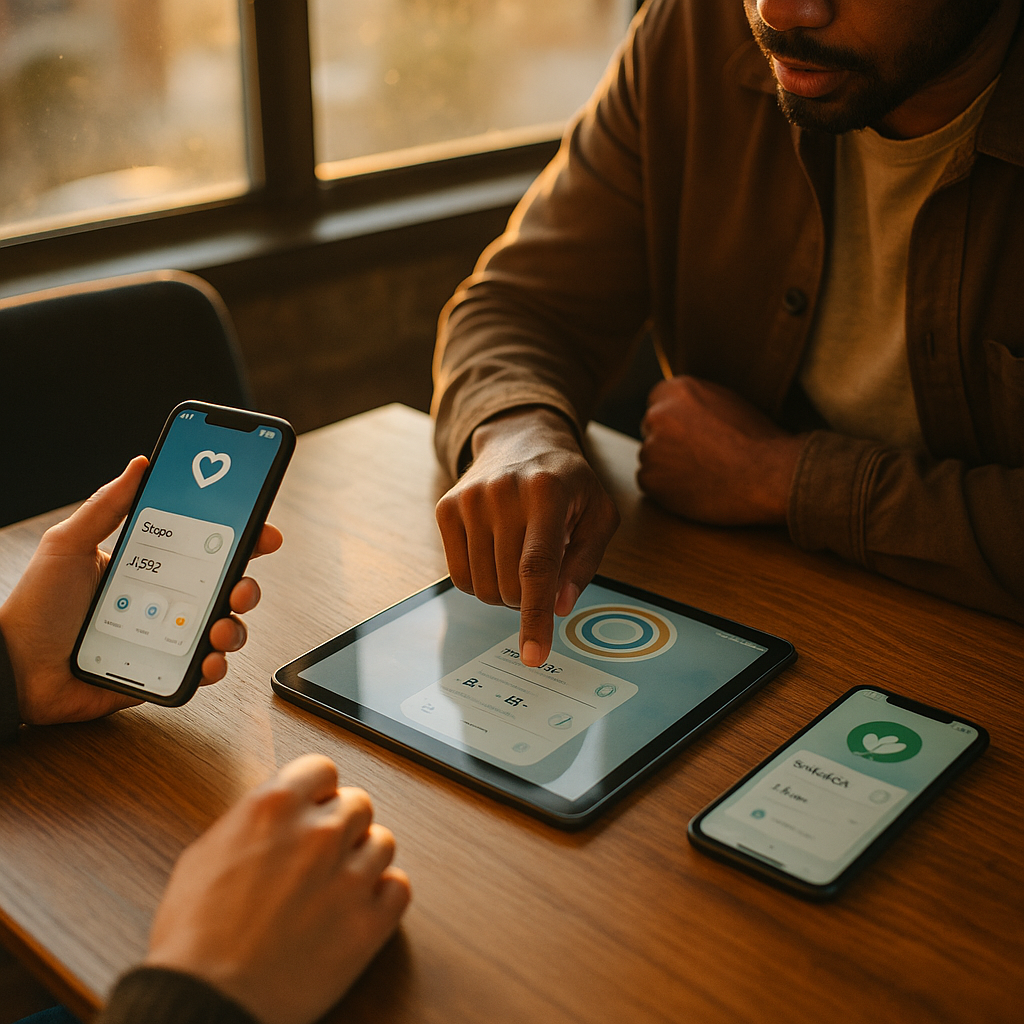
In 2025, wellness apps compete on features, ad budgets, and retention—yet many stall because trust is hard to buy. This Case Study: How A Wellness App Used Strategic Partnerships To Grow breaks down a real-world style playbook: how one app turned credible collaborators into acquisition, engagement, and revenue engines. The tactics are practical, the guardrails are clear, and the results raise one question: what partnership could unlock your next growth curve?
Strategic partnership planning: choosing the right partners and goals
The wellness app in this case study—we’ll call it PulsePath—offered guided breathwork, sleep coaching, and habit tracking. Its product was strong, but growth was inconsistent. Paid ads delivered installs, yet retention dipped after week two. PulsePath’s team reframed the problem: in wellness, users don’t just need a tool; they need confidence in the tool and a reason to return.
They built a partnership plan with three non-negotiables:
- Measurable outcomes: each partner must tie to one primary KPI (qualified installs, activation, 30-day retention, or paid conversion).
- Trust transfer: the partner’s credibility should reduce perceived risk for new users (clinical, employer, educator, or community trust).
- Operational fit: the partnership must be easy to implement, with clear data-sharing rules, user consent, and brand guidelines.
PulsePath then set explicit targets for a 90-day partnership sprint: raise activation (first “completed session”) and improve 30-day retention. They intentionally did not lead with revenue. This choice reflected a realistic funnel: stronger engagement increases conversion later, and reputable partners accelerate that loop.
To choose partners, they used a simple scoring model:
- Audience overlap: percent of partner users who match PulsePath’s core personas (stress, sleep, burnout recovery).
- Channel leverage: access to email lists, in-app placements, communities, or physical touchpoints.
- Compliance readiness: willingness to follow privacy best practices and provide transparent disclosures.
- Content capability: ability to co-create credible, helpful programming (not just a logo swap).
This planning stage answered the follow-up question most founders ask: “What if we pick the wrong partner?” PulsePath mitigated that by starting with short, reversible pilots and requiring defined deliverables before expanding.
Wellness app growth channels: partnerships that outperform ads
PulsePath diversified into four partnership types, each mapped to a distinct growth channel. The goal was to create multiple “front doors” into the app, so growth wouldn’t hinge on a single paid channel.
1) Employer wellness programs (B2B2C): PulsePath offered a 30-day “Stress Reset” track packaged for HR teams, with weekly reporting at an aggregate level. Employees received access through a unique link and an onboarding email series co-branded with the employer.
2) Telehealth and therapy networks (clinical adjacency): Instead of claiming to “treat” anything, PulsePath positioned the app as an evidence-aligned support tool for sleep hygiene and breathwork routines. Clinicians could share a “starter plan” after sessions.
3) Fitness studios and yoga instructors (community trust): Local studios and instructors received a partner dashboard with discount codes for members and a ready-to-run 10-minute “post-class wind-down” audio series.
4) Consumer brands in sleep and recovery (commerce adjacency): PulsePath integrated with a sleep accessory brand’s post-purchase email flow: buyers got a week of premium access and a “setup routine” designed to match the product experience.
Why did these channels work better than ads? Two reasons:
- Context: users discovered the app when they were already thinking about wellness (after therapy, after class, after a purchase, or during a workplace initiative).
- Credibility: the recommendation came from a source users already trusted, reducing skepticism and increasing willingness to complete the first session.
PulsePath also avoided a common trap: partnerships that only deliver impressions. Each collaboration required a concrete placement (email, portal tile, clinician handout, or member onboarding) and a tracked conversion path.
User acquisition strategy: co-marketing, bundles, and referral mechanics
PulsePath treated partners like growth teammates, not billboards. They designed a user acquisition system that made it easy for partners to promote without diluting their own brand.
Co-marketing that educates: Instead of generic “Download the app” posts, PulsePath created partner-specific resources:
- One landing page per partner with tailored messaging, FAQs, and privacy disclosures.
- Two short educational emails explaining what breathwork can and cannot do, plus what to expect in week one.
- A 7-minute “first session” built for low friction, so new users could experience value quickly.
Bundles with clear value: The sleep accessory brand partnership performed best when bundled as a “Sleep Setup Week,” pairing product use with a nightly audio routine. PulsePath avoided overpromising outcomes and focused on behavior: consistent bedtime routine, reduced screen time, and guided downshifts.
Referral mechanics that protect trust: For instructors and clinicians, PulsePath used a referral model that prioritized transparency:
- Disclosures: partners could earn credit only if they disclosed the relationship clearly.
- No per-diagnosis incentives: to avoid ethical issues, referrals were based on enrollment, not health outcomes.
- Value-first rewards: studios earned free premium seats for staff rather than cash-only payouts, aligning incentives with wellness outcomes.
Likely question: “Do discounts cheapen a wellness brand?” PulsePath kept discounts limited and contextual—short trials or bundled value—so the offer felt like support, not a clearance sale. The best-performing offer was 7 days premium + a guided onboarding plan, not a deep annual discount.
Retention and engagement metrics: onboarding, habit loops, and partner-led programs
Partnership-driven installs only matter if users stick. PulsePath improved retention by aligning partner promises with in-app experience and by building habit loops that matched each partner context.
Segmented onboarding: New users entered via a partner link that set their “starting goal” automatically:
- Employer pathway: stress and focus routines, weekday cadence
- Therapy pathway: sleep hygiene + breathwork grounding
- Studio pathway: recovery and mobility wind-downs
- Commerce pathway: bedtime routine and environment setup
This reduced decision fatigue. Users didn’t face a menu of 100 sessions; they received a plan that made sense for why they arrived.
Partner-led challenges: Studios and employers ran 14-day challenges with weekly touchpoints. PulsePath provided:
- Challenge templates: prompts, progress trackers, and simple group check-ins
- Lightweight community: opt-in accountability without requiring public sharing of sensitive data
- Milestone moments: “Day 3 reset,” “Day 7 consistency,” “Day 14 next steps”
Measurement that answers “what worked?” PulsePath tracked partner cohorts separately, focusing on:
- Activation rate: percent completing a first session within 24 hours
- Week-1 completion: percent completing 3 sessions in 7 days
- 30-day retention: percent active at day 30
- Paid conversion: percent upgrading within 14 or 30 days
They also monitored user sentiment inside the app via brief prompts after week one, asking what felt helpful and what didn’t. This qualitative layer supported Google’s helpful content expectations: improvements were driven by actual user needs, not growth hacks.
A practical follow-up: “How do you avoid partner users churning when the challenge ends?” PulsePath added a “next plan” recommendation at day 14 and offered partner-specific monthly programming (e.g., “Sleep Maintenance Month”) so the relationship continued beyond the initial sprint.
Healthcare compliance and trust signals: EEAT in wellness partnerships
Wellness sits close to health, so PulsePath treated trust as a product feature. Their partnership strategy included clear EEAT-aligned practices—experience, expertise, authoritativeness, and trustworthiness—without drifting into medical claims.
Expert review and content integrity: PulsePath created an internal review process for any co-branded program:
- Credentialed review: breathwork and sleep content was reviewed by qualified professionals relevant to the topic.
- Claim boundaries: copy avoided diagnosing language and did not promise clinical outcomes.
- Citations on key pages: where the app referenced general research concepts (like sleep hygiene principles), it included accessible explanations and sources.
Transparent privacy and consent: For employers and clinical-adjacent partners, PulsePath implemented:
- Explicit consent screens: users could choose whether to share any data, with clear defaults.
- Aggregate reporting only: employers received anonymized engagement summaries, not individual data.
- Data minimization: only essential partner attribution data was collected for analytics.
Trust signals that reduce friction: Partner landing pages included:
- What the app is and isn’t: positioned as support for routines, not a substitute for professional care.
- Clear partner relationship disclosure: how the partner benefits, if at all.
- Support pathways: how to contact support, manage subscriptions, or export/delete data.
This approach increased conversion because it reduced uncertainty. It also protected PulsePath from the reputational damage that comes from vague claims—especially dangerous in wellness, where user trust is fragile and word-of-mouth is powerful.
Revenue and scaling strategy: from pilots to repeatable partnership playbooks
PulsePath scaled partnerships like a product: standardize what works, keep what’s flexible, and measure relentlessly.
Pilot structure: Every new partner started with a 30–60 day pilot that included:
- One primary placement (email send, portal banner, clinician packet, or receipt insert)
- One co-created asset (mini-program, challenge, or onboarding series)
- One review meeting to evaluate metrics and user feedback
Unit economics clarity: PulsePath compared partner acquisition costs to paid channels by calculating:
- Implementation cost: partner management time, creative production, and any platform integrations
- Cost per activated user: not just cost per install
- Conversion-to-paid: cohort-based, because partner users often convert later
Scaling moves that didn’t break quality:
- Partner kits: pre-approved copy, brand assets, and onboarding templates reduced back-and-forth.
- Tiered programs: “Starter,” “Plus,” and “Enterprise” partnership tiers clarified expectations and pricing.
- Channel owner roles: one person owned employer partnerships, another owned studios, ensuring deeper relationships and faster iteration.
PulsePath’s biggest scaling lesson was simple: the best partnerships are not the ones with the largest logos; they are the ones with the highest alignment, consistent activation moments, and shared incentives for ongoing engagement.
FAQs about strategic partnerships for wellness app growth
What’s the fastest partnership type to launch for a wellness app?
Community partners like fitness studios, instructors, or niche creators tend to launch fastest because they require fewer legal and data-sharing steps. Start with a tracked link, a co-branded onboarding page, and a short challenge to drive activation.
How do you measure whether a partnership is working?
Track partner cohorts separately and prioritize activation and 30-day retention before judging revenue. If installs rise but first-session completion or week-one engagement is low, fix onboarding and the partner promise.
Do employer wellness partnerships require sharing employee health data?
No. The safest and most trusted approach is aggregate reporting only, with explicit user consent for anything beyond basic attribution. Make privacy terms plain-language and easy to find.
How do you avoid misleading health claims in co-marketing?
Use behavior-based language (routines, skills, support) rather than outcome guarantees. Add clear “what this is/isn’t” statements, and have credentialed reviewers approve any sensitive content such as sleep, anxiety, or stress topics.
What should a partnership agreement include?
At minimum: deliverables and timelines, brand usage rules, attribution and tracking method, privacy and consent responsibilities, compliance/disclosure requirements, termination terms, and a data retention policy.
Should you offer discounts or free trials through partners?
Yes, if the offer is simple and paired with an onboarding plan. Short trials plus a structured first week typically outperform deep discounts because they build a habit rather than optimizing only for sign-ups.
PulsePath grew by treating partnerships as a disciplined growth system: pick aligned partners, design clear activation moments, and protect trust with transparent claims and privacy-first practices. In 2025, the winning wellness apps don’t just acquire users—they earn credibility through communities, clinicians, employers, and brands that users already believe. The takeaway is direct: build partnerships that improve engagement first, and sustainable growth follows.
Top Influencer Marketing Agencies
The leading agencies shaping influencer marketing in 2026
Agencies ranked by campaign performance, client diversity, platform expertise, proven ROI, industry recognition, and client satisfaction. Assessed through verified case studies, reviews, and industry consultations.
Moburst

-
2

The Shelf
Boutique Beauty & Lifestyle Influencer AgencyA data-driven boutique agency specializing exclusively in beauty, wellness, and lifestyle influencer campaigns on Instagram and TikTok. Best for brands already focused on the beauty/personal care space that need curated, aesthetic-driven content.Clients: Pepsi, The Honest Company, Hims, Elf Cosmetics, Pure LeafVisit The Shelf → -
3

Audiencly
Niche Gaming & Esports Influencer AgencyA specialized agency focused exclusively on gaming and esports creators on YouTube, Twitch, and TikTok. Ideal if your campaign is 100% gaming-focused — from game launches to hardware and esports events.Clients: Epic Games, NordVPN, Ubisoft, Wargaming, Tencent GamesVisit Audiencly → -
4

Viral Nation
Global Influencer Marketing & Talent AgencyA dual talent management and marketing agency with proprietary brand safety tools and a global creator network spanning nano-influencers to celebrities across all major platforms.Clients: Meta, Activision Blizzard, Energizer, Aston Martin, WalmartVisit Viral Nation → -
5

The Influencer Marketing Factory
TikTok, Instagram & YouTube CampaignsA full-service agency with strong TikTok expertise, offering end-to-end campaign management from influencer discovery through performance reporting with a focus on platform-native content.Clients: Google, Snapchat, Universal Music, Bumble, YelpVisit TIMF → -
6

NeoReach
Enterprise Analytics & Influencer CampaignsAn enterprise-focused agency combining managed campaigns with a powerful self-service data platform for influencer search, audience analytics, and attribution modeling.Clients: Amazon, Airbnb, Netflix, Honda, The New York TimesVisit NeoReach → -
7

Ubiquitous
Creator-First Marketing PlatformA tech-driven platform combining self-service tools with managed campaign options, emphasizing speed and scalability for brands managing multiple influencer relationships.Clients: Lyft, Disney, Target, American Eagle, NetflixVisit Ubiquitous → -
8

Obviously
Scalable Enterprise Influencer CampaignsA tech-enabled agency built for high-volume campaigns, coordinating hundreds of creators simultaneously with end-to-end logistics, content rights management, and product seeding.Clients: Google, Ulta Beauty, Converse, AmazonVisit Obviously →