


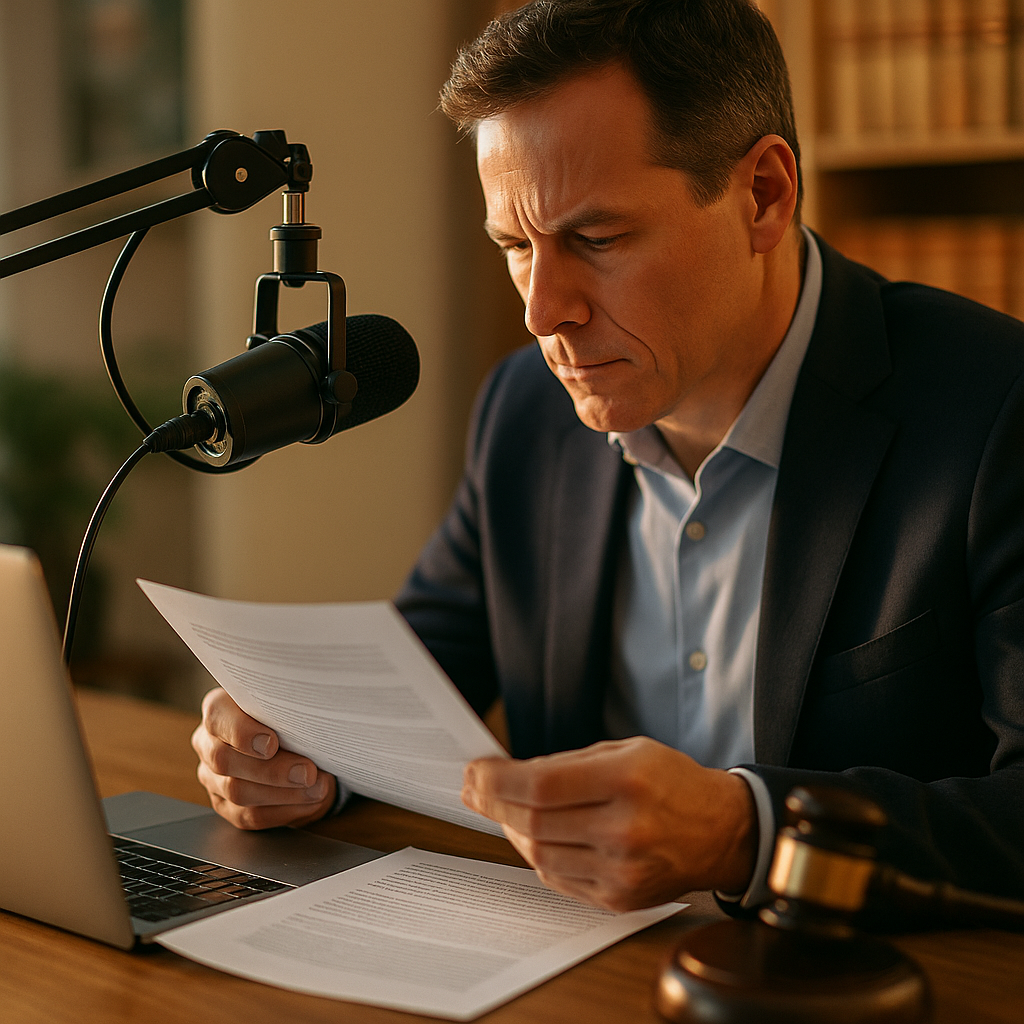
Navigating the legalities of synthetic voiceovers in global advertising has become a core compliance challenge as brands scale campaigns across markets, platforms, and languages. AI-generated speech can reduce production time, personalize creative, and localize at speed, but it also introduces risks around consent, copyright, data protection, and consumer deception. Master the rules, contracts, and safeguards now to avoid costly takedowns and reputational damage.
Global advertising compliance: mapping the legal landscape
Global campaigns often fail not because the creative is weak, but because the legal assumptions are local. Synthetic voiceovers sit at the intersection of advertising law, IP, privacy, consumer protection, and platform policies. In 2025, regulators and self-regulatory bodies increasingly scrutinize AI-driven content, especially where it can mislead consumers or exploit a person’s identity.
Start with a jurisdiction map that ties each market to the rules most likely to apply:
- Consumer protection and advertising standards: prohibitions on misleading or deceptive practices, disclosure expectations, and substantiation rules.
- Personality, image, and publicity rights: restrictions on using a person’s voice or “voice likeness” without permission, especially for celebrities and public figures.
- Copyright and neighboring rights: rules governing voice performances, sound recordings, and music or audio libraries embedded in your spot.
- Privacy and data protection: biometric and sensitive data concepts, cross-border transfers, and lawful basis requirements when collecting or processing voice data.
- Sector-specific rules: healthcare, finance, alcohol, political advertising, and children’s advertising may impose stricter requirements.
Operational takeaway: Treat synthetic voiceovers as a regulated asset, not a commodity. Build a review workflow that includes legal, brand safety, and localization experts before creative is duplicated across regions. When you plan a global rollout, confirm whether the same voice is allowed everywhere and whether local disclosure norms differ.
Voice likeness rights: consent, talent contracts, and attribution
A major legal flashpoint is the use of a recognizable or imitable voice. Even if you never name a person, a synthetic voice that evokes a particular individual can trigger claims, depending on local law and the facts. The safest approach is to design your synthetic voice strategy around consent and clear contractual scope.
If you use a real voice actor to train or create a cloned voice, secure written permissions that cover:
- Purpose: advertising, internal use, product demos, customer support, or all of the above.
- Territory: list markets, and address global digital distribution explicitly.
- Term: time-limited vs perpetual use; include renewal options.
- Media: broadcast, streaming, social, in-app, OOH with audio, IVR, podcasts, and paid influencer integrations.
- Derivatives: whether you can alter tone, language, pacing, emotion, or generate new scripts without fresh approvals.
- Exclusivity and conflicts: prevent the same synthetic voice from appearing for competitors if that matters for brand identity.
- Approval rights and moral rights: specify whether the talent can veto certain product categories or messages.
If you use a “stock” synthetic voice from a vendor, confirm in the license that:
- The vendor has secured all underlying rights and consents from any contributing performers.
- You receive commercial rights for advertising use in your intended territories and channels.
- The vendor will not provide the identical voice to direct competitors (if required), or at least will disclose whether it is non-exclusive.
Attribution: Most ad formats do not require voice attribution, but attribution can matter contractually. If a vendor or performer requires credit, ensure it is feasible across platforms. If not, negotiate alternative consideration or a waiver.
Follow-up question brands ask: “Can we create a voice that ‘sounds like’ a famous person without using their recordings?” Practically, this is high-risk. Even without training data from that person, a deliberately evocative voice can support claims based on identity misappropriation, unfair competition, or misleading endorsement. The compliance approach is to avoid imitation intent and document your creative process to show independent development.
Copyright and licensing: who owns AI-generated audio outputs?
Synthetic voiceovers raise two separate IP issues: (1) rights in the inputs (training data, scripts, prompts, reference recordings), and (2) rights in the outputs (the generated audio file). Ownership and permitted use depend heavily on your contracts and the vendor’s terms.
Key licensing checkpoints for advertisers:
- Script rights: ensure you own or license the copy globally and across media, especially if it adapts taglines, quotes, or third-party content.
- Model and dataset assurances: require warranties that training and reference materials were obtained lawfully and do not infringe third-party rights.
- Output usage rights: confirm you have the right to use, edit, localize, and synchronize the audio with video and music in ads.
- Exclusivity and uniqueness: understand whether your output can be reproduced by others using the same model or voice preset.
- Indemnities and limitations: negotiate indemnity for IP claims where possible, and assess caps that may be too low for global campaigns.
Practical rule: Never assume “we paid for it, so we own it.” Many AI vendors grant a license rather than an assignment. For a brand voice used across campaigns, seek an enterprise agreement that clarifies ownership or provides a broad, irrevocable commercial license with clear sublicensing rights to agencies and affiliates.
Music and SFX are still separate. If your synthetic voiceover is mixed with a track, you must clear music rights (composition and master) and confirm that any sound effects library permits advertising and global distribution.
Data privacy and biometrics: handling voice data lawfully
Voice can be personal data. In some contexts, it can function as biometric data when used to identify or authenticate a person. Even when you only generate a voice, your workflow may involve collecting recordings from talent, employees, or consumers, and transferring files across borders for production.
Build a privacy-forward workflow:
- Data minimization: collect only what you need to create the voiceover; avoid storing raw recordings longer than necessary.
- Lawful basis and notices: provide clear privacy notices to voice talent and any individuals whose recordings are processed; document the lawful basis for processing.
- Biometric caution: if voiceprints are created for identity verification or unique identification, treat this as a higher-risk category and apply stricter controls.
- Cross-border transfers: confirm where processing occurs (including vendor subprocessors) and implement the appropriate transfer mechanisms for each market.
- Security measures: encryption at rest and in transit, access controls, audit logs, and a defined incident response plan.
Consumer recordings in ads: If you plan to generate “personalized” voice ads using a customer’s voice or voicemail, obtain explicit consent, define retention periods, and offer simple opt-out and deletion routes. Also validate whether the personalization could be considered profiling with additional obligations in certain jurisdictions.
Follow-up question: “Is a synthetic voice ‘biometric data’ if it’s not tied to a real person?” Often, risk is lower if it is not used to identify a person and has no link to an individual. The risk rises sharply if the synthetic voice is derived from, linked to, or presented as a specific person, or if it is used in authentication contexts.
Disclosure and consumer protection: avoiding deceptive AI advertising
Synthetic voiceovers can mislead when they imply a real spokesperson, a celebrity endorsement, a live customer testimonial, or a human customer service agent. Many markets treat these impressions as material to consumer decision-making, especially in regulated categories.
When disclosure is most important:
- Endorsements and testimonials: if a synthetic voice presents as a real customer or expert, ensure you can substantiate the testimonial and avoid fabricated identities.
- Celebrity-like voices: if the voice could reasonably be taken as a known person, do not rely on ambiguity; obtain permission or change creative direction.
- Political or issue ads: heightened scrutiny; implement stronger verification and consider clear labeling even when not strictly required.
- Children and vulnerable audiences: apply stricter standards; avoid manipulative or confusing audio formats.
How to disclose without harming performance: Use short, plain language in audio or on-screen text where feasible (e.g., “Voice generated with AI”). Place disclosures where consumers will actually notice them: early in the ad for audio-only placements, and near the endorsement claim for video.
Substantiation still applies: Synthetic delivery does not reduce the need to substantiate performance claims, pricing statements, availability, and comparative claims. Ensure your compliance team reviews scripts before generation to prevent rapid scaling of unsubstantiated copy into many variants.
Platform rules and risk management: policies, audits, and governance
Even if an ad is legal, it can still be removed for violating platform rules. Major ad platforms and marketplaces increasingly regulate manipulated media, impersonation, and misleading content. For global advertising teams, governance is how you keep speed without losing control.
Implement a synthetic voice governance program:
- Vendor due diligence: evaluate model provenance, consent practices, security certifications, and documented processes for handling takedown requests.
- Standard contract clauses: warranties on rights and consents, audit rights, subprocessors disclosure, security obligations, and meaningful indemnities.
- Creative safeguards: prohibited-use list (no imitation of real individuals, no fake testimonials, no sensitive targeting scripts), plus mandatory disclosure rules by category.
- Approval workflow: legal review triggers for certain markets, regulated products, or any use of a voice resembling a real person.
- Version control: track which voice model, settings, scripts, and markets were used for each asset to support rapid remediation.
- Monitoring: scan for unauthorized reuse of your brand voice and report impersonation quickly.
Audit readiness: Keep a “rights packet” per campaign: contracts, consent forms, vendor licenses, model details, scripts, substantiation, disclosures, and distribution lists. If a regulator, platform, or rights holder challenges the ad, a complete packet speeds resolution and reduces downtime.
FAQs about synthetic voiceovers in global advertising
Do we need permission to use a synthetic voice in an ad?
If the voice is not derived from or presented as a specific person, permission may not be required. If it is cloned from a real person, resembles a known individual, or implies endorsement, obtain explicit consent and document the scope (territory, term, media, and derivative use).
Can we localize the same synthetic voice into multiple languages?
Yes, but confirm your license covers multilingual generation and derivative works. Also verify that the localized delivery does not create new risks, such as sounding like a local public figure or triggering stricter disclosure expectations in specific markets.
Who owns the AI-generated voiceover file?
Ownership depends on vendor terms and your contract. Many providers grant a commercial license rather than transferring ownership. For a long-term brand voice, negotiate clear, global rights to use, edit, and sublicense the audio across affiliates and agencies.
Do we have to disclose that a voiceover is AI-generated?
Not always, but disclosure is strongly advisable when consumers could be misled about identity, endorsement, or authenticity. For testimonials, celebrity-adjacent voices, and sensitive categories, clear labeling and substantiation reduce legal and platform risk.
Is a voice recording considered personal data?
Often yes. If the recording identifies a person or can reasonably be linked to them, privacy obligations apply. If you generate voiceprints for identification or authentication, treat it as higher-risk processing and implement stronger safeguards and explicit permissions where required.
What should we demand from synthetic voice vendors?
Ask for documented consent practices, warranties of non-infringement, clear output usage rights for advertising, security controls, subprocessor transparency, and indemnities that match the exposure of global campaigns. Also require a process for takedowns and rapid incident response.
In 2025, synthetic voiceovers can scale global advertising, but only when brands treat them as a rights-managed, privacy-aware, and disclosure-ready asset. Build jurisdiction-specific compliance maps, secure explicit voice likeness permissions, negotiate output rights and indemnities, and apply privacy-by-design to voice data. Pair these steps with platform-aware governance so teams can move fast without triggering takedowns or disputes.