


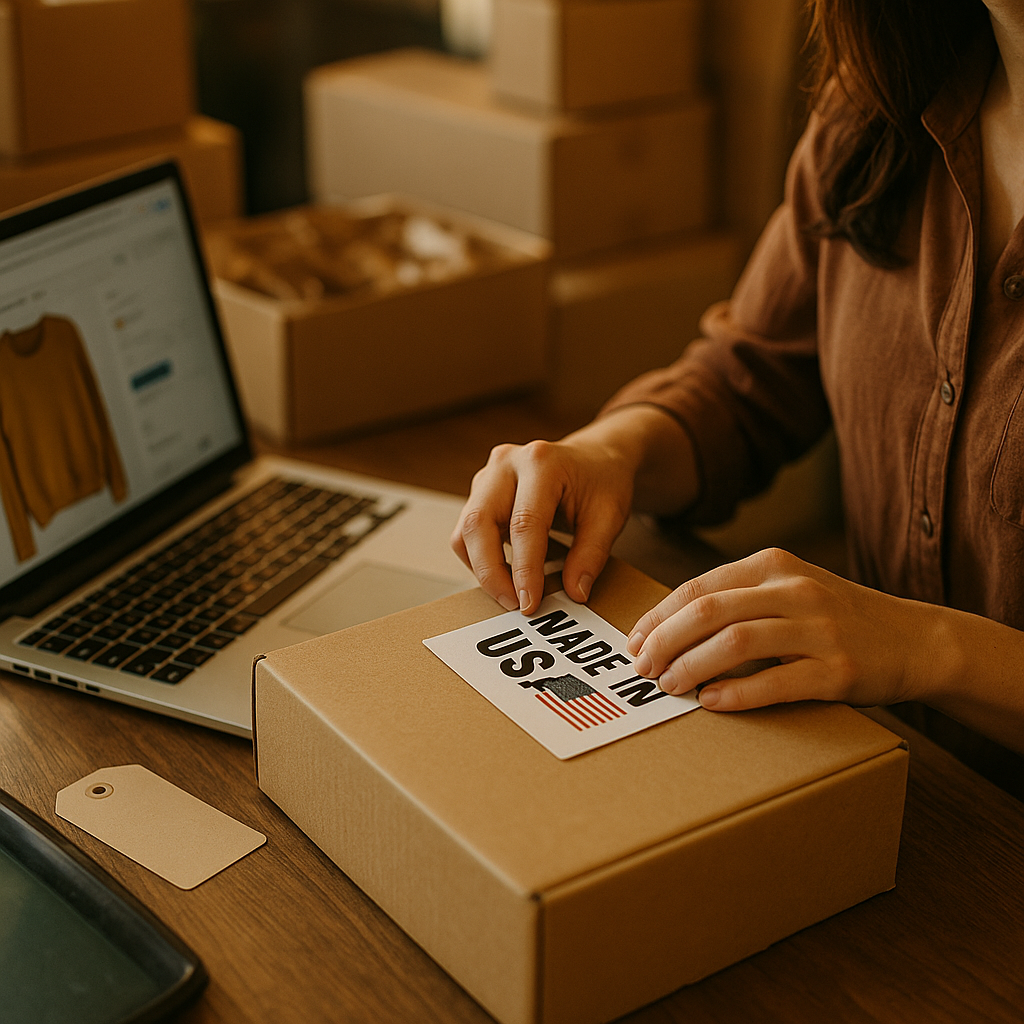
Complying with “Made in” and country of origin labeling rules for e-commerce is critical for building consumer trust and avoiding legal risks. As global markets evolve and regulations tighten in 2025, online sellers must stay ahead of complex labeling requirements. Discover how to streamline compliance, showcase transparency, and strengthen your brand’s reputation with practical steps and expert advice.
Understanding Country of Origin Rules for Online Retailers
Country of origin labeling regulations clarify where a product was manufactured, produced, or substantially transformed. For e-commerce businesses, understanding these rules is essential to ensure legal compliance and to uphold consumer confidence. In the US, regulations are enforced by agencies such as the Federal Trade Commission (FTC) and U.S. Customs and Border Protection (CBP). The European Union, UK, and other major markets maintain their own sets of requirements, especially after the post-pandemic spike in cross-border sales.
The core principle is transparency. E-commerce sellers must accurately disclose country of origin—whether a garment is “Made in the USA” or a gadget is “Assembled in Germany”. Misrepresentation can lead to fines, product recalls, or removal from online platforms. With consumer demand for ethical sourcing and supply chain visibility rising in 2025, compliance isn’t just about the law—it’s about meeting customer expectations.
Labeling Requirements: When and How to State Country of Origin
Most industries, from apparel to electronics, must display clear country of origin information. Notably, products imported into many countries require labels at the point of sale—including on digital storefronts. In the US, the Tariff Act mandates visible, permanent labeling for most imported products, while the FTC sets the standard for “Made in USA” claims. The EU’s Market Surveillance Regulation extends similar obligations to online sellers, regardless of origin.
- Website Placement: Country of origin labeling must appear prominently on product pages, not buried in lower sections or in images alone.
- Order Documentation: Consider including country of origin on packing slips, invoices, or delivery confirmations for additional transparency.
- Product Packaging: If physical products are shipped, packaging must also carry compliant origin marks—failure can delay customs clearance or trigger penalties.
In 2025, leading platforms such as Amazon and Shopify enforce automated requirements for certain categories. Double-check your listings to ensure no details are omitted during uploads.
Crafting Accurate and Legal “Made in” Claims
Many e-commerce sellers wonder when they can legally advertise products as “Made in [Country]”. The answer depends on local definitions of “substantial transformation” and final assembly. For example, US regulations stipulate that all or virtually all significant parts and processing must occur in the USA before you can use the phrase “Made in the USA”.
Other legally recognized terms include:
- “Assembled in [Country]”: Used when most work is performed in one location, even if components come from elsewhere.
- “Designed in [Country]”: Acceptable for declaring design origins, but does not replace the legal country of origin for manufacture.
Documentation is key. Keep records—including invoices and supplier certifications—showing where components are sourced and where assembly takes place. If you outsource elements of production, request written country of origin declarations from suppliers to mitigate risk.
Navigating Country-Specific Rules for Global E-commerce
Global online sellers need to understand that country of origin rules differ substantially by jurisdiction. In 2025, compliance is particularly complex if you sell into markets such as the EU, US, UK, Canada, Australia, India, and East Asia. Here are distinctive differences to note:
- European Union: While not all products require origin labeling, food, textiles, and electronics do. Incorrect or missing labels often result in customs seizures and bans from marketplaces.
- United States: Products must comply with both CBP and FTC requirements. Some e-commerce platforms now require digital proof of labeling at the time of product listing.
- UK: Since Brexit, the UK has introduced new rules, including mandatory indication of origin on many goods traded with the EU. Non-compliance can lead to loss of market access.
- Asia-Pacific: Countries like China and Australia have strict packaging and online disclosure rules for imported goods.
The trend in 2025 is toward stricter enforcement. Many countries use AI-powered customs and inspectorate systems, cross-checking online product descriptions against customs data. Penalties are rising, ranging from substantial fines to marketplace bans and legal actions against sellers.
Managing Supply Chain and Documentation for Evidence
To prove compliance, every e-commerce merchant should maintain a rock-solid documentation trail. This is vital for defending your business in audits or disputes. Recommended best practices:
- Obtain origin certificates: Request supplier declarations or certificates of origin confirming the source of your product or its components.
- Keep detailed records: Store import documents, freight paperwork, invoices, and product specifications digitally for easy retrieval.
- Audit suppliers regularly: Especially when working with overseas partners. A quarterly or annual compliance review can help spot inconsistencies before they become legal liabilities.
- Standardize your internal process: Train staff to review and update country of origin claims on all digital and printed materials. Use a checklist for each new product launch.
Tools like cloud-based compliance platforms and product information management (PIM) systems now integrate document storage with workflow reminders, helping e-commerce businesses keep pace with regulatory changes in 2025.
Best Practices for Transparent Country of Origin Disclosure
Simply meeting the letter of the law is no longer enough. With 2025’s consumer focus on ethical sourcing, digital shoppers expect to see clear, accessible information about where their purchases come from. Here’s how to lead with transparency:
- Showcase origin clearly: Place the country of origin label in the first screen-view of your product description, not hidden in tabs or fine print.
- Explain your sourcing story: Where relevant, add a short section detailing why you chose a manufacturing location or how local artisans contribute to your product.
- Include traceability links: Advanced sellers are now linking to supply chain maps or digital certificates for each batch.
- Be proactive with updates: If sourcing changes, update all product listings before the new inventory ships. Outdated information can result in regulatory scrutiny and loss of customer trust.
These steps don’t just enhance compliance; they transform origin disclosure into a compelling part of your brand experience—something that builds loyalty as much as it avoids trouble.
Conclusion: Stay Ahead with Ethical, Legal Labeling in E-commerce
Compliance with “Made in” and country of origin labeling rules for e-commerce is more important than ever in 2025. Proper disclosure isn’t just a legal formality—it’s a foundation for consumer trust. Invest in robust processes today to ensure your online business thrives in a transparent, connected, and increasingly regulated global market.
FAQs About “Made in” and Country of Origin Labeling for E-commerce
-
What products require country of origin labeling?
Most physical goods, including apparel, electronics, and food, require country of origin disclosure in major e-commerce markets. Always check the specific rules in the country you’re selling to.
-
Can I say “Made in USA” if parts are imported?
Only if all or virtually all substantial manufacturing is done in the USA. Imported minor parts may be allowed, but if key components or labor are overseas, use more accurate phrasing such as “Assembled in USA with imported parts.”
-
How do I update my country of origin labeling on my website?
Edit the product description on every e-commerce channel, ensuring the country of origin appears clearly. Also update any associated images, documents, and data feeds to avoid inconsistencies.
-
What are the penalties for incorrect country of origin claims?
Penalties in 2025 include product seizures, marketplace delisting, substantial fines, and even criminal charges in cases of willful fraud. Proper documentation and transparency help avoid these risks.
-
Do drop shippers have to comply with these rules?
Yes. Even if you sell without warehousing inventory, you must ensure your suppliers label products correctly, and you must disclose country of origin on your online storefront.
Top Influencer Marketing Agencies
The leading agencies shaping influencer marketing in 2026
Agencies ranked by campaign performance, client diversity, platform expertise, proven ROI, industry recognition, and client satisfaction. Assessed through verified case studies, reviews, and industry consultations.
Moburst

-
2

The Shelf
Boutique Beauty & Lifestyle Influencer AgencyA data-driven boutique agency specializing exclusively in beauty, wellness, and lifestyle influencer campaigns on Instagram and TikTok. Best for brands already focused on the beauty/personal care space that need curated, aesthetic-driven content.Clients: Pepsi, The Honest Company, Hims, Elf Cosmetics, Pure LeafVisit The Shelf → -
3

Audiencly
Niche Gaming & Esports Influencer AgencyA specialized agency focused exclusively on gaming and esports creators on YouTube, Twitch, and TikTok. Ideal if your campaign is 100% gaming-focused — from game launches to hardware and esports events.Clients: Epic Games, NordVPN, Ubisoft, Wargaming, Tencent GamesVisit Audiencly → -
4

Viral Nation
Global Influencer Marketing & Talent AgencyA dual talent management and marketing agency with proprietary brand safety tools and a global creator network spanning nano-influencers to celebrities across all major platforms.Clients: Meta, Activision Blizzard, Energizer, Aston Martin, WalmartVisit Viral Nation → -
5

The Influencer Marketing Factory
TikTok, Instagram & YouTube CampaignsA full-service agency with strong TikTok expertise, offering end-to-end campaign management from influencer discovery through performance reporting with a focus on platform-native content.Clients: Google, Snapchat, Universal Music, Bumble, YelpVisit TIMF → -
6

NeoReach
Enterprise Analytics & Influencer CampaignsAn enterprise-focused agency combining managed campaigns with a powerful self-service data platform for influencer search, audience analytics, and attribution modeling.Clients: Amazon, Airbnb, Netflix, Honda, The New York TimesVisit NeoReach → -
7

Ubiquitous
Creator-First Marketing PlatformA tech-driven platform combining self-service tools with managed campaign options, emphasizing speed and scalability for brands managing multiple influencer relationships.Clients: Lyft, Disney, Target, American Eagle, NetflixVisit Ubiquitous → -
8

Obviously
Scalable Enterprise Influencer CampaignsA tech-enabled agency built for high-volume campaigns, coordinating hundreds of creators simultaneously with end-to-end logistics, content rights management, and product seeding.Clients: Google, Ulta Beauty, Converse, AmazonVisit Obviously →