


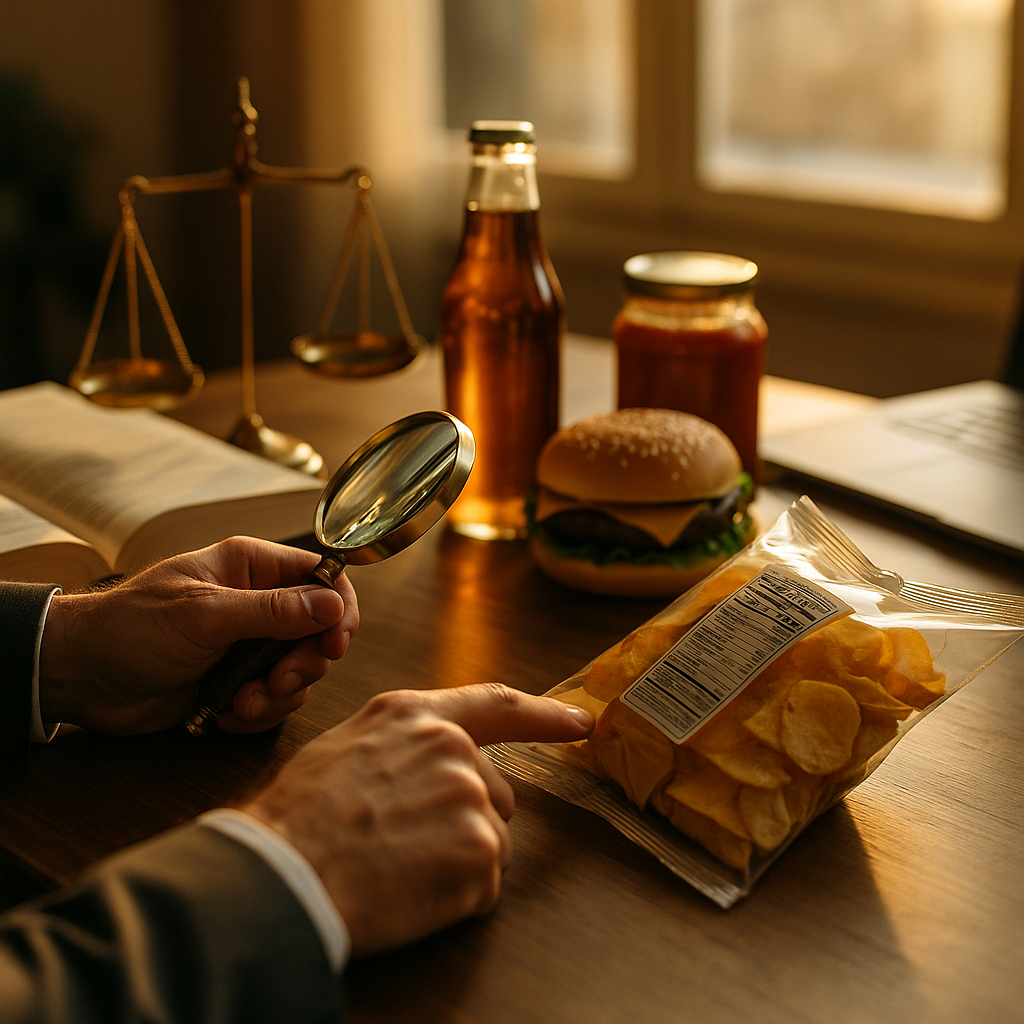
The food and beverage industry is under constant scrutiny, making “how to comply with food and beverage advertising and labeling laws” a vital topic for producers, marketers, and business owners. Staying compliant protects your brand reputation, avoids costly penalties, and builds consumer trust. Ready to ensure your product stands out for the right reasons? Dive into these crucial steps for lawful advertising and labeling.
Understanding the Legal Landscape of Product Labeling Compliance
To achieve full product labeling compliance, it’s important to grasp the complex legal framework governing food and beverage products in 2025. Regulations differ by region, but universally, labeling must not mislead consumers and must provide clear, accurate information. Key legal standards typically require:
- Ingredient Listing: All components must be disclosed, with allergens highlighted.
- Nutritional Information: Accurate details about calories, fats, sugars, and essential nutrients are mandatory.
- Date Codes: ‘Best before’ and ‘use by’ dates inform safe consumption periods.
- Claims and Certifications: Any “organic,” “gluten-free,” or similar claims must be provable and certified.
- Language and Graphics: The information must be clear, legible, and not obscured by design elements.
Staying informed about regional updates is easier with tools like the European Union’s Food Information to Consumers (FIC) database and resources from the U.S. Food and Drug Administration (FDA) and local authorities. Always align with the most current regulations where your products are sold.
Mastering Food Advertising Law for Honest Marketing
Food advertising law sets the tone for ethical marketing. Every promotional message, whether on packaging, digital ads, or traditional media, must be truthful and scientifically substantiated. Regulators like the U.S. Federal Trade Commission (FTC), Australia’s ACCC, and the UK’s ASA actively monitor for misleading claims.
- No False Health Benefits: Only promote proven health outcomes supported by research.
- Avoid Unsubstantiated Buzzwords: Challenge all claims of “superfood,” “immune-boosting,” or “miracle cure” with robust evidence.
- Child-Focused Advertising: Many regions restrict marketing tactics targeting children, especially for high-fat, sugar, or salt products.
- Transparency: Clearly disclose sponsorships, influencer partnerships, and paid endorsements.
Internal review processes, legal vetting of ad copy, and ongoing staff training are proven methods to minimize advertising risks. According to a 2024 international survey by Innova Market Insights, 74% of consumers distrust brands caught exaggerating product benefits—reputation truly hinges on honest marketing.
Ensuring Accurate Allergen and Nutrition Labeling
Accurate allergen and nutrition labeling is a non-negotiable expectation for all food and beverage businesses. Regulators enforce strict standards, as improper labeling can risk public health and lead to severe penalties. In 2023, the FDA issued over 100 warnings for undeclared allergens, highlighting the importance of diligence.
- Mandatory Allergen Disclosures: Always list the major allergens mandated in your jurisdiction (e.g., peanuts, shellfish, wheat, milk).
- Nutrition Fact Panels: Present clear, honest nutrition information, reviewed annually or whenever recipes change.
- Ingredient Traceability: Ensure your supply chain provides up-to-date allergen and nutrient data for every batch.
Investing in digital compliance systems can minimize human errors. Many companies also employ third-party laboratory verification—even minor discrepancies can erode consumer trust or lead to product recalls.
Leveraging Compliance Checklists for Label Approval
Utilizing a compliance checklist is one of the most effective ways to streamline regulatory adherence and avoid common pitfalls. A good food product approval process should include:
- Label Review: Assess for completeness, accuracy, and legibility.
- Claim Verification: Match all claims against scientific or legal standards.
- Allergen Highlighting: Double-check for both direct and potential cross-contamination disclosures.
- Translation Accuracy: For global markets, ensure text is correctly translated and fits local legal terminology.
- Proof of Certification: Document all logo usage, such as “organic” or “non-GMO,” with supporting paperwork.
Some businesses benefit from hiring third-party compliance consultants or leveraging automated label-review software, reducing the risk of oversight. Consistent, documented procedures offer strong protection in case of audits or regulatory inquiries.
Adapting to Market-Specific Labeling Laws for International Sales
Complying with international labeling laws ensures seamless access to global markets. Each country or region sets unique requirements, which might cover language, permissible claims, measurement units, and icons. For example:
- European Union: Mandatory front-of-pack nutritional information and specific allergen highlighting.
- United States: Usage of FDA-standard nutrition panels and “Nutrition Facts” formatting.
- Asia-Pacific: Stricter rules for genetically modified ingredient disclosures.
Review each country’s regulatory websites before launching in a new market. Translation failures or missing certifications are common red flags that can delay product launches or trigger recalls. Consistently working with local legal experts and up-to-date regulatory guides is essential for global compliance.
Building Consumer Trust Through Transparent Food Labeling Regulations
Applying food labeling regulations transparently not only fulfills legal requirements—it also builds meaningful consumer relationships. Surveys show that, in 2024, 62% of shoppers switched brands for better transparency. Complete, honest labeling coupled with ethically sound advertising nurtures brand loyalty and reduces exposure to class action lawsuits or government sanctions.
- Publish detailed ingredient sourcing stories on your website to back package claims.
- Be proactive in updating consumers on regulatory changes and labelling improvements.
- Encourage direct feedback about labeling clarity to demonstrate genuine commitment.
Proactive transparency can set your brand apart in a competitive landscape, transforming regulatory compliance from a legal necessity into a powerful differentiator.
Conclusion: Empowering Your Brand Through Responsible Compliance
Mastering food and beverage advertising and labeling laws shields your business and deepens consumer trust in 2025’s competitive market. Commit to accuracy, honesty, and market-specific regulations throughout your product lifecycle—empowering your brand to lead responsibly and sustainably. Compliance isn’t just a requirement; it’s your opportunity to thrive.
FAQs: Food and Beverage Advertising and Labeling Laws
- What happens if my product labeling is non-compliant?
Non-compliance can result in product recalls, fines, and reputational harm. Regulators may also bar non-compliant products from sale. - Do advertising laws apply to social media campaigns?
Yes. All product-related statements, images, and endorsements on social media are subject to food advertising law and must be truthful and substantiated. - Can I use “organic” or “natural” claims freely on my packaging?
Only if your product meets the legal definition and you possess the appropriate certification; otherwise, such claims are misleading and could result in penalties. - How often should I review my product labels for compliance?
Review labels annually or whenever recipes, sources, or regulations change to ensure ongoing compliance with the latest requirements. - Do allergen labeling requirements differ between countries?
Yes, and you must customize labeling to each market’s laws. Some countries require all potential allergen traces to be disclosed, while others have defined lists.
Top Influencer Marketing Agencies
The leading agencies shaping influencer marketing in 2026
Agencies ranked by campaign performance, client diversity, platform expertise, proven ROI, industry recognition, and client satisfaction. Assessed through verified case studies, reviews, and industry consultations.
Moburst

-
2

The Shelf
Boutique Beauty & Lifestyle Influencer AgencyA data-driven boutique agency specializing exclusively in beauty, wellness, and lifestyle influencer campaigns on Instagram and TikTok. Best for brands already focused on the beauty/personal care space that need curated, aesthetic-driven content.Clients: Pepsi, The Honest Company, Hims, Elf Cosmetics, Pure LeafVisit The Shelf → -
3

Audiencly
Niche Gaming & Esports Influencer AgencyA specialized agency focused exclusively on gaming and esports creators on YouTube, Twitch, and TikTok. Ideal if your campaign is 100% gaming-focused — from game launches to hardware and esports events.Clients: Epic Games, NordVPN, Ubisoft, Wargaming, Tencent GamesVisit Audiencly → -
4

Viral Nation
Global Influencer Marketing & Talent AgencyA dual talent management and marketing agency with proprietary brand safety tools and a global creator network spanning nano-influencers to celebrities across all major platforms.Clients: Meta, Activision Blizzard, Energizer, Aston Martin, WalmartVisit Viral Nation → -
5

The Influencer Marketing Factory
TikTok, Instagram & YouTube CampaignsA full-service agency with strong TikTok expertise, offering end-to-end campaign management from influencer discovery through performance reporting with a focus on platform-native content.Clients: Google, Snapchat, Universal Music, Bumble, YelpVisit TIMF → -
6

NeoReach
Enterprise Analytics & Influencer CampaignsAn enterprise-focused agency combining managed campaigns with a powerful self-service data platform for influencer search, audience analytics, and attribution modeling.Clients: Amazon, Airbnb, Netflix, Honda, The New York TimesVisit NeoReach → -
7

Ubiquitous
Creator-First Marketing PlatformA tech-driven platform combining self-service tools with managed campaign options, emphasizing speed and scalability for brands managing multiple influencer relationships.Clients: Lyft, Disney, Target, American Eagle, NetflixVisit Ubiquitous → -
8

Obviously
Scalable Enterprise Influencer CampaignsA tech-enabled agency built for high-volume campaigns, coordinating hundreds of creators simultaneously with end-to-end logistics, content rights management, and product seeding.Clients: Google, Ulta Beauty, Converse, AmazonVisit Obviously →