


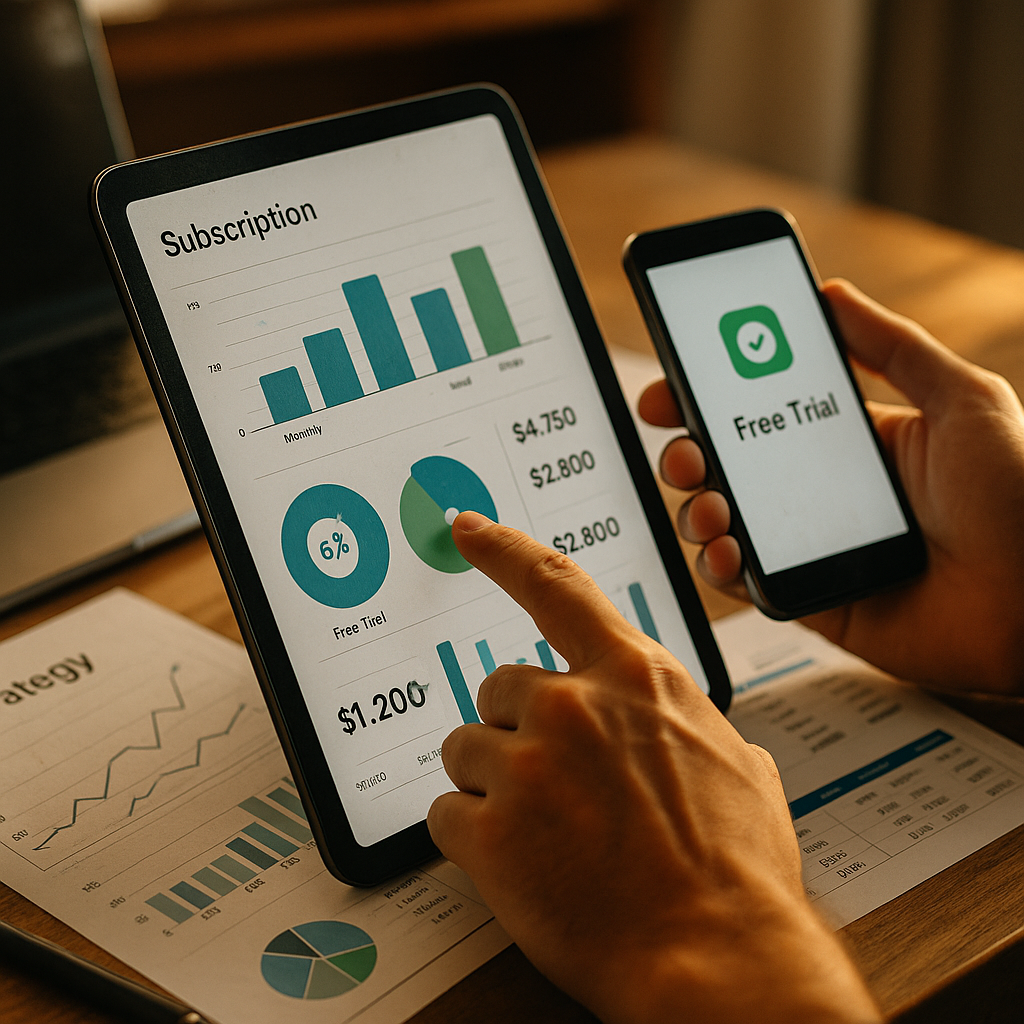
Are you wondering how to create a marketing strategy for a mobile app subscription service? In 2025’s competitive app landscape, crafting a focused plan can distinguish your brand and rapidly boost revenue. Discover the essential steps and actionable best practices to create engagement, drive conversions, and ensure your mobile app’s lasting success.
Understanding Your Target Audience for Subscription Apps
Before building a marketing strategy for your mobile app subscription service, pinpoint your ideal users. Success hinges on understanding their needs, behaviors, and motivations:
- Demographics: Age, location, occupation, device preferences.
- Pain Points: What challenges does your app solve?
- Subscription Habits: Are they familiar with in-app purchases and recurring billing?
- Buying Motivations: Do they seek convenience, value, or exclusivity?
Utilize in-app analytics, competitor reviews, and user surveys to segment and profile your audience. The 2025 Mobile App Trends Report from App Annie highlights that personalized messaging boosts subscription conversion rates by 27%. Knowing your users intimately allows you to tailor every aspect of your marketing—raising retention and lowering churn.
Mobile App Value Proposition and Positioning Strategy
In 2025, the mobile app market is saturated. Your value proposition sets your subscription service apart. Make it unambiguous and memorable—users need immediate clarity on your app’s unique benefits. Consider these steps:
- Define Your Unique Selling Points: What content, features, or benefits are exclusive to subscribers?
- Position Against Competitors: Highlight what you offer that others don’t—such as superior UX, personalized recommendations, or exclusive content.
- Clear Communication: Ensure your app store descriptions, website, and onboarding flows communicate this value.
Your value proposition should answer: “Why should I pay for this app instead of using a free or rival alternative?” Back your claims with social proof: use testimonials, ratings, and, where available, third-party endorsements to build trust.
User Acquisition Strategies for a Mobile App Subscription Service
Driving qualified users to your app is a fundamental piece of your marketing strategy. In 2025, successful subscription apps invest in multi-channel acquisition campaigns, such as:
- App Store Optimization (ASO): Update keywords, screenshots, and videos regularly for both iOS and Android stores. According to Sensor Tower, 65% of downloads occur via organic search.
- Paid Social Advertising: Leverage Meta Ads, TikTok, and YouTube to target lookalike audiences interested in similar apps or topics.
- Influencer Partnerships: Collaborate with micro-influencers for authentic reviews, demo videos, or limited offers. Peer influence is crucial in 2025’s trust economy.
- Content Marketing: Write blog articles, publish user stories, or host webinars showing your app’s benefits. Educate—don’t just promote.
- Email Marketing: Capture early leads with pre-launch campaigns, then nurture sign-ups with onboarding tips and periodic incentives.
Combine organic and paid acquisition for efficient growth. Track ROI closely, reallocating budget to top-performing channels. Google’s App Campaigns, for instance, use machine learning to automate bidding—freeing your team to focus on creative iteration.
Conversion Optimization for Subscription Models
With rising privacy standards and increasing user skepticism in 2025, converting free users to subscribers requires finesse. Optimize conversion using the following tactics:
- Clear Paywall Messaging: Use concise, benefit-driven language and visuals. Avoid jargon.
- Freemium and Trials: Offer a generous trial or a feature-limited free tier. Recent data from Adjust shows trials can boost conversions by up to 38%.
- Personalized Offers: Show dynamic pricing or limited-time incentives based on user journey and behavior.
- Simplified Checkout Experience: Minimize form fields, integrate trusted payment processors, and ensure high security compliance with PCI DSS and GDPR.
- Onboarding Flows: Walk new users through features that will encourage paid upgrades, using tooltips and progress markers.
Regularly A/B test elements like paywall copy, free trial length, and notification timing. Lean on analytics: segment conversion data by user cohort and acquisition channel to target underperforming areas.
Retention and Engagement in App Subscription Services
Retaining subscribers determines whether your mobile app subscription service becomes truly profitable. In 2025, the average app loses 75% of its daily active users within 3 days if not nurtured. Strengthen retention through:
- Push Notifications: Send personalized, timely updates—always offering value, not noise.
- In-App Messaging: Announce new features, exclusive content drops, or prompt feedback via surveys.
- Gamification: Progress badges, streaks, and rewards boost daily or weekly engagement.
- Continuous Content or Feature Updates: Use changelogs and “What’s New” prompts so subscribers feel valued and involved.
- Community Building: Forums, group challenges, and leaderboard events build loyalty and bring word-of-mouth virality.
Track retention metrics—especially churn rates, session frequency, and lifetime value (LTV). Conduct exit surveys to understand why users cancel, and implement win-back workflows for lapsed subscribers, such as targeted discounts or personalized re-engagement emails.
Measuring and Refining Your Mobile App Marketing Strategy
Data-driven decisions sharpen your strategy over time. Rely on transparent, actionable analytics aligned with your KPIs. Focus on these 2025 essentials:
- Acquisition Costs (CAC) vs. LTV: Maintain a healthy ratio for sustainable scaling. Leading apps target an LTV:CAC of 3:1 or better.
- Conversion and Retention Funnels: Map user journeys from acquisition through to trial, subscription, and renewal or churn.
- Cohort Analysis: Segment users by source, device, or behavior for granular insights.
- Revenue Metrics: Monitor monthly recurring revenue (MRR), average revenue per user (ARPU), and active subscriber growth.
Apply findings to iterate on messaging, pricing, and user experience. Stay agile: conduct regular competitor benchmarking and stay updated on platform guidelines and privacy changes, ensuring long-term compliance and sustainability.
Conclusion: Building Long-Term Success in Mobile App Subscriptions
A robust marketing strategy for your mobile app subscription service blends deep audience knowledge, crisp value messaging, multi-channel acquisition, and relentless optimization. Stay data-driven and responsive to user feedback for sustainable growth. Implement these best practices today to ensure your subscription app outpaces the competition—capturing loyal, high-value customers for years to come.
Frequently Asked Questions
-
What is the most effective user acquisition channel for mobile app subscription services in 2025?
In 2025, a mix of App Store Optimization, paid social media ads, and influencer campaigns delivers the highest ROI for most subscription apps. Optimal channel mix depends on your niche and audience, so continuously test and measure performance.
-
How can I reduce churn for my subscription app?
Engage users through personalized push notifications, continuous feature updates, gamification elements, and proactive customer support. Collect feedback from users who cancel, address their concerns, and implement win-back strategies like targeted discounts or content releases.
-
How should I price my app’s subscription plans?
Base pricing on competitor benchmarks, user willingness to pay, and perceived value of features. Offer multiple tiers or a free trial to improve accessibility. Use A/B testing to refine the balance between price, conversion, and retention.
-
What metrics should I track to measure my app subscription marketing strategy?
Key metrics include customer acquisition cost (CAC), lifetime value (LTV), conversion rates, churn rates, monthly recurring revenue (MRR), and retention by cohort. Regularly analyzing these KPIs supports informed refinement of your marketing tactics.
-
Do I need to localize my mobile app for global markets?
Absolutely. In 2025, localized language, offers, and payment methods greatly expand reach and improve conversion rates across diverse markets. Consider cultural nuances, local laws, and user expectations when expanding internationally.
Top Influencer Marketing Agencies
The leading agencies shaping influencer marketing in 2026
Agencies ranked by campaign performance, client diversity, platform expertise, proven ROI, industry recognition, and client satisfaction. Assessed through verified case studies, reviews, and industry consultations.
Moburst

-
2

The Shelf
Boutique Beauty & Lifestyle Influencer AgencyA data-driven boutique agency specializing exclusively in beauty, wellness, and lifestyle influencer campaigns on Instagram and TikTok. Best for brands already focused on the beauty/personal care space that need curated, aesthetic-driven content.Clients: Pepsi, The Honest Company, Hims, Elf Cosmetics, Pure LeafVisit The Shelf → -
3

Audiencly
Niche Gaming & Esports Influencer AgencyA specialized agency focused exclusively on gaming and esports creators on YouTube, Twitch, and TikTok. Ideal if your campaign is 100% gaming-focused — from game launches to hardware and esports events.Clients: Epic Games, NordVPN, Ubisoft, Wargaming, Tencent GamesVisit Audiencly → -
4

Viral Nation
Global Influencer Marketing & Talent AgencyA dual talent management and marketing agency with proprietary brand safety tools and a global creator network spanning nano-influencers to celebrities across all major platforms.Clients: Meta, Activision Blizzard, Energizer, Aston Martin, WalmartVisit Viral Nation → -
5

The Influencer Marketing Factory
TikTok, Instagram & YouTube CampaignsA full-service agency with strong TikTok expertise, offering end-to-end campaign management from influencer discovery through performance reporting with a focus on platform-native content.Clients: Google, Snapchat, Universal Music, Bumble, YelpVisit TIMF → -
6

NeoReach
Enterprise Analytics & Influencer CampaignsAn enterprise-focused agency combining managed campaigns with a powerful self-service data platform for influencer search, audience analytics, and attribution modeling.Clients: Amazon, Airbnb, Netflix, Honda, The New York TimesVisit NeoReach → -
7

Ubiquitous
Creator-First Marketing PlatformA tech-driven platform combining self-service tools with managed campaign options, emphasizing speed and scalability for brands managing multiple influencer relationships.Clients: Lyft, Disney, Target, American Eagle, NetflixVisit Ubiquitous → -
8

Obviously
Scalable Enterprise Influencer CampaignsA tech-enabled agency built for high-volume campaigns, coordinating hundreds of creators simultaneously with end-to-end logistics, content rights management, and product seeding.Clients: Google, Ulta Beauty, Converse, AmazonVisit Obviously →