


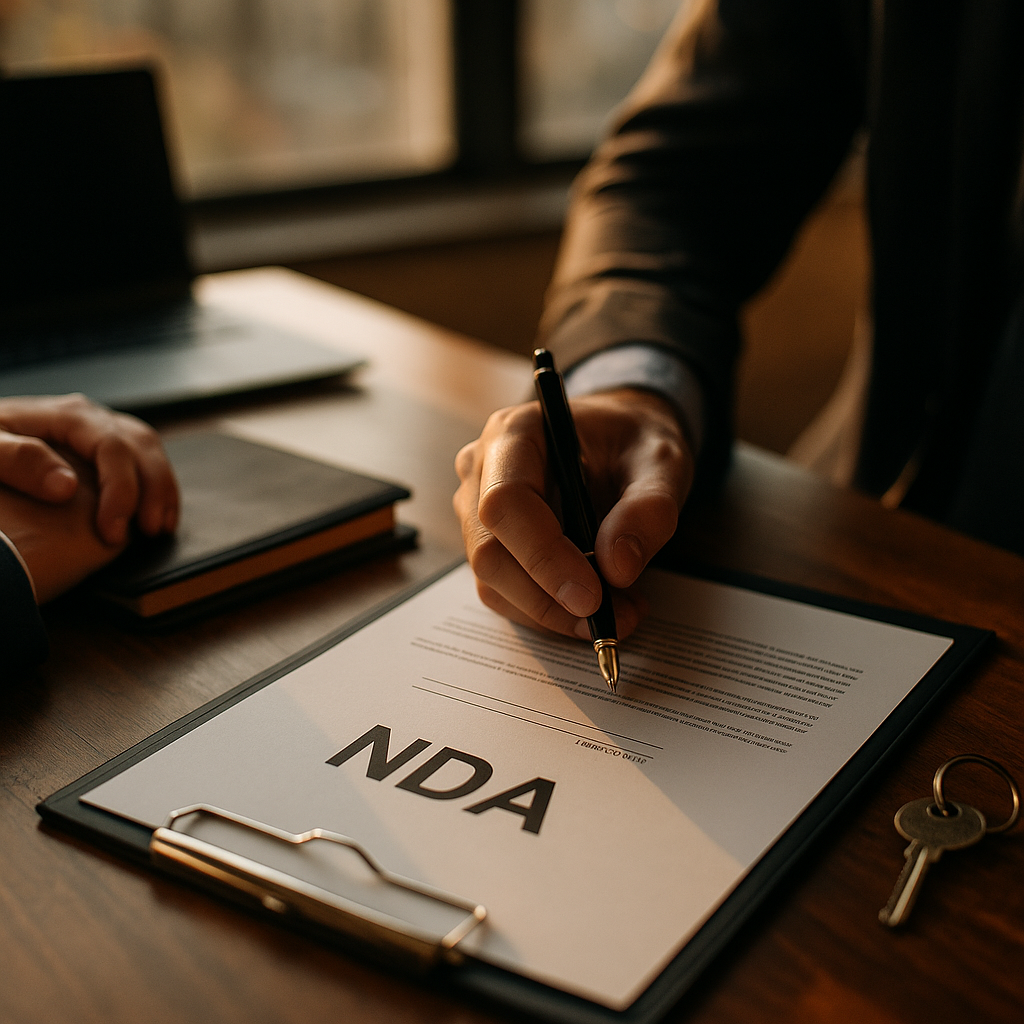
A Non-Disclosure Agreement (NDA) is a vital legal tool for protecting sensitive information in business. Understanding how to write a clear and effective non-disclosure agreement ensures your data, trade secrets, and competitive edge remain secure. Learn the key steps and expert-backed techniques to draft NDAs that truly safeguard your interests—let’s get started.
Essential NDA Components for Legal Effectiveness
Creating a robust NDA starts with understanding the basic clauses every non-disclosure agreement must include to be legally effective. Missing or vague terms often lead to enforcement challenges or legal loopholes. Here are the critical components:
- Definition of Confidential Information: Clearly specify what information is protected. This may include product designs, business strategies, client lists, or proprietary data.
- Obligations of the Receiving Party: Outline exactly how the recipient must protect the information and restrict its use.
- Exclusions from Confidentiality: State what information is not covered, such as publicly available knowledge or data received lawfully from a third party.
- Timeframe: Establish the duration of confidentiality obligations, both during and after the business relationship.
- Consequences of Breach: Detail the remedies, which might include legal action or financial penalties, in the event of unauthorized disclosure.
According to legal experts interviewed by LegalZoom in 2024, NDAs missing clear definitions or consequences are more likely to fail in court. Always review these core sections carefully.
Best Practices for NDA Clarity and Readability
Drafting a non-disclosure agreement that’s easy to understand increases compliance and minimizes disagreements. Here’s how to keep your NDA clear and concise:
- Use Simple, Direct Language: Avoid complex legal jargon whenever possible, opting for straightforward terms that all parties can understand.
- Organize Content Logically: Use clear headings, bullet points, and numbered clauses to group provisions sensibly.
- Eliminate Ambiguity: Define all key terms and avoid using generic references like “all business affairs.”
- Seek Consistency: Ensure terms are used consistently throughout, especially when listing parties or types of information.
Employing plain English in contracts, as reported by The National Law Review in 2024, reduces misunderstandings and disputes by up to 30%. Clear writing makes your NDA a practical tool, not just a legal safeguard.
Tailoring NDAs for Specific Situations and Industries
Every business relationship is unique, so customizing your NDA to match the context increases its enforceability. Consider these scenarios:
- Startup Partnerships: Define limitations around intellectual property and investor discussions. Address potential mergers or acquisitions.
- Employee Agreements: Focus on trade secrets, insider information, and post-employment obligations.
- Freelancer and Vendor Contracts: Clarify remote work or subcontracting scenarios where information may pass through multiple parties.
- International Transactions: Adapt the NDA to comply with different jurisdictions and cross-border data laws.
In 2025, with data privacy regulations like the updated GDPR and increasing remote collaborations, neglecting to adapt your NDA can leave valuable information unprotected. Work with legal counsel familiar with your industry for best results.
Ensuring Mutual Trust with Balanced Confidentiality Agreements
An effective non-disclosure agreement must balance both parties’ interests, particularly when negotiating with other businesses or potential partners. To build trust and ensure enforceability:
- Decide on Unilateral vs. Mutual NDAs: Choose mutual NDAs when both sides are sharing confidential data, promoting fairness and encouraging openness.
- Set Reasonable Expectations: Avoid overbroad or indefinite periods of confidentiality that could be seen as restrictive. Typically, NDAs range from two to five years.
- Address Dispute Resolution: Include clear venues and processes for resolving disagreements, such as mediation or arbitration clauses.
Research from ContractWorks in late 2024 indicates that NDAs perceived as overly one-sided are less likely to be signed and more likely contested in court. A balanced agreement fosters cooperation and trust between parties.
Review and Update Non-Disclosure Agreements Regularly
As business landscapes evolve rapidly in 2025, it’s critical to review and update your NDA templates frequently. Outdated or generic forms may not reflect current laws, data risks, or operational changes.
- Consult Legal Professionals: Get your NDAs reviewed periodically by a lawyer, especially if you operate across several jurisdictions.
- Monitor Regulatory Changes: Stay informed about new privacy or labor laws that might affect your agreements.
- Update Digital Disclosure Methods: Explicitly include electronic communications, cloud storage, and virtual meeting records where appropriate.
The 2025 global business climate demands agility in your legal documentation—regular audits ensure your NDA remains effective and enforceable in any context.
Conclusion: Secure Confidentiality with a Well-Crafted NDA
A clear and effective non-disclosure agreement protects your sensitive information and builds stronger business relationships. By including essential elements, aiming for clarity, customizing documents, balancing confidentiality, and performing regular reviews, you ensure your NDAs deliver real protection. Invest the time to get your NDA right—it’s a core asset in 2025’s competitive environment.
FAQs: Writing an Effective Non-Disclosure Agreement
-
What is the primary purpose of an NDA?
An NDA legally binds parties not to disclose or misuse confidential information, protecting sensitive data during business relationships.
-
Can I use an online NDA template?
Templates provide a starting point, but custom tailoring and legal review ensure your NDA fits your specific needs and meets current legal standards.
-
How long should an NDA’s duration be?
Most NDAs last between two and five years, though the period should reflect the nature and value of the protected information.
-
What happens if someone breaches an NDA?
A breach can result in legal remedies such as injunctions, damages, or specific performance as set forth in the NDA’s remedies section.
-
Do NDAs apply to electronic communications?
Yes—modern NDAs should explicitly cover digital data, emails, and virtual meetings to keep pace with current business practices.
Top Influencer Marketing Agencies
The leading agencies shaping influencer marketing in 2026
Agencies ranked by campaign performance, client diversity, platform expertise, proven ROI, industry recognition, and client satisfaction. Assessed through verified case studies, reviews, and industry consultations.
Moburst

-
2

The Shelf
Boutique Beauty & Lifestyle Influencer AgencyA data-driven boutique agency specializing exclusively in beauty, wellness, and lifestyle influencer campaigns on Instagram and TikTok. Best for brands already focused on the beauty/personal care space that need curated, aesthetic-driven content.Clients: Pepsi, The Honest Company, Hims, Elf Cosmetics, Pure LeafVisit The Shelf → -
3

Audiencly
Niche Gaming & Esports Influencer AgencyA specialized agency focused exclusively on gaming and esports creators on YouTube, Twitch, and TikTok. Ideal if your campaign is 100% gaming-focused — from game launches to hardware and esports events.Clients: Epic Games, NordVPN, Ubisoft, Wargaming, Tencent GamesVisit Audiencly → -
4

Viral Nation
Global Influencer Marketing & Talent AgencyA dual talent management and marketing agency with proprietary brand safety tools and a global creator network spanning nano-influencers to celebrities across all major platforms.Clients: Meta, Activision Blizzard, Energizer, Aston Martin, WalmartVisit Viral Nation → -
5

The Influencer Marketing Factory
TikTok, Instagram & YouTube CampaignsA full-service agency with strong TikTok expertise, offering end-to-end campaign management from influencer discovery through performance reporting with a focus on platform-native content.Clients: Google, Snapchat, Universal Music, Bumble, YelpVisit TIMF → -
6

NeoReach
Enterprise Analytics & Influencer CampaignsAn enterprise-focused agency combining managed campaigns with a powerful self-service data platform for influencer search, audience analytics, and attribution modeling.Clients: Amazon, Airbnb, Netflix, Honda, The New York TimesVisit NeoReach → -
7

Ubiquitous
Creator-First Marketing PlatformA tech-driven platform combining self-service tools with managed campaign options, emphasizing speed and scalability for brands managing multiple influencer relationships.Clients: Lyft, Disney, Target, American Eagle, NetflixVisit Ubiquitous → -
8

Obviously
Scalable Enterprise Influencer CampaignsA tech-enabled agency built for high-volume campaigns, coordinating hundreds of creators simultaneously with end-to-end logistics, content rights management, and product seeding.Clients: Google, Ulta Beauty, Converse, AmazonVisit Obviously →