


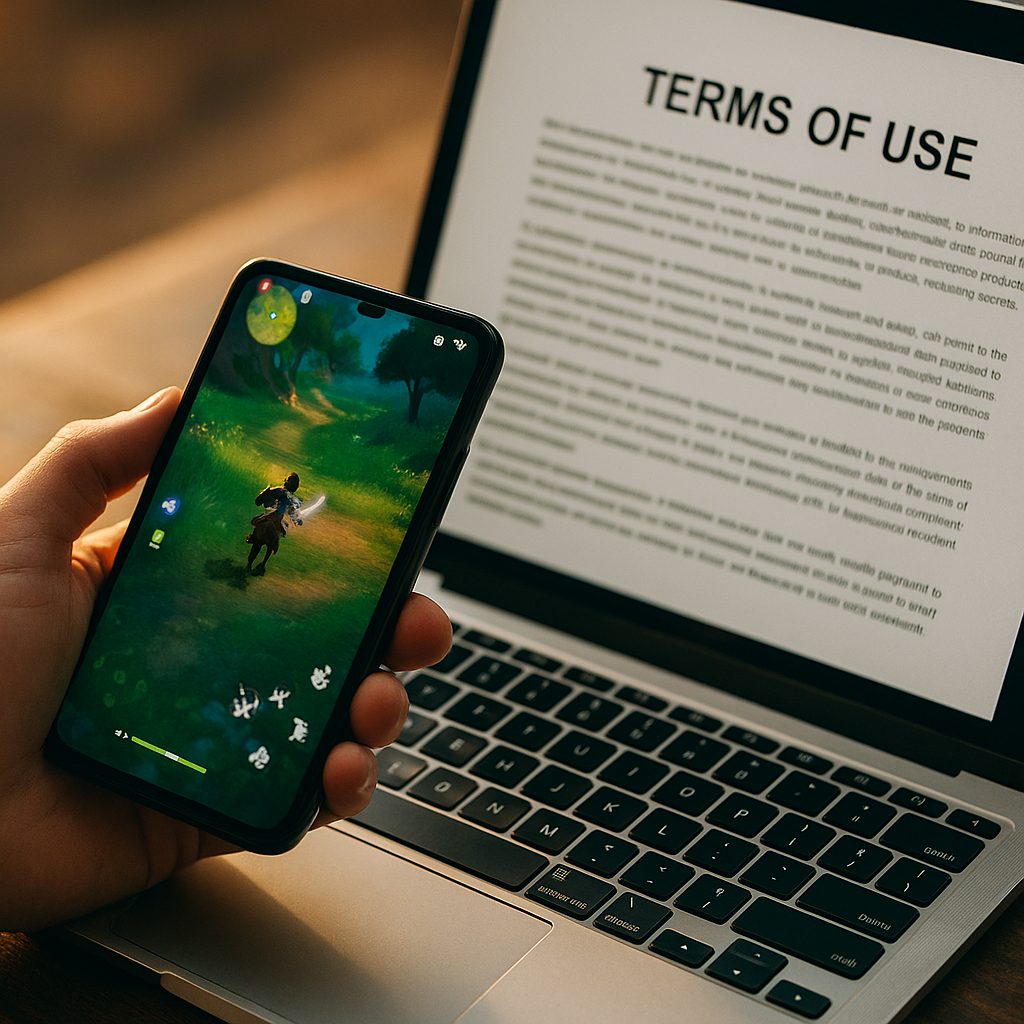
Drafting a powerful Terms of Use Agreement for a mobile game is essential in 2025 to protect your rights, foster player trust, and comply with global regulations. Mobile game developers often overlook this key document’s role in reducing disputes and outlining user obligations. Curious about crafting a player-friendly, enforceable Terms of Use that truly works? Let’s dive in.
Understanding the Purpose of a Mobile Game Terms of Use
A Terms of Use Agreement, sometimes called Terms of Service, acts as a legally binding contract between the game developer and every player. It defines user responsibilities, developer rights, restricted behaviors, and dispute procedures. In 2025’s increasingly regulated digital landscape, this document is vital for:
- Clarifying permitted and prohibited uses
- Protecting intellectual property like graphics and code
- Limiting potential liabilities due to bugs or user conduct
- Complying with regional regulations, such as data privacy laws
- Facilitating smoother conflict resolution
Defining the right rules from the start builds trust and minimizes legal risks as your player base grows.
Key Elements of an Effective Terms of Use for Mobile Games
To create an enforceable agreement, include core clauses tailored to the realities of mobile gaming in 2025. The following sections are standard and should be written in clear, user-friendly language:
- User Eligibility: State age restrictions (e.g., 13+), device requirements, and regional limitations due to legal compliance or technical support.
- Account Management: Outline creation, security, and termination rules. Specify procedures for lost accounts, banned users, and how players can delete data.
- Acceptable Use Policy: List prohibited behaviors (such as cheating, exploiting bugs, or hate speech). Explain how you handle abuse reports and the steps for enforcement.
- Intellectual Property Rights: Clearly claim all content, artwork, and code. State whether players can share screenshots, mods, or stream gameplay, and where.
- Purchases and Refunds: Describe virtual currency, in-app purchases, and refund procedures in accordance with major app store guidelines.
- Dispute Resolution: Define how disputes will be resolved—whether by arbitration, venue (which country’s courts handle issues), or alternative means.
- Privacy Policy Reference: Link to your privacy policy and briefly summarize how player data is collected and used, in compliance with GDPR, CCPA, or similar laws.
Revisit these sections regularly to address new features, monetization changes, and legal shifts in the mobile gaming sector.
Writing Clear, User-Centered Legal Language
In recent years, both app stores and regulators have increased scrutiny of overly complex or hidden Terms of Use. To meet today’s standards and Google’s EEAT guidelines, successful agreements prioritize clarity and transparency:
- Avoid legalese: Use short sentences, plain English, and define technical terms in easy-to-understand ways so all players—including minors—can grasp their responsibilities.
- Use headings and bullet points: Organize your content into digestible sections, making it easier for users to find relevant information quickly.
- Highlight important clauses: Draw attention to vital points like account bans, data usage, or refund policies with bold or italicized text.
- Offer summaries: Consider providing a short, plain-language summary at the top of each section, so non-legal readers can understand the essentials without digging into legal details.
This user-friendly approach demonstrates respect for your players, builds trust, and reduces the chance of disputes later on.
Ensuring Legal Compliance and Enforceability
An agreement is only as good as its enforceability. In 2025, rapidly evolving global privacy and consumer protection laws impact every mobile game operator. Consider these best practices to stay protected:
- Comply with app store rules: Google Play and the App Store require clear disclosures for virtual currencies, subscriptions, and user data. Always consult their latest developer policies.
- Meet regional regulatory standards: Games targeting Europe, North America, or Asia must reference applicable laws like GDPR or children’s privacy regulations. If your game appeals to kids, you will need extra parental consent language.
- Obtain explicit consent: Use a checkbox or “I agree” button before account creation or purchase. Passive acceptance, such as using the app, is often not enforceable in many jurisdictions in 2025.
- Keep a dated archive: Document every Terms of Use update and require user re-acceptance for major changes. This protects you in case of disputes or audits.
- Seek legal review: Consult a technology lawyer to review your drafted Terms, especially if your game launches in multiple markets or is monetized with user-generated content.
Combining legal compliance with intuitive design ensures your Terms serve as a true shield, not just a formality.
Updating and Communicating Your Terms of Use in 2025
Stale or hidden Terms of Use are a liability. Timely, transparent updates are a marker of a trustworthy mobile game brand:
- Notify users proactively: Send clear, concise notifications with each update. Use in-game popups, email newsletters, or app store release notes to inform all players.
- Log and archive versions: Maintain a public record of all versions, with dates and summarized changes. This demonstrates transparency and helps manage disputes about which rules apply retrospectively.
- Request renewed consent: For major changes—such as monetization model shifts or expanded data collection—require users to re-accept the new Terms before their next login or purchase.
- Offer feedback mechanisms: Invite questions or concerns after major updates by providing a support contact or an FAQ section within the Terms document itself.
Regular, clear communications build credibility, assure compliance, and make users more willing to abide by your policies.
Practical Examples of Strong Terms of Use in Mobile Games
Leading game studios in 2025 set the bar by using transparent, player-focused Terms of Use. Here’s how modern agreements stand out:
- Epic, Inc.’s “Realm Quest” Terms: Offers a brief TL;DR summary of each section, followed by a more detailed explanation, making the document accessible to both young and adult players.
- Indie hit “FarmMaster”: Presents in-app shortcuts to key policies—like refund terms or user conduct—reducing user frustration and increasing compliance rates.
- “Stars Chase” by Cosmos Games: Links clear, up-to-date changelogs of policy updates and offers live chat support for agreement-related questions.
Analyze how these real-world examples improve user engagement and reduce legal incidents. Applying their best practices can set your mobile game apart.
FAQs About Writing Terms of Use for Mobile Games
-
Do I really need a Terms of Use Agreement for my mobile game?
Yes. A Terms of Use Agreement legally protects your studio, defines user and developer rights, and reduces the risk of disputes. App stores often require it for publishing, especially with user-generated content or in-app purchases.
-
What happens if users don’t accept my updated Terms?
If users decline, you should restrict access to key features or the platform entirely to avoid operating under conflicting policies. Always solicit renewed consent for significant updates.
-
Can I copy Terms from another game?
Copying terms isn’t advised. Your agreement must reflect your actual game operations, features, and monetization methods. Use competitor examples as a reference, then tailor and review with a legal expert.
-
How often should I update my Terms of Use?
Update your Terms whenever you introduce major new features, change monetization methods, or need to address emerging regulations. At a minimum, review your policy annually to keep up with shifts in the legal environment.
-
Is a Privacy Policy enough without a Terms of Use?
No. The Privacy Policy only explains data handling. Terms of Use define user rights, rules, liabilities, and dispute processes—covering a much broader legal landscape.
For lasting success, treat your Terms of Use Agreement as a living document—a cornerstone of trust and legal protection for both your mobile game and its players.
Top Influencer Marketing Agencies
The leading agencies shaping influencer marketing in 2026
Agencies ranked by campaign performance, client diversity, platform expertise, proven ROI, industry recognition, and client satisfaction. Assessed through verified case studies, reviews, and industry consultations.
Moburst

-
2

The Shelf
Boutique Beauty & Lifestyle Influencer AgencyA data-driven boutique agency specializing exclusively in beauty, wellness, and lifestyle influencer campaigns on Instagram and TikTok. Best for brands already focused on the beauty/personal care space that need curated, aesthetic-driven content.Clients: Pepsi, The Honest Company, Hims, Elf Cosmetics, Pure LeafVisit The Shelf → -
3

Audiencly
Niche Gaming & Esports Influencer AgencyA specialized agency focused exclusively on gaming and esports creators on YouTube, Twitch, and TikTok. Ideal if your campaign is 100% gaming-focused — from game launches to hardware and esports events.Clients: Epic Games, NordVPN, Ubisoft, Wargaming, Tencent GamesVisit Audiencly → -
4

Viral Nation
Global Influencer Marketing & Talent AgencyA dual talent management and marketing agency with proprietary brand safety tools and a global creator network spanning nano-influencers to celebrities across all major platforms.Clients: Meta, Activision Blizzard, Energizer, Aston Martin, WalmartVisit Viral Nation → -
5

The Influencer Marketing Factory
TikTok, Instagram & YouTube CampaignsA full-service agency with strong TikTok expertise, offering end-to-end campaign management from influencer discovery through performance reporting with a focus on platform-native content.Clients: Google, Snapchat, Universal Music, Bumble, YelpVisit TIMF → -
6

NeoReach
Enterprise Analytics & Influencer CampaignsAn enterprise-focused agency combining managed campaigns with a powerful self-service data platform for influencer search, audience analytics, and attribution modeling.Clients: Amazon, Airbnb, Netflix, Honda, The New York TimesVisit NeoReach → -
7

Ubiquitous
Creator-First Marketing PlatformA tech-driven platform combining self-service tools with managed campaign options, emphasizing speed and scalability for brands managing multiple influencer relationships.Clients: Lyft, Disney, Target, American Eagle, NetflixVisit Ubiquitous → -
8

Obviously
Scalable Enterprise Influencer CampaignsA tech-enabled agency built for high-volume campaigns, coordinating hundreds of creators simultaneously with end-to-end logistics, content rights management, and product seeding.Clients: Google, Ulta Beauty, Converse, AmazonVisit Obviously →