


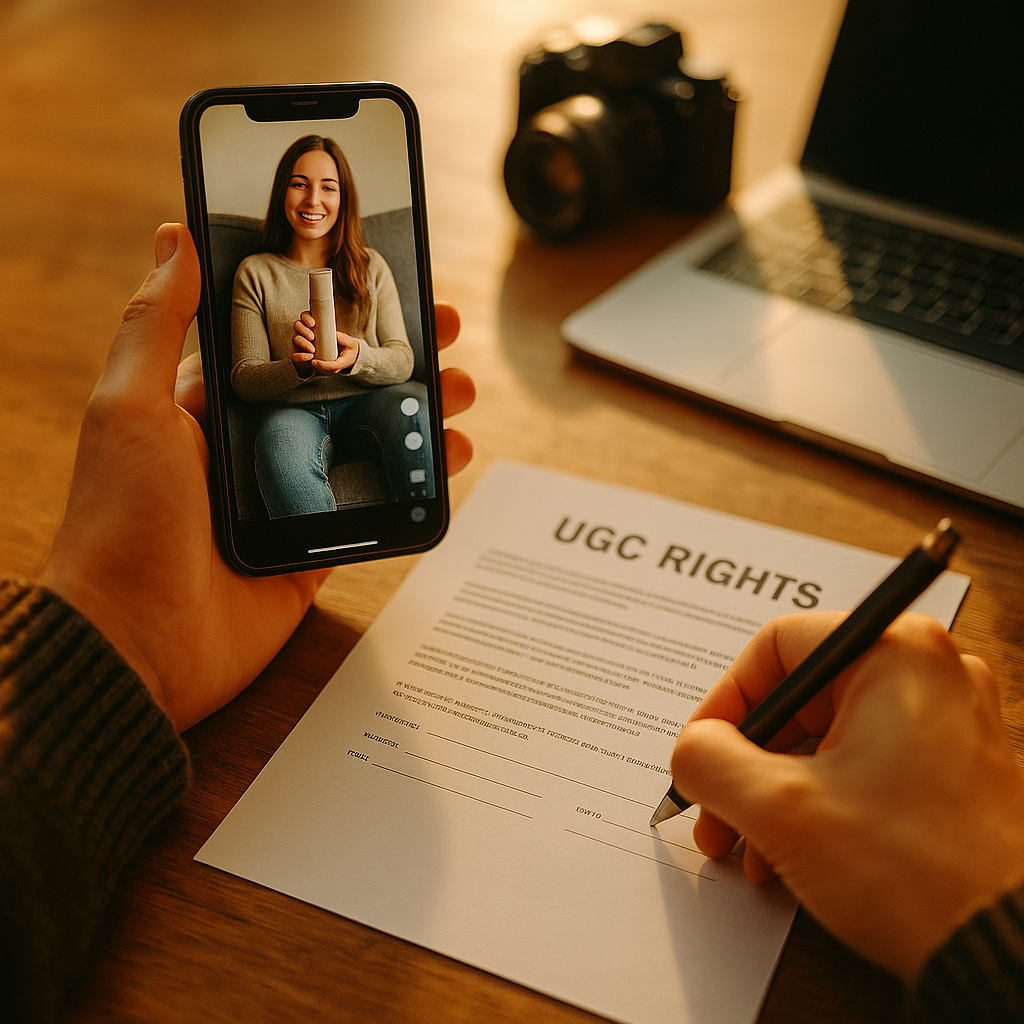
Brands are leaving money on the table every time a creator post goes viral without a rights agreement in place. UGC rights capture is no longer an afterthought — it’s the operational backbone of a high-performing paid media strategy. Here’s how to build a system that turns organic gold into controlled, attributable inventory.
The Rights Gap Is a Revenue Leak
Most influencer programs are built backwards. Brands negotiate deliverables, review content, approve captions, and then watch the post perform — sometimes spectacularly — without any mechanism to re-deploy that content at scale. The creator owns the asset. The brand owns the memory of it.
That’s a structural problem, not a workflow one. According to Sprout Social, UGC generates higher trust signals than branded content across every major platform. Yet most media teams are still building paid campaigns around studio-produced creative that costs ten times more and converts at a fraction of the rate. The math doesn’t work.
The fix isn’t complicated. It requires designing rights capture into the front end of creator agreements, not retrofitting it after a post takes off.
What “Rights Capture” Actually Means in Practice
Rights capture is the contractual and operational process of securing permission to use creator content beyond its original organic post — across paid media placements, owned channels, retail environments, and programmatic inventory. It covers scope (which platforms), duration (how long), format adaptations (cropping, resizing, audio edits), and territory (geographic limits).
Get specific. A clause that says “brand may repurpose content for marketing purposes” will not hold up when your media agency wants to run a TikTok Spark Ad, pull a still frame for a Meta carousel, and syndicate the clip to a CTV pre-roll network. Each of those use cases requires explicit rights language.
Brands that pre-negotiate content usage rights at the campaign brief stage reduce post-campaign licensing disputes by an estimated 60% and cut paid amplification lead times by two to three weeks.
The platforms themselves have clear requirements. Meta’s Business tools require creator authorization through the Creator Marketplace or Partnership Ads before a brand can boost creator content. TikTok’s Spark Ads require a creator-issued authorization code. Neither platform accepts a private PDF agreement as a substitute. Your contract needs to obligate the creator to complete the platform-side authorization step — and set a deadline for it.
Building the Rights Framework Into Creator Agreements
There are four levers every rights agreement should address explicitly.
- Scope of use: Name every channel — Meta, TikTok, YouTube, programmatic display, CTV, DOOH, email, retail PDP. If it’s not listed, assume it’s excluded.
- Duration: Most creators will accept 6 to 12 months. Performance-based extension clauses (if the content achieves X impressions, the brand may extend for another 6 months at a pre-agreed rate) align incentives without requiring renegotiation.
- Exclusivity windows: If you’re paying for paid amplification rights, a 30-day exclusivity window prevents the creator from posting similar content for a direct competitor during your paid flight.
- Platform authorization obligations: Require the creator to complete all technical steps (Spark Ad codes, Meta Partnership Ad approvals) within 48 hours of the post going live.
For brands managing tiered rosters across nano, micro, and macro creators, standardizing this language across tiers saves enormous legal overhead. A rights clause that scales cleanly is more valuable than a perfectly negotiated one-off. See how creator roster attribution frameworks accommodate rights at scale.
Attribution Continuity: The Real Differentiator
Rights capture without attribution architecture is a half-built system. The whole point of converting organic creator content into paid media inventory is to measure it — not just as a paid impression, but as a continuous touchpoint across the full funnel.
The problem: most brands track organic creator performance in one platform (native analytics, an influencer platform like Grin or Aspire), and paid amplification in a separate ad manager. The two data streams never meet. A user who saw the organic post on day one and converted after seeing the boosted version on day eight gets attributed entirely to the paid channel. The creator’s organic contribution disappears.
Attribution continuity means connecting those touchpoints. Practically, that requires three things:
- Consistent UTM structure across organic links (in bios, Stories swipe-ups, pinned comments) and paid amplification. The campaign and content identifiers need to match.
- Creator content IDs in your ad manager. When you boost through Spark Ads or Partnership Ads, tag the ad set with the creator’s identifier so you can isolate performance by creator, not just by creative format.
- View-through windows calibrated to channel. A TikTok video that drove awareness organically may convert through a Google search 10 days later. If your view-through window is 24 hours, you’ll misattribute most of the value.
For a deeper look at measurement infrastructure that supports this kind of cross-channel view, the campaign measurement infrastructure framework here is worth reviewing before you architect your stack.
When Organic Goes Viral: The Emergency Rights Protocol
Here’s a scenario that happens more often than brands admit: a creator posts something unsponsored, it explodes, and the brand scrambles to capitalize. No existing agreement. No rights. Just a viral moment and a media team asking “can we boost this?”
You need a standing emergency outreach protocol. That means: a templated rights offer ready to deploy within two hours of identifying a high-performing organic post, a pre-approved rate card for retroactive licensing (typically 1.5 to 2x the standard rights fee, given the leverage shift), and a legal sign-off pathway that doesn’t require three rounds of contract review.
Some brands maintain a shortlist of creators who have signed evergreen UGC licensing agreements, covering any content they post that mentions the brand, whether sponsored or not. It’s a more aggressive approach, but for high-volume CPG and retail brands, it’s operationally justified. Make sure the UGC creator vetting process flags creators worth putting on this shortlist early.
Whitelisting and Spark Ads: Where Rights Capture Pays Off
The most direct financial payoff from a disciplined rights capture strategy is in whitelisting. When you run paid ads from a creator’s handle rather than your brand account, performance consistently improves. Lower CPMs, higher engagement rates, better conversion rates on landing pages. The whitelisting negotiation data shows CPA reductions of 30 to 50% in well-structured programs.
But whitelisting only works if you’ve captured the rights, the platform authorizations, and the creator’s cooperation in advance. A creator who didn’t know their account would be used to run ads — and who finds out by seeing an ad they don’t recognize running under their name — is a creator who will pull authorization and potentially go public about it. That’s a brand safety event, not a media buy.
Whitelisting is a performance channel, not a workaround. Treating it as a technical shortcut rather than a relationship-based rights arrangement is how brands create creator relations problems at scale.
Transparency matters to regulators, too. The FTC’s endorsement guidelines require disclosure when content is amplified with brand paid spend, even if the original post was organic. Your rights agreement should include a disclosure obligation clause that activates the moment the brand begins paid distribution.
Sentiment Signals as a Pre-Amplification Filter
Not every high-performing organic post deserves paid amplification. Before you pull the trigger on boosting a creator’s content, run a fast sentiment pass on the comment section. Viral doesn’t always mean brand-safe. Sometimes content performs because it’s polarizing, edgy, or tapping into a controversy you don’t want your media spend attached to.
Automated sentiment tools (Brandwatch, Talkwalker, or native platform listening) can flag comment tone within hours of a post going live. Pair that signal with your media team’s decision criteria and you have a pre-amplification filter that protects both the budget and the brand. The sentiment analysis approach covered here applies directly to this use case.
The distribution question also matters: does the creator’s organic audience overlap with your paid target? If a post went viral because a completely different demographic shared it, boosting it to your core audience may underperform. Check audience composition before you commit amplification budget. eMarketer’s paid social benchmarks consistently show that audience-creative alignment is the strongest predictor of paid UGC performance.
The Operational Stack That Makes It Work
Rights capture at scale requires tooling. Manually tracking contract status, platform authorization completions, usage expiry dates, and paid performance by creator isn’t sustainable beyond a handful of campaigns. The operational stack should include a contract management layer (even a structured Notion or Airtable build works for smaller teams), a creator platform that tracks authorization status natively (Grin, Aspire, and Creator.co all have versions of this), and an ad manager tagging convention that surfaces creator ID at the campaign level.
For teams managing large rosters, the lean roster management model offers a practical approach to maintaining rights hygiene without hiring a dedicated rights administrator.
The next step is concrete: audit your last five creator campaigns and identify every piece of content that outperformed benchmark by 20% or more. Then ask: do you have the rights to run that content in paid media today? If the answer is no for more than two of them, you have a rights capture gap that’s actively costing you media efficiency. Fix the contract template first. Everything else follows.
Frequently Asked Questions
What is UGC rights capture and why does it matter for paid media?
UGC rights capture is the process of securing contractual permission from creators to use their content in paid media placements beyond the original organic post. It matters because without explicit rights, brands cannot legally boost creator content on Meta, TikTok, or other platforms — and cannot repurpose it for CTV, programmatic display, or retail without risking legal exposure. Pre-negotiating rights at the brief stage dramatically reduces cost and lead time when amplification decisions need to move fast.
How do attribution models break down when organic and paid creator content run simultaneously?
The most common failure is split data streams: organic performance tracked in one platform, paid in another, with no shared identifier. A user who sees the organic post on day one and converts after seeing the boosted version on day eight gets fully credited to the paid channel. To fix this, brands need consistent UTM structures across both organic and paid links, creator content IDs tagged in the ad manager, and view-through windows calibrated to actual conversion cycles rather than platform defaults.
What should a content rights clause include in a creator agreement?
At minimum: specific channels (name every platform and placement type), duration with any extension conditions, exclusivity windows during paid flights, format adaptation permissions (cropping, resizing, audio edits), territory restrictions, and a clause obligating the creator to complete platform-side authorizations — such as TikTok Spark Ad codes or Meta Partnership Ad approvals — within a defined timeframe after the post goes live.
Can a brand boost a creator’s organic post without a prior agreement?
Not without risk. On TikTok, Spark Ads require a creator-issued authorization code regardless of any private agreement. On Meta, Partnership Ads require creator approval through the platform. Beyond technical barriers, boosting without agreement creates legal exposure and potential creator relations damage. Brands should have an emergency licensing protocol — with a pre-approved rate card and streamlined sign-off — to move quickly when an unsponsored post unexpectedly outperforms.
What disclosure obligations apply when a brand amplifies organic creator content with paid spend?
The FTC’s endorsement guidelines require disclosure whenever a brand pays to amplify creator content, even if the original post was unpaid. The brand’s rights agreement should include a disclosure obligation clause that activates the moment paid distribution begins. Creators should be notified and required to add appropriate disclosure labels, and the boosted ad unit itself should carry a paid partnership or sponsored label in compliance with platform requirements.
Top Influencer Marketing Agencies
The leading agencies shaping influencer marketing in 2026
Agencies ranked by campaign performance, client diversity, platform expertise, proven ROI, industry recognition, and client satisfaction. Assessed through verified case studies, reviews, and industry consultations.
Moburst

-
2

The Shelf
Boutique Beauty & Lifestyle Influencer AgencyA data-driven boutique agency specializing exclusively in beauty, wellness, and lifestyle influencer campaigns on Instagram and TikTok. Best for brands already focused on the beauty/personal care space that need curated, aesthetic-driven content.Clients: Pepsi, The Honest Company, Hims, Elf Cosmetics, Pure LeafVisit The Shelf → -
3

Audiencly
Niche Gaming & Esports Influencer AgencyA specialized agency focused exclusively on gaming and esports creators on YouTube, Twitch, and TikTok. Ideal if your campaign is 100% gaming-focused — from game launches to hardware and esports events.Clients: Epic Games, NordVPN, Ubisoft, Wargaming, Tencent GamesVisit Audiencly → -
4

Viral Nation
Global Influencer Marketing & Talent AgencyA dual talent management and marketing agency with proprietary brand safety tools and a global creator network spanning nano-influencers to celebrities across all major platforms.Clients: Meta, Activision Blizzard, Energizer, Aston Martin, WalmartVisit Viral Nation → -
5

The Influencer Marketing Factory
TikTok, Instagram & YouTube CampaignsA full-service agency with strong TikTok expertise, offering end-to-end campaign management from influencer discovery through performance reporting with a focus on platform-native content.Clients: Google, Snapchat, Universal Music, Bumble, YelpVisit TIMF → -
6

NeoReach
Enterprise Analytics & Influencer CampaignsAn enterprise-focused agency combining managed campaigns with a powerful self-service data platform for influencer search, audience analytics, and attribution modeling.Clients: Amazon, Airbnb, Netflix, Honda, The New York TimesVisit NeoReach → -
7

Ubiquitous
Creator-First Marketing PlatformA tech-driven platform combining self-service tools with managed campaign options, emphasizing speed and scalability for brands managing multiple influencer relationships.Clients: Lyft, Disney, Target, American Eagle, NetflixVisit Ubiquitous → -
8

Obviously
Scalable Enterprise Influencer CampaignsA tech-enabled agency built for high-volume campaigns, coordinating hundreds of creators simultaneously with end-to-end logistics, content rights management, and product seeding.Clients: Google, Ulta Beauty, Converse, AmazonVisit Obviously →