


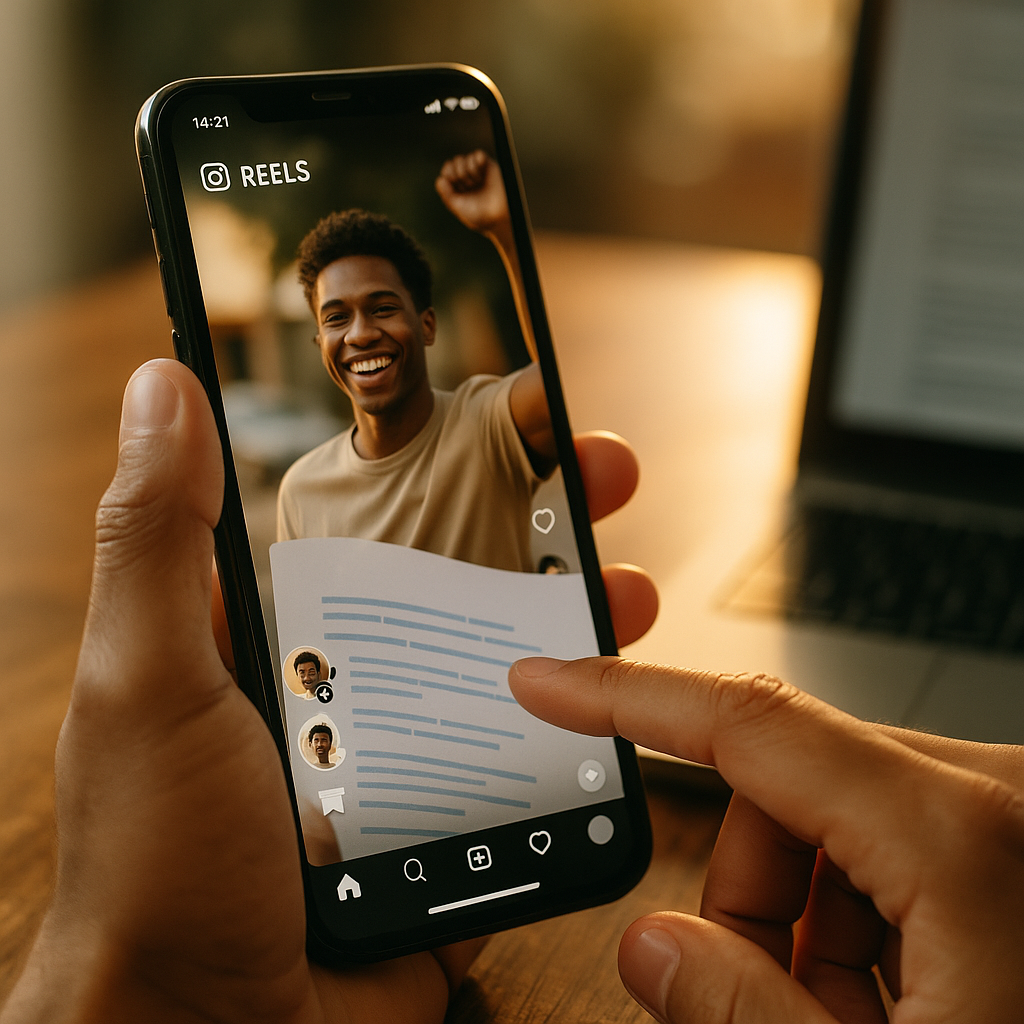
Instagram just told brands something quiet but seismic: untagged Reels are second-class content now. The platform’s GEM ranking system — Generative Engagement Model, per Meta’s own engineering notes — actively boosts Reels carrying product tags in distribution scoring. If your Instagram shoppable-first GEM algorithm strategy still treats product tags as an afterthought, you’re leaving reach on the table.
This isn’t a minor tweak. It’s a distribution filter with real budget implications.
What GEM Actually Rewards
Meta has spent years training recommendation models on watch time, saves, and shares. GEM adds a commercial-intent layer on top of that. Reels with product tags now get weighted differently in the initial candidate pool — the shortlist of content Instagram considers before it even runs engagement predictions. Untagged content still competes, but it starts from a smaller pool of impressions.
Think of it like paid search quality score, except the “keyword” is a tagged SKU instead of a search term. Meta wants to close the loop between discovery and purchase inside the app, and shoppable Reels are the mechanism. This tracks with what we’ve already seen in Instagram’s shopping-tagged Reels shift — GEM is the formalized, named version of that earlier signal.
Early agency testing suggests product-tagged Reels are seeing meaningfully higher initial distribution than identical untagged versions of the same creative — sometimes the difference between a Reel that plateaus at a few thousand views and one that clears six figures.
Meta hasn’t published exact multipliers publicly, and it likely never will — surfacing the precise weighting would invite gaming. But directionally, the message from Meta’s business resources is consistent: shoppable content is a growth priority, and GEM operationalizes that priority at the ranking level.
Why Brands Can’t Treat This as Optional
Here’s the uncomfortable math. If tagged Reels get preferential distribution and your competitor tags every post while you tag one in five, you’re not just losing individual post reach. You’re losing compounding reach, because Instagram’s model learns your account’s tagging behavior over time and adjusts baseline distribution accordingly.
That’s the part most brands miss. GEM isn’t purely post-level. It appears to factor account-level shoppability signals — how consistently a profile links products, how often shop tabs get engagement, whether tagged catalog items are current and in stock. An account that tags sporadically sends mixed signals, and mixed signals get hedged distribution.
For agencies managing multiple brand accounts, this changes the whole briefing conversation with clients. It’s no longer “should we tag products in this Reel” — it’s “why isn’t every commerce-relevant Reel tagged, and what’s blocking that workflow.”
The Creator Complication
Creator-posted Reels add friction. Product tagging on branded content requires the creator to have Meta’s affiliate or partnership tools enabled, the brand’s catalog properly synced, and the creator willing to tag rather than just mention the product verbally. Plenty of creators skip tagging because it feels transactional, or because their past experience with Instagram Shopping was clunky.
That reluctance is now a distribution cost, not just a missed sale. Brief your creators accordingly. If you’re already restructuring briefs around platform algorithm changes, this pairs naturally with guidance in Instagram Reels vs TikTok brief strategy, where creative direction has to account for platform-specific ranking logic rather than a one-size-fits-all script.
Building the Playbook: Five Moves
Chasing GEM without a system is how brands end up with sloppy, over-tagged feeds that annoy audiences and dilute brand voice. Here’s a more disciplined approach.
- Audit tagging coverage first. Pull the last 90 days of Reels and calculate the percentage that carry product tags. Most brands are shocked to find it’s under 40%, even when a majority of content is commerce-adjacent.
- Sync catalog hygiene before scaling volume. A tagged product that’s out of stock or mispriced does more harm than an untagged Reel. Meta’s ranking systems can detect low-quality shopping signals (broken links, catalog mismatches), and that data likely feeds back into GEM’s confidence scoring.
- Rebuild the creative brief around a tag-first hook. The product needs to be visually identifiable in the first three seconds, not just mentioned in a caption. This mirrors pacing guidance in the Reels hooks and pacing playbook — front-load the visual cue that makes tagging feel native, not bolted on.
- Segment creator contracts by tagging compliance. Build tagging into deliverable specs the same way you’d specify hashtag disclosure. Pay bonuses or tiered rates for creators who maintain consistent product-tag hygiene across a campaign.
- Track distribution lift, not just conversion. Set up a controlled test: identical Reel concepts, half tagged, half not, across a rolling content calendar. Measure reach and impressions separately from purchase conversion. Distribution lift is the GEM signal; conversion lift is a downstream commerce metric. Conflating them muddies your read on whether GEM itself is working.
What This Means for Paid and Whitelisting Strategy
If you’re running creator content through Partnership Ads or whitelisting setups, product tags interact with paid distribution too. A tagged Reel boosted through Advantage+ shopping campaigns appears to get more efficient delivery than an untagged equivalent, likely because the ad system and the organic ranking system share signal inputs now.
This is worth folding into your creator whitelisting setup process. If your whitelisting workflow doesn’t include a tagging compliance checkpoint before spend goes live, you’re paying to boost content that’s already starting from a distribution disadvantage.
Media buyers should also revisit KPI benchmarks. If historical CPMs were set against a mixed pool of tagged and untagged creative, current CPMs on tagged-only campaigns may look artificially efficient by comparison — not because the media got cheaper, but because you finally stopped fighting the algorithm.
Where This Fits Against the Rest of Meta’s Roadmap
GEM doesn’t exist in isolation. It sits alongside Meta’s broader push toward AI-curated feeds and away from strict chronological or follower-based delivery. The AI-curated Reels feed shift already signaled that Meta’s ranking systems weight behavioral and commercial signals over account size. GEM is a continuation of that logic, not a departure from it.
It also echoes what’s happening across competing platforms. TikTok’s own shop-tagging mechanics have followed a similar arc — reference the breakdown in how product tags boost reach on TikTok Shop for a useful cross-platform comparison. Brands running parallel Instagram and TikTok programs should expect tagging discipline to matter on both, even though the underlying ranking mechanics differ.
Industry data backs the broader shift toward commerce-embedded content. eMarketer’s social commerce forecasts have repeatedly shown in-app purchase behavior climbing year over year, and Statista’s social commerce data tells a similar story globally. Platforms aren’t guessing that shoppable content matters — they’re building ranking systems around data that already proves it.
Compliance Doesn’t Disappear Just Because It’s a Tag
Product tags don’t replace disclosure requirements. The FTC’s endorsement guidelines still apply regardless of whether a Reel carries a shopping tag — a tagged product doesn’t automatically communicate a material connection between brand and creator. Keep #ad and #sponsored disclosures in captions even when the product tag makes the commercial intent visually obvious. Regulators care about clarity to the consumer, not whether the platform’s ranking system already “knows” it’s commerce content.
The Real Risk Isn’t Missing a Trend
The risk is treating this as a creative afterthought instead of an operational fix. Tagging discipline is a workflow problem — catalog sync, creator onboarding, brief templates, QA checkpoints — dressed up as a content trend. Brands that solve it operationally will compound their distribution advantage. Brands that keep tagging manually and inconsistently will keep wondering why reach feels increasingly unpredictable.
Next step: Run the 90-day tagging audit this week, fix catalog sync issues before you scale volume, and rebuild your next creator brief with tagging as a required deliverable, not a nice-to-have.
FAQs
What is Instagram’s GEM algorithm?
GEM (Generative Engagement Model) is Meta’s Reels ranking system that factors commercial intent signals, including product tags, alongside traditional engagement metrics like watch time and saves when determining distribution.
Does product tagging actually increase Reels reach?
Early testing by agencies and brands suggests tagged Reels receive preferential initial distribution compared to identical untagged content, though Meta hasn’t published exact weighting figures publicly.
Do creators need special access to tag products in Reels?
Yes. Creators need Meta’s affiliate or brand partnership tools enabled, and the brand’s product catalog must be properly synced for tags to function correctly.
Does product tagging replace FTC disclosure requirements?
No. Product tags are a commerce feature, not a disclosure mechanism. Creators and brands still need clear sponsorship disclosures like #ad per FTC guidelines, regardless of tagging.
How does this affect paid whitelisting campaigns?
Tagged Reels boosted through Partnership Ads or whitelisting appear to deliver more efficiently than untagged equivalents, likely because organic ranking and paid delivery systems share signal inputs.
Top Influencer Marketing Agencies
The leading agencies shaping influencer marketing in 2026
Agencies ranked by campaign performance, client diversity, platform expertise, proven ROI, industry recognition, and client satisfaction. Assessed through verified case studies, reviews, and industry consultations.
Moburst

-
2

The Shelf
Boutique Beauty & Lifestyle Influencer AgencyA data-driven boutique agency specializing exclusively in beauty, wellness, and lifestyle influencer campaigns on Instagram and TikTok. Best for brands already focused on the beauty/personal care space that need curated, aesthetic-driven content.Clients: Pepsi, The Honest Company, Hims, Elf Cosmetics, Pure LeafVisit The Shelf → -
3

Audiencly
Niche Gaming & Esports Influencer AgencyA specialized agency focused exclusively on gaming and esports creators on YouTube, Twitch, and TikTok. Ideal if your campaign is 100% gaming-focused — from game launches to hardware and esports events.Clients: Epic Games, NordVPN, Ubisoft, Wargaming, Tencent GamesVisit Audiencly → -
4

Viral Nation
Global Influencer Marketing & Talent AgencyA dual talent management and marketing agency with proprietary brand safety tools and a global creator network spanning nano-influencers to celebrities across all major platforms.Clients: Meta, Activision Blizzard, Energizer, Aston Martin, WalmartVisit Viral Nation → -
5

The Influencer Marketing Factory
TikTok, Instagram & YouTube CampaignsA full-service agency with strong TikTok expertise, offering end-to-end campaign management from influencer discovery through performance reporting with a focus on platform-native content.Clients: Google, Snapchat, Universal Music, Bumble, YelpVisit TIMF → -
6

NeoReach
Enterprise Analytics & Influencer CampaignsAn enterprise-focused agency combining managed campaigns with a powerful self-service data platform for influencer search, audience analytics, and attribution modeling.Clients: Amazon, Airbnb, Netflix, Honda, The New York TimesVisit NeoReach → -
7

Ubiquitous
Creator-First Marketing PlatformA tech-driven platform combining self-service tools with managed campaign options, emphasizing speed and scalability for brands managing multiple influencer relationships.Clients: Lyft, Disney, Target, American Eagle, NetflixVisit Ubiquitous → -
8

Obviously
Scalable Enterprise Influencer CampaignsA tech-enabled agency built for high-volume campaigns, coordinating hundreds of creators simultaneously with end-to-end logistics, content rights management, and product seeding.Clients: Google, Ulta Beauty, Converse, AmazonVisit Obviously →