


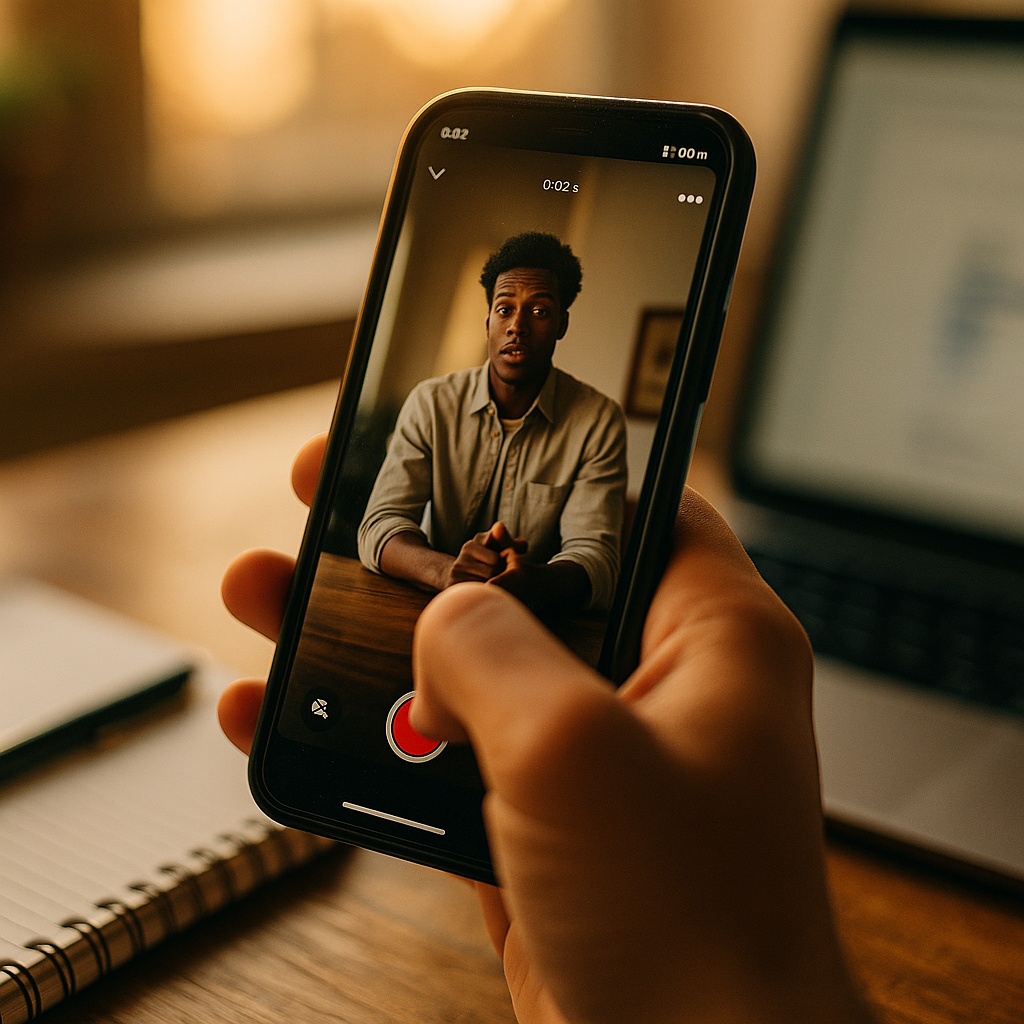
Instagram now lets creators post Reels up to three minutes long, and early data from Meta’s own creator tools shows average watch time dropping off a cliff after second ten regardless of total runtime. So here’s the uncomfortable question: if the Instagram Reels length update gives you more room to tell a story, why are most brands using that room to bury the story instead of building on it?
Longer Reels sound like a gift. More space for product demos, testimonials, tutorials. But length without discipline is just a longer way to lose someone in eight seconds instead of six. The brands winning this format shift aren’t writing longer scripts — they’re writing layered ones, where the hook still does all the heavy lifting and everything after it earns the next five seconds, one beat at a time.
What Actually Changed, and Why It Matters for Brand Content
Instagram extended maximum Reels length as part of its broader push to compete with YouTube on mid-form video, following similar moves already tested with YouTube Shorts pacing changes. The platform wants creators making tutorials, mini-vlogs, and episodic content without forcing them onto separate formats or off-platform links.
For brands, this closes a gap that’s existed since Reels launched. Product education, unboxing, before-and-afters, multi-step tutorials — all of it used to get chopped into unnatural 60-second segments or pushed to feed posts nobody clicked through. Now it fits in one native unit that the algorithm actually wants to distribute, especially since Meta’s AI-curated Reels feed is increasingly weighting session-level watch time over simple view counts.
That’s the operational upside. The risk is that marketing teams treat “longer allowed” as “longer expected,” and pad scripts with brand throat-clearing before getting to the point. Meta hasn’t changed how attention works. It’s changed how much room you have to reward attention once you’ve earned it.
Extended runtime doesn’t extend your grace period. The first ten seconds still determine whether anyone sees seconds eleven through ninety.
The 10-Second Hook Isn’t Negotiable — It’s Just Doing a Different Job Now
Retention curves on longer Reels look almost identical to short ones for the first ten seconds, then diverge sharply based on whether the content delivers a second “why should I stay” moment around the 15 to 20 second mark. Sprout Social’s engagement research consistently shows the steepest audience drop-off happens in that opening window, and nothing about a longer runtime changes the psychology of a scrolling thumb.
What changes is what the hook needs to promise. A 15-second Reel’s hook just needs to earn one payoff. A 90-second Reel’s hook needs to earn a payoff and imply there’s more value coming, because viewers are subconsciously calculating whether the runtime is worth their time before they’ve even hit second three.
Think of it like a movie trailer versus a feature film’s cold open. The trailer over-promises for 15 seconds. The film’s opening scene has to hook you and also signal “there’s a whole story here worth your two hours.” Longer Reels need that second kind of hook.
Three Hook Structures That Survive the Longer Format
- The stacked-payoff hook: Promise one quick win in the first 5 seconds, then tease a bigger one (“but the real trick is at minute one”). This works well for tutorial and how-to content, similar to structures brands have adapted for pre-roll hooks that beat skip behavior on YouTube.
- The contradiction hook: Open with a claim that challenges assumed knowledge. “Everyone tells you to do X. Here’s why that’s wrong, and what we did instead.” This buys extra seconds because the viewer wants resolution, not just information.
- The receipts hook: Lead with the result, then structure the rest of the Reel as the proof. Before/after transformations, revenue numbers, follower growth — show the outcome first, then walk backward through the process.
None of these require more hook time. They require a hook that’s aware it’s opening a longer piece, not a standalone six-second clip.
Structuring the Middle: Where Most Brand Reels Actually Fail
Here’s the part nobody talks about enough. The hook gets all the strategic attention, and the middle third of longer Reels becomes a dumping ground for whatever footage the brand already had lying around. That’s where retention actually collapses.
Longer-form Reels need internal pacing beats — mini re-hooks placed every 15 to 20 seconds that re-justify the viewer’s continued attention. Editorially, this looks like:
- A pattern interrupt (cut, zoom, text overlay, sound change) every 3-4 seconds minimum
- A new piece of information or visual proof point at each re-hook interval, not just a stylistic cut
- Progress markers (“step 2 of 4,” a visible countdown, a running total) that give viewers a reason to see it through
This is the same logic brands have had to apply to livestream retention and countdown-driven urgency in commerce content — see how beauty restock livestreams structure urgency without losing viewers mid-stream. Longer Reels borrow that same “give them a reason to stay for the next segment” logic, just compressed into a much shorter window.
Brands that skip this step end up with Reels that have great openers and terrible completion rates, which quietly tanks distribution even when the hook performs well in the first three seconds of measurement.
Repurposing Long-Form Assets Without Making a 90-Second Ad
The temptation with extended Reels is obvious: take a 90-second brand video you already produced and drop it in whole. Resist this. Reels distribution still runs through a short-form-native algorithm, even at extended lengths, and content that feels like a repurposed ad reads differently to the system and to viewers than content built for the format.
The practical move is re-cutting long-form assets around the hook-and-re-hook structure above, not just trimming runtime. Pull the strongest proof point from your long-form video and move it to second three. Restructure the rest around it. This is the same discipline brands have had to apply when adapting polished commercial footage for platforms that now reward rawness and immediacy — see how raw Reels are outperforming polished ads even when brand budgets clearly favor the polished version.
If a creator partner is producing the content, brief them on pacing beats specifically. Don’t just hand over a runtime limit and a key message. Specify where the re-hooks need to land.
What This Means for Briefs, Budgets, and Measurement
Extended Reels length changes three operational things brand teams need to account for immediately.
Briefs need a beat sheet, not just a message hierarchy. Creator briefs built for 15-second Reels typically specify a hook, a key message, and a CTA. Longer Reels need timestamped beats: hook at 0:00, proof point at 0:12, re-hook at 0:20, secondary proof at 0:35, and so on. Agencies running influencer programs at scale should build this into standard brief templates now, before longer-form becomes the default rather than the exception.
Budgets should account for more editing time, not more shooting time. The raw footage requirement doesn’t necessarily grow, but the edit complexity does. Pacing a 90-second Reel with proper re-hooks takes meaningfully longer to cut than a 15-second one. Factor that into creator rates and post-production timelines, particularly for whitelisted or boosted content managed through creator whitelisting setups.
Measurement needs a mid-video retention view, not just completion rate. Average watch time and completion percentage tell you less on longer Reels than a full retention graph does. If you’re not already pulling retention curves from Meta Business Suite or a third-party analytics layer, start. You need to see exactly where viewers drop, not just how many made it to the end.
A 40% completion rate on a 90-second Reel with a strong drop-off at second 12 tells a completely different story than the same 40% with a gradual decline throughout. One is a hook problem. The other is a pacing problem. They need different fixes.
A Quick Gut-Check Before You Greenlight a Longer Reel
Ask three questions before extending a Reel’s runtime just because you can:
- Does the extra runtime add new information, or just more of the same message?
- Is there a re-hook moment planned for every 15-20 second stretch?
- Would this still work as a 15-second Reel if you cut everything after the first payoff?
If the answer to that last question is yes, and the extended version doesn’t add proportional value, you probably don’t need the extended format for this particular piece. Not every message deserves ninety seconds. That restraint, frankly, is the real skill this update is testing for.
According to eMarketer’s ongoing tracking of short-form video engagement, short-form video consumption habits remain resistant to longer formats unless pacing compensates. Meta’s own creator guidance echoes this, and platforms like Meta Business Suite now surface retention data specifically to help brands diagnose where longer content loses viewers.
Worth noting too: this isn’t happening in isolation. TikTok’s watch-time-weighted algorithm changes, covered in our breakdown of how media buyers must adapt, point to the same industry-wide shift. Platforms are rewarding sustained attention over quick spikes, and brands slow to restructure their content architecture will keep losing distribution to competitors who’ve already made the change.
Frequently Asked Questions
How long can Instagram Reels be now?
Instagram supports Reels up to three minutes in length, giving brands and creators significantly more room than the original 90-second cap for tutorials, product demos, and episodic content.
Does a longer Reel need a longer hook?
No. The first 10 seconds still need to hook the viewer immediately. What changes is that the hook also needs to signal there’s a bigger payoff coming later, rather than delivering everything upfront.
What’s a re-hook, and how often do I need one?
A re-hook is a pacing beat, a cut, new proof point, or pattern interrupt, that re-earns viewer attention. Plan for one roughly every 15 to 20 seconds in longer Reels to prevent mid-video drop-off.
Should I just repurpose existing long-form video into extended Reels?
Not without re-editing for pacing. Reels distribution still favors short-form-native structure even at extended runtimes. Repurposed long-form ads often underperform because they lack the hook-and-re-hook rhythm the algorithm and viewers expect.
What metric should I watch besides completion rate?
Pull full retention curves, not just completion percentage. Where the drop-off happens matters more than how much of the audience finishes, since early drop-off signals a hook problem and gradual decline signals a pacing problem.
Frequently Asked Questions
How long can Instagram Reels be now?
Instagram supports Reels up to three minutes in length, giving brands and creators significantly more room than the original 90-second cap for tutorials, product demos, and episodic content.
Does a longer Reel need a longer hook?
No. The first 10 seconds still need to hook the viewer immediately. What changes is that the hook also needs to signal there’s a bigger payoff coming later, rather than delivering everything upfront.
What’s a re-hook, and how often do I need one?
A re-hook is a pacing beat, a cut, new proof point, or pattern interrupt, that re-earns viewer attention. Plan for one roughly every 15 to 20 seconds in longer Reels to prevent mid-video drop-off.
Should I just repurpose existing long-form video into extended Reels?
Not without re-editing for pacing. Reels distribution still favors short-form-native structure even at extended runtimes. Repurposed long-form ads often underperform because they lack the hook-and-re-hook rhythm the algorithm and viewers expect.
What metric should I watch besides completion rate?
Pull full retention curves, not just completion percentage. Where the drop-off happens matters more than how much of the audience finishes, since early drop-off signals a hook problem and gradual decline signals a pacing problem.
Bottom line: audit your next three Reels briefs for a beat sheet, not just a hook line, and if there’s no re-hook planned before the 20-second mark, cut the runtime back down until there is.
Top Influencer Marketing Agencies
The leading agencies shaping influencer marketing in 2026
Agencies ranked by campaign performance, client diversity, platform expertise, proven ROI, industry recognition, and client satisfaction. Assessed through verified case studies, reviews, and industry consultations.
Moburst

-
2

The Shelf
Boutique Beauty & Lifestyle Influencer AgencyA data-driven boutique agency specializing exclusively in beauty, wellness, and lifestyle influencer campaigns on Instagram and TikTok. Best for brands already focused on the beauty/personal care space that need curated, aesthetic-driven content.Clients: Pepsi, The Honest Company, Hims, Elf Cosmetics, Pure LeafVisit The Shelf → -
3

Audiencly
Niche Gaming & Esports Influencer AgencyA specialized agency focused exclusively on gaming and esports creators on YouTube, Twitch, and TikTok. Ideal if your campaign is 100% gaming-focused — from game launches to hardware and esports events.Clients: Epic Games, NordVPN, Ubisoft, Wargaming, Tencent GamesVisit Audiencly → -
4

Viral Nation
Global Influencer Marketing & Talent AgencyA dual talent management and marketing agency with proprietary brand safety tools and a global creator network spanning nano-influencers to celebrities across all major platforms.Clients: Meta, Activision Blizzard, Energizer, Aston Martin, WalmartVisit Viral Nation → -
5

The Influencer Marketing Factory
TikTok, Instagram & YouTube CampaignsA full-service agency with strong TikTok expertise, offering end-to-end campaign management from influencer discovery through performance reporting with a focus on platform-native content.Clients: Google, Snapchat, Universal Music, Bumble, YelpVisit TIMF → -
6

NeoReach
Enterprise Analytics & Influencer CampaignsAn enterprise-focused agency combining managed campaigns with a powerful self-service data platform for influencer search, audience analytics, and attribution modeling.Clients: Amazon, Airbnb, Netflix, Honda, The New York TimesVisit NeoReach → -
7

Ubiquitous
Creator-First Marketing PlatformA tech-driven platform combining self-service tools with managed campaign options, emphasizing speed and scalability for brands managing multiple influencer relationships.Clients: Lyft, Disney, Target, American Eagle, NetflixVisit Ubiquitous → -
8

Obviously
Scalable Enterprise Influencer CampaignsA tech-enabled agency built for high-volume campaigns, coordinating hundreds of creators simultaneously with end-to-end logistics, content rights management, and product seeding.Clients: Google, Ulta Beauty, Converse, AmazonVisit Obviously →