


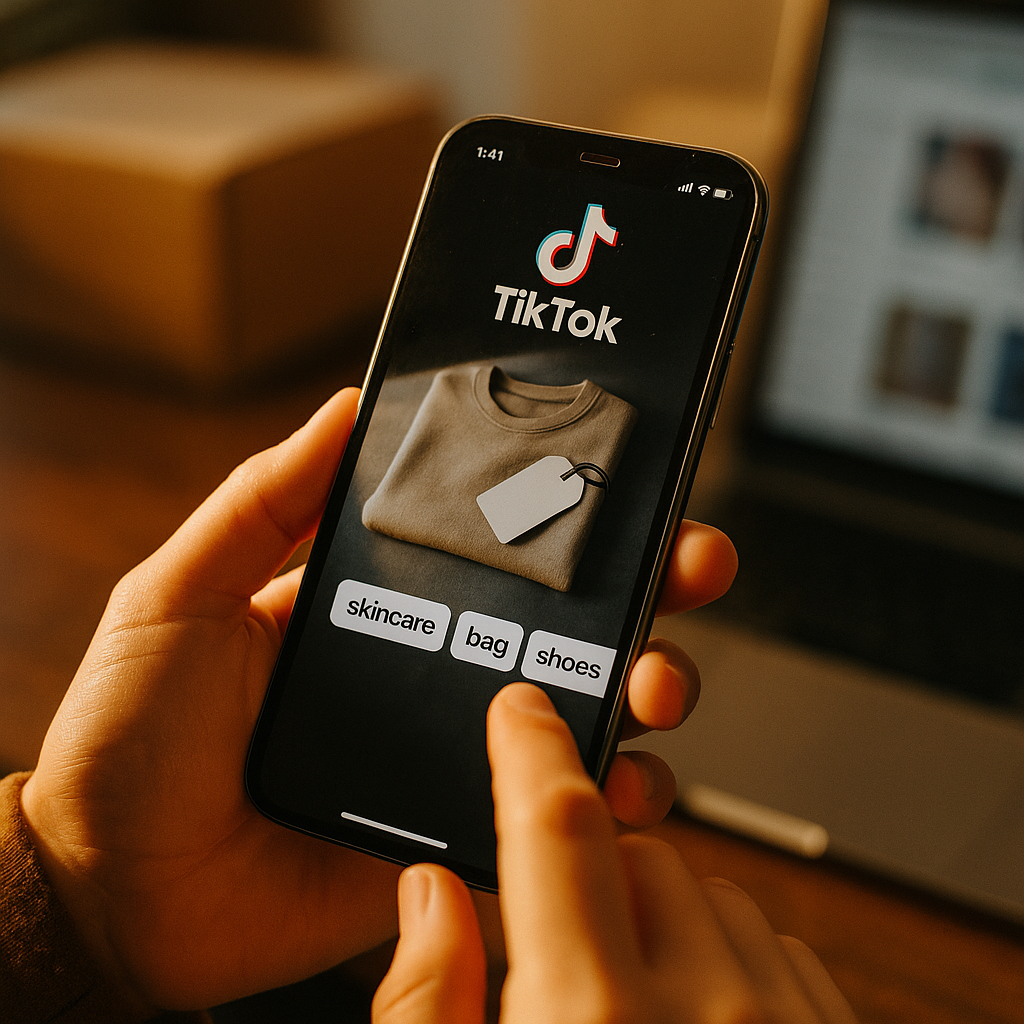
Videos with product tags get routed into a separate distribution pipeline than organic content on TikTok. That’s not speculation — it’s how the platform’s commerce infrastructure is built. If your brand is still treating TikTok Shop’s algorithm boost as a rumor rather than an engineering reality, you’re leaving reach on the table that competitors are already banking.
This isn’t about gaming the system. It’s about understanding a genuinely different ranking path and building content that qualifies for it.
The Two-Track System Nobody Talks About
TikTok’s core “For You” ranking has always leaned on watch time, completion rate, shares, and rewatches. That much is well documented. What’s less discussed is that product-tagged videos get evaluated against a parallel set of signals tied to commerce intent: click-through to product pages, add-to-cart events, and conversion velocity after view.
Think of it as two overlapping scoring systems running on the same content. A video without a product tag lives or dies on engagement metrics alone. A video with a tag gets scored on engagement and commercial performance, and strong commercial signals can compensate for merely average watch-time numbers.
A product-tagged video with a 3% click-through rate can outrank a higher-completion-rate video with zero shopping intent, because TikTok Shop’s algorithm weighs downstream purchase behavior as a distinct ranking input, not just a bonus metric.
That’s a meaningful shift for anyone planning briefs. If you’ve been optimizing purely for hook strength and completion rate, you’re only solving half the equation. We covered the foundational structure for this in our breakdown of how to structure videos that convert, but the commerce-specific ranking mechanics deserve their own deep dive.
Why Product Tags Trigger a Different Distribution Queue
When a creator or brand adds a product link, TikTok’s system flags the content for eligibility in Shop-specific surfaces: the Shop tab, product showcase carousels, and shoppable search results. These are additional distribution channels layered on top of the standard FYP queue, not a replacement for it.
Here’s the part that surprises most media buyers: content doesn’t need to go viral in the traditional sense to perform well commercially. A video with modest reach (say, 40,000 views) but a high add-to-cart rate can get re-surfaced repeatedly in Shop-adjacent placements over days or weeks. Organic reach compounds because the algorithm keeps testing the video against fresh audience segments as long as conversion signals hold up.
Compare that to non-tagged content, which typically peaks within 24-48 hours and then falls off a cliff. Shop-tagged videos have a longer tail because they’re being evaluated on a rolling commercial performance basis, not just initial engagement velocity.
The Metrics That Actually Move the Needle
- Product page click-through rate: the percentage of viewers who tap through from video to product listing.
- Add-to-cart rate: a stronger signal than clicks alone; TikTok’s system treats this as high-intent behavior.
- Time-to-purchase: faster conversion after view suggests strong product-content fit.
- Return visit rate: users who come back to the product page after initial exposure, often via retargeting or search.
- Video completion combined with tag interaction: viewers who watch to the end and tap the product tag are weighted more heavily than either signal alone.
None of this is published as an explicit ranking formula by TikTok, and it shouldn’t be — algorithms shift constantly and public documentation lags reality. But agencies running high-volume Shop campaigns have triangulated these patterns across hundreds of tagged videos, and the correlation is consistent enough to build strategy around.
What This Means for Your Content Brief
If commercial signals carry real ranking weight, your creative brief needs to change. Hook-first thinking still matters, but the middle and end of the video now carry more strategic weight than they used to.
Specifically:
- Product reveals should happen early enough that viewers who drop off mid-video still see the tag.
- Calls to action need to be explicit (“tap the yellow cart” performs better than vague prompts) because tap-through rate is a scored metric, not a vanity one.
- Price and value framing should appear on-screen, not just spoken, since text overlays reduce friction between interest and click.
- Urgency mechanics (restocks, limited drops, countdowns) genuinely lift click-through, but they carry compliance risk if mishandled. Our guide on countdown timer scripts that avoid FTC risk covers the specific language patterns that pass legal review while still driving urgency.
Beauty and fashion brands running restock drops have been particularly aggressive here. The livestream format compounds the effect further — we broke down the compliant version of this playbook in our piece on beauty restock livestreams and compliant urgency, which is worth reading alongside this piece if your category relies on scarcity messaging.
Casual Content Still Wins — Even With a Product Tag
Here’s where a lot of brand teams get it wrong. They assume that because commerce signals matter, production value should go up. It shouldn’t. TikTok’s broader algorithmic preference for unpolished, native-feeling content hasn’t changed just because a product tag is attached.
We’ve written extensively about how TikTok’s algorithm favors casual content over polished production, and that preference persists inside the Shop ecosystem. A product-tagged video shot on an iPhone in a bedroom, with genuine-sounding commentary, routinely outperforms a studio-produced ad with the same tag attached. The engagement layer of the ranking system doesn’t care about production budget. It cares about whether people watch, react, and stay.
So the winning formula isn’t “spend more to convert more.” It’s “keep it native, but structure the commercial beats deliberately.” That’s a subtler brief than most creative teams are used to writing, and it’s why in-house teams increasingly lean on creators who already understand the format rather than trying to reverse-engineer it internally.
Measurement: What to Actually Track
Standard influencer marketing KPIs (impressions, engagement rate, follower growth) don’t tell you much about Shop performance in isolation. If you’re running or evaluating TikTok Shop campaigns, your reporting stack needs commerce-specific fields:
- GMV per video, not just per campaign
- Click-to-cart conversion rate, segmented by whether the video was creator-organic or paid-boosted via Spark Ads
- Reach decay curve — how long a video keeps generating sales after posting, which tells you whether it’s benefiting from the extended commerce distribution window
- Repeat purchase rate attributed to Shop-tagged content, especially relevant for consumable or subscription categories
TikTok’s own TikTok for Business platform surfaces some of this natively through Shop analytics, but most enterprise teams pipe it into a broader dashboard alongside eMarketer benchmark data to contextualize performance against category norms. If you’re not currently isolating Shop-tagged video performance from general organic performance in your reporting, you’re likely under- or over-crediting creators based on incomplete data.
Risk and Compliance: Don’t Skip This Part
Commerce features invite regulatory scrutiny that standard organic content doesn’t. Any video that tags a product and makes a claim about price, availability, or performance falls under the same disclosure standards enforced by the Federal Trade Commission. Add urgency language (“selling out,” “last chance”) and you’re now navigating both platform policy and consumer protection law simultaneously.
Brands that scaled Shop programs fast in prior cycles learned this the hard way, and some are still working through the fallout. If your team is rebuilding trust with a burned advertiser base or tightening internal approval workflows, our re-entry playbook for rebuilding advertiser confidence lays out a practical sequence for doing that without losing the reach advantage tagged content provides.
Where This Is Headed
TikTok has continued to expand Shop’s footprint into search results and live commerce, and the algorithmic weighting toward commercial signals shows no sign of reversing. Platforms generally don’t build monetization infrastructure and then deprioritize it. If anything, expect the gap between tagged and untagged organic reach to widen as TikTok Shop’s GMV targets grow.
For brand teams, the practical implication is simple: product tagging isn’t an optional add-on to your content strategy anymore. It’s a distribution lever with its own mechanics, its own optimization inputs, and its own risk profile. Treat it as a separate discipline from general organic content planning, and staff or brief accordingly.
Next step: Audit your last 20 TikTok Shop videos and separate tagged from untagged performance. If you don’t see a measurable reach or conversion gap favoring tagged content, your creative brief — not the algorithm — is likely the problem.
Frequently Asked Questions
Does adding a product tag to a TikTok video actually increase its organic reach?
Yes, in most documented cases. Product-tagged videos become eligible for additional distribution surfaces like Shop tabs and shoppable search, and strong commerce signals (clicks, add-to-carts) can extend a video’s reach lifespan beyond what non-tagged content typically achieves.
Do I need a high follower count for tagged videos to get algorithmic boost?
No. Commerce signal weighting appears to apply regardless of follower size. Smaller creators with high conversion rates on tagged content often outperform larger accounts with weaker commercial engagement.
Should product reveals happen at the start or end of the video?
Earlier is generally safer. Since drop-off is inevitable, placing the product reveal and tag interaction opportunity in the first half of the video ensures more viewers are exposed to it before they scroll away.
Does polished, high-production content perform better with product tags?
Not necessarily. TikTok’s engagement-layer ranking still favors native, casual-feeling content, and that preference carries over into Shop-tagged videos. Production value doesn’t override authenticity signals.
What compliance risks come with product-tagged content?
Any claims about pricing, availability, or urgency must meet FTC disclosure standards. Combining product tags with countdown or scarcity messaging adds legal risk if not scripted carefully.
How should brands measure the success of product-tagged videos differently from regular content?
Track commerce-specific metrics like click-to-cart rate, GMV per video, and reach decay curve, rather than relying solely on standard engagement metrics like views and likes.
Frequently Asked Questions
Top Influencer Marketing Agencies
The leading agencies shaping influencer marketing in 2026
Agencies ranked by campaign performance, client diversity, platform expertise, proven ROI, industry recognition, and client satisfaction. Assessed through verified case studies, reviews, and industry consultations.
Moburst

-
2

The Shelf
Boutique Beauty & Lifestyle Influencer AgencyA data-driven boutique agency specializing exclusively in beauty, wellness, and lifestyle influencer campaigns on Instagram and TikTok. Best for brands already focused on the beauty/personal care space that need curated, aesthetic-driven content.Clients: Pepsi, The Honest Company, Hims, Elf Cosmetics, Pure LeafVisit The Shelf → -
3

Audiencly
Niche Gaming & Esports Influencer AgencyA specialized agency focused exclusively on gaming and esports creators on YouTube, Twitch, and TikTok. Ideal if your campaign is 100% gaming-focused — from game launches to hardware and esports events.Clients: Epic Games, NordVPN, Ubisoft, Wargaming, Tencent GamesVisit Audiencly → -
4

Viral Nation
Global Influencer Marketing & Talent AgencyA dual talent management and marketing agency with proprietary brand safety tools and a global creator network spanning nano-influencers to celebrities across all major platforms.Clients: Meta, Activision Blizzard, Energizer, Aston Martin, WalmartVisit Viral Nation → -
5

The Influencer Marketing Factory
TikTok, Instagram & YouTube CampaignsA full-service agency with strong TikTok expertise, offering end-to-end campaign management from influencer discovery through performance reporting with a focus on platform-native content.Clients: Google, Snapchat, Universal Music, Bumble, YelpVisit TIMF → -
6

NeoReach
Enterprise Analytics & Influencer CampaignsAn enterprise-focused agency combining managed campaigns with a powerful self-service data platform for influencer search, audience analytics, and attribution modeling.Clients: Amazon, Airbnb, Netflix, Honda, The New York TimesVisit NeoReach → -
7

Ubiquitous
Creator-First Marketing PlatformA tech-driven platform combining self-service tools with managed campaign options, emphasizing speed and scalability for brands managing multiple influencer relationships.Clients: Lyft, Disney, Target, American Eagle, NetflixVisit Ubiquitous → -
8

Obviously
Scalable Enterprise Influencer CampaignsA tech-enabled agency built for high-volume campaigns, coordinating hundreds of creators simultaneously with end-to-end logistics, content rights management, and product seeding.Clients: Google, Ulta Beauty, Converse, AmazonVisit Obviously →