


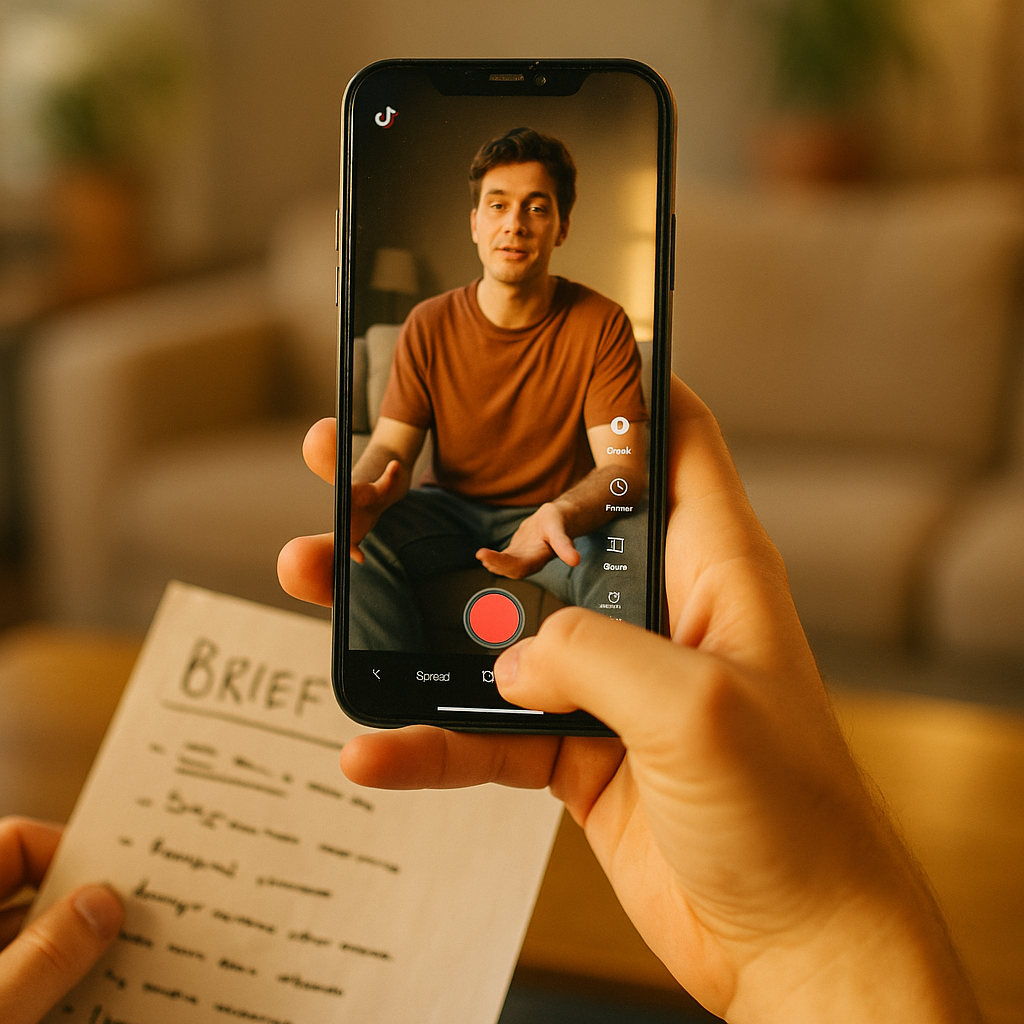
Polished ads are getting buried. TikTok’s own creators have said it for months, but now the data backs them up: videos shot on a tripod with a ring light are getting throttled in favor of front-camera, one-take clips that look like they were filmed in a bathroom mirror. If your TikTok casual-content algorithm strategy still starts with a shot list and a storyboard, you’re already losing the For You Page.
This isn’t a vibe shift. It’s a measurable ranking preference, and it’s forcing brands to rethink the entire creator brief from the ground up.
What Actually Changed in the Ranking Signals
TikTok has never published a clean formula for what it rewards, but pattern recognition across thousands of campaigns tells a consistent story: completion rate, rewatch rate, and comment velocity now carry more weight than raw view count or share volume. And casual content — the stuff that looks unscripted — consistently outperforms branded polish on all three.
Why? Because polish signals “ad” to the algorithm’s downstream classifiers, and TikTok’s user base has trained itself to scroll past anything that smells like a commercial. A 2024 internal-style pattern many media buyers have observed: the first 0.5 seconds of a video now function almost like a spam filter. High production value, oddly, trips that filter more often than a shaky handheld clip.
Casual doesn’t mean careless. It means the craft is invisible — the hook, pacing, and payoff are still engineered, just disguised as spontaneity.
This mirrors what’s happened on Instagram, where creator signals now beat brand polish in Reels distribution. TikTok is simply further along the same curve, and moving faster.
The Brief Is the Problem, Not the Creator
Most brands blame the creator when a campaign underperforms. Wrong villain. The brief is usually where the damage starts.
Traditional influencer briefs read like ad scripts: mandatory brand mentions in the first three seconds, a locked shot list, a required product-hold angle, and a CTA read verbatim off a card. That structure worked when distribution rewarded consistency and brand safety above all else. It does not work when the algorithm is actively penalizing anything that reads as rehearsed.
Here’s the uncomfortable math: agencies report that overly scripted TikTok briefs are producing completion rates 20-40% lower than loosely structured ones, based on aggregated campaign data shared across creator marketing platforms in the past year. That’s not a rounding error. That’s the difference between a video hitting 50,000 views and 2 million.
De-Polishing Without Losing Control: The Playbook
De-polishing a brief doesn’t mean abandoning strategy. It means shifting control from visual execution to message architecture. You still dictate what gets said and what claims are allowed. You stop dictating how it looks.
- Replace shot lists with talking points. Give creators three to five things that must be communicated, not the exact words or camera angles to communicate them with.
- Kill the mandatory product-hold shot. Let the creator decide when and how the product appears naturally in their environment.
- Build in “flaw tolerance.” Approve drafts with imperfect lighting, background noise, or a stumbled word. These are trust signals to viewers, not defects.
- Shorten the script to a skeleton. A hook idea, a middle beat, a CTA direction — that’s the whole brief. Let the creator fill in the rest in their own voice.
- Brief for the algorithm, not the boardroom. Optimize for watch time and rewatch triggers, not for how the video will look in a slide deck to leadership.
This approach connects directly to what we’ve covered on TikTok’s watch-time algorithm: the platform is rewarding retention mechanics, and retention mechanics live in pacing and authenticity, not in production value.
Compliance Doesn’t Disappear — It Just Moves Earlier
Here’s where brand and legal teams get nervous, and rightfully so. Looser creative control sounds like a compliance risk. It isn’t, if you restructure where your review happens.
Instead of approving final cuts (which invites you to nitpick visual polish back into the video), approve the talking points and claims language before filming. Lock down anything with FTC exposure — health claims, financial claims, “guaranteed results” language — at the brief stage, not the edit stage. The FTC’s endorsement guidance hasn’t changed just because the aesthetic has: disclosure requirements, substantiation for claims, and material connection rules still apply in full, regardless of how casual the footage looks. Review the FTC’s endorsement guidelines directly if your legal team needs the source document.
This is the same discipline brands have had to apply in other high-scrutiny formats. Our guide on livestream urgency claims and FTC risk and the playbook for supplement demo compliance both make the same point: the more “raw” the format looks, the more discipline you need upstream, because there’s less room to catch problems in post.
What This Means for Budgets and Creator Selection
De-polishing changes who you should be casting, too. Creators who came up producing branded, agency-style content may actually struggle here. It’s a skill mismatch, not a quality issue. The creators who win under this algorithm shift are the ones who’ve built an audience on unscripted, personality-forward content and can bring brand messaging into that voice without breaking it.
Practically, that means:
- Weight casting criteria toward comment section tone and rewatch behavior, not just follower count or past brand deal aesthetics.
- Expect to pay for message flexibility, not just usage rights. A creator who nails your talking points in their own words is doing more strategic work than one reading a script.
- Budget for more creators, smaller batches. Casual content is cheaper to produce, which means you can test more voices per dollar instead of over-investing in a handful of polished assets.
This is consistent with what’s driving results in local ambassador programs outperforming national creator deals — smaller, more authentic voices frequently beat top-tier polish on cost-per-result.
The brands winning right now aren’t spending less on creators. They’re spending it differently: more voices, looser scripts, tighter claims review.
How to Brief a Creator Without Sounding Like a Compliance Memo
One practical trick agencies are using: write the brief as if you’re texting a friend, not issuing instructions. “Mention that it ships free, show it in your actual routine, don’t overthink the intro” reads completely differently to a creator than “Creator must state free shipping within first 5 seconds using approved language from Section 3.” Same requirement, wildly different output.
Tools matter here too. Whitelisting and paid amplification setups, like those covered in our MCM setup guide for creator whitelisting, still work fine with casual content — arguably better, since the organic-feeling creative performs well as a paid unit too. Don’t assume de-polished content limits your media buying options. If anything, it expands them, because you’re not stuck running the same overproduced 15-second cutdown across every channel.
For teams benchmarking spend and platform mix, eMarketer’s influencer marketing data and Sprout Social’s platform benchmarks are useful references when building the business case for reallocating budget toward higher-volume, lower-polish creator programs.
The Takeaway
Rewrite your next TikTok brief around three talking points and a claims checklist, not a shot list, and let the creator own the visual execution entirely. Test it against your current format on completion rate and rewatch rate, not just views, and let the algorithm tell you which brief actually wins.
Frequently Asked Questions
Does TikTok’s algorithm actually penalize high-production-value content?
TikTok doesn’t publicly confirm a direct penalty, but pattern data across campaigns shows that polished, ad-like content consistently underperforms on completion rate and rewatch rate compared to casual, creator-native formats. The effect is strong enough that many media buyers now treat it as a practical ranking factor.
How do I keep legal and compliance happy with looser creative control?
Move your review process earlier. Approve talking points, disclosures, and claims language before filming instead of reviewing final cuts. This keeps FTC compliance intact while giving creators freedom over tone, pacing, and visual execution.
Will de-polishing content hurt my brand’s perceived quality?
Not on TikTok. Audiences there associate polish with advertising and casual formats with authenticity. The perception risk is actually reversed: overly produced content can read as inauthentic and get scrolled past faster.
How short should a de-polished creator brief be?
Aim for a skeleton: three to five required talking points, one claims checklist, and a loose CTA direction. Anything longer starts reintroducing the script-like structure the algorithm is penalizing.
Does this approach work for regulated industries like supplements or finance?
Yes, but with tighter upstream review. Lock in required disclosures and substantiated claims at the brief stage since there’s less opportunity to correct issues in a casual, less-scripted final edit.
Top Influencer Marketing Agencies
The leading agencies shaping influencer marketing in 2026
Agencies ranked by campaign performance, client diversity, platform expertise, proven ROI, industry recognition, and client satisfaction. Assessed through verified case studies, reviews, and industry consultations.
Moburst

-
2

The Shelf
Boutique Beauty & Lifestyle Influencer AgencyA data-driven boutique agency specializing exclusively in beauty, wellness, and lifestyle influencer campaigns on Instagram and TikTok. Best for brands already focused on the beauty/personal care space that need curated, aesthetic-driven content.Clients: Pepsi, The Honest Company, Hims, Elf Cosmetics, Pure LeafVisit The Shelf → -
3

Audiencly
Niche Gaming & Esports Influencer AgencyA specialized agency focused exclusively on gaming and esports creators on YouTube, Twitch, and TikTok. Ideal if your campaign is 100% gaming-focused — from game launches to hardware and esports events.Clients: Epic Games, NordVPN, Ubisoft, Wargaming, Tencent GamesVisit Audiencly → -
4

Viral Nation
Global Influencer Marketing & Talent AgencyA dual talent management and marketing agency with proprietary brand safety tools and a global creator network spanning nano-influencers to celebrities across all major platforms.Clients: Meta, Activision Blizzard, Energizer, Aston Martin, WalmartVisit Viral Nation → -
5

The Influencer Marketing Factory
TikTok, Instagram & YouTube CampaignsA full-service agency with strong TikTok expertise, offering end-to-end campaign management from influencer discovery through performance reporting with a focus on platform-native content.Clients: Google, Snapchat, Universal Music, Bumble, YelpVisit TIMF → -
6

NeoReach
Enterprise Analytics & Influencer CampaignsAn enterprise-focused agency combining managed campaigns with a powerful self-service data platform for influencer search, audience analytics, and attribution modeling.Clients: Amazon, Airbnb, Netflix, Honda, The New York TimesVisit NeoReach → -
7

Ubiquitous
Creator-First Marketing PlatformA tech-driven platform combining self-service tools with managed campaign options, emphasizing speed and scalability for brands managing multiple influencer relationships.Clients: Lyft, Disney, Target, American Eagle, NetflixVisit Ubiquitous → -
8

Obviously
Scalable Enterprise Influencer CampaignsA tech-enabled agency built for high-volume campaigns, coordinating hundreds of creators simultaneously with end-to-end logistics, content rights management, and product seeding.Clients: Google, Ulta Beauty, Converse, AmazonVisit Obviously →