


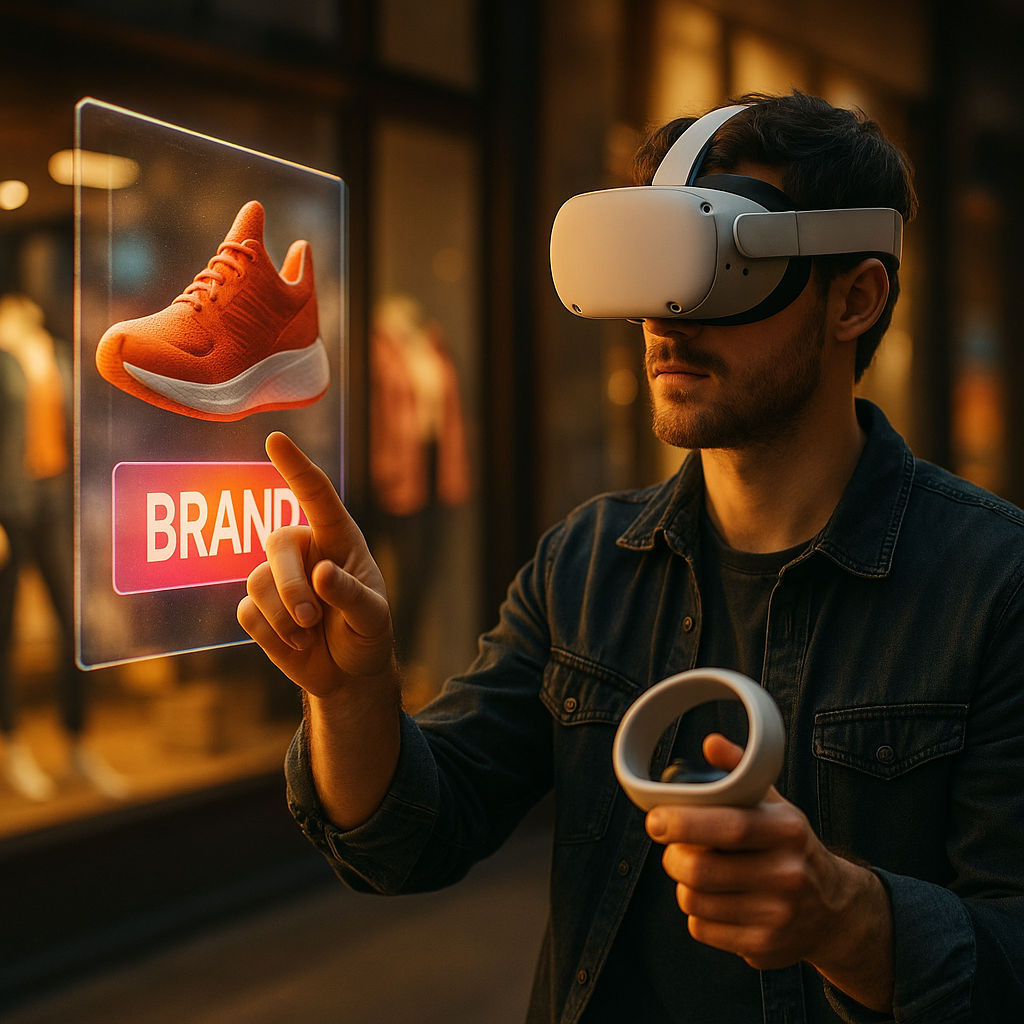
Designing Immersive Brand Experiences For Mixed Reality Device Activations is now a core capability for marketers in 2025, as consumers expect interactive storytelling, not static demos. Mixed reality (MR) can turn a product launch into a guided, memorable journey—if the experience is intentional, measurable, and safe. The difference between novelty and value comes down to craft, operations, and trust. Are you ready to build it right?
Immersive brand experiences: set the strategy before you build
Effective MR activations start with business clarity, not 3D assets. Your first job is to translate brand goals into an experience strategy that can be executed on a show floor, in a retail footprint, or at a roadshow. When teams skip this step, they often ship a visually impressive demo that fails to drive qualified leads, comprehension, or purchase intent.
Define the activation’s primary outcome. Choose one dominant objective and support it with secondary metrics:
- Awareness: maximize throughput, social sharing triggers, and short “wow-to-value” time.
- Education: improve feature understanding via guided tasks and comparison moments.
- Consideration: capture intent signals (configurations, saved builds, requested follow-ups).
- Conversion: connect MR actions to a clear next step (quote, booking, purchase).
Map the narrative to the real environment. MR works because it anchors digital content to physical context. Decide what is “real” and what is “virtual,” then use that contrast deliberately. For example, let users handle a physical product shell while MR reveals internal components, safety features, or performance states that can’t be seen otherwise.
Design around time and staffing constraints. In device activations, the bottleneck is rarely compute power; it’s people. Calculate throughput: session length, onboarding time, reset time, and staff-to-guest ratio. If you need high volume, aim for 3–5 minute core loops with optional depth for those who opt in.
Answer follow-up questions inside the experience. Build “why this matters” into each scene: price justification, sustainability claims, compatibility, maintenance, or safety. If guests must ask a brand rep for basic answers, the activation becomes a queue, not a story.
Mixed reality device activations: pick the right format and footprint
Not every MR device activation needs the same structure. Match the format to audience maturity, venue constraints, and the product’s complexity.
Common activation formats in 2025:
- Guided single-user demo: best for premium products, technical education, or high-value B2B leads.
- Multi-user shared MR: ideal for collaboration narratives (design reviews, team simulations) and social proof.
- Walk-up micro-experience: optimized for high foot traffic; low friction and fast reset.
- Hosted “MR theater”: one presenter guides many guests, increasing throughput while preserving story control.
Choose the interaction model deliberately. Hand tracking feels natural, but it can be slower and less precise under show lighting or for first-time users. Controllers can be faster for task-based flows. Voice can reduce menu friction but needs careful handling in noisy venues and for accessibility. Offer at least two input paths when possible: a primary interaction plus a reliable fallback.
Design for spatial constraints. A great MR experience is still subject to real-world booth size, safety perimeters, and line management. Use clear floor markings and staff choreography. If the device relies on spatial mapping, plan for consistent lighting, uncluttered surfaces, and a predictable “play zone.”
Make the physical set earn its cost. The environment should reinforce the story: props that act as anchors, tactile moments that build trust, and branded touchpoints for photos. Avoid building expensive scenery that the MR content ignores; guests notice the mismatch.
Spatial storytelling: craft presence, not just visuals
Spatial storytelling turns brand messages into actions. In MR, users remember what they do, not what they are told. Your creative goal is to create a sequence of meaningful choices that demonstrate value.
Use an experience arc with “proof moments.” Structure the activation like a guided journey:
- Orientation: establish safety boundaries, controls, and what success looks like.
- Hook: one striking reveal that communicates the premise fast.
- Hands-on value: tasks that map to real benefits (save time, reduce risk, improve outcomes).
- Personalization: configure options, select use cases, or choose an industry scenario.
- Proof: before/after comparisons, performance overlays, or simulated outcomes.
- Resolution: summarize what they experienced and route them to next steps.
Make the brand role clear. The user should understand whether your brand is the guide, the tool, the platform, or the hero. If the MR content is entertaining but detached from brand purpose, recall drops. Place the brand’s differentiators inside the actions: speed, precision, safety, reliability, service, or ecosystem.
Design with cognitive load in mind. MR can overwhelm new users. Keep instructions short and contextual: show, don’t explain. Use simple visual cues (arrows, highlights, ghost hands) and consistent UI placement. Avoid stacking text panels in space. If you must display numbers, anchor them to the object they describe.
Respect comfort and ergonomics. Limit rapid motion, reduce unnecessary animation, and keep key interactions in a comfortable field of view. Provide seated options for longer demos. Offer a “skip” for users who feel discomfort, and train staff to recognize signs of fatigue.
Localize the story. If your activation tours multiple regions, plan for language, measurement units, and culturally appropriate scenarios. Local relevance improves comprehension and reduces staff intervention.
User experience design: reduce friction, increase confidence
In real-world activations, the UX must survive distracted users, variable lighting, and short attention spans. Great MR UX feels effortless and predictable.
Optimize onboarding for first-time users. Assume most guests have never worn your device model. Use a two-layer onboarding approach:
- 30-second “minimum viable” onboarding: wear, fit, safety boundary, one gesture, one interaction.
- Optional deeper tutorial: accessible via a prompt for those who want advanced controls.
Build for recoverability. Users will miss gestures, mis-tap, or look away. Include “undo,” “restart scene,” and a clear “return to home” state. Keep a staff-controlled admin panel to reset sessions quickly without disrupting the guest experience.
Accessibility is part of quality. Offer alternatives for users with limited mobility, reduced vision, or hearing needs. Practical activation tactics include:
- Seated mode and smaller interaction zones.
- High-contrast UI and large targets.
- Captioning for audio instructions.
- Non-voice options for noisy venues or privacy concerns.
Plan for hygiene, privacy, and consent. Provide disposable face interfaces when possible, sanitize between uses, and communicate your process clearly. If you collect any personal data (lead capture, biometrics, photos, voice), use explicit consent prompts, explain purpose, and minimize collection. This protects guests and strengthens brand trust.
Integrate staff into the UX. In activations, the best “interface” can be a trained facilitator. Give staff a scripted flow, troubleshooting steps, and escalation paths. Equip them with quick talking points that connect what users see to real-world benefits and next steps.
Activation analytics: measure impact and prove ROI
If you can’t measure it, you can’t scale it. MR activations generate rich behavioral data, but you need a measurement plan that respects privacy and still answers business questions.
Define metrics that match the objective. Useful activation KPIs include:
- Throughput: sessions per hour, average session length, reset time.
- Engagement: completion rate, drop-off points, interactions per scene.
- Comprehension: in-experience quizzes, feature recall prompts, confidence ratings.
- Lead quality: saved configurations, requested follow-up type, account tier.
- Conversion signals: bookings, cart actions, quote requests, demo-to-meeting rate.
Instrument the experience from day one. Add event tracking for key actions: first interaction, core task completion, personalization choices, and exit routes. Keep a clear naming convention so marketing, product, and agency partners can interpret dashboards without translation.
Connect MR behavior to CRM without over-collecting. Use short, optional lead forms triggered after value is delivered. If you need identity earlier (B2B gated demos), explain why: “We’ll email your configuration and next steps.” Use QR codes or NFC tap for faster capture and fewer errors.
Run rapid iteration cycles on-site. Plan for small updates between days or cities: copy tweaks, staff prompts, scene ordering, or tutorial simplification. Track whether changes improve completion, reduce session time, or increase qualified follow-ups. This operational mindset separates high-performing activations from one-off stunts.
Document claims for credibility. If the experience communicates performance, sustainability, or safety benefits, ensure the underlying data is approved by legal and product teams. Keep a reference pack for staff so they can answer technical questions confidently and consistently.
Production and safety: deliver reliably at scale
MR activations succeed when they run smoothly for hours, not when they impress for five minutes. Reliability, safety, and contingency planning protect your brand.
Build a production checklist. Include device charging rotations, spare headsets, spare fit accessories, network requirements, offline mode, and a hard reset procedure. Test the entire flow in conditions that mimic the venue: lighting, noise, Wi‑Fi congestion, and crowd density.
Prioritize physical safety. MR can reduce awareness of surroundings. Implement:
- Clear guardian boundaries and physical barriers where needed.
- Spotters for moving experiences.
- Slip-resistant flooring and cable management.
- Seated demos for longer or more intense scenes.
Plan for failures without drama. Devices overheat, tracking fails, and software can crash. Create a graceful fallback: a short “lite” demo, a 2D companion display, or a staff-led explanation with physical props. Guests should feel cared for, not inconvenienced.
Protect IP and brand consistency. Use secured builds, device management policies, and content version control. Ensure logos, tone, and claims are consistent across the MR experience, signage, staff scripts, and follow-up emails.
Select experienced partners and clarify ownership. Mixed reality is interdisciplinary: 3D, UX, engineering, event ops, legal, and marketing. Assign a single accountable owner for the end-to-end experience and a clear escalation chain during live days.
FAQs: Designing immersive brand experiences for MR activations
What makes a mixed reality brand activation “immersive” instead of gimmicky?
Immersion comes from meaningful interaction: users complete tasks that demonstrate real benefits, the story responds to their choices, and the experience connects clearly to a next step. A gimmick looks impressive but doesn’t teach, qualify, or convert.
How long should an MR activation experience be?
For high-traffic environments, design a 3–5 minute core loop with optional deeper content. For premium or technical demos, 8–12 minutes can work if you provide seating, strong facilitation, and smooth onboarding.
Do we need multi-user mixed reality for events?
Not always. Multi-user experiences can increase memorability and social proof, but they add complexity in calibration, networking, and facilitation. If your objective is education or lead capture, a well-designed single-user flow often performs better and is easier to scale.
How do we measure ROI from an MR device activation?
Track throughput, completion rate, key interaction events, and post-demo conversion signals (meetings booked, quotes requested, purchases). Connect behavior to CRM with consent, and compare results to baseline channels such as standard booth demos or video presentations.
What are the biggest operational risks at live activations?
The most common risks are onboarding bottlenecks, device downtime, tracking issues due to lighting or reflective surfaces, and hygiene or comfort concerns. Mitigate with staffing plans, spare devices, venue testing, clear safety boundaries, and a documented reset process.
How do we handle privacy and consent in MR experiences?
Collect only what you need, explain why you need it, and request explicit consent before capturing personal data such as photos, voice, or identifiers. Provide a no-data path to experience the demo when possible, and store data securely with limited retention.
Mixed reality activations win in 2025 when they combine clear strategy, strong spatial storytelling, and dependable operations. Design the experience around one primary outcome, remove onboarding friction, and treat safety, privacy, and accessibility as core quality signals. Measure what matters—completion, comprehension, and conversion—and iterate quickly. Build trust through transparency and proof, and your activation will scale beyond the event floor.
Top Influencer Marketing Agencies
The leading agencies shaping influencer marketing in 2026
Agencies ranked by campaign performance, client diversity, platform expertise, proven ROI, industry recognition, and client satisfaction. Assessed through verified case studies, reviews, and industry consultations.
Moburst

-
2

The Shelf
Boutique Beauty & Lifestyle Influencer AgencyA data-driven boutique agency specializing exclusively in beauty, wellness, and lifestyle influencer campaigns on Instagram and TikTok. Best for brands already focused on the beauty/personal care space that need curated, aesthetic-driven content.Clients: Pepsi, The Honest Company, Hims, Elf Cosmetics, Pure LeafVisit The Shelf → -
3

Audiencly
Niche Gaming & Esports Influencer AgencyA specialized agency focused exclusively on gaming and esports creators on YouTube, Twitch, and TikTok. Ideal if your campaign is 100% gaming-focused — from game launches to hardware and esports events.Clients: Epic Games, NordVPN, Ubisoft, Wargaming, Tencent GamesVisit Audiencly → -
4

Viral Nation
Global Influencer Marketing & Talent AgencyA dual talent management and marketing agency with proprietary brand safety tools and a global creator network spanning nano-influencers to celebrities across all major platforms.Clients: Meta, Activision Blizzard, Energizer, Aston Martin, WalmartVisit Viral Nation → -
5

The Influencer Marketing Factory
TikTok, Instagram & YouTube CampaignsA full-service agency with strong TikTok expertise, offering end-to-end campaign management from influencer discovery through performance reporting with a focus on platform-native content.Clients: Google, Snapchat, Universal Music, Bumble, YelpVisit TIMF → -
6

NeoReach
Enterprise Analytics & Influencer CampaignsAn enterprise-focused agency combining managed campaigns with a powerful self-service data platform for influencer search, audience analytics, and attribution modeling.Clients: Amazon, Airbnb, Netflix, Honda, The New York TimesVisit NeoReach → -
7

Ubiquitous
Creator-First Marketing PlatformA tech-driven platform combining self-service tools with managed campaign options, emphasizing speed and scalability for brands managing multiple influencer relationships.Clients: Lyft, Disney, Target, American Eagle, NetflixVisit Ubiquitous → -
8

Obviously
Scalable Enterprise Influencer CampaignsA tech-enabled agency built for high-volume campaigns, coordinating hundreds of creators simultaneously with end-to-end logistics, content rights management, and product seeding.Clients: Google, Ulta Beauty, Converse, AmazonVisit Obviously →