


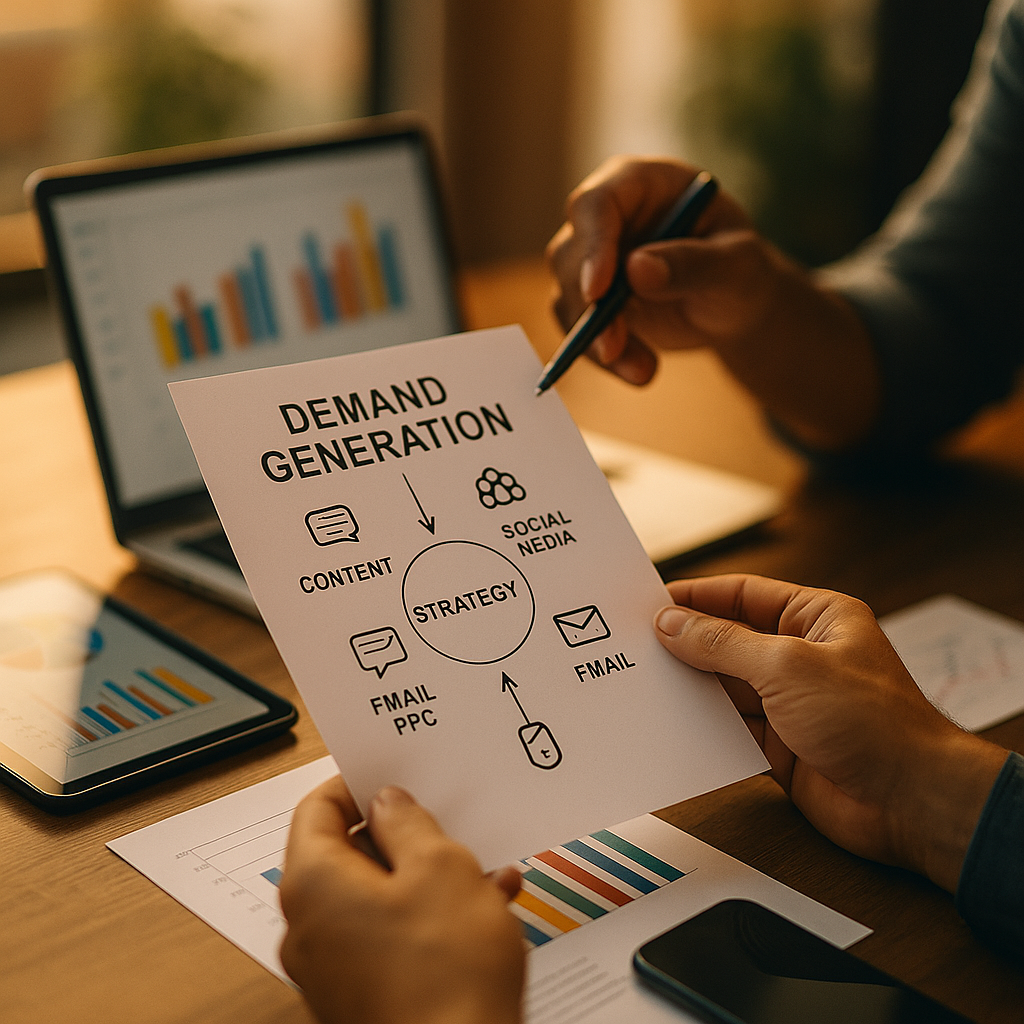
Developing a multi-channel demand generation strategy is essential for modern businesses aiming for sustainable growth. With evolving customer behaviors and rising competition, harnessing several marketing channels boosts reach and impact. In this guide, we’ll break down actionable steps to create an effective, data-driven demand generation plan—so your organization never misses a growth opportunity.
Understanding Multi-Channel Demand Generation
A robust multi-channel demand generation strategy leverages several marketing platforms to target and nurture prospects throughout their buyer journey. Rather than relying on a single channel, businesses diversify outreach using email, social media, paid advertising, SEO, and events to maximize engagement. Each channel serves a specific audience segment or buying phase, ensuring touchpoints are optimized for relevance and conversion.
Why is a multi-channel approach effective? In 2025, according to Statista, customers interact with brands across an average of six touchpoints before making a purchase. Integrating channels ensures you meet prospects where they are—improving awareness, building trust, and driving conversions. Cross-channel consistency and message reinforcement also help brands stay top-of-mind in a crowded digital landscape.
Identifying and Segmenting Your Target Audience
Your demand generation strategy should begin with precise audience identification and segmentation. Without understanding who you’re targeting, even the best campaigns may miss the mark. Use your customer relationship management (CRM) tools, website analytics, and social listening to collect data points, such as demographics, firmographics, behaviors, and pain points.
- Build audience personas: Create detailed profiles of your ideal customers, including roles, goals, challenges, content preferences, and buying triggers.
- Segment smartly: Go beyond basic industry or company size segmentation. Group audiences based on which channels they frequent, content formats they prefer, and where they fall in the buyer’s journey.
- Update regularly: Market conditions and buyer behaviors shift. Routinely validate your assumptions using survey data, website tracking, and sales feedback.
Refined segmentation ensures your messaging is personal and targeted, which drives meaningful interactions across all selected channels.
Selecting High-Impact Marketing Channels
There is no one-size-fits-all approach when it comes to channel selection. Your best multi-channel demand generation results will come from blending platforms that align with your audience’s behaviors and your business objectives. Consider the strengths of each:
- Email Marketing: Still delivers one of the highest ROI rates. Schedule targeted newsletters, nurture series, and promotional emails based on audience segmentation.
- Social Media: Essential for brand visibility and real-time engagement. Tailor strategies for LinkedIn, Instagram, TikTok, and emerging platforms based on audience demographics and preferred content styles.
- Search Engine Optimization (SEO): Capture inbound leads by ranking for high-intent keywords relevant to your offerings. Optimize both website and blog content for best results.
- Paid Advertising: Accelerate reach with pay-per-click (PPC), paid social, or display ads. Use data-driven targeting to hone in on decision-makers.
- Events and Webinars: Build trust and relationships by hosting or attending industry events, workshops, and webinars—whether virtual or in-person.
Audit your previous results to identify top-performing channels, but continually experiment with new avenues—such as podcasts or partner marketing—for competitive advantage in 2025.
Integrating Content Marketing for Lead Nurturing
Content is the connective tissue of your multi-channel demand generation strategy. High-quality, authoritative content attracts, educates, and persuades prospects to move closer to conversion, regardless of entry channel. EEAT (Expertise, Experience, Authoritativeness, Trustworthiness) guidelines must underpin every content asset you produce:
- Topic relevance: Prioritize themes aligned with your audience’s pain points and needs at every buyer journey stage.
- Diverse formats: Develop ebooks, case studies, videos, infographics, podcasts, and more—distributing strategically across your chosen channels.
- Personalization: Use dynamic content blocks, tailored emails, and segmented ad campaigns to speak directly to user segments.
- Clear calls to action: Every piece of content should prompt an action, whether it is to download a guide, sign up for an event, or book a demo.
Consistent, EEAT-aligned content not only attracts leads but builds a relationship over time, increasing the quality and conversion rates of your pipeline.
Leveraging Data and Analytics for Optimization
A data-driven mindset is essential for refining your demand generation efforts. Implement analytics tools—like Google Analytics 4, marketing automation platforms, and CRM software—to monitor campaign performance across all channels. Here’s how to harness data for continuous improvement:
- Set clear KPIs: Identify measurable goals, such as website traffic, lead quality, conversion rates, or customer acquisition cost (CAC).
- Track the full funnel: Map every touchpoint to see where prospects enter, engage, and drop off. This informs budget allocation and optimizes underperforming stages.
- Experiment and iterate: Use A/B tests, multivariate testing, and cohort analyses to learn what content, channels, and offers deliver best results.
- Share insights: Foster alignment between marketing and sales by sharing pipeline insights, closed-loop feedback, and win/loss analysis.
Regularly reviewing your performance data allows your teams to pivot strategies and capture more demand in real time, turning analytics into true business intelligence.
Aligning Sales and Marketing Teams for Unified Execution
Misalignment between sales and marketing can undermine even the most sophisticated multi-channel strategy. Effective demand generation relies on ongoing collaboration, shared goals, and unified messaging across every customer touchpoint. Achieve this by:
- Developing shared definitions: Agree on what constitutes a marketing-qualified lead (MQL) versus a sales-qualified lead (SQL).
- Establishing regular communication: Hold weekly or bi-weekly ‘smarketing’ meetings to review performance, surface roadblocks, and celebrate wins.
- Synchronizing outreach: Use integrated tools so both teams know which leads are engaging with what content, and when to hand off from nurture to sales engagement.
- Delivering consistent messaging: Arm sales reps with up-to-date content and value propositions tailored for various buyer personas and pain points.
This unified approach shortens sales cycles, improves close rates, and amplifies the ROI of your demand generation investment.
FAQs: Multi-Channel Demand Generation Strategy
- What is multi-channel demand generation?
Multi-channel demand generation is a marketing approach that uses multiple platforms—such as email, social media, SEO, and events—to attract, engage, and convert potential customers. - How do I choose the right channels for my strategy?
Analyze your target audience’s preferences, review analytics from past campaigns, and experiment with new platforms. Focus on the channels where your audience spends the most time and engages most frequently. - How do I measure the success of my demand generation strategy?
Track key performance indicators such as website visits, lead volume, lead quality, conversion rates, and customer acquisition cost. Use analytics to monitor performance and optimize your campaigns in real time. - What role does content play in a multi-channel demand generation plan?
Content drives engagement and conversion. Tailor content types—like blogs, videos, and case studies—to specific channels and buyer journey stages to maximize impact. - How can I ensure alignment between sales and marketing teams?
Hold regular joint meetings, use unified CRM and automation systems, share definitions of lead stages, and synchronize messaging to ensure seamless handoffs and a consistent customer experience.
Building a successful multi-channel demand generation strategy means uniting audience insights, high-impact channels, EEAT-driven content, data analytics, and collaborative sales-marketing execution. By following these principles, your business can create demand at every stage of the buyer journey—and outpace the competition in 2025.
Top Influencer Marketing Agencies
The leading agencies shaping influencer marketing in 2026
Agencies ranked by campaign performance, client diversity, platform expertise, proven ROI, industry recognition, and client satisfaction. Assessed through verified case studies, reviews, and industry consultations.
Moburst

-
2

The Shelf
Boutique Beauty & Lifestyle Influencer AgencyA data-driven boutique agency specializing exclusively in beauty, wellness, and lifestyle influencer campaigns on Instagram and TikTok. Best for brands already focused on the beauty/personal care space that need curated, aesthetic-driven content.Clients: Pepsi, The Honest Company, Hims, Elf Cosmetics, Pure LeafVisit The Shelf → -
3

Audiencly
Niche Gaming & Esports Influencer AgencyA specialized agency focused exclusively on gaming and esports creators on YouTube, Twitch, and TikTok. Ideal if your campaign is 100% gaming-focused — from game launches to hardware and esports events.Clients: Epic Games, NordVPN, Ubisoft, Wargaming, Tencent GamesVisit Audiencly → -
4

Viral Nation
Global Influencer Marketing & Talent AgencyA dual talent management and marketing agency with proprietary brand safety tools and a global creator network spanning nano-influencers to celebrities across all major platforms.Clients: Meta, Activision Blizzard, Energizer, Aston Martin, WalmartVisit Viral Nation → -
5

The Influencer Marketing Factory
TikTok, Instagram & YouTube CampaignsA full-service agency with strong TikTok expertise, offering end-to-end campaign management from influencer discovery through performance reporting with a focus on platform-native content.Clients: Google, Snapchat, Universal Music, Bumble, YelpVisit TIMF → -
6

NeoReach
Enterprise Analytics & Influencer CampaignsAn enterprise-focused agency combining managed campaigns with a powerful self-service data platform for influencer search, audience analytics, and attribution modeling.Clients: Amazon, Airbnb, Netflix, Honda, The New York TimesVisit NeoReach → -
7

Ubiquitous
Creator-First Marketing PlatformA tech-driven platform combining self-service tools with managed campaign options, emphasizing speed and scalability for brands managing multiple influencer relationships.Clients: Lyft, Disney, Target, American Eagle, NetflixVisit Ubiquitous → -
8

Obviously
Scalable Enterprise Influencer CampaignsA tech-enabled agency built for high-volume campaigns, coordinating hundreds of creators simultaneously with end-to-end logistics, content rights management, and product seeding.Clients: Google, Ulta Beauty, Converse, AmazonVisit Obviously →