


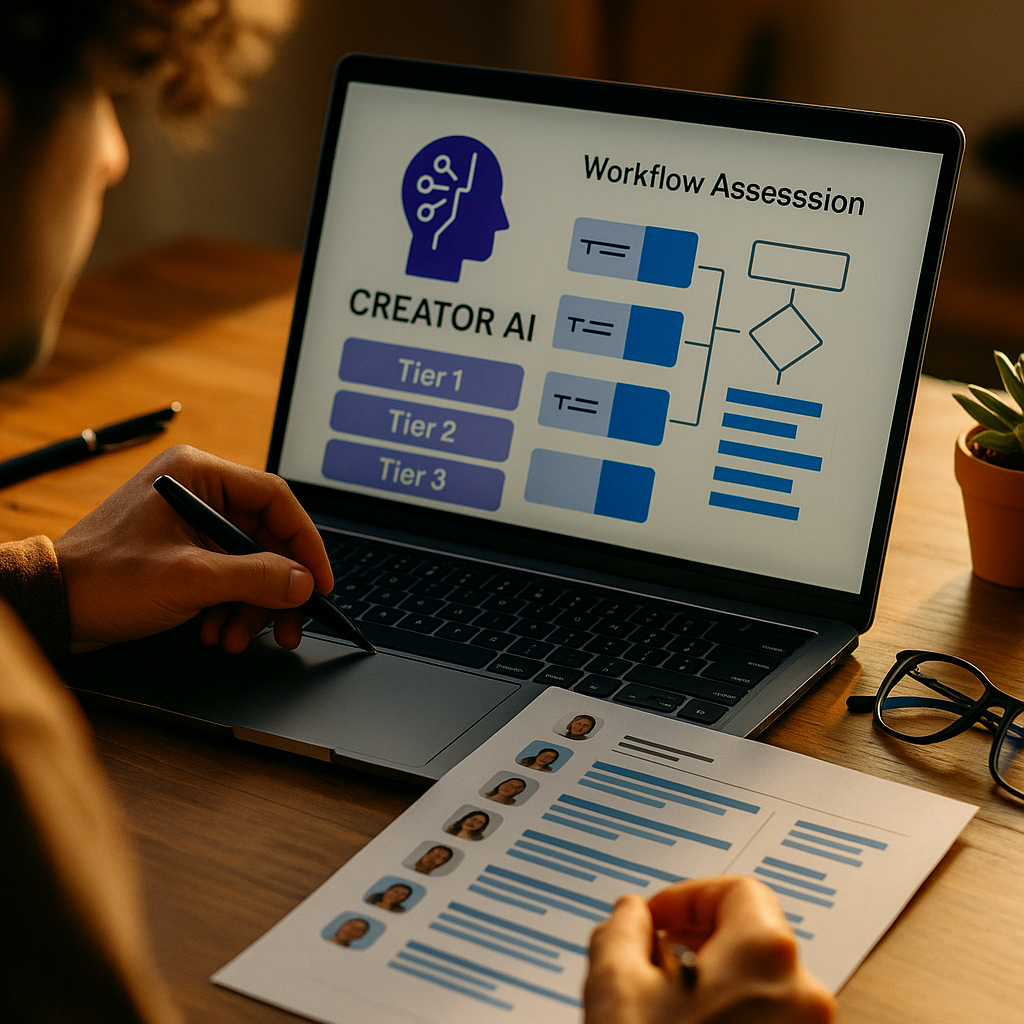
Roughly 60% of professional creators now use some form of AI tooling in their production pipeline — but infrastructure maturity varies wildly. Before you sign your next creator contract, you need to know whether their workflow can actually handle your brief. That question should be shaping your creator tier classification right now.
The Production Gap Nobody’s Talking About
There’s a growing divide in the creator economy that most brand teams are only discovering mid-campaign, when a deliverable is late, off-brief, or visually inconsistent with the last activation. On one side: creators who have genuinely integrated AI into a repeatable, auditable production workflow. On the other: creators who use AI tools occasionally and opportunistically, with no real system behind them.
The difference matters enormously for brands. A creator with a reliable AI production stack can turn around complex, multi-format deliverables faster, maintain brand consistency across campaign phases, and handle revision cycles without blowing timelines. A creator without one can’t, regardless of how talented they are or how impressive their portfolio looks at the vetting stage.
A creator’s follower count tells you about their distribution. Their AI production infrastructure tells you about their operational capacity. Both belong in your tier assessment — only one is routinely ignored.
This isn’t about whether creators use AI ethically or disclose it properly (though those questions matter too). It’s about operational reliability. Brand teams running multi-channel campaigns with tight production windows are effectively co-dependent on creator infrastructure. Auditing that infrastructure is no longer optional.
What “Reliable AI Production Workflow” Actually Means
Reliable doesn’t mean expensive. A creator running a well-structured workflow in CapCut, combined with Claude for scripting and Midjourney for concept visuals, can be more operationally mature than one who has a subscription to every premium tool but no systematic process.
What you’re assessing is whether the creator has:
- Consistency in tooling: Are they using the same tools across projects, or constantly switching? Frequent tool-switching introduces variation and learning curve delays mid-campaign.
- A documented process: Can they articulate their production stages? From scripting to edit to caption to thumbnail — each stage should have a defined tool or method.
- Version control or file management: Do they maintain organized asset libraries? This matters enormously for brands that need to repurpose content or request brand-side edits.
- Redundancy planning: What happens if a key tool goes down or changes its pricing model? Creators who rely on a single point-solution with no fallback are a tool consolidation risk waiting to surface at renewal.
- Multimodal capability: Can they produce across formats (video, static, audio, short-form) without outsourcing? This speaks to brief complexity capacity.
Brands doing this kind of assessment in depth should consult a structured AI stack due diligence checklist before contracts are finalized.
How This Should Factor Into Creator Tier Classification
Most brands currently tier creators by reach, engagement rate, and content category. Some add brand safety scores. Almost none systematically include production infrastructure. That needs to change.
Consider a two-axis model. The first axis is the traditional one: audience quality and fit. The second axis is production infrastructure maturity. A creator who scores high on both belongs in Tier 1 for complex, high-stakes campaigns. A creator who scores high on audience quality but low on infrastructure belongs in a different tier: suitable for straightforward, single-format briefs with minimal revision requirements.
This isn’t punitive. It’s matching operational capacity to campaign demand. A nano-creator with a rigorous production workflow might be better suited for a complex always-on program than a macro-creator with ad hoc tooling. The stack compatibility assessment process helps surface exactly those mismatches before they cost you a campaign cycle.
Practically, this means adding a production infrastructure section to your creator intake questionnaires. Ask for tool names, not just content samples. Request a workflow walkthrough. Some agencies are starting to require screen-recorded process demos as part of onboarding for Tier 1 partnerships. That’s not excessive; it’s due diligence.
Brief Complexity Decisions Downstream of Infrastructure Assessment
Once you’ve assessed infrastructure maturity, brief complexity becomes a much cleaner decision.
Creators with verified multimodal AI workflows can absorb briefs that require: adaptation across aspect ratios, versioning for A/B testing, localization overlays, caption and subtitle integration, and custom thumbnail production. Creators without those capabilities simply cannot execute those briefs reliably, no matter what they promise in the pitch.
A useful framing: think of brief complexity in three bands. Band one is single-format, low-revision content where almost any creator can execute. Band two is multi-format with moderate revision cycles, suitable for creators with solid but not advanced infrastructure. Band three is complex, multi-channel, multi-version campaigns that require confirmed multimodal capability and production process documentation before the brief is even written.
The practical implication is that your multimodal creative pipeline planning needs to account for creator-side capability, not just brand-side capacity. You can have the most sophisticated internal production operation and still have campaigns collapse because the creator can’t execute at the brief’s complexity level.
Sending a Band Three brief to a Band One creator isn’t a relationship problem. It’s a systems problem — one that infrastructure assessment would have caught before the contract was signed.
Long-Term Partnership Viability: The Infrastructure Trajectory Question
For long-term partnerships, the relevant question isn’t just “what is this creator’s current infrastructure?” It’s “where is their infrastructure heading, and does that trajectory align with our campaign roadmap?”
A creator who is actively investing in their AI stack, experimenting with new tools in a structured way, and demonstrating increasing production sophistication quarter over quarter is a better long-term bet than one with a currently impressive setup but no evidence of adaptation. The AI tooling landscape is moving fast — Statista data shows creator economy platform investment continuing to accelerate — and static infrastructure becomes a liability.
This is where partnership check-ins need to evolve beyond content performance reviews. Quarterly infrastructure conversations with Tier 1 and Tier 2 partners should be standard. What tools have they added or dropped? Have they encountered capacity constraints? Are there upcoming tool consolidation events (pricing changes, platform shutdowns) that could disrupt their workflow during a critical campaign window?
Brands that treat creator infrastructure as a one-time onboarding data point will get surprised. Those that treat it as an ongoing relationship dimension will maintain a meaningful operational edge. The pre-signature stack audit is a starting point, not the whole answer.
The Signals Worth Watching in Creator Vetting
When you’re evaluating a new creator partner, you won’t always have time for a full infrastructure deep-dive. There are faster proxy signals worth training your team to spot.
- Consistent visual language across recent content: This suggests stable tooling. Erratic visual shifts often signal tool-switching or outsourced production.
- Fast revision turnaround in past collaborations: Reference checks with other brand partners can reveal this. Ask specifically about revision cycle times, not just “was the creator easy to work with?”
- Published content about their own process: Creators who write or speak publicly about their production setup tend to have one. Silence about process is often the absence of one.
- Platform-native optimization: Are their thumbnails, captions, and metadata optimized? This suggests structured post-production, not just raw filming. TikTok’s creator tools and Google’s content guidance both provide benchmarks for what optimized platform-native content looks like.
- Disclosure habits: Creators who clearly and consistently disclose AI use in their content are, in the experience of most brand compliance teams, more likely to have structured workflows. Disclosure requires knowing what you used. The FTC’s endorsement guidance is increasingly implicated in AI content disclosure requirements, and organized creators stay ahead of it.
The fastest way to operationalize this is through AI-assisted creator discovery platforms that are beginning to incorporate infrastructure signals alongside traditional audience metrics. Expect that capability to become standard in influencer marketing platforms within the next 12-18 months.
Building the Assessment Into Your Partner Program Architecture
The brands winning at this aren’t running ad hoc creator infrastructure audits. They’ve embedded the assessment into program architecture. Creator intake forms include production stack questions. Tier classification rubrics include infrastructure scoring. Contract templates include a workflow disclosure clause. Renewal reviews include an infrastructure update section.
This integration also has a downstream benefit for your own team’s tech stack rationalization decisions. When you know what tools your creator partners are running, you can make better decisions about where to integrate, which platforms to prioritize for brand-side tooling investments, and where workflow compatibility gaps need bridging through onboarding support or tool provisioning.
The creator economy’s AI production infrastructure divide is real, measurable, and consequential. The brands that build systematic assessment into their programs now will have materially better campaign execution, cleaner partner relationships, and a significantly lower rate of expensive mid-campaign surprises. Start with your next Tier 1 renewal. Ask the infrastructure questions. The answers will reshape how you think about the entire roster.
Frequently Asked Questions
What is creator AI production infrastructure, and why does it matter for brands?
Creator AI production infrastructure refers to the combination of AI tools, workflows, and processes a creator uses to produce content — covering scripting, editing, visual creation, optimization, and file management. It matters for brands because a creator’s operational capacity directly affects their ability to execute complex briefs reliably, meet revision timelines, and maintain brand consistency across campaign phases.
How should AI production workflow maturity factor into creator tier classification?
Brands should add a production infrastructure maturity axis to their existing tier classification model. Creators who score high on both audience quality and infrastructure maturity belong in Tier 1 for complex campaigns. Those with strong audiences but weak infrastructure should be assigned to tiers with simpler brief requirements. This prevents over-briefing creators who lack the operational capacity to execute reliably.
What specific questions should brands ask creators during production infrastructure assessment?
Ask creators to name the specific AI tools they use at each stage of production, describe their revision and file management process, explain what happens if a key tool is unavailable, and confirm their ability to produce across multiple formats. For Tier 1 partnerships, request a workflow walkthrough or process documentation. Reference checks with previous brand partners about revision cycle times are also highly informative.
How does creator infrastructure maturity affect brief complexity decisions?
Brief complexity should be calibrated directly to confirmed infrastructure capability. Creators with verified multimodal AI workflows can handle multi-format, multi-version briefs with adaptation requirements. Creators without documented production processes should receive simpler, single-format briefs with minimal revision cycles. Sending complex briefs to creators without the infrastructure to execute them is a primary driver of campaign delays and cost overruns.
How often should brands reassess creator AI production infrastructure in ongoing partnerships?
For Tier 1 and Tier 2 partners, quarterly infrastructure check-ins are advisable. The AI tooling landscape shifts rapidly, and a creator’s stack at onboarding may look significantly different six months later. Renewal reviews should include a mandatory infrastructure update to ensure ongoing alignment with campaign complexity requirements and to surface any tool consolidation or platform changes that could affect deliverability.
What are the fastest proxy signals for creator infrastructure maturity during initial vetting?
Key proxy signals include: consistent visual language across recent content (suggesting stable tooling), fast revision turnaround in past brand collaborations, public documentation of their own production process, platform-native content optimization, and consistent AI disclosure habits. Creators who are transparent and systematic about their process tend to have one. Those signals can be assessed quickly before committing to a deeper infrastructure audit.
Top Influencer Marketing Agencies
The leading agencies shaping influencer marketing in 2026
Agencies ranked by campaign performance, client diversity, platform expertise, proven ROI, industry recognition, and client satisfaction. Assessed through verified case studies, reviews, and industry consultations.
Moburst

-
2

The Shelf
Boutique Beauty & Lifestyle Influencer AgencyA data-driven boutique agency specializing exclusively in beauty, wellness, and lifestyle influencer campaigns on Instagram and TikTok. Best for brands already focused on the beauty/personal care space that need curated, aesthetic-driven content.Clients: Pepsi, The Honest Company, Hims, Elf Cosmetics, Pure LeafVisit The Shelf → -
3

Audiencly
Niche Gaming & Esports Influencer AgencyA specialized agency focused exclusively on gaming and esports creators on YouTube, Twitch, and TikTok. Ideal if your campaign is 100% gaming-focused — from game launches to hardware and esports events.Clients: Epic Games, NordVPN, Ubisoft, Wargaming, Tencent GamesVisit Audiencly → -
4

Viral Nation
Global Influencer Marketing & Talent AgencyA dual talent management and marketing agency with proprietary brand safety tools and a global creator network spanning nano-influencers to celebrities across all major platforms.Clients: Meta, Activision Blizzard, Energizer, Aston Martin, WalmartVisit Viral Nation → -
5

The Influencer Marketing Factory
TikTok, Instagram & YouTube CampaignsA full-service agency with strong TikTok expertise, offering end-to-end campaign management from influencer discovery through performance reporting with a focus on platform-native content.Clients: Google, Snapchat, Universal Music, Bumble, YelpVisit TIMF → -
6

NeoReach
Enterprise Analytics & Influencer CampaignsAn enterprise-focused agency combining managed campaigns with a powerful self-service data platform for influencer search, audience analytics, and attribution modeling.Clients: Amazon, Airbnb, Netflix, Honda, The New York TimesVisit NeoReach → -
7

Ubiquitous
Creator-First Marketing PlatformA tech-driven platform combining self-service tools with managed campaign options, emphasizing speed and scalability for brands managing multiple influencer relationships.Clients: Lyft, Disney, Target, American Eagle, NetflixVisit Ubiquitous → -
8

Obviously
Scalable Enterprise Influencer CampaignsA tech-enabled agency built for high-volume campaigns, coordinating hundreds of creators simultaneously with end-to-end logistics, content rights management, and product seeding.Clients: Google, Ulta Beauty, Converse, AmazonVisit Obviously →