


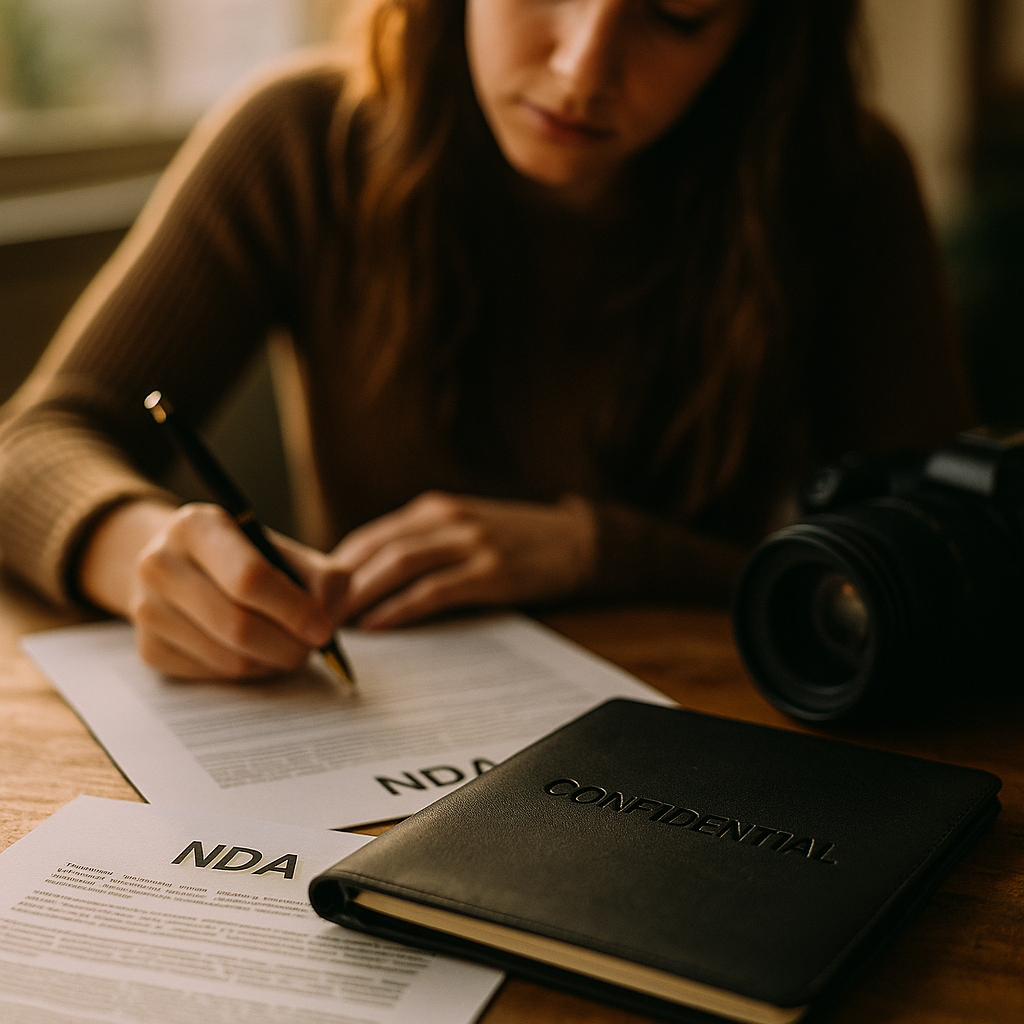
One unboxing video, posted four days early by a single creator, forced a Fortune 500 tech brand to move its entire launch window up by a week in 2023. The product leaked. The press embargo broke. Millions in coordinated media spend got scrambled overnight. A properly drafted creator NDA would have given that brand a contract to enforce instead of a PR crisis to manage.
Unreleased product campaigns are some of the most valuable, and most exposed, assets a brand owns. Creators get early access because early access drives better content. But early access without binding confidentiality terms is just a leak waiting for a publish button.
Why Creator NDAs Matter More Than They Used To
Influencer seeding used to mean mailing a box to a handful of creators a week before launch. Now brands run multi-phase campaigns involving dozens of creators, each with early product access, pre-release messaging, pricing data, and sometimes internal roadmaps. The surface area for leaks has grown exponentially, and so has the financial stake. A delayed or spoiled launch doesn’t just cost media dollars, it can move stock prices for public companies and tank first-week sales velocity for DTC brands that live and die on launch-day momentum.
Platforms haven’t made this easier. TikTok’s algorithm rewards speed, not patience. A creator sitting on exclusive content has real incentive to post early if a trend is hot or a competitor beats them to the moment. Without a contractual deterrent, “I forgot the embargo date” becomes a plausible excuse that costs brands nothing to hear and everything to live with.
A verbal “please don’t post this yet” is not a confidentiality agreement. It’s a hope, and hope is not a risk mitigation strategy.
What a Creator Confidentiality Clause Should Actually Cover
Generic influencer agreements often bury confidentiality in a single boilerplate paragraph borrowed from an employment contract template. That’s a mistake. Creator work is different: it involves content creation, platform publishing, and public-facing promotion, which means the confidentiality terms need to be specific about what “disclosure” even means.
- Defined confidential information. Spell out exactly what’s covered: product samples, pricing, launch dates, creative briefs, internal names, packaging, influencer lists, and campaign strategy documents. Vague language like “proprietary information” invites disputes.
- No-post and no-tease windows. Separate the embargo date (no posting at all) from any teaser period (limited posting allowed, with specific restrictions on what can be shown). Creators need clarity, not guesswork.
- Device and storage restrictions. Require creators to store product shots and briefs in approved, access-controlled folders rather than personal camera rolls that sync to public cloud accounts by default.
- Third-party exposure. Address family members, assistants, editors, and co-creators who might see or handle the product before launch. A leak from a creator’s editor is still a leak.
- Survival clause. Confidentiality obligations should outlast the campaign relationship itself, typically for a defined period after public launch, not just until the contract term ends.
- Liquidated damages or remedy language. Define what happens if a breach occurs. Injunctive relief, flat penalty fees, or both should be spelled out rather than left to a judge to sort out after the damage is done.
This level of specificity matters because creators aren’t lawyers, and most won’t read a 12-page agreement closely. Clear, enumerated terms reduce accidental breaches far more effectively than dense legal prose.
Where Brands Get This Wrong
The most common failure isn’t a missing NDA. It’s an NDA that exists but doesn’t match how the campaign actually runs. Legal drafts a confidentiality clause assuming a single reveal date, while the marketing team runs a phased rollout with three different disclosure tiers for macro, mid-tier, and nano creators. The contract and the campaign operate on different assumptions, and nobody notices until a mid-tier creator posts during what they believed was an approved teaser window.
Another recurring gap: agencies managing creator relationships on a brand’s behalf sometimes use their own standard NDA template instead of the brand’s. That template might not reference the specific product, might use a weaker definition of confidential information, or might lack the brand’s preferred remedy language entirely. If you’re working through an agency or talent agency licensing arrangement, confirm whose paper governs confidentiality and make sure it’s airtight before product ships.
There’s also the exclusivity overlap problem. Brands sometimes assume a confidentiality clause covers competitive conflicts too, but those are separate issues requiring separate contract language. A creator can honor an NDA perfectly while still posting for a direct competitor the following week. If that’s a concern, confidentiality terms need to work alongside dedicated exclusivity clauses, not substitute for them.
How Enforceable Are These Clauses, Really?
Here’s the uncomfortable truth: a confidentiality clause is only as strong as a brand’s willingness and ability to enforce it. Courts generally uphold reasonable NDAs, but “reasonable” is doing a lot of work in that sentence. Overly broad confidentiality definitions, excessive duration, or penalty clauses that look punitive rather than compensatory can get struck down or narrowed by a judge.
Liquidated damages clauses need to reflect a genuine pre-estimate of harm, not an arbitrary scare number. A $500,000 penalty for a nano creator with 8,000 followers posting a product shot two days early is unlikely to survive a legal challenge. Tie damages to realistic campaign impact: lost media value, PR remediation costs, or a percentage of total campaign spend tends to hold up better than a flat punitive figure.
An NDA you can’t realistically enforce is worse than no NDA at all, because it gives legal teams false confidence while doing nothing to change creator behavior.
Enforcement also depends on documentation. If a leak happens, brands need timestamped proof of what was shared, when, and under what terms. This is exactly why content archiving practices matter well beyond FTC compliance. The same archive that proves disclosure compliance can also prove exactly when a confidentiality breach occurred, which matters enormously if a case ever reaches arbitration.
Building NDA Terms Into the Broader Creator Contract
Confidentiality shouldn’t live in isolation. It needs to connect to the other contractual mechanisms that already govern the relationship. If a brand is running a multi-year creator contract, confidentiality terms should refresh or reaffirm with each new product cycle rather than relying on language drafted for a single campaign years earlier. Markets change, product categories shift, and a confidentiality clause written for a skincare launch may not adequately cover a tech hardware reveal two years later.
Insurance is the other piece brands overlook. A creator who breaches confidentiality and triggers a PR crisis creates liability that can ripple into other coverage areas. Reviewing how E&O insurance clauses interact with confidentiality breaches helps clarify who actually bears financial responsibility when a leak triggers downstream costs like accelerated ad spend or emergency PR retainers.
For international campaigns, note that confidentiality enforcement varies significantly by jurisdiction. What’s enforceable in a US contract might need modification for creators based in the EU or UK, where data protection and employment law can intersect with NDA terms in unexpected ways. Brands running cross-border influencer programs should loop in regional counsel rather than assuming one template travels everywhere.
Practical Steps for Tightening Your Agreements
None of this requires reinventing contract law. It requires discipline and specificity.
- Audit existing creator agreements for confidentiality language that predates current campaign structures.
- Separate embargo dates from teaser windows explicitly, in writing, with calendar dates rather than vague phrases like “closer to launch.”
- Require secure, access-logged file sharing for product images and briefs instead of email attachments or shared drives with broad permissions.
- Define realistic remedies tied to actual campaign value, not arbitrary penalty figures.
- Brief creators verbally in addition to written terms. A quick onboarding call reduces “I didn’t realize” breaches dramatically.
- Build a breach response protocol before you need one: who contacts the creator, who contacts platforms for takedown requests, and who documents the timeline.
Marketing teams juggling dozens of simultaneous creator relationships might also find it useful to review how social listening platforms can flag early leaks before they spread, and how industry campaign benchmarks frame the real cost of a broken embargo in terms of lost media value.
Frequently Asked Questions
FAQs
What is a creator NDA and why do brands need one for product launches?
A creator NDA is a confidentiality agreement that restricts a creator from disclosing unreleased product details, imagery, pricing, or campaign strategy before an agreed date. Brands need one because early product access without enforceable confidentiality terms creates a direct leak risk that can disrupt launch timing and media spend.
Can a brand actually sue a creator for breaking an embargo?
Yes, if the confidentiality clause is specific, reasonable, and tied to documented damages. Courts are more likely to enforce clauses with clearly defined scope and realistic remedy language than broad, punitive clauses that look designed to intimidate rather than compensate for actual harm.
How long should a confidentiality clause last after a campaign ends?
Most brands set survival periods between six months and two years after public launch, depending on product category and competitive sensitivity. Hardware and tech launches often warrant longer survival windows than seasonal fashion or beauty drops.
Does an NDA cover a creator’s editor or assistant too?
Only if the contract explicitly extends confidentiality obligations to third parties the creator works with. Brands should require creators to flag anyone with access to pre-release product or content and bind those individuals under the same terms or a separate acknowledgment.
What’s the difference between a confidentiality clause and an exclusivity clause?
Confidentiality restricts disclosure of specific unreleased information. Exclusivity restricts a creator from working with competing brands during a defined period. They address different risks and should both appear in the contract when relevant, rather than assuming one covers the other.
What should a brand do immediately after discovering a leak?
Document the breach with timestamps, request an immediate platform takedown, review the specific contract language triggered, and decide quickly whether to pursue a remedy or accelerate the launch timeline to minimize further damage.
Protecting a product launch starts long before the first piece of seeded content goes out. Get the confidentiality terms specific, tie remedies to real damages, and brief creators like the deal depends on it, because it does.
FAQs
What is a creator NDA and why do brands need one for product launches?
A creator NDA is a confidentiality agreement that restricts a creator from disclosing unreleased product details, imagery, pricing, or campaign strategy before an agreed date. Brands need one because early product access without enforceable confidentiality terms creates a direct leak risk that can disrupt launch timing and media spend.
Can a brand actually sue a creator for breaking an embargo?
Yes, if the confidentiality clause is specific, reasonable, and tied to documented damages. Courts are more likely to enforce clauses with clearly defined scope and realistic remedy language than broad, punitive clauses that look designed to intimidate rather than compensate for actual harm.
How long should a confidentiality clause last after a campaign ends?
Most brands set survival periods between six months and two years after public launch, depending on product category and competitive sensitivity. Hardware and tech launches often warrant longer survival windows than seasonal fashion or beauty drops.
Does an NDA cover a creator’s editor or assistant too?
Only if the contract explicitly extends confidentiality obligations to third parties the creator works with. Brands should require creators to flag anyone with access to pre-release product or content and bind those individuals under the same terms or a separate acknowledgment.
What’s the difference between a confidentiality clause and an exclusivity clause?
Confidentiality restricts disclosure of specific unreleased information. Exclusivity restricts a creator from working with competing brands during a defined period. They address different risks and should both appear in the contract when relevant, rather than assuming one covers the other.
What should a brand do immediately after discovering a leak?
Document the breach with timestamps, request an immediate platform takedown, review the specific contract language triggered, and decide quickly whether to pursue a remedy or accelerate the launch timeline to minimize further damage.
Top Influencer Marketing Agencies
The leading agencies shaping influencer marketing in 2026
Agencies ranked by campaign performance, client diversity, platform expertise, proven ROI, industry recognition, and client satisfaction. Assessed through verified case studies, reviews, and industry consultations.
Moburst

-
2

The Shelf
Boutique Beauty & Lifestyle Influencer AgencyA data-driven boutique agency specializing exclusively in beauty, wellness, and lifestyle influencer campaigns on Instagram and TikTok. Best for brands already focused on the beauty/personal care space that need curated, aesthetic-driven content.Clients: Pepsi, The Honest Company, Hims, Elf Cosmetics, Pure LeafVisit The Shelf → -
3

Audiencly
Niche Gaming & Esports Influencer AgencyA specialized agency focused exclusively on gaming and esports creators on YouTube, Twitch, and TikTok. Ideal if your campaign is 100% gaming-focused — from game launches to hardware and esports events.Clients: Epic Games, NordVPN, Ubisoft, Wargaming, Tencent GamesVisit Audiencly → -
4

Viral Nation
Global Influencer Marketing & Talent AgencyA dual talent management and marketing agency with proprietary brand safety tools and a global creator network spanning nano-influencers to celebrities across all major platforms.Clients: Meta, Activision Blizzard, Energizer, Aston Martin, WalmartVisit Viral Nation → -
5

The Influencer Marketing Factory
TikTok, Instagram & YouTube CampaignsA full-service agency with strong TikTok expertise, offering end-to-end campaign management from influencer discovery through performance reporting with a focus on platform-native content.Clients: Google, Snapchat, Universal Music, Bumble, YelpVisit TIMF → -
6

NeoReach
Enterprise Analytics & Influencer CampaignsAn enterprise-focused agency combining managed campaigns with a powerful self-service data platform for influencer search, audience analytics, and attribution modeling.Clients: Amazon, Airbnb, Netflix, Honda, The New York TimesVisit NeoReach → -
7

Ubiquitous
Creator-First Marketing PlatformA tech-driven platform combining self-service tools with managed campaign options, emphasizing speed and scalability for brands managing multiple influencer relationships.Clients: Lyft, Disney, Target, American Eagle, NetflixVisit Ubiquitous → -
8

Obviously
Scalable Enterprise Influencer CampaignsA tech-enabled agency built for high-volume campaigns, coordinating hundreds of creators simultaneously with end-to-end logistics, content rights management, and product seeding.Clients: Google, Ulta Beauty, Converse, AmazonVisit Obviously →