


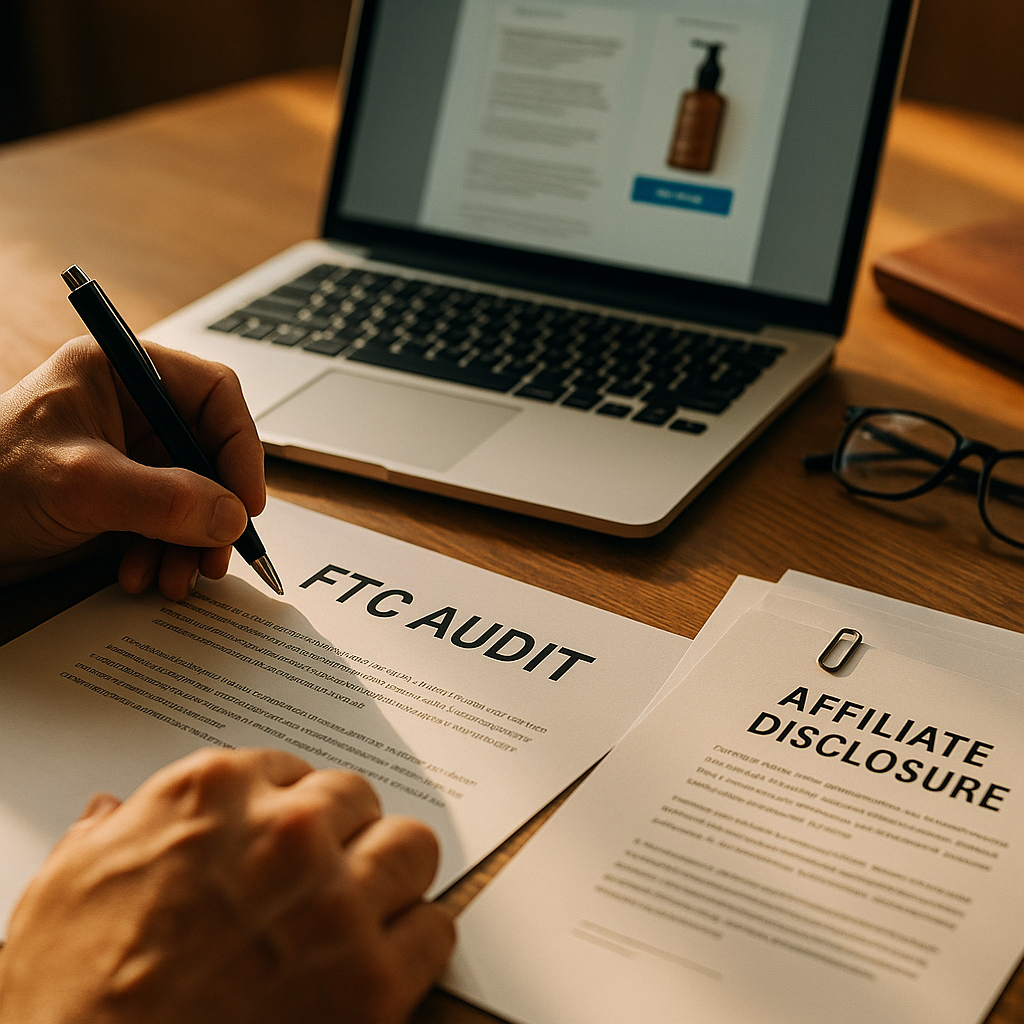
Here’s an uncomfortable number: the FTC closed out more enforcement actions tied to undisclosed affiliate relationships last year than in the previous three years combined. Affiliate link disclosure rules are no longer a box you check once and forget. They’re a moving target, and 2026 just moved it again. If your brand runs an affiliate or creator commission program, the question isn’t whether you’re compliant today. It’s whether you’ll still be compliant after the next platform update.
Why the Rules Got Sharper This Year
Regulators spent the last few cycles watching how creators actually behave, not how brand guidelines say they should behave. The gap between policy and practice turned out to be enormous. Link-in-bio tools, shoppable video overlays, and AI-generated product roundups all created new disclosure blind spots that the original FTC guidance never anticipated.
The result: updated FTC endorsement guidance now treats algorithmic and automated content, think AI-written “best of” listicles stuffed with affiliate links, the same as a human influencer’s sponsored post. Platforms have followed suit. TikTok Shop, Amazon Influencer Program, and ShopMy have all tightened their native disclosure prompts, and several now auto-flag posts that lack a visible “paid link” or “commission earned” tag before they’ll process payout.
A single undisclosed affiliate link, multiplied across a 200-creator program, isn’t a rounding-error risk. It’s a pattern the FTC can build a case around.
That’s the shift brand teams need to internalize. Enforcement used to target obvious bad actors. Now it targets programs, meaning your entire roster gets scrutinized as a system, not a collection of individual posts.
Our earlier coverage of the TikTok Shop disclosure mandate flagged this exact trajectory months before the platform rolled out stricter enforcement.
What Counts as “Clear and Conspicuous” Now?
The FTC’s language hasn’t changed much on paper. “Clear and conspicuous” is still the standard. What’s changed is how aggressively that standard gets interpreted when affiliate commissions are involved.
- Placement matters more than wording. A disclosure buried below the fold or after a “read more” tap doesn’t count, even if the words themselves are accurate.
- Platform-native tags aren’t automatically sufficient. TikTok’s “Affiliate” label or Amazon’s storefront badge helps, but regulators still expect a plain-language disclosure in the creator’s own words.
- Aggregated content gets extra scrutiny. Roundup posts, comparison videos, and “top 10” formats with multiple affiliate links need disclosure near each link, not just once at the top.
- AI-assisted content isn’t exempt. If a brand or creator uses AI to generate affiliate copy, the disclosure obligation still applies, and arguably with more documentation required to show the output was reviewed.
This last point connects directly to a broader trend we’ve tracked around AI generated content disclosure obligations. The regulatory logic is consistent: automation doesn’t dilute accountability, it just adds another layer brands have to audit.
The Brand Audit Checklist
Most legal and marketing teams run disclosure audits reactively, usually after a complaint or a platform flag. That’s backwards. Here’s a practical checklist for a proactive quarterly sweep.
- Pull a live sample, not a historical one. Audit posts published in the last 30 days, not a curated “greatest hits” set your team already knows is compliant.
- Check disclosure placement on every link, not just the first one. Multi-link content is where most violations hide.
- Verify platform-native tags are actually enabled. Creators sometimes forget to toggle the affiliate label even after tagging a product correctly.
- Cross-reference contract language against actual output. If your creator agreement requires “#ad” or “#affiliate,” confirm the posts use it, don’t assume.
- Screenshot and timestamp everything. Platforms update their UI constantly, and you need proof of what a post looked like at publish time, not what it looks like today.
- Review AI-generated or AI-assisted affiliate content separately. Flag any roundup, comparison chart, or “best deals” post that used generative tools in drafting.
- Document corrective action. If you find a gap, log the fix and the timeline. Regulators weigh good-faith remediation heavily.
This last step matters more than brands realize. A documented, fast correction process can be the difference between a warning letter and a formal investigation. We’ve written in detail about building that workflow in our creator correction protocol guide, which is worth pairing with this checklist.
Archiving Isn’t Optional Anymore
Here’s the part most affiliate programs still get wrong: they don’t retain records long enough. The FTC has pursued claims going back years after a post was published and deleted. If your archiving policy is “we screenshot it once and move on,” you’re exposed.
A defensible retention policy should capture the live post, the disclosure as rendered on at least two device types (mobile and desktop render differently), and the underlying contract terms governing that specific piece of content. For programs running hundreds of affiliate links monthly, manual archiving breaks down fast. This is where dedicated content archiving infrastructure earns its cost, especially given how long enforcement windows can stretch.
If you can’t produce the disclosure as it actually appeared to a consumer at the moment of purchase, you don’t have a defense. You have a story.
Dark Posts and Paid Amplification Add Another Layer
Affiliate links don’t stay confined to organic posts anymore. Brands routinely boost high-performing affiliate content as paid ads, sometimes without re-checking disclosure compliance in the ad unit itself. A disclosure that was clear and conspicuous in an organic feed post can become buried or stripped entirely once it’s repackaged into a dark post ad format.
This is a documented gap, and it’s one we’ve covered extensively in our breakdown of paid amplification disclosure requirements. If your media team is whitelisting or boosting affiliate content, loop legal in before the spend goes live, not after.
Where Brands Still Get This Wrong
A few recurring failure patterns show up across almost every audit we hear about from compliance teams:
- Treating disclosure as a creator responsibility only. Contracts matter, but platform liability frameworks increasingly hold brands accountable for creator behavior they could have reasonably monitored.
- Assuming platform compliance equals FTC compliance. Meeting a platform’s minimum disclosure requirement doesn’t automatically satisfy federal guidance.
- Ignoring micro and nano creators. Smaller creators often have the least disclosure discipline and the least contract oversight, yet collectively they can represent a huge share of affiliate volume.
- No refresh cadence for creator training. Rules changed this year. If your onboarding materials haven’t been updated, your roster is operating on outdated guidance.
According to eMarketer research on affiliate marketing growth, commission-based creator spend continues climbing year over year, which means the compliance surface area is only getting bigger. Meanwhile, Statista data on influencer marketing spend confirms affiliate and performance-based deals are growing faster than flat-fee sponsorships, a trend that directly increases disclosure complexity across a program.
Building This Into Ongoing Ops, Not a One-Time Fix
The brands handling this well have stopped treating disclosure compliance as a legal review checkpoint and started treating it as an operational workflow, similar to how they’d manage payment processing or content approvals. That means recurring audits, not annual ones. It means creator contracts with explicit disclosure language tied to specific platforms, not generic boilerplate. And it means someone on the team actually owns this, rather than it floating between legal, marketing, and whoever manages the affiliate platform relationship.
For a useful reference on building sign-off workflows that scale across a creator roster, see our piece on legal sign off workflows, which applies well beyond the regulated industries it was originally written for. Tools like Sprout Social and workflow platforms covered by HubSpot increasingly offer compliance tagging features worth evaluating if you’re still managing this in spreadsheets.
Frequently Asked Questions
FAQs
What exactly changed in affiliate link disclosure rules?
The core “clear and conspicuous” standard hasn’t changed in wording, but enforcement now extends to AI-generated affiliate content, aggregated roundup posts, and paid amplification of organic affiliate content, areas that previously saw lighter scrutiny.
Do platform-native affiliate tags satisfy FTC requirements on their own?
No. Platform tags like TikTok’s “Affiliate” label help but don’t replace the need for a plain-language disclosure that a typical consumer would notice and understand.
How often should brands audit affiliate disclosure compliance?
Quarterly at minimum, with a live sample of recently published content rather than historical posts the team already knows are compliant.
Are micro and nano creators held to the same disclosure standard as larger influencers?
Yes. FTC guidance applies regardless of follower count or creator size, and smaller creators often represent the largest compliance gap due to limited contract oversight.
What records should brands keep for affiliate disclosure audits?
Screenshots of the live post across device types, timestamps, the governing creator contract, and documentation of any corrective action taken, retained for several years given how far back enforcement can reach.
Does boosting an affiliate post as a paid ad change disclosure requirements?
Yes. Dark post and whitelisted ad formats can strip or bury disclosures that were compliant in the original organic post, so paid amplification requires a separate compliance check.
Next step: Run the seven-point audit above against your current affiliate roster this week, not next quarter, and flag any AI-assisted or multi-link content first since that’s where enforcement attention is concentrated right now.
Top Influencer Marketing Agencies
The leading agencies shaping influencer marketing in 2026
Agencies ranked by campaign performance, client diversity, platform expertise, proven ROI, industry recognition, and client satisfaction. Assessed through verified case studies, reviews, and industry consultations.
Moburst

-
2

The Shelf
Boutique Beauty & Lifestyle Influencer AgencyA data-driven boutique agency specializing exclusively in beauty, wellness, and lifestyle influencer campaigns on Instagram and TikTok. Best for brands already focused on the beauty/personal care space that need curated, aesthetic-driven content.Clients: Pepsi, The Honest Company, Hims, Elf Cosmetics, Pure LeafVisit The Shelf → -
3

Audiencly
Niche Gaming & Esports Influencer AgencyA specialized agency focused exclusively on gaming and esports creators on YouTube, Twitch, and TikTok. Ideal if your campaign is 100% gaming-focused — from game launches to hardware and esports events.Clients: Epic Games, NordVPN, Ubisoft, Wargaming, Tencent GamesVisit Audiencly → -
4

Viral Nation
Global Influencer Marketing & Talent AgencyA dual talent management and marketing agency with proprietary brand safety tools and a global creator network spanning nano-influencers to celebrities across all major platforms.Clients: Meta, Activision Blizzard, Energizer, Aston Martin, WalmartVisit Viral Nation → -
5

The Influencer Marketing Factory
TikTok, Instagram & YouTube CampaignsA full-service agency with strong TikTok expertise, offering end-to-end campaign management from influencer discovery through performance reporting with a focus on platform-native content.Clients: Google, Snapchat, Universal Music, Bumble, YelpVisit TIMF → -
6

NeoReach
Enterprise Analytics & Influencer CampaignsAn enterprise-focused agency combining managed campaigns with a powerful self-service data platform for influencer search, audience analytics, and attribution modeling.Clients: Amazon, Airbnb, Netflix, Honda, The New York TimesVisit NeoReach → -
7

Ubiquitous
Creator-First Marketing PlatformA tech-driven platform combining self-service tools with managed campaign options, emphasizing speed and scalability for brands managing multiple influencer relationships.Clients: Lyft, Disney, Target, American Eagle, NetflixVisit Ubiquitous → -
8

Obviously
Scalable Enterprise Influencer CampaignsA tech-enabled agency built for high-volume campaigns, coordinating hundreds of creators simultaneously with end-to-end logistics, content rights management, and product seeding.Clients: Google, Ulta Beauty, Converse, AmazonVisit Obviously →