


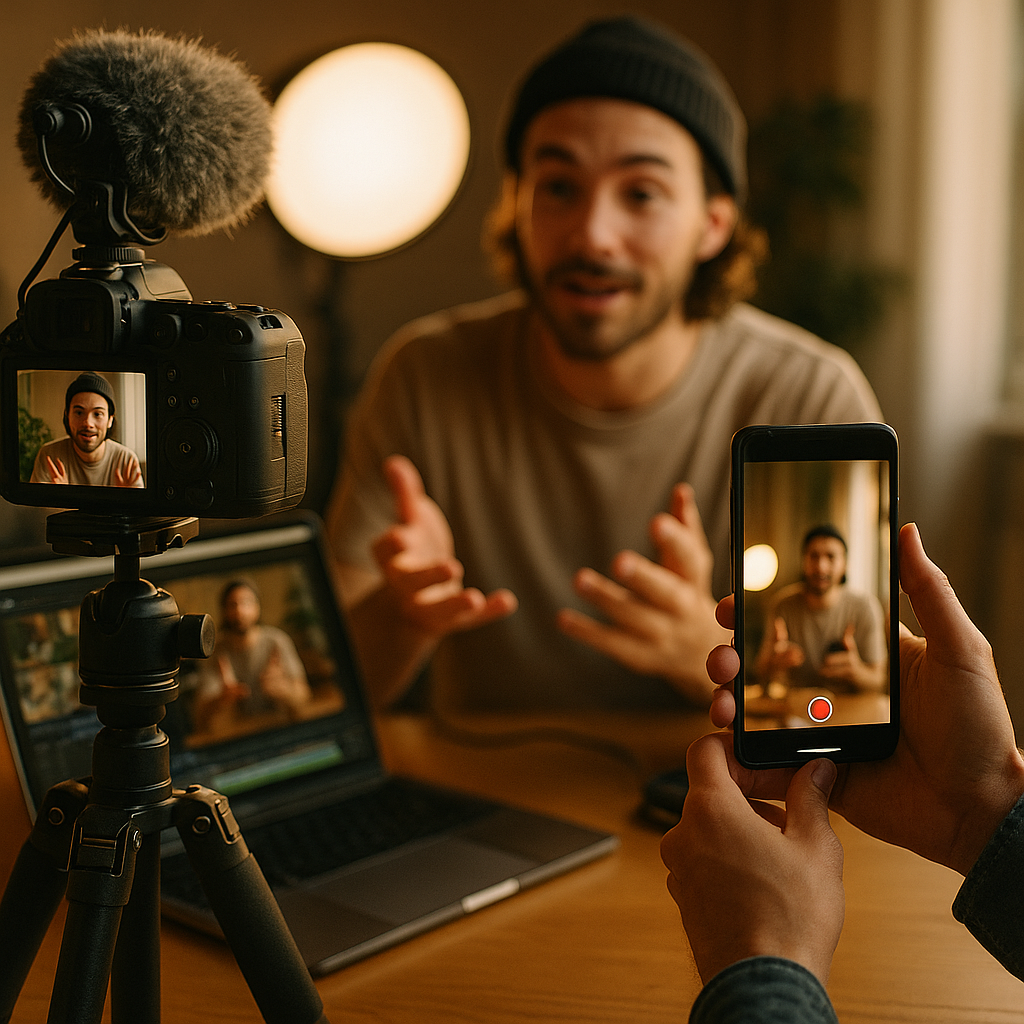
Some creator-produced content is now screening at Sundance. When the production bar shifts that dramatically, your approval framework — built for a 60-second selfie video — becomes a liability. The creator economy’s studio-scale production standard is no longer aspirational. It’s operational. And most brand creative teams haven’t caught up.
The Production Gap Nobody Wants to Admit
The uncomfortable truth: a growing cohort of top-tier creators is outproducing brand in-house teams on raw creative quality. MrBeast’s production model involves dedicated directors of photography, sound designers, colorists, and post-production editors whose combined output would pass muster at a mid-tier broadcast network. Brands like Amazon and Walmart are now paying premium rates to license his content for paid media — not just for his audience, but for the asset quality itself.
This isn’t an isolated case. According to Statista, the creator economy is projected to surpass $500 billion globally by 2027. A meaningful share of that value is being unlocked not by follower count, but by production infrastructure. The shift has direct implications for how brands brief, review, and contract creators.
When a creator’s raw footage meets broadcast spec, your brand’s approval checklist — built around watermark placement and hashtag compliance — is measuring the wrong things entirely.
Why Your Current Approval Framework Is Broken
Most brand creative approval frameworks were designed around UGC risk management. Is the logo visible? Is the disclosure present? Is the background brand-safe? Those questions still matter, but they’re table stakes now, not creative quality controls.
The problem is structural. Approval workflows at large brands typically route through legal, compliance, and brand safety reviewers who are trained to catch problems, not evaluate production quality. When a creator submits a cinematic short-form piece with professional color grading, spatial audio, and narrative arc, it goes through the same checklist as a lo-fi kitchen tutorial. That’s a mismatch that costs brands in two directions: it slows down high-quality content with irrelevant revision cycles, and it lets low-quality content through because nobody’s technically “failing” the checklist.
If your approval chain doesn’t include at least one creative director or senior producer with production experience, you’re not reviewing content. You’re auditing compliance.
What “Studio-Scale” Actually Means in Creator Context
Let’s define the standard clearly, because vague expectations are the enemy of good briefs.
- Cinematography: Multi-camera or cinema-grade single camera capture (Sony FX3, RED Komodo, BMPCC 6K are common in the top-creator tier). Shallow depth of field, intentional lighting design, stabilized movement.
- Post-production: Professional color grading (DaVinci Resolve), licensed music or original composition, motion graphics, and sound design rather than stock audio.
- Narrative structure: Hook, tension, payoff. Not just a product demo with a transition effect.
- Multi-platform asset versioning: A single shoot producing 9:16 short-form, 16:9 long-form, and square formats with platform-native edits, not just cropped repurposes.
This last point matters operationally. Brands investing in studio-scale creator content should be demanding multi-surface asset production from a single shoot. If you’re only getting one deliverable format, you’re leaving value on the table regardless of how good that one format looks.
Rebuilding Deliverable Standards From the Ground Up
Here’s where most creative directors need to do real work. Deliverable specs written three years ago reference frame rates and file sizes. Current specs need to address creative quality benchmarks that are harder to define but far more consequential.
Start with a tiered deliverable framework. Not every creator engagement requires studio-scale output — and mandating it universally will price out mid-tier partners who generate strong performance through authenticity, not production value. The framework should have at least three tiers:
- Tier 1 (Flagship): Studio-scale production. Full brief, narrative treatment, director’s cut approval, full asset library across formats. Used for hero campaigns, tentpole moments, CTV distribution.
- Tier 2 (Standard): Semi-professional production. Brand kit provided, one revision cycle, format versioning for two platforms minimum.
- Tier 3 (Reactive): Authentic/native production. Minimal brand overlay, fast-turnaround, cultural moment response. Quality standard is platform-native, not broadcast-grade.
This tiering approach directly informs how you structure creator briefs for high-production integrations and prevents the common mistake of applying Tier 1 review standards to Tier 3 content.
For episodic creator series, deliverable standards should include episode-level brand integration specs, cross-episode continuity requirements, and rights language that accounts for long-form content licensing across streaming and CTV surfaces.
Rights, Usage, and the Cost Nobody Budgets For
Studio-scale content changes your rights conversation entirely. A creator producing a five-minute cinematic brand film has invested in original music, talent (beyond themselves), location fees, and post-production labor. The usage rights for that content — across paid social, CTV, OOH, retail, and international markets — cannot be priced at a standard “content license” rate.
Many brands are learning this the hard way. They’ve commissioned exceptional content, then discovered their standard contract gives them 90-day social rights and nothing more. Repurposing that content for a CTV buy requires renegotiation, which either delays the campaign or kills the asset’s secondary value entirely.
Build rights tiering into your upfront contract structure. If you’re working with creators whose output quality qualifies for paid media distribution, reference FTC guidance on endorsement disclosures in paid media contexts and ensure your usage rights agreements explicitly cover each distribution surface. Rights ambiguity at the studio-scale tier isn’t just a legal risk — it’s a budget risk that compounds.
Updating Your Brief Architecture
A Tier 1 creator brief cannot look like a Tier 3 brief with extra rows in a spreadsheet. The architecture is fundamentally different.
For studio-scale engagements, your brief should include a creative treatment section (not just talking points), technical specifications for camera and audio, a storyboard or shot list approval gate, music licensing direction, and post-production milestone checkpoints. The brief becomes closer to a production order than a campaign brief.
This is where brands that have developed modular brief frameworks for multi-surface distribution have a structural advantage. A modular brief separates the brand narrative core from the platform-specific execution instructions, which maps cleanly onto studio-scale production workflows where the same footage gets edited differently for each surface.
Also worth building into the brief: what the creator does and doesn’t control. Studio-scale creators often have strong directorial vision. The best brand integrations at this level are collaborations, not directives. Your brief should define non-negotiables (brand safety, disclosure, key message) and leave intentional creative latitude everywhere else. Open-ended brief structures consistently outperform prescriptive ones at the top production tier.
The brands winning at studio-scale creator content aren’t writing tighter briefs. They’re writing smarter ones: tight on brand requirements, wide open on creative execution.
Benchmarking Quality: What Does “Good” Look Like Now?
If your team can’t articulate what good looks like at each tier, your approval process will default to subjective opinion or compliance-only review. Neither produces consistent results.
Build a quality benchmark library. Curate 10-15 examples of creator content that represents the standard for each of your tiers across key platforms — YouTube, TikTok, Instagram, and CTV. These become your internal reference points during brief development and approval review. Update the library quarterly; the standard moves fast.
For platforms like YouTube and CTV, eMarketer data consistently shows that production quality correlates with completion rate and brand recall at statistically significant levels. This is your ROI argument for investing in the Tier 1 infrastructure internally. Completion rate on professionally produced creator content on YouTube averages meaningfully higher than on content that scores low on production value metrics.
For distribution across CTV specifically, reference the IAB’s production standards documentation at IAB.com. Creator content entering the CTV supply chain needs to meet the same technical spec requirements as traditional broadcast assets — something most creator contracts don’t currently address.
Finally, tie your quality benchmarks to contract language. “Broadcast-quality audio” is enforceable. “Good sound” is not. Specificity in deliverable standards protects both the brand and the creator and eliminates the most common source of revision cycle friction at the top production tier.
Start this week by pulling your three most recent Tier 1 creator deliverables and running them against a broadcast-quality technical checklist. The gaps you find will tell you exactly where your approval framework needs rebuilding first.
Frequently Asked Questions
What is the creator economy’s studio-scale production standard?
It refers to the practice of top-tier creators producing content that meets or exceeds broadcast and streaming quality standards, including professional cinematography, post-production color grading, spatial audio, original music, and multi-format asset versioning. This is now common among leading creators on YouTube, and is increasingly expected in premium brand partnerships.
How should brands update their creative approval frameworks for high-production creator content?
Brands should move beyond compliance-only review checklists and include creative directors or senior producers with production experience in the approval chain. Approval milestones should be staged: creative treatment approval, pre-production storyboard review, rough cut feedback, and final delivery sign-off. Each stage should reference a documented quality benchmark, not just a brand safety checklist.
How do deliverable standards differ for studio-scale creator content versus standard influencer content?
Standard influencer deliverables typically specify format, duration, platform, and disclosure requirements. Studio-scale deliverables should additionally specify technical production requirements (camera spec, color grading standard, audio spec), narrative structure expectations, multi-surface asset versioning requirements, and rights usage terms that account for paid media, CTV, and OOH distribution.
What rights considerations apply when creator content meets broadcast quality?
When creator content reaches broadcast quality, it often involves original music, third-party talent, and location fees that affect usage rights beyond a standard social media license. Brands must negotiate usage rights upfront across all intended distribution surfaces — paid social, CTV, OOH, retail, and international — and ensure contracts address each surface explicitly. Retroactive rights renegotiation is both costly and delays campaign execution.
How should brands structure creator briefs for studio-scale productions?
Studio-scale briefs should function more like production orders than campaign briefs. They should include a creative treatment section, technical production specifications, storyboard or shot list approval gates, music licensing direction, and post-production milestone checkpoints. Non-negotiables (brand safety, disclosure, key messages) should be clearly defined, while creative execution latitude should be intentionally left open to leverage the creator’s directorial vision.
Top Influencer Marketing Agencies
The leading agencies shaping influencer marketing in 2026
Agencies ranked by campaign performance, client diversity, platform expertise, proven ROI, industry recognition, and client satisfaction. Assessed through verified case studies, reviews, and industry consultations.
Moburst

-
2

The Shelf
Boutique Beauty & Lifestyle Influencer AgencyA data-driven boutique agency specializing exclusively in beauty, wellness, and lifestyle influencer campaigns on Instagram and TikTok. Best for brands already focused on the beauty/personal care space that need curated, aesthetic-driven content.Clients: Pepsi, The Honest Company, Hims, Elf Cosmetics, Pure LeafVisit The Shelf → -
3

Audiencly
Niche Gaming & Esports Influencer AgencyA specialized agency focused exclusively on gaming and esports creators on YouTube, Twitch, and TikTok. Ideal if your campaign is 100% gaming-focused — from game launches to hardware and esports events.Clients: Epic Games, NordVPN, Ubisoft, Wargaming, Tencent GamesVisit Audiencly → -
4

Viral Nation
Global Influencer Marketing & Talent AgencyA dual talent management and marketing agency with proprietary brand safety tools and a global creator network spanning nano-influencers to celebrities across all major platforms.Clients: Meta, Activision Blizzard, Energizer, Aston Martin, WalmartVisit Viral Nation → -
5

The Influencer Marketing Factory
TikTok, Instagram & YouTube CampaignsA full-service agency with strong TikTok expertise, offering end-to-end campaign management from influencer discovery through performance reporting with a focus on platform-native content.Clients: Google, Snapchat, Universal Music, Bumble, YelpVisit TIMF → -
6

NeoReach
Enterprise Analytics & Influencer CampaignsAn enterprise-focused agency combining managed campaigns with a powerful self-service data platform for influencer search, audience analytics, and attribution modeling.Clients: Amazon, Airbnb, Netflix, Honda, The New York TimesVisit NeoReach → -
7

Ubiquitous
Creator-First Marketing PlatformA tech-driven platform combining self-service tools with managed campaign options, emphasizing speed and scalability for brands managing multiple influencer relationships.Clients: Lyft, Disney, Target, American Eagle, NetflixVisit Ubiquitous → -
8

Obviously
Scalable Enterprise Influencer CampaignsA tech-enabled agency built for high-volume campaigns, coordinating hundreds of creators simultaneously with end-to-end logistics, content rights management, and product seeding.Clients: Google, Ulta Beauty, Converse, AmazonVisit Obviously →