


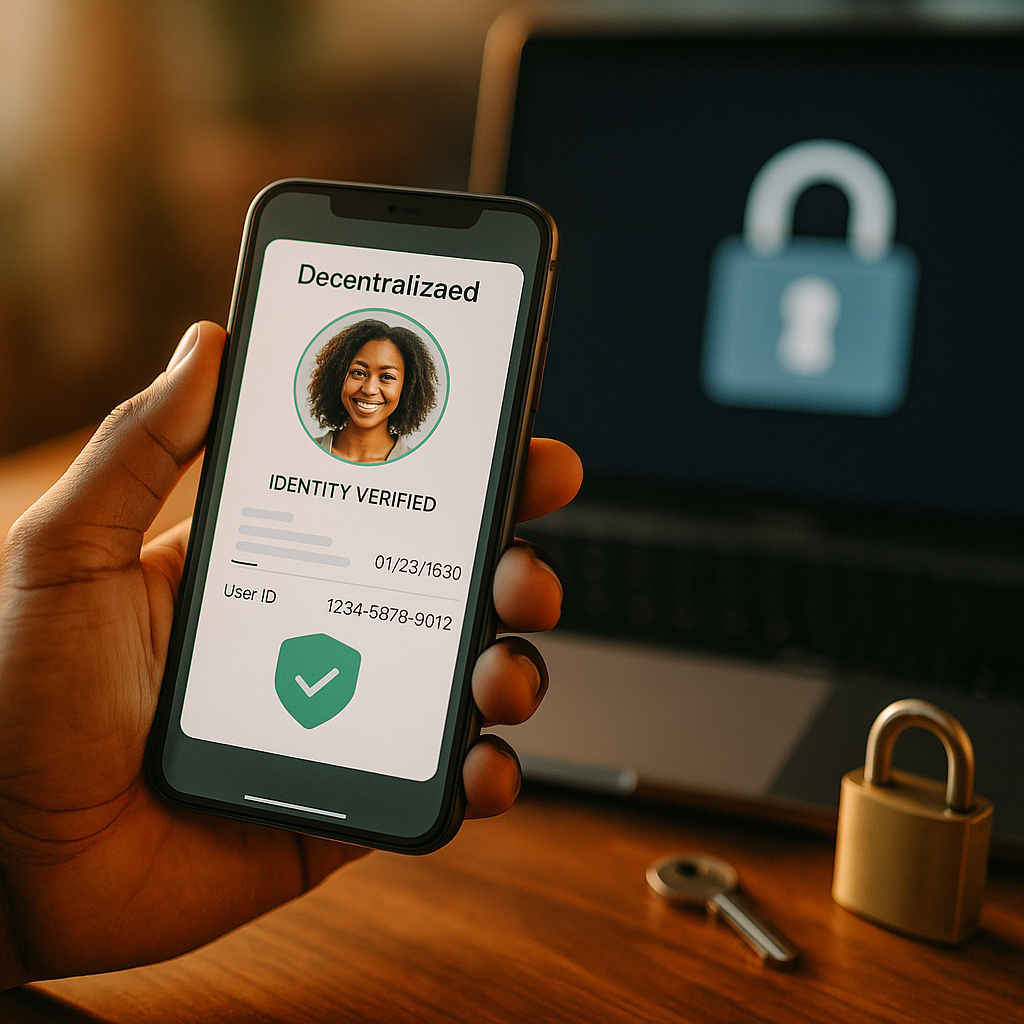
In 2025, customer trust and regulatory pressure are reshaping how companies verify people online. Many organizations now see decentralized identity solutions as a practical alternative to password-heavy logins and risky data hoards. As fraud rises and privacy expectations harden, brands want identities that are portable, secure, and user-controlled. The shift is accelerating across industries—so what’s pushing it now?
Customer trust and privacy-first identity
Brands compete on experience, but they increasingly win or lose on trust. Consumers have learned that “create an account” often means “hand over data,” and repeated breaches have made that exchange feel lopsided. A privacy-first approach to identity changes the relationship: users can prove what a business needs to know without exposing everything else.
Decentralized identity typically relies on verifiable credentials issued by trusted organizations (like banks, employers, universities, or government services) and held in a user-controlled wallet. Instead of copying documents or storing raw personal data, a brand can request a specific proof: age eligibility, employment status, residency, or account ownership. This aligns with data minimization principles and reduces the “honeypot” problem that attracts attackers.
From a customer perspective, the value is simple: fewer forms, fewer passwords, fewer unnecessary disclosures. From a brand perspective, the value is measurable: reduced friction in onboarding, less support burden from credential resets, and improved confidence that the person on the other end is legitimate. In practice, trust rises when users feel in control and when brands clearly explain what will be requested, why it’s needed, and how it will be verified.
To meet Google’s helpful-content expectations, leading brands document these flows in plain language and publish security and privacy summaries that show how identity data is handled. Clear user education turns an abstract concept into a concrete benefit.
Data security and breach risk reduction
Many identity stacks were built on an assumption that central databases are unavoidable. That assumption is being challenged. When a brand stores large volumes of personally identifiable information (PII), it also stores the liability that comes with it: breach notification obligations, remediation costs, reputational damage, and ongoing monitoring. Centralized identity repositories create a single, high-value target.
Decentralized identity changes the security model in three key ways:
- Less sensitive data at rest: Brands can verify claims without retaining full PII, shrinking what can be stolen.
- Cryptographic verification: Verifiable credentials and digital signatures allow a relying party to confirm authenticity without calling back to a central database for every check.
- Reduced credential reuse: Moving away from passwords and shared secrets lowers the impact of phishing and credential stuffing.
This does not mean decentralized identity eliminates risk. It shifts the work toward robust key management, secure wallet design, device security, and recovery processes. Mature deployments address follow-up questions up front: What happens if a user loses a device? How are credentials revoked? How does customer support assist without reintroducing weak identity checks?
Brands that implement well define strong recovery patterns (for example, multiple recovery factors, trusted contacts, or re-issuance workflows) and pair them with fraud monitoring and step-up verification for higher-risk actions. The result is a security posture that relies less on storing secrets and more on proving claims with cryptographic assurance.
Regulatory compliance and consent management
Privacy regulation and digital identity requirements continue to tighten. While the specific obligations vary by jurisdiction, the direction is consistent: collect less, protect more, explain clearly, and honor user rights. Brands are moving toward decentralized identity because it can support compliance by design, not just by policy.
Consent management becomes more credible when a user is not forced into an all-or-nothing account profile. With decentralized identity, a brand can request only the attributes needed for a specific purpose and can present a clear consent prompt tied to that purpose. This helps businesses answer common compliance questions such as:
- Why do you need this data? Each credential request can be scoped to a specific transaction.
- How long will you keep it? Brands can avoid retaining raw data and keep only audit-friendly proofs or minimal references.
- Can a user withdraw consent? Access can be terminated at the relying party, and credentials can be revoked by issuers.
Decentralized identity also supports stronger auditability. When designed carefully, the system can provide tamper-evident logs of what was requested and what was verified, without exposing the user’s complete identity. That balance matters when regulators and customers both expect transparency.
However, compliance is not automatic. Brands need governance: clear roles (issuer, holder, verifier), documented data flows, and third-party risk management for wallet providers and credential issuers. The most credible organizations publish accessible explanations of these roles and back them with security assessments and privacy impact reviews.
Fraud prevention and KYC modernization
Fraud is no longer confined to a few high-risk sectors. Account takeovers, synthetic identities, bonus abuse, and refund fraud affect retail, media, travel, financial services, and marketplaces. Traditional identity checks—upload a document, take a selfie, answer knowledge-based questions—can be expensive, slow, and frustrating for legitimate customers.
Decentralized identity supports a more modern approach to KYC and verification. Instead of repeating verification steps at every brand, customers can reuse trusted credentials from reputable issuers. A bank, telecom, employer, or government service can issue a credential once; the user can then present it many times as needed.
This model can reduce the need for brands to handle sensitive documents directly. For example, a brand can verify that a user meets an age threshold without collecting a birthdate, or confirm address validity without storing a full utility bill. These selective disclosures reduce both fraud opportunities and privacy risks.
Brands adopting decentralized identity also gain a stronger way to defend against common attack patterns:
- Phishing resistance: Cryptographic proofs are harder to steal and replay than passwords or one-time codes.
- Higher assurance for high-risk actions: Step-up requests can require a stronger credential for withdrawals, transfers, or account changes.
- Improved integrity signals: Credentials can include issuer assurance levels and revocation status checks.
Follow-up questions often arise about fairness and access: What about users without credentials? Strong programs keep inclusive fallback options, such as traditional verification, while encouraging issuance through widely available partners. The aim is not to exclude; it is to raise assurance where it matters and reduce friction where it doesn’t.
Interoperability and user experience across ecosystems
Brands increasingly operate in ecosystems rather than silos: partner marketplaces, embedded finance, loyalty coalitions, travel alliances, gig platforms, and cross-app experiences. Centralized identity struggles in these environments because each organization maintains separate accounts, duplicative verification steps, and inconsistent security controls.
Decentralized identity improves interoperability by using shared standards for credentials and proofs. When credentials are portable, users can move through partner journeys without repeatedly re-entering the same information. This can shorten sign-up funnels, reduce abandonment, and support seamless experiences like:
- Faster onboarding: Verify eligibility and key attributes in seconds instead of days.
- Streamlined partner access: Confirm membership or status for benefits without exposing full profiles.
- Consistent authentication: Reduce password creation and reset loops across properties.
User experience improves when brands implement clear prompts and predictable flows. The best experiences avoid technical jargon and show exactly what will be shared. They also allow customers to say “no” and continue with an alternative path when possible, which strengthens trust and reduces support tickets.
For product teams, interoperability also means less vendor lock-in. Instead of tying identity to one platform’s proprietary account graph, brands can architect around standards-based verification. That flexibility matters when businesses expand into new regions, add new partners, or update risk requirements.
Implementation strategy and governance for decentralized identity
Brands that succeed treat decentralized identity as a business transformation, not a plug-in feature. They start with specific, high-impact use cases and define clear success metrics. Common starting points include age verification, membership validation, employee/contractor access, high-risk transaction step-up, and passwordless login for returning users.
A practical implementation strategy usually includes:
- Use-case selection: Choose journeys where verification costs are high or fraud risk is meaningful.
- Issuer partnerships: Work with reputable credential issuers that match your customer base.
- Wallet and UX decisions: Support user-friendly wallets and accessible recovery options.
- Revocation and lifecycle: Define how credentials expire, renew, and get revoked.
- Assurance levels: Map credential strength to actions (browse, purchase, withdraw, change profile).
- Security and privacy reviews: Conduct threat modeling, penetration testing, and privacy impact assessments.
Governance is the difference between a pilot and a scalable program. Brands need policies for issuer trust, credential schemas, support escalation, and incident response. They should also document how verification decisions are made, especially when automated risk scoring is involved, to avoid opaque outcomes.
EEAT in this space comes from transparency: explain the system, cite standards and security practices in public documentation, and provide clear support paths when something goes wrong. Customers and partners are more likely to adopt when the program is understandable, verifiable, and responsibly operated.
FAQs about decentralized identity solutions
What are decentralized identity solutions in simple terms?
They are systems where people hold digital credentials (like proof of age or employment) in a wallet and share only what a brand needs. Verification happens using cryptography and trusted issuers, reducing reliance on centralized databases of personal data.
Do decentralized identity solutions replace passwords completely?
They can, but many brands roll them out alongside existing methods. Passwordless login is a common use case, yet businesses often keep fallback options for account recovery and for customers who aren’t ready to use a wallet.
How do brands verify credentials without storing customer data?
The brand checks a cryptographic proof that a trusted issuer signed the credential and that it hasn’t been revoked. The brand can store minimal records for auditing, but it does not need to retain the full underlying personal data.
What happens if a user loses their phone or wallet access?
Strong programs provide recovery through re-issuance, multi-factor recovery, trusted contacts, or verified account recovery steps. Brands plan these workflows early to avoid pushing support teams back to insecure identity checks.
Is decentralized identity only for financial services and crypto?
No. Retail, travel, healthcare, education, gaming, and marketplaces use it for age checks, membership validation, employee access, anti-fraud step-up, and partner onboarding—anywhere a brand needs reliable verification with less data exposure.
How does decentralized identity help with compliance?
It supports data minimization and purpose-based consent by letting brands request only the necessary attributes. It can also improve auditability by recording what was verified without collecting excessive personal information.
What should a brand look for when choosing a decentralized identity approach?
Look for standards alignment, clear revocation and recovery, strong wallet security, issuer trust frameworks, accessibility, and measurable outcomes like reduced fraud, higher conversion, and lower support costs.
Brands are moving toward decentralized identity solutions because they reduce sensitive-data exposure, modernize fraud controls, and support privacy-first experiences that customers increasingly demand in 2025. The strongest programs start with targeted use cases, adopt interoperable standards, and invest in recovery and governance. The takeaway is clear: identity can be safer and simpler when users share proofs, not piles of data.