


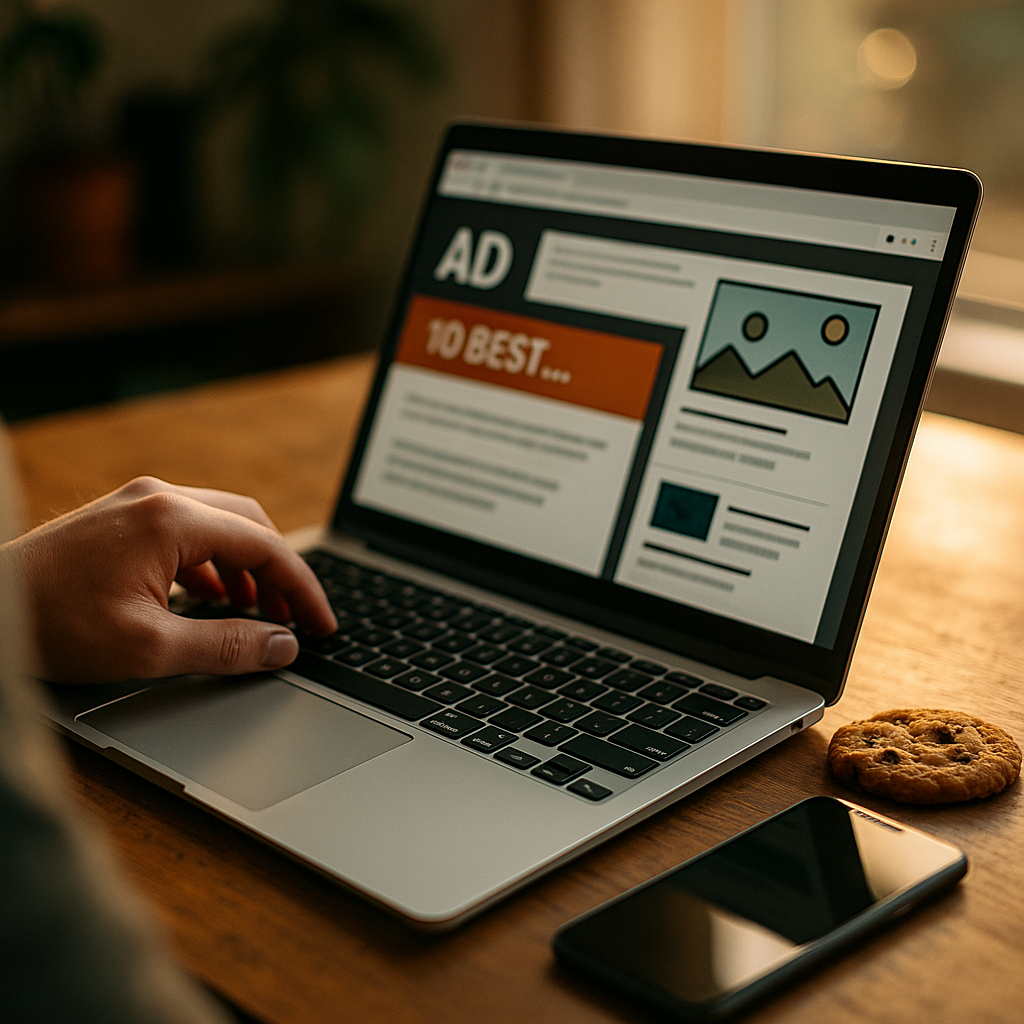
In 2025, marketers face a practical reality: the Death of the Cookie is accelerating, and audiences expect privacy-first experiences without sacrificing relevance. As third-party identifiers fade, ad performance must come from understanding what people want in the moment—not who they were yesterday. Intent-based contextual ads are back with better signals, smarter models, and clearer measurement—so which tactics win now?
Why the Death of the Cookie changes everything for privacy-first advertising
Third-party cookies once acted as a universal shortcut for audience targeting, frequency management, and conversion attribution. Their decline forces a reset in how brands reach people across the open web. In practice, this shift changes three core parts of advertising operations:
- Targeting: Behavioral segments built from cross-site tracking become less reliable or unavailable. Scale based on identity graphs shrinks and becomes fragmented across platforms.
- Measurement: Multi-touch attribution that depends on user-level trails loses fidelity. Models increasingly rely on aggregated, privacy-protected reporting and incrementality tests.
- Optimization: Real-time bidding strategies that assume stable user IDs must instead optimize around page context, device signals, first-party inputs, and event-level feedback.
This is not “the end of personalization.” It is a move from surveillance-style personalization to relevance-by-design. Buyers still need accuracy, but they now earn it through consent, transparency, and context. The winners in 2025 build campaigns that perform even when identity signals are limited or absent.
How intent-based contextual ads outperform legacy contextual targeting
Contextual advertising used to mean matching a banner to a topic. Intent-based contextual ads go further: they infer the goal behind a session and align creative, offer, and landing experience to that goal. Instead of asking “Who is this user?” the strategy asks “What are they trying to do right now?”
Three improvements make modern contextual meaningfully stronger than the old keyword era:
- Richer semantic understanding: Natural-language models interpret meaning, sentiment, and nuance beyond simple page categories. A review article, a comparison guide, and a troubleshooting post can all live in the same “topic,” but represent different intent states.
- Intent signals across content patterns: The structure of content (lists, comparisons, pricing tables), the density of product mentions, and the presence of “how to,” “best,” “vs,” and “near me” cues can indicate whether someone is researching, evaluating, or ready to buy.
- Brand-safety and suitability baked in: Modern systems classify not just “safe/unsafe,” but suitability tiers based on the advertiser’s risk tolerance and category needs.
For teams worried about performance, the practical takeaway is simple: context works best when it is tied to decision-making moments. A campaign aligned to “insurance quote comparison intent” will typically outperform one aligned to “insurance” as a broad topic, because it matches the user’s stage and expected next action.
First-party data strategy that complements contextual targeting
Context alone is powerful, but it becomes even more effective when paired with a disciplined first-party data strategy. The goal is not to recreate third-party tracking; it is to use consented signals to improve relevance, measurement, and lifetime value.
In 2025, strong first-party programs share a few traits:
- Clear value exchange: Email programs, memberships, gated tools, and loyalty benefits that users understand and choose.
- Clean data architecture: Standardized event naming, consistent taxonomy, and documented sources of truth so media teams trust the inputs.
- Activation with restraint: Use first-party audiences where they add value (retention, upsell, suppression of existing customers) and rely on contextual + creative for acquisition scale.
Answering a common follow-up: Do contextual ads replace first-party data? No. They reduce dependence on third-party identity and expand reach. First-party data improves efficiency where you have relationships and consent. Together, they create a stable system: contextual finds the right moments, first-party data improves the experience for known customers and helps measure outcomes more reliably.
Privacy-first measurement and attribution in a cookieless world
Measurement is where many cookie-era playbooks break. In 2025, the most credible approach combines multiple methods rather than trusting a single dashboard metric. To align with privacy expectations and still make confident decisions, focus on a measurement stack that answers three questions: Did it work? Why did it work? Can we scale it?
Practical methods that hold up well:
- Incrementality testing: Use geo tests, audience holdouts, or platform experiments to estimate true lift. This is the fastest way to validate contextual strategy versus control.
- Media mix modeling (MMM): Useful for budget allocation across channels when user-level attribution is limited. MMM works best when paired with frequent tests that calibrate assumptions.
- Modeled attribution with guardrails: Use aggregated conversions and modeled paths, but validate with experiments. Treat modeled results as directional, not absolute truth.
- Server-side tagging and consent-aware analytics: Reduce data loss from browser restrictions while respecting consent choices and data minimization principles.
A follow-up readers often ask: How do you handle frequency without cookies? You do it with a mix of publisher capabilities, contextual rotation strategies, and platform frequency tools where available. Then you watch outcomes: if frequency caps are imperfect, you protect performance with stronger creative variety and landing-page relevance so repeat exposures don’t become wasted impressions.
Brand safety, suitability, and trust signals for modern contextual advertising
As contextual spend grows, so does scrutiny. Advertisers need more than “brand safe.” They need brand suitable placements that match their tone, category regulations, and customer expectations.
In 2025, brand safety best practices for contextual campaigns include:
- Define suitability tiers: Create a simple internal framework (green/amber/red) that clarifies what content themes are acceptable, borderline, or excluded.
- Use inclusion lists, not only blocklists: Blocklists are reactive. Curated inclusion lists of trusted publishers and high-performing content types improve quality and reduce surprises.
- Verify with independent reporting: Use third-party verification for viewability, invalid traffic, and content classification where appropriate, especially for regulated categories.
- Align creative to context: Suitability is not just placement. A sensitive news context can be acceptable if the message is informational and respectful, and unacceptable if the creative is aggressive or tone-deaf.
This is where EEAT matters in practice: ads that appear in credible environments, match user intent, and avoid manipulative messaging tend to perform better and create fewer downstream issues for brand trust.
How to build a 2025 contextual advertising playbook for higher ROI
Intent-based contextual ads reward teams that operate with clear hypotheses and tight feedback loops. Use this playbook to move from “testing contextual” to scaling it as a primary acquisition engine.
1) Start with intent mapping, not channels
List the highest-value intent states in your category. For example: “compare,” “best for,” “how to choose,” “pricing,” “reviews,” “alternatives,” “troubleshooting,” and “near me” (where relevant). For each, define the user question and the next best action you want them to take.
2) Build contextual clusters
Group inventory by intent, not broad topics. A single category can contain multiple clusters with different conversion probabilities. Your bidding, creative, and landing pages should differ by cluster.
3) Design creative that matches the moment
- Research intent: Offer guides, checklists, calculators, and neutral explainers.
- Evaluation intent: Highlight differentiators, comparisons, proof points, and transparent pricing.
- Purchase intent: Use clear offers, urgency only when true, and low-friction conversion paths.
4) Upgrade landing pages for intent continuity
Contextual ads fail when the landing page ignores the user’s question. Mirror the language of the content environment, answer the likely objections immediately, and provide the next step with minimal distraction. If the page is a comparison guide, the landing page should continue that comparison rather than forcing a generic product pitch.
5) Establish measurement you can defend
Before scaling spend, decide what “proof” looks like. Typically that means lift tests, blended CAC targets, and cohort retention checks. If your analytics are consent-aware and your tests are clean, contextual results become far easier to justify to finance and leadership.
6) Scale responsibly
Scale by expanding intent clusters, then publishers, then formats—while keeping suitability rules stable. When performance dips, diagnose by intent state first. Many “contextual doesn’t work” conclusions are really “we mixed incompatible intent states and averaged away the signal.”
FAQs about the Death of the Cookie and intent-based contextual ads
-
Are third-party cookies completely gone in 2025?
Availability is significantly reduced and inconsistent across environments. Even where they still appear, relying on them is a fragile strategy. The safer approach is to build campaigns that perform with limited identity signals using contextual, first-party, and privacy-safe measurement.
-
Do intent-based contextual ads work for B2B?
Yes, especially when intent clusters reflect real B2B buying tasks like “vendor comparison,” “RFP template,” “implementation checklist,” “security requirements,” and “pricing model.” Pair contextual acquisition with first-party nurture for the strongest pipeline impact.
-
How do I choose the right contextual segments?
Start from customer questions and funnel stage, then validate with tests. Avoid overly broad topics. Prioritize segments where the content naturally signals a next step your product can satisfy.
-
Will contextual targeting reduce personalization?
It changes the type of personalization. Instead of tailoring to a person’s historical behavior across sites, it tailors to the user’s current intent and environment. Many users prefer this because it feels relevant without feeling invasive.
-
What metrics should I track for contextual campaigns?
Track outcomes first: conversion rate, CPA/CAC, revenue per session, and incremental lift where possible. Then track quality indicators: engaged sessions, bounce rate, viewability, and post-click retention by cohort. Use these together to avoid optimizing for cheap clicks.
-
How can I keep brand safety high while scaling?
Use suitability tiers, inclusion lists, and independent verification. Review top placements and queries regularly, and align creative tone to sensitive contexts. Scaling should expand trusted clusters, not loosen controls.
In 2025, the practical response to cookie loss is not panic—it is a better definition of relevance. Intent-based contextual ads let brands show up when people are actively researching, comparing, or ready to act, without leaning on invasive tracking. Combine strong context modeling with consented first-party data and defensible incrementality testing, and you get performance that survives platform shifts and earns user trust.
Top Influencer Marketing Agencies
The leading agencies shaping influencer marketing in 2026
Agencies ranked by campaign performance, client diversity, platform expertise, proven ROI, industry recognition, and client satisfaction. Assessed through verified case studies, reviews, and industry consultations.
Moburst

-
2

The Shelf
Boutique Beauty & Lifestyle Influencer AgencyA data-driven boutique agency specializing exclusively in beauty, wellness, and lifestyle influencer campaigns on Instagram and TikTok. Best for brands already focused on the beauty/personal care space that need curated, aesthetic-driven content.Clients: Pepsi, The Honest Company, Hims, Elf Cosmetics, Pure LeafVisit The Shelf → -
3

Audiencly
Niche Gaming & Esports Influencer AgencyA specialized agency focused exclusively on gaming and esports creators on YouTube, Twitch, and TikTok. Ideal if your campaign is 100% gaming-focused — from game launches to hardware and esports events.Clients: Epic Games, NordVPN, Ubisoft, Wargaming, Tencent GamesVisit Audiencly → -
4

Viral Nation
Global Influencer Marketing & Talent AgencyA dual talent management and marketing agency with proprietary brand safety tools and a global creator network spanning nano-influencers to celebrities across all major platforms.Clients: Meta, Activision Blizzard, Energizer, Aston Martin, WalmartVisit Viral Nation → -
5

The Influencer Marketing Factory
TikTok, Instagram & YouTube CampaignsA full-service agency with strong TikTok expertise, offering end-to-end campaign management from influencer discovery through performance reporting with a focus on platform-native content.Clients: Google, Snapchat, Universal Music, Bumble, YelpVisit TIMF → -
6

NeoReach
Enterprise Analytics & Influencer CampaignsAn enterprise-focused agency combining managed campaigns with a powerful self-service data platform for influencer search, audience analytics, and attribution modeling.Clients: Amazon, Airbnb, Netflix, Honda, The New York TimesVisit NeoReach → -
7

Ubiquitous
Creator-First Marketing PlatformA tech-driven platform combining self-service tools with managed campaign options, emphasizing speed and scalability for brands managing multiple influencer relationships.Clients: Lyft, Disney, Target, American Eagle, NetflixVisit Ubiquitous → -
8

Obviously
Scalable Enterprise Influencer CampaignsA tech-enabled agency built for high-volume campaigns, coordinating hundreds of creators simultaneously with end-to-end logistics, content rights management, and product seeding.Clients: Google, Ulta Beauty, Converse, AmazonVisit Obviously →